Summary

  1. At every crushed building there is anger against the authoritiespublished at 14:11 BST

    Orla Guerin
    Reporting from La Guaira, Venezuela

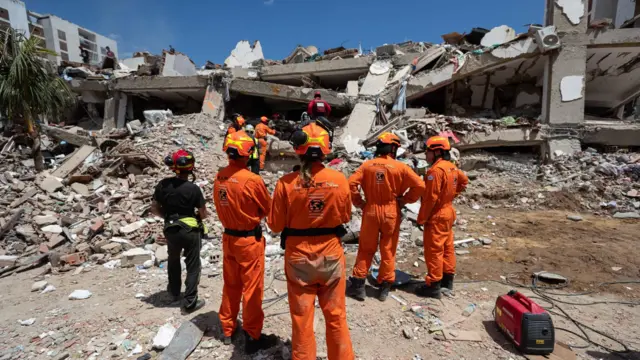
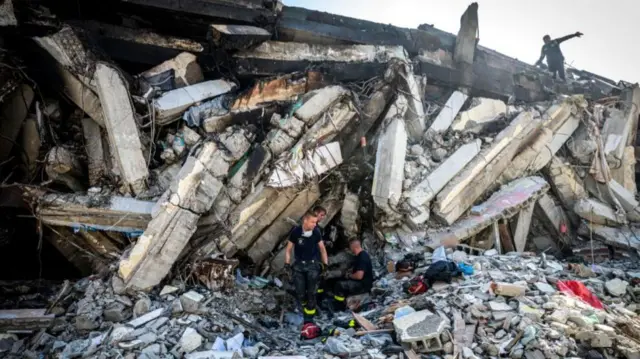
    UK search and rescue team UKIsar carrying out a search in Caraballeda La Guaira on 29 JuneImage source, UK ISAR
    Image caption,

    UK search and rescue team UKIsar carrying out a search in Caraballeda, La Guaira, on Monday

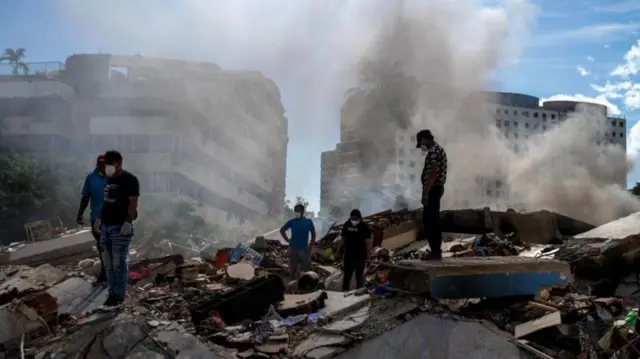
    There is more sign of the Venezuelan police and army on the streets in the worst affected areas of La Guaira state, but not in the rubble.

    The main search and rescue efforts are still being carried out by local volunteers and international teams.

    At every crushed building, where relatives wait for a body or a miracle rescue, there is anger against the authorities.

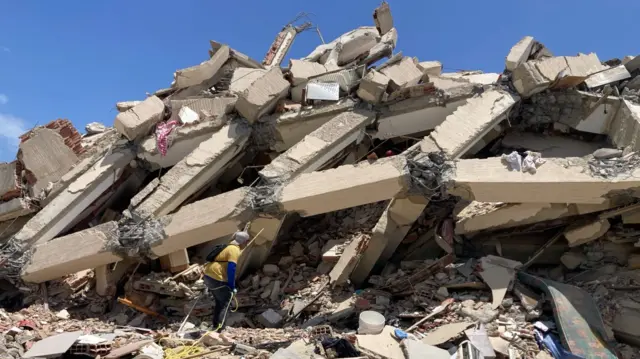
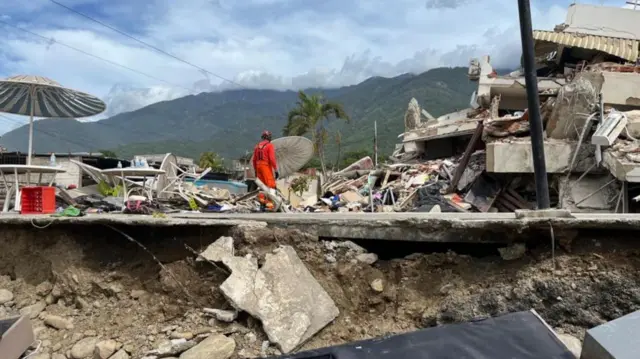
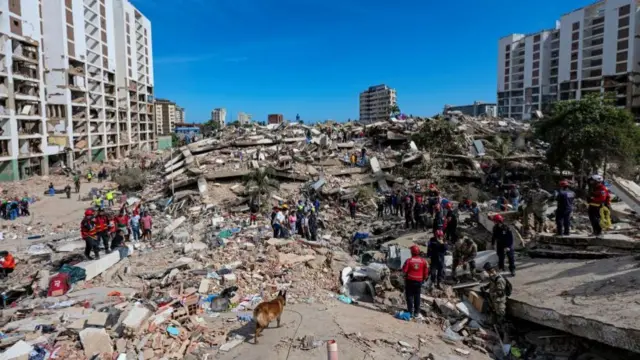
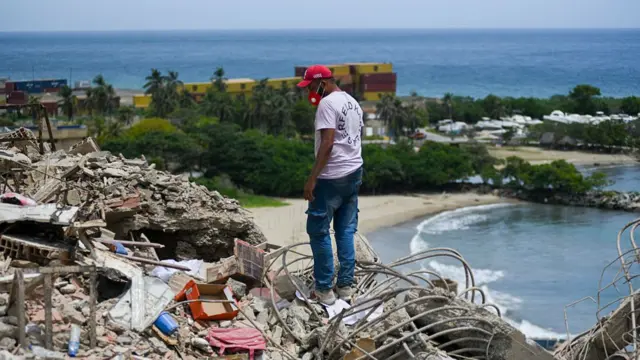
    That includes Caraballeda on the coast, where a vast area looks like it has been upended by a giant hand.

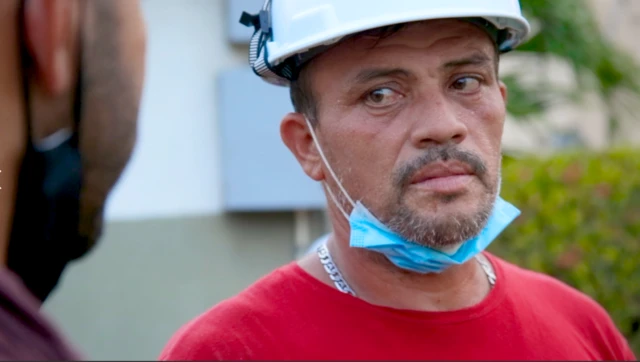
    Ruben Rojas, 32, an electrician by trade, has been digging in the rubble here since the twin quakes on Thursday, with only gloves and a hard hat. When I ask about government help, he shakes his head.

    "The civil protection people decided to help, but they don’t have the equipment. The government doesn’t give it. They are just like us, working with their hands," he says.

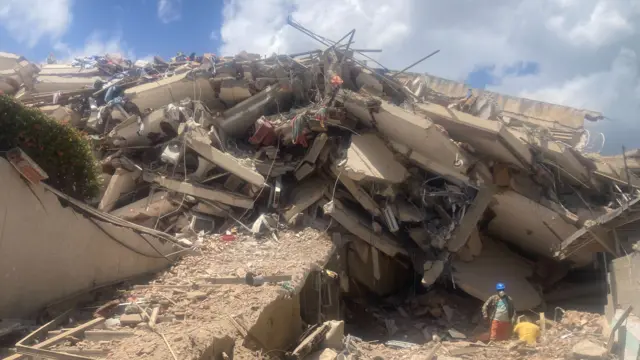
    That picture is reflected elsewhere. In the rubble of Catia La Mar, we met a university professor who is missing eight family members in two separate collapsed buildings.

    He told us he had been contacting officials and pushing them to bring help to the site for three days.

    To his frustration, there was no sign of the state until Sunday evening, when the pulverised apartment blocks had already become a grave for many.

  2. 'My son would be alive if the rescuers had arrived on time'published at 14:00 BST

    Yogita Limaye
    Reporting from Caracas

    Angel Paredes, aged 12, and his mother Ruth
    Image caption,

    Angel Paredes, aged 12, pictured alongside his mother Ruth

    Warning: This post contains distressing details

    At the hospital, we meet a family who has a story of miraculous survival, but also unbearable loss.

    Twelve-year-old Angel Paredes is being discharged. He’s in a wheelchair with both his legs bandaged, but the injuries are minor. He spent nearly 36 hours under the rubble of his home before he was pulled out.

    "He kept calling out to the rescuers; that’s how they found him," says his mother Ruth.

    Visibly in shock, she tells us she’s lost seven members of her family - two young children, her husband, her mother, two sisters and a niece. Ruth survived unhurt because she was away at work.

    Ruth Paredes

    Her hands shake as she shows us a photo on her mobile phone of her three-year-old son Alexander sitting on the shoulders of her husband Raymar.

    "My little son was alive for a while. But the rescuers came too late. And they didn’t have the machines required to dig through the rubble faster. He died next to his father," she said.

    The bodies of her mother, and her youngest, a one-and a half year old girl Aime, have not been found yet.

    Ruth’s eyes well up with tears as she shows us videos of Aime.

    As he’s wheeled out of the hospital, Angel says: "I am very close to my family. I loved my younger siblings so much. I spent 36 hours next to their dead bodies." His voice cracks as he speaks.

    For now, they will be staying with friends. Like thousands of Venezuelans, they don’t have a home to go back to.

  3. Earthquake monitors record hundreds of aftershocks in Venezuelapublished at 13:49 BST

    Jack Grey
    Live reporter

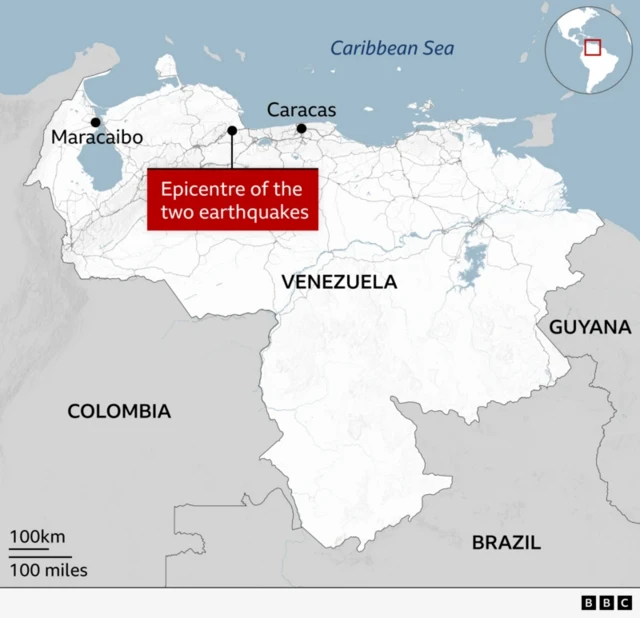
    Hundreds of aftershocks have been reported in Venezuela since the two magnitude 7.2 and 7.5 earthquakes caused widespread devastation on Wednesday.

    Venezuela's Foundation for Seismological Research is regularly reporting new aftershocks. However, many are below magnitude 3, which are not normally felt by humans.

    However, earlier this afternoon a 4.6-magnitude quake was reported by the United States Geological Survey (USGS) off the coast of Caracas, which was widely felt but is reported to have caused no further damage.

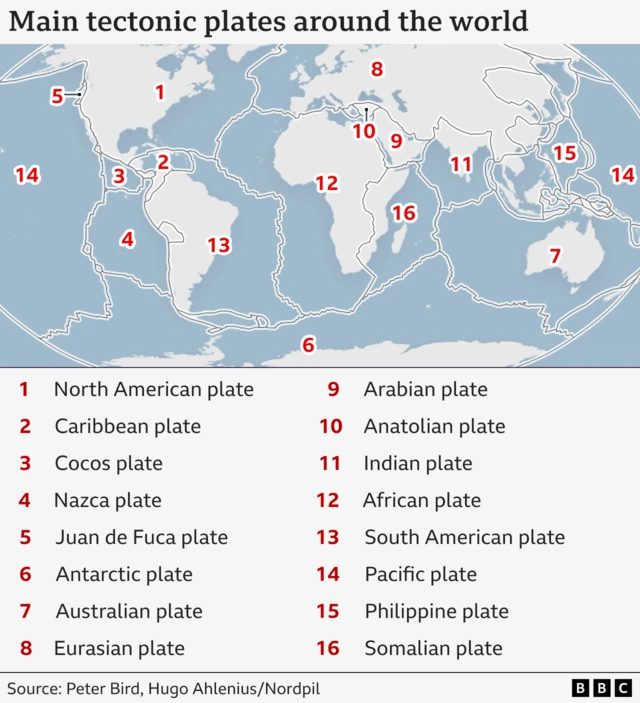
    Aftershocks are pretty much as the name suggests - smaller earthquakes that follow the main earthquake that are typically caused by parts of tectonic plates adjusting to changes in stress after the main quake.

    Shallower earthquakes - as we’ve had in Venezuela - are more likely to be followed by aftershocks, according to the USGS, which can be dangerous for continuing rescue operations.

    A chart explaining how earthquakes are measured based on the Moment Magnitude Scale. It has three columns: Magnitude, Earthquake effects, and Estimated number each year. The rows are: Magnitude 2.9 or less – Effects not normally felt – There are millions per year; Magnitude 4 to 4.9 – Minor earthquake felt by humans – 10,000 per year; Magnitude 5 to 5.9 – Light earthquake, some property damage – 1,500 per year; Magnitude 6 to 6.9 – Moderate earthquake, property damage – 150 per year; Magnitude 7 – 7.9 – Strong earthquake, loss of life, damage costs billions – 18 per year; Magnitude 8 – 8.9 – Great earthquake, large loss of life – 1 per year; Magnitude 9+ – Largest recorded earthquakes, destruction over vast areas – Fewer than one per year
  4. Large aftershock hits north of Venezuela's capital - US Geological Surveypublished at 13:30 BST
    Breaking

    A powerful aftershock hit Venezuela early on Monday, shaking the area hit by last week's twin earthquakes again, according to the United States Geological Survey.

    A magnitude-4.6 quake struck off the coast of Caracas, at a depth of 10km (6.2 miles), just after 07:00 local time (12:00 BST).

    No damage was immediately reported, interim President Delcy Rodríguez said, according to Reuters.

  5. Dutch naval ship delivering emergency aid while China announces £11m of supportpublished at 13:24 BST

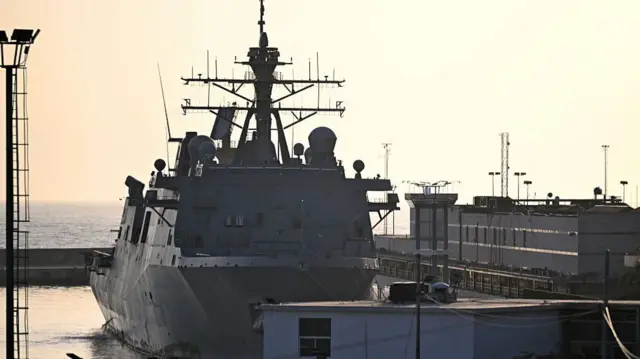
    Dutch naval vessel HNLMS Groningen is berthed at the Defence and Security Exhibition on September 10, 2013 in London, EnglandImage source, Getty Images
    Image caption,

    The Netherlands' HNLMS Groningen, pictured here in London in 2013, is being sent to Venezuela to deliver aid

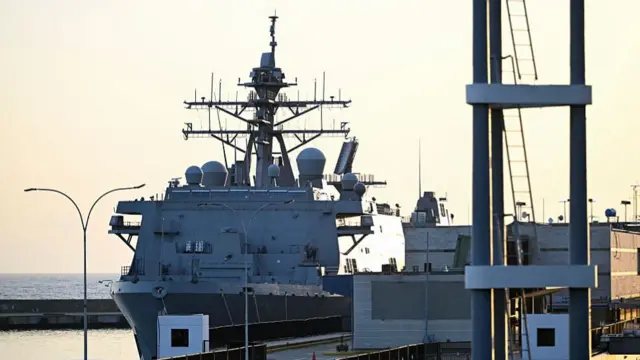
    The Netherlands is sending a naval vessel from Curaçao to Venezuela to deliver emergency aid, the Dutch ministry of defence has announced.

    Patrol vessel HNLMS Groningen, which the ministry says was scheduled to arrive yesterday evening, is delivering food, water and relief supplies.

    It adds that the ship's crew will be available to provide emergency relief on site "in co-ordination with the Venezuelan authorities and the United Nations".

    It comes as China announces it will donate 100 million yuan (£11.1 million) of emergency supplies to Venezuela, according to Reuters news agency.

    Citing China's foreign ministry, it reports that the supplies will be sent as soon as possible, with Beijing willing to provide additional support if needed.

  6. Rescuers pull 21-year-old man alive from rubble after nearly five days, El Salvador president sayspublished at 13:10 BST
    Breaking

    A 21-year-old being rescued in VenezuelaImage source, X / @nayibbukele

    A 21-year-old man has been rescued in La Guaira state by rescue teams from Venezuela, Mexico, and El Salvador, President Nayib Bukele from El Salvador says.

    Aaron Levi Cantillo Vargas was found alive beneath rubble in the town of Caraballeda, but between the rescuers and Aaron lay the body of a deceased person, President Bukele posted earlier - complicating the rescue.

    The 21-year-old is now receiving specialised medical attention, Bukele says, adding that the rescuers will "continue working with the hope of being able to save more lives".

    Venezuela's Acting President Delcy Rodríguez says the rescue operation took 43 hours, after Aaron was trapped for 106 hours.

  7. Website launched to help people find relatives hospitalised after quakespublished at 12:46 BST

    A man in police uniform holds his phone and looks at long lists with names stuck to a wallImage source, EPA/Shutterstock
    Image caption,

    A member of the police checks a list of injured and deceased in Caracas on Friday

    A website to help people find their relatives or friends hospitalised after the earthquakes struck has been launched, with 2,853 patients across three states registered so far.

    There are 11 hospitals in La Guaira and Caracas on the site - localizapacientes.com, external, which translates as 'locate patients.com'.

    Families can search by first name, last name or ID numbers to find out which hospital their relative is in, the website says.

    A civilian-run missing persons site suggests the number of those missing in Venezuela is much higher, with more than 46,000 people registered as unreachable.

    But these figures may not be entirely accurate, as they rely on people confirming whether or not they have since been found safe.

  8. Hospital walls filling up with photos of those still missingpublished at 12:26 BST

    Yogita Limaye
    Reporting from Caracas

    A wall of an hospital covered in missing posters following earthquakes in Venezuela

    The walls outside the Miguel Perez Carreño hospital in Caracas are filling up with photos of those missing after the earthquake.

    Tens of thousands are still missing and families are going from hospital to hospital in search of their loved ones.

    By the hour, people come with photos of their families printed on flyers and stick them on the walls.

    We met Yerinker Bermudez, who’s searching for his friends who lived in his building in La Guaira.

    He’s using a cane to walk and is injured. He tells us he had a narrow escape because the earthquake struck his building which collapsed just as he was entering it.

    Yerinker Bermudez, who’s searching for his friends, pictures in a grey nike tracksuit outside a hosptial in Caracas
    Image caption,

    Yerinker Bermudez says the police or government have not helped survivors locate those still missing

    Anger at his government spills out as he speaks: "The police and government didn’t help us. We pulled the dead and survivors out ourselves, along with neighbours and volunteers.

    "We dug through the rubble with our bare hands," he says pointing to his hands.

    Behind him crowds are gathered scouring a list of the injured admitted to this hospital, hoping to find a familiar name.

    Inside the hospital, the beds are full and medics are working at a frantic pace.

    Dr Santiago Casanova, who works at the hospital told us the first few days were extremely challenging: "But now we aren’t receiving as many injured so the situation has stabilised here."

    That, of course, is because as the days roll by, fewer people are being pulled out from the rubble alive.

  9. Satellite images reveal scale of destruction in affluent coastal townpublished at 12:06 BST

    Caroline Souza
    BBC News visual journalism, Americas Hub

    Satellite images from 26 June, provided by Vantor, show the scale of devastation in the once affluent coastal town of Caraballeda, in the state of La Guaira, just north of Caracas.

    The image from before the earthquakes shows high rise buildings next to the Caraballeda Golf and Yacht Club, once a symbol of the area’s prosperity and opulence.

    After the earthquakes there is nothing left of the two tall twin buildings and others in the surrounding area.

    Caraballeda, once known for its 1990s luxury tourism industry, has seen much of its infrastructure badly affected.

    Hotels, residential complexes and the marina are among the buildings that have been reduced to piles of rubble.

    The Caraballeda Golf and Yacht Club has now been turned into a makeshift hospital and relief centre, offering support and shelter to those affected, and as a collection point for receiving clothing donations and humanitarian aid.

    This Flourish post cannot be displayed in your browser. Please enable Javascript or try a different browser.

  10. International teams assisting search and rescue efforts in Venezuelapublished at 11:39 BST

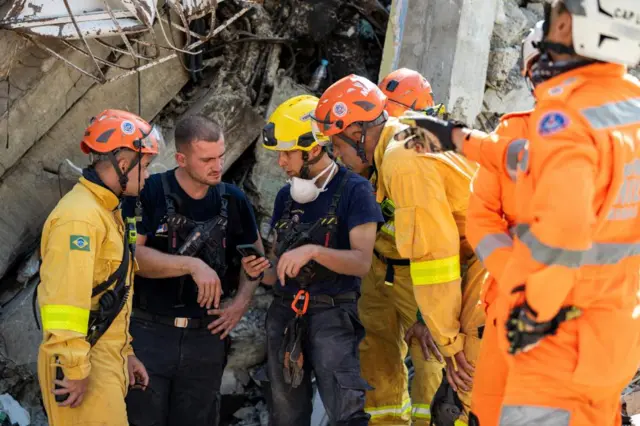
    Search and rescue teams from around the world are working on the ground in Venezuela in attempt to locate any remaining survivors following last week's earthquakes.

    Teams from the UK, US, France and Turkey have been pictured joining emergency operations over the last few days.

    UK search and rescue team UKIsar carrying out searches in Carabelleda La Guaira. Caraballeda is a Venezuelan town, capital of the parish of the same name La Guaira state. Date: June 28th 2026 Credit UK ISARImage source, UKIsar
    Image caption,

    UK search and rescue team UKIsar is helping carrying out searches in Carabelleda, La Guaira

    A U.S. rescue team takes part in rescue efforts, after earthquakes hit the country, in La Guaira, Venezuela, June 28, 2026Image source, Reuters
    Image caption,

    US rescuers were assisting teams in La Guaira over the weekend

    Turkish search and rescue personnel, including specialist personnel from the Disaster and Emergency Management Authority (AFAD) and the Turkish Armed Forces, arrive at Simon Bolivar International Airport in the capital city of Caracas, Venezuela, on June 28, 2026Image source, Getty Images
    Image caption,

    Turkish search and rescue and armed forces personnel arrived in Venezuela on Sunday

    Members of the French Civil Security Training and Intervention Regiment (UIISC 7) walk in an area affected by building collapses in La Guaira state, Venezuela, on June 28, 2026, following earthquakes.Image source, Reuters
    Image caption,

    Members of the French Civil Security Training and Intervention Regiment have also arrived in Venezuela

  11. Rescue workers try to pull a 21-year-old from the rubble in La Guaira statepublished at 11:19 BST

    rescue workers travel in the back of a pick-up truckImage source, Getty Images
    Image caption,

    Rescuers from El Salvador drive at Caraballeda in La Guaira state

    The President of El Salvador, Nayib Bukele, says rescue teams from El Salvador, Mexico and Venezuela have located a 21-year-old alive in La Guaira state and are currently working to rescue him.

    A doctor has been able to administer fluids to keep the boy, named as Aaron Levi Cantillo Vargas, hydrated, Bukele writes on X.

    But between the rescuers and Aaron "lies the body of a deceased person", which Bukele says is "complicating the efforts to reach him".

    "At this moment, we are working to recover the body with the utmost respect and care possible, in the hope of being able to reach Aaron in the coming hours," Bukele adds.

  12. Survivor searching for relatives calls for additional support and machinerypublished at 10:48 BST

    A man in a black polo shirt speaks to Reuters in front of a group of people that have been searching through the rubble to find survivors of earthquakesImage source, Reuters
    Image caption,

    The unidentified man told Reuters news agency that only 80 people have been recovered - both alive and dead - from a building that housed 300

    A survivor of the earthquakes that have devastated parts of Venezuela has complained about the lack of support he feels is being provided by the government to rescue those trapped.

    The unidentified man, who himself was searching for missing relatives, tells the Reuters news agency in La Guaira that "we want support; we want heavy machinery".

    "We want to take our family members with us. I’m not the only one in this situation. They’re almost not going to let us in here anymore. They haven’t helped us clear the rubble," he says.

    He says there were 300 people in the building he's been searching, but that only 80 people have been recovered, either alive or dead.

    "We have no choice; we don’t have help," he adds.

  13. ‘I'm sure he must be looking for me’: The father waiting for his missing 10-year-old sonpublished at 10:27 BST

    Norberto Paredes
    BBC Mundo correspondent, reporting from La Guaira

    Ali Rodríguez

    Outside José María Vargas Hospital in La Guaira, a sense of desperation hangs in the air. Dozens of people crowd the entrance, searching for relatives missing after Wednesday’s double earthquake. To help, health authorities have posted a list of hospitalized patients.

    Anxious faces scan the names in silence, caught between fear and hope.

    A few metres away, Ali Rodríguez, a 50-year-old motorcycle taxi driver, says he was trapped for eight hours under the rubble of a supermarket before being rescued.

    “When the shaking started, I tried to run with my wife, but we were dragged back inside. We ended up buried together, chest to chest, with a sheet of zinc through us. There was a child next to me… he died. An eight-year-old boy,” he says, his voice shaking.

    “We were saved by looters [who came into the supermarket where we were trapped] — they were the ones who gave us this second chance,” he says, criticising the slow official response.

    Their 10-year-old son had stayed at home while they went shopping. He has no news of him and refuses to leave the hospital, as he hopes his son will be brought there.

    His wife has been transferred to a hospital in Caracas but he says he will stay there until his son appears.

    "I think he's alive, but I'm afraid he thinks we're dead [...] I'm sure he must be looking for me."

  14. 'I watched as the kitchen and the bedroom collapsed around me'published at 10:04 BST

    Quake survivor Susana Saavedra speaking to Reuters news agencyImage source, Reuters
    Image caption,

    Susana Saavedra says she watched her bedroom collapse just moments after she left the room

    A woman from Caracas has described watching her apartment collapse around her following the magnitude 7.2 and 7.5 earthquakes that hit Venezuela last Wednesday.

    Susana Saavedra tells the Reuters news agency that she had just stepped out of her bedroom when the first quake hit, a decision she says saved her life.

    "Right then, the shaking started. I stood under the pillar and watched as the kitchen and the bedroom collapsed around me. Everything just kept collapsing—everything," she says.

    The rear of Saavedra's building has been completely destroyed, reports Reuters, with six bodies having been recovered from the structure.

    "I feel very sad because of the loss of our neighbours. At least I was lucky enough to save my own life. But our neighbours - young people, full of life - were left in the rubble," Saavedra adds.

    "I imagine that if I hadn’t left my room, I, too, would have been in that rubble and wouldn’t have survived."

  15. 'As long as he was alive, I was going to be alive,' says Mum rescued with 18-day-old babypublished at 09:42 BST

    Alice Cuddy
    Senior international reporter, in Caracas

    Media caption,

    'A miracle': Mother and son in hospital after being pulled from rubble

    A mother who was pulled from the rubble of her wrecked home in Venezuela with her 18-day-old baby has told the BBC how her newborn son helped keep her alive.

    Dayana Patino was in her eigth-floor apartment with her son, Juan David, in the northern coastal region of La Guaira when the earthquakes hit.

    She says she instantly rushed to cradle her son, but then says she felt as if she was "flying", adding: "I felt like I was sinking in water and dirt, and then I fell into the pit where I remained".

    "I don't know how I didn't let go of my baby because I was flying. I got crushed against furniture," she adds.

    She and her son remained trapped under the rubble until her screams managed to alert rescuers, who were able to extract the pair on Thursday night.

    "As long as he was alive, I was going to be alive. Every now and then I was touching his nose for proof that he was still breathing," Dayana says.

    Footage of the rescue has been shared around the world, with Juan David becoming a symbol of hope in Venezuela, which has been devastated by the twin earthquakes that hit the country on Wednesday - killing at least 1,450 people.

  16. Moments of hope for rescuers shrinking as more bodies being retrievedpublished at 09:13 BST

    Will Grant
    Reporting from Catia La Mar

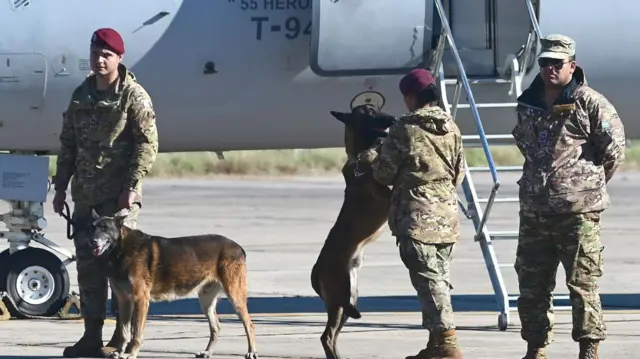
    A Spanish rescue dog searches for possible victims on the rubble of a collapsed building in Catia La Mar, La Guaira state, Venezuela, on June 28, 2026Image source, Getty Images
    Image caption,

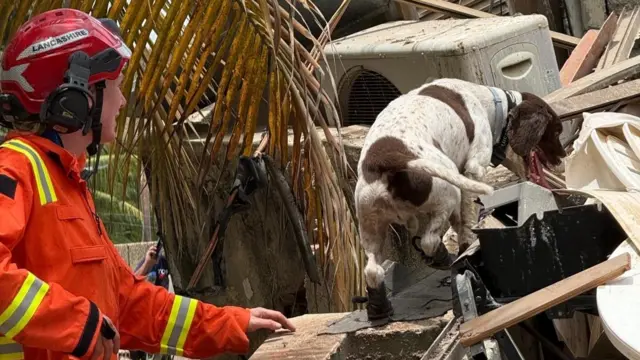
    Rescue dogs are aiding teams in Catia La Mar as they attempt to find survivors following last week's earthquakes

    Over the past few days there's been children brought out of the rubble and returned to the arms of their waiting parents, parents brought out with their children, an eight-month-old baby brought out alive.

    These are the moments that really buoy the spirit of the nation, let alone the rescue teams who have achieved these things.

    The problem is, of course, that with each moment that passes, with each hour that passes, the chance of that happening again grows slimmer.

    It's been an incredibly difficult period for the rescue teams these last 24 hours, because on the first few days there were those moments of optimism, those chinks of light and hope - but they are now being extinguished.

    I went down to Catia La Mar, on Venezuela's destroyed northern coastline, where all rescuers have been doing is pulling out bodies.

    It was grim work of retrieving the dead, with families still there waiting for news but completely aware now that the chances of being bought out alive are almost nil.

  17. Venezuela's opposition leader says she'll return to support those affectedpublished at 08:58 BST

    Maria Corina Machado smiling at the cameraImage source, Getty Images

    María Corina Machado says "the time has come" for her to return to Venezuela.

    The opposition leader left the country in a covert operation in December 2025 after living in hiding following widely disputed elections in 2024.

    "It is my duty to accompany my people. We need to be together to embrace, to grieve and mourn together," she tells Fox&Friends.

    "The absolute priority is saving lives and consoling and helping those who have been harmed, I will very soon be back in Venezuela together with the Venezuelan people," Machado adds.

  18. All schools in Venezuela to remain closed this week, government sayspublished at 08:40 BST

    All schools in Venezuela will remain closed until next Monday, 6 June, the country's education ministry has announced.

    Schools have been shut across the Venezuela since the quakes hit on Wednesday, with the education ministry stating some would be repurposed as shelters and donation collection centres.

  19. Drone shots show catastrophic damage caused by back-to-back earthquakespublished at 08:27 BST

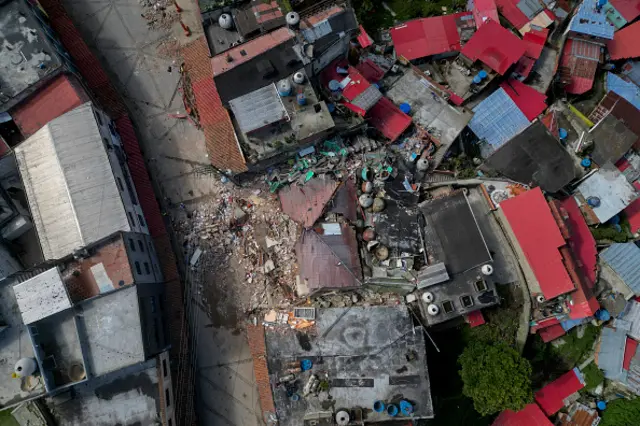
    Drone images taken on 26 June show the extent of damage caused to Venezuela's coastal state of La Guaira following last Wednesday's magnitude 7.2 and 7.5 earthquakes.

    Bordering Venezuela's Capital District, which contains Caracas, La Guaira has been one of the hardest hit states by the back-to-back quakes.

    A drone view shows buildings destroyed by earthquakes, in La Guaira, Venezuela, June 26, 2026Image source, Reuters
    A drone view shows buildings destroyed by earthquakes, in La Guaira, Venezuela, June 26, 2026Image source, Reuters
    A drone view shows buildings destroyed by earthquakes, in La Guaira, Venezuela, June 26, 2026.Image source, Reuters
  20. 'Every now and then you will get that miracle rescue,' says UK firefighter in Venezuelapublished at 08:10 BST

    : Search and rescue operations continue for survivors trapped under collapsed buildings following two powerful earthquakes earlier this week, in the coastal state of La Guaira, Venezuela on June 28, 2026Image source, Getty Images

    A British firefighter helping search and rescue efforts in Venezuela says his team retains "hope" despite the window for finding survivors shrinking.

    "There's obviously a lot of devastation, collapsed buildings, houses, you can see homeless people with no places to go... it's shocking to see," says Mark Leeson of West Midlands Fire Service, who has been sent to Venezuela as part of a UK-wide team.

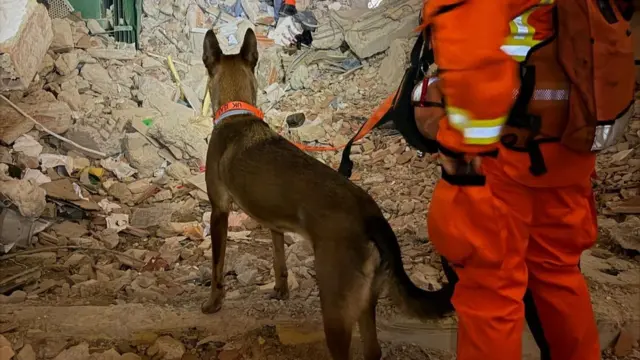
    Leeson tells BBC Radio 4's Today programme that his team uses search and rescue dogs trained to only find living survivors. The dogs bark when they pick up a scent before the rescue team is deployed.

    He says there is a generally a 96-hour window - which closed on Sunday at 18:04 local time, 22:04 BST- when rescuers can expect to save most lives following a disaster such as this one, but says "every now and then you will get that miracle rescue".

    "You've always got that hope that you can make a difference."