Summary

  • More search and rescue teams are arriving in Venezuela, but hopes are fading of finding survivors after Wednesday's back-to-back earthquakes

  • At least 1,450 are known to have died but the number is expected to rise - a missing persons website has more than 46,000 people on it

  • There is still a shortage of machinery needed to lift rubble, and some Venezuelans say the government hasn't done enough

  • With each moment that passes, with each hour that passes, the chance of people being found alive grows slimmer, reports Will Grant from one of the worst-affected areas of Venezuela

  • One man says he pulled his daughter halfway out of the rubble but now needs equipment to finish the rescue. On Sunday, 33 people were found alive

  • One UK firefighter in Venezuela says there's usually a 96-hour window to find the most survivors - that ended on Sunday evening. Teams are now hoping for "miracle rescues", he says

  1. 'As long as he was alive, I was going to be alive,' says Mum rescued with 18-day-old babypublished at 09:42 BST
    Alice Cuddy
    Senior international reporter, in Caracas

    Media caption,

    'A miracle': Mother and son in hospital after being pulled from rubble

    A mother who was pulled from the rubble of her wrecked home in Venezuela with her 18-day-old baby has told the BBC how her newborn son helped keep her alive.

    Dayana Patino was in her eigth-floor apartment with her son, Juan David, in the northern coastal region of La Guaira when the earthquakes hit.

    She says she instantly rushed to cradle her son, but then says she felt as if she was "flying", adding: "I felt like I was sinking in water and dirt, and then I fell into the pit where I remained".

    "I don't know how I didn't let go of my baby because I was flying. I got crushed against furniture," she adds.

    She and her son remained trapped under the rubble until her screams managed to alert rescuers, who were able to extract the pair on Thursday night.

    "As long as he was alive, I was going to be alive. Every now and then I was touching his nose for proof that he was still breathing," Dayana says.

    Footage of the rescue has been shared around the world, with Juan David becoming a symbol of hope in Venezuela, which has been devastated by the twin earthquakes that hit the country on Wednesday - killing at least 1,450 people.

  2. Moments of hope for rescuers shrinking as more bodies being retrievedpublished at 09:13 BST

    Will Grant
    Reporting from Catia La Mar

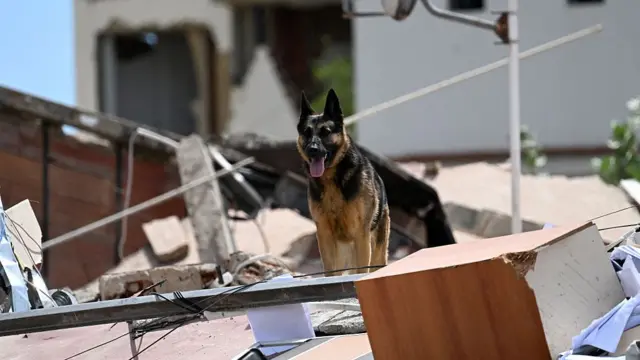
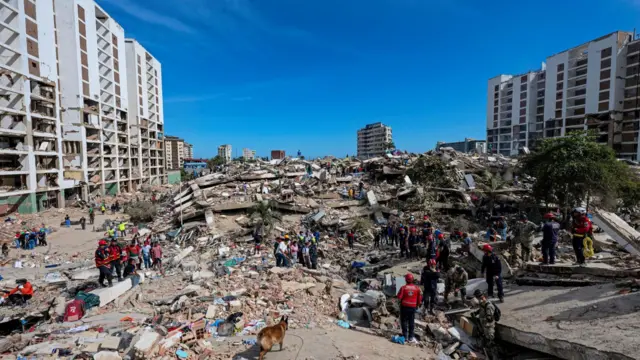
    A Spanish rescue dog searches for possible victims on the rubble of a collapsed building in Catia La Mar, La Guaira state, Venezuela, on June 28, 2026Image source, Getty Images
    Image caption,

    Rescue dogs are aiding teams in Catia La Mar as they attempt to find survivors following last week's earthquakes

    Over the past few days there's been children brought out of the rubble and returned to the arms of their waiting parents, parents brought out with their children, an eight-month-old baby brought out alive.

    These are the moments that really buoy the spirit of the nation, let alone the rescue teams who have achieved these things.

    The problem is, of course, that with each moment that passes, with each hour that passes, the chance of that happening again grows slimmer.

    It's been an incredibly difficult period for the rescue teams these last 24 hours, because on the first few days there were those moments of optimism, those chinks of light and hope - but they are now being extinguished.

    For most of the past 24 hours I've been in Catia La Mar, on Venezuela's destroyed northern coastline, all rescuers have been doing is pulling out bodies.

    It was grim work of retrieving the dead, with families still there waiting for news but completely aware now that the chances of being bought out alive are almost nil.

  3. Venezuela's opposition leader says she'll return to support those affectedpublished at 08:58 BST

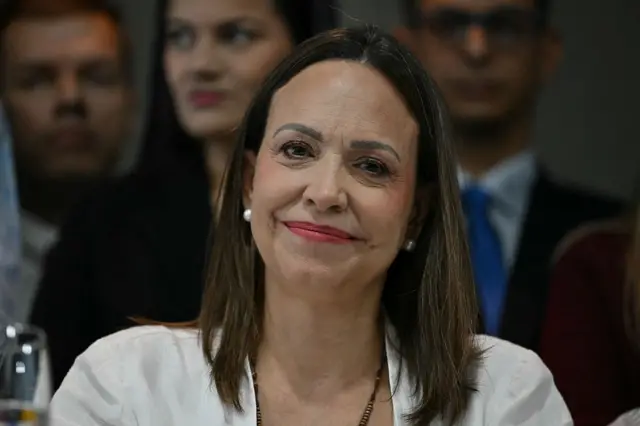
    Maria Corina Machado smiling at the cameraImage source, Getty Images

    María Corina Machado says "the time has come" for her to return to Venezuela.

    The opposition leader left the country in a covert operation in December 2025 after living in hiding following widely disputed elections in 2024.

    "It is my duty to accompany my people. We need to be together to embrace, to grieve and mourn together," she tells Fox&Friends.

    "The absolute priority is saving lives and consoling and helping those who have been harmed, I will very soon be back in Venezuela together with the Venezuelan people," Machado adds.

  4. All schools in Venezuela to remain closed this week, government sayspublished at 08:40 BST

    All schools in Venezuela will remain closed until next Monday, 6 June, the country's education ministry has announced.

    Schools have been shut across the Venezuela since the quakes hit on Wednesday, with the education ministry stating some would be repurposed as shelters and donation collection centres.

  5. Drone shots show catastrophic damage caused by back-to-back earthquakespublished at 08:27 BST

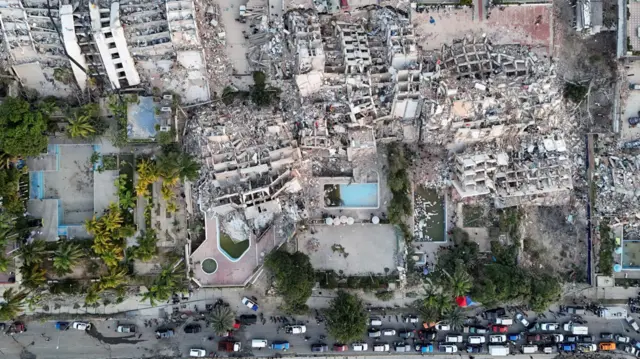
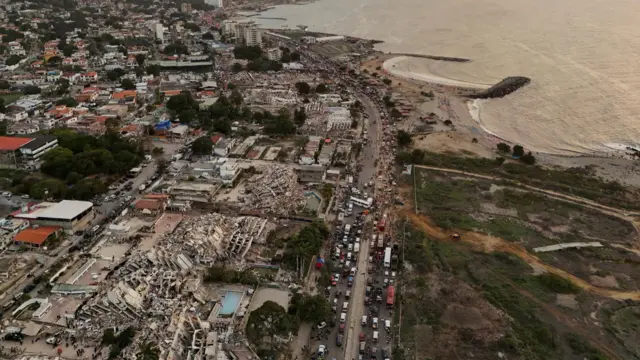
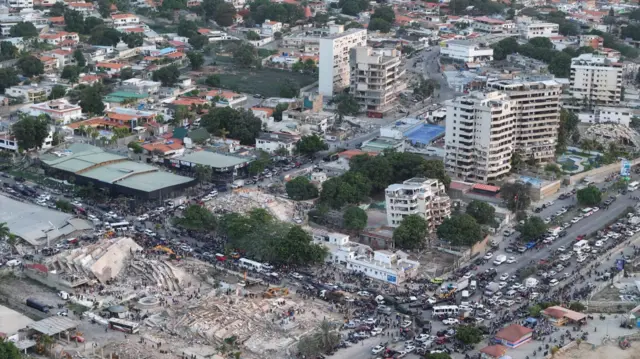
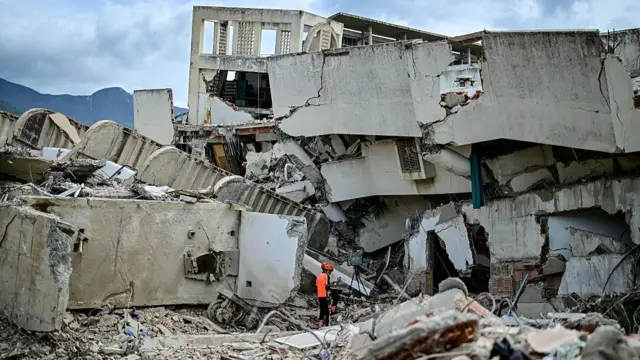
    Drone images taken on 26 June show the extent of damage caused to Venezuela's coastal state of La Guaira following last Wednesday's magnitude 7.2 and 7.5 earthquakes.

    Bordering Venezuela's Capital District, which contains Caracas, La Guaira has been one of the hardest hit states by the back-to-back quakes.

    A drone view shows buildings destroyed by earthquakes, in La Guaira, Venezuela, June 26, 2026Image source, Reuters
    A drone view shows buildings destroyed by earthquakes, in La Guaira, Venezuela, June 26, 2026Image source, Reuters
    A drone view shows buildings destroyed by earthquakes, in La Guaira, Venezuela, June 26, 2026.Image source, Reuters
  6. 'Every now and then you will get that miracle rescue,' says UK firefighter in Venezuelapublished at 08:10 BST

    : Search and rescue operations continue for survivors trapped under collapsed buildings following two powerful earthquakes earlier this week, in the coastal state of La Guaira, Venezuela on June 28, 2026Image source, Getty Images

    A British firefighter helping search and rescue efforts in Venezuela says his team retains "hope" despite the window for finding survivors shrinking.

    "There's obviously a lot of devastation, collapsed buildings, houses, you can see homeless people with no places to go... it's shocking to see," says Mark Leeson of West Midlands Fire Service, who has been sent to Venezuela as part of a UK-wide team.

    Leeson tells BBC Radio 4's Today programme that his team uses search and rescue dogs trained to only find living survivors. The dogs bark when they pick up a scent before the rescue team is deployed.

    He says there is a generally a 96-hour window - which closed on Sunday at 18:04 local time, 22:04 BST- when rescuers can expect to save most lives following a disaster such as this one, but says "every now and then you will get that miracle rescue".

    "You've always got that hope that you can make a difference."

  7. A state already in crisis, struck by disaster, struggles to respondpublished at 07:54 BST

    People look through the rubble of a collapsed buildingImage source, Reuters

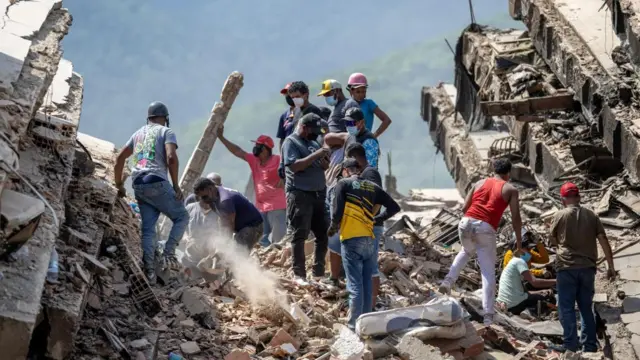
    Many Venezuelans have been critical of the government's response to last week's earthquakes, saying equipment and state manpower have been lacking, with many communities undertaking rescue work themselves.

    The first 72 hours after a disaster are crucial for finding people - it's now been more than 100 since the earthquakes hit on Wednesday.

    One man, Wilber, who said he had lost eight of his relatives, told the BBC on Sunday the state has been a hindrance, not a help.

    "The government decided to close the streets," he said, adding it was "making it harder to bring help".

    "Yesterday we waited from 6am to 4pm to get a special permission to come here. We wasted hours," he said.

    There have been multiple reports of people searching the rubble with their bare hands in an effort to find loved ones.

    Over the weekend, a Mexican fireman and disaster assessment specialist told the BBC the situation was "extremely challenging", with the country’s rescue equipment "decades behind international standards".

    Similarly, there have been reports that the health system has been overwhelmed by the challenge, with one doctor saying the state struggled to provide healthcare even on a "normal day" before the disaster.

    Opposition leaders say the government has mismanaged the economy and public services for years, reducing its capacity to respond. The government itself says rescuers have been deployed and the state is co-ordinating the response.

    Media caption,

    Anger directed at Venezuela's official response to earthquake recovery

  8. Tens of thousands remain missing as rescue efforts continuepublished at 07:42 BST

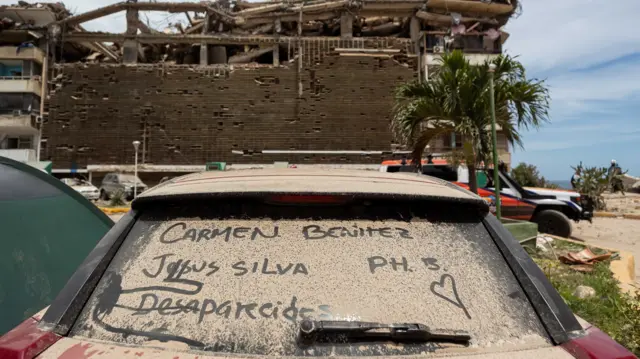
    A list of names of missing persons is written on a car in an area affected by the earthquake in Catia La Mar, Venezuela, 28 June 2026Image source, EPA
    Image caption,

    In the coastal city of Catia La Mar, near Caracas, the names of some of the missing have been written on the rear window of a car

    So far, Venezuelan officials have confirmed that 1,450 people have died following the quakes, however, we do not yet know the actual figure.

    Immediately following the two earthquakes, the US Geological Survey's (USGS) estimated the potential fatalities at likely between 10,000 and 100,000.

    This is not an exact figure but is calculated based off the size of the quake and the population in the affected area to help emergency responders deploy resources effectively.

    The Venezuelan government has not yet provided an estimate of the total fatalities, but with tens of thousands believed to still be missing, the death toll is expected to climb further as rescue operations continue.

    A civilian-run missing persons site is reporting that more than 46,000 people remain unreachable by family members.

  9. Two 11-year-olds and a teenager rescued from the rubble hours after quakespublished at 07:22 BST

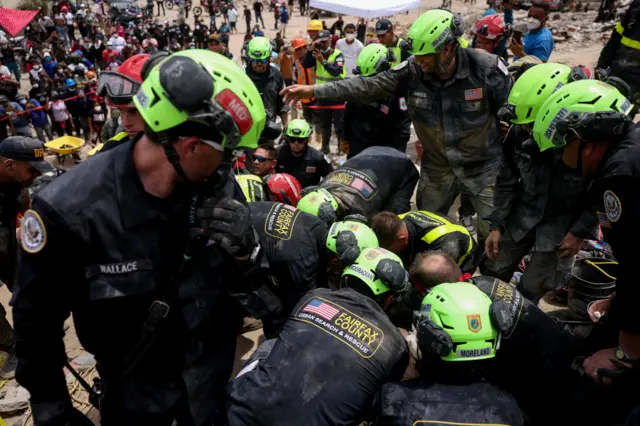
    US rescue teams in Fairfax County Urban Seach and Rescue jackets work on a teenager pulled out of the rubble a crowd observing in the backgroundImage source, Reuters
    Image caption,

    US rescuers helped pull a teenager from the rubble over 90 hours after the double earthquakes struck

    Among those rescued at the weekend were two 11-year-old boys, who were separately rescued from collapsed buildings within hours of each other on Sunday.

    Colombia's National Unit for Disaster Risk Management (UNGRD) pulled 11-year-old boy Moises from under about 3m (9.8ft) of debris.

    Reuters reported that a rescuer was overheard on a walkie-talkie saying the young boy was found near his sister and mother, who had both died.

    Hours later,interim President Delcy Rodríguezposted a video on X, purportedly showing the rescue of a second 11-year-old boy in the town of Caraballeda.

    American and French rescue teams also pulled a man and his teenage son from the rubble in La Guaira.

    A French rescuer says they are "extremely weak" and that teams are doing "everything we can to rehydrate them".

  10. 33 survivors found - but number of dead rises to 1,450published at 07:15 BST

    A rescue dog from the Argentine search and rescue team searches for bodies in the rubble of a collapsed building in La Guaira state, Venezuela, on June 28, 2026Image source, Reuters

    At least 1,450 people have died following the two earthquakes that hit Venezuela on Wednesday, according to the latest update from officials.

    On Sunday evening, top lawmaker Jorge Rodríguez announced that a further 3,150 have been injured, saying rescuers were now in the "critical hours" to save lives.

    He added that 774 buildings have been collapsed or been impacted by the quakes and that a total of 12,721 people have been displaced.

    Speaking to foreign rescuers on Sunday evening, interim President Delcy Rodriguez said 33 people had been rescued over the weekend.

    Earlier on Sunday, Unicef estimated that 1.8 million people were in need of humanitarian aid following the incident, including 680,000 children.

    The United Nations Development programme also estimated the cost of the "direct physical damage" at $6.7bn (£5.1bn), or about 6% of the country's GDP.

  11. 'I pulled my daughter halfway out of the rubble - now I need equipment'published at 06:54 BST

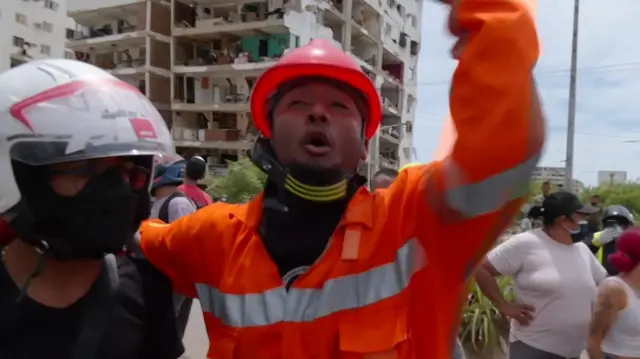
    Wilker Molaya in an orange hi-vi jacket clamours as he holds on to the back of a woman in an helmet, a severely damaged building behind himImage source, Reuters

    Wilker Molaya has been desperately trying to rescue his daughter after the building she was in collapsed in La Guaira during last week's double earthquakes in Venezuela.

    "I pulled my daughter halfway out," he tells the Reuters news agency, but adds: "They don't give us any equipment, and we have families there."

    Molaya isn't the only one still trying to rescue family from the rubble. Hector Villegas says his ex-wife, his son-in-law's mother and his eldest grandson where inside a building when the quake hit.

    "Since that day, we haven't been able to locate their bodies," Villegas says. "I see that rescue efforts are under way and we'll be here waiting."

    Mexican Red Cross volunteer Adalberto Pastor says rescuers are now using electronic equipment to locate people after first relying on search dogs.

    "We are currently continuing the search using electronic equipment, which allows us to be more certain about the locations that the dog teams may have already detected," Pastor says.

  12. Power restored in large part of La Guaira, Rodríguez sayspublished at 06:50 BST

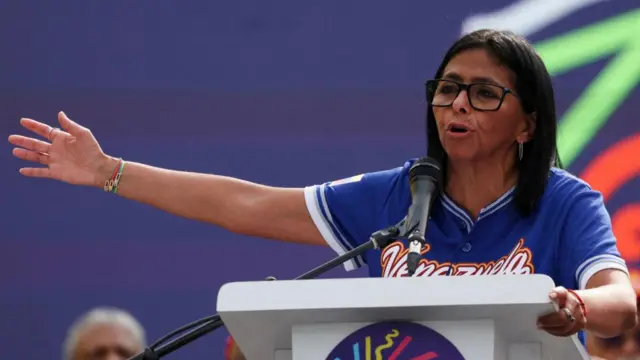
    Rodríguez speaks from a podium on stageImage source, Reuters
    Image caption,

    Delcy Rodríguez speaking earlier this month before the earthquakes hit

    A large part of La Guaira state - one of the worst affected areas - has been reconnected to the power grid, acting President Delcy Rodríguez says.

    In an update posted a few hours ago on social media, she says the government has also restored most of the road network there, and is progressively restoring water supplies.

    A presidential commission has been set up to assess homes and infrastructure, she says, and a task force has been created to set up temporary shelters.

    Planning is also under way for projects to build news housing on short time frames, she says.

    Search rescues are ongoing, and the government will not rest until it locates everyone who can be rescued, she says, ending her posts with a message of "hope for all Venezuelans".

    As we've been reporting, there is growing anger with the government in Venezuela - with opposition leaders and ordinary Venezuelans accusing it of responding too slowly.

  13. Families search for loved ones while anger at government growspublished at 06:44 BST

    Yogita Limaye
    Reporting from Caracas

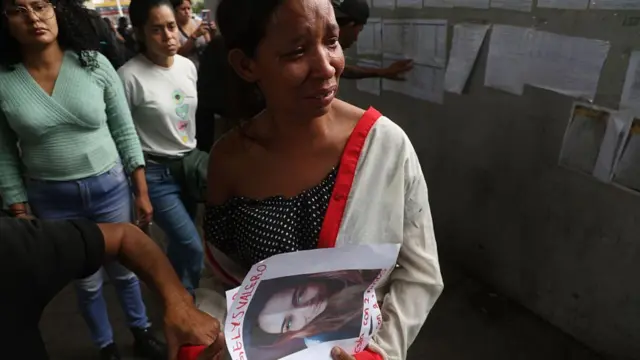
    A shows a picture of a missing person and looks visibly upset, while behind her a man searches a wall with information posted on itImage source, Getty Images

    The walls outside hospitals in Caracas are slowly filling up with pictures of the missing.

    By the hour, families tack up more photos desperately looking for information about their loved ones.

    The morgue in the capital is overwhelmed and as more bodies are brought in there is simply not enough space to store them, even until they can be identified and returned.

    Search and rescue operations continue in many areas, and while more relief teams are arriving in the country from different parts of the world every day, there is still an acute shortage of the equipment and manpower required to dig through the rubble.

    Anger against the Venezuelan government has been growing, as residents say it isn’t doing enough to help them.

    Our teams in Venezuela will bring you the latest news and analysis on this page - stay with us.