Summary

  1. Social media giant Meta agrees to pay billions after claims it harmed childrenpublished at 18:53 BST

    Rachel Flynn
    Live reporter

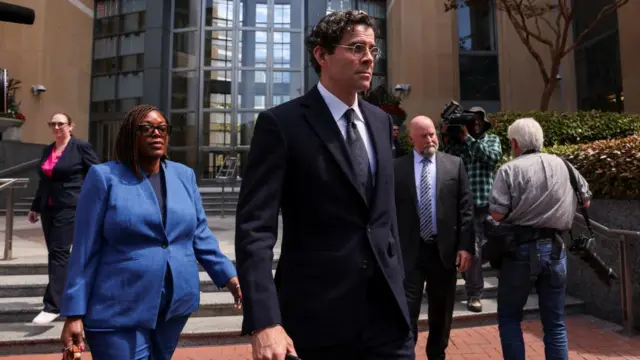
    Instagram chief Adam Mosseri leaving the building, with paparazzi behind himImage source, Reuters
    Image caption,

    Instagram chief Adam Mosseri leaving the courthouse on Tuesday

    It's still early in the morning in California, where Meta has agreed to pay up to $18bn (£13.24bn) to settle claims brought by 29 US states that its platforms harmed children.

    The payment can be used to fund youth online safety initiatives, among other state priorities, Meta says.

    The deal also requires Meta to introduce certain rules for teenage users, including daily limits and night-time blocks.

    It stems from a 2023 lawsuit which claimed numerous violations of federal and state privacy laws for children. Meta has consistently denied any wrongdoing - read more about the case here.

    Technology and AI editor Zoe Kleinman says she wasn't expecting this. Meta has fought hard, over multiple lawsuits spanning many months and at great expense, to maintain that it is a company committed to protecting children on its platforms, she writes.

    Judge Gonzalez Rogers says she is likely to give this deal the green light, but Meta has its caveats. The Facebook and Instagram owner says 30% of the $18bn (£13.24bn) will only be released after two specific conditions are met, relating to competitors Youtube and TikTok implementing similar measures.

    We are yet to hear from Youtube and TikTok about Meta's demands, and after only receiving the terms at 06:00 this morning, Judge Gonzalez Rogers is yet to officially grant it.

    We are now ending our live coverage. You can read more here: Meta agrees to pay up to $18bn to settle social media case
  2. It shouldn't have taken a lawsuit for Meta to implement safety measures, whistleblower sayspublished at 18:13 BST

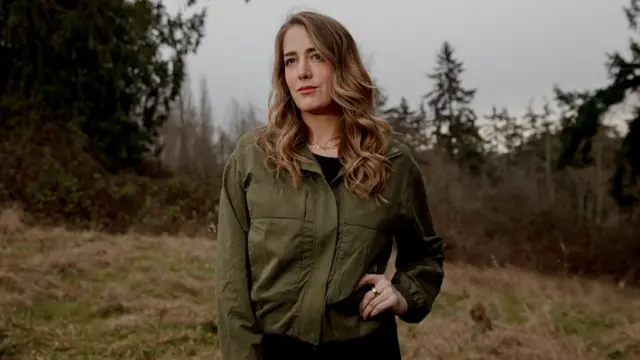
    Kelly Stonelake, pictured in 2025Image source, Getty Images
    Image caption,

    Kelly Stonelake, pictured in 2025

    Meta executive-turned whistleblower Kelly Stonelake says today's settlement is evidence that Meta was aware certain policies needed to be changed.

    "Meta spent years insisting that the people raising these concerns were wrong, that its products were safe, and that it could be trusted to police itself," she wrote on her blog, Overturned. "Today, it agreed to change those products and declared that the rest of the industry should do the same."

    Though Meta still denies wrongdoing as part of this settlement, Stonelake said it's concerning that the company had to be pressed by a lawsuit in order to implement safety measures.

    "If Meta believes these measures are necessary enough to become an industry standard, then the obvious question is why children had to wait until attorneys general took the company to federal court to get them," she wrote.

    Meta contends that today's agreement is "building on our longstanding efforts to empower parents and support teens".

  3. California to now focus more on TikTok, Snapchat and YouTubepublished at 17:29 BST

    Kali Hays
    US technology reporter

    California Attorney General Rob Bonta added during his press conference on Wednesday that, with the state's action against Meta now mostly settled, he "will be putting more time and attention" on an active lawsuit it has against TikTok. That action was filed in 2024.

    "We will be focused on the rest of the industry," Bonta said. "There is a bigger ecosystem here. So we'll be focused on TikTok, we'll focus on Snap, and I'm very concerned about YouTube."

    That likely puts even more pressure on those companies to cut deals with California and other states in line with what was reached with Meta on Wednesday.

  4. Proposed measures a good start but difficulties ahead, say expertspublished at 17:24 BST

    The Facebook logo displayed on a phone with the Meta logo visible on a screen behind itImage source, Reuters

    We've been getting some more expert reaction to the news that Meta has settled in its US social media court case.

    Professor Alan Woodward, professor of cybersecurity at the University of Surrey, says the difficult part in implementing the changes is "knowing who is a teenager".

    "Building a timer or an overnight block is easy. Meta already has both in softer forms," he says.

    Woodward adds the limits agreed in the settlement "applies only to accounts the company identifies as belonging to a minor".

    "So the whole scheme rests on age checks. Those checks are imperfect."

    Meanwhile Dr Holly Bear, senior postdoctoral researcher in the department of psychiatry at the University of Oxford says "measures like this are an important first step".

    "But they won't be enough on their own."

    Bear adds young people move across many platforms, "so real progress needs action across the wider digital environment, not just changes at one company".

  5. How big is the settlement and who gets it?published at 17:14 BST

    Imran Rahman-Jones
    Technology reporter

    There are a few different numbers flying around regarding how much Meta will actually have to pay out.

    Meta says it will be up to about $18bn (£13.3bn) over 10 years, but 30% of that is dependent on YouTube and TikTok implementing child safety measures too.

    The money will be split across 48 states, plus the District of Columbia and three other territories: Puerto Rico, American Samoa and the Northern Mariana Islands.

    Of those, 51 states and territories came to a combined deal worth $17.1bn. Texas cut its own deal, which its attorney general said was worth about $1bn.

    New Mexico, Meta says, “chose the litigation path rather than working with us on a path forward”.

    Florida is the only other state not included, with its attorney general posting on X, external the pay-out was “peanuts” and a “slap on the wrist for a trillion-dollar corp”.

    To put all this in context, Meta’s revenue from April to June this year was $61bn. And the company’s share price has gone up since news of the settlement came out.

  6. Judge suspends Meta trial saying she is 'inclined' to approve dealpublished at 17:03 BST
    Breaking

    Lily Jamali
    North America Technology Correspondent

    The outcome of the Meta trial was always going to be up to Judge Yvonne Gonzalez Rogers even though there was a jury listening to evidence to render an advisory verdict.

    Gonzalez Rogers said just moments ago that she is likely to give this deal the green light.

    “My inclination is to grant it,” while jokingly offering the caveat that she did only receive the terms at 6am so she will need a little more time to review it.

    For now, she says she will suspend the trial.

    “I’m quite happy,” she said.

  7. Meta's defeats this year likely 'in the back of their mind', Bonta sayspublished at 16:57 BST

    Bonta is asked how much previous legal defeats for Meta "opened the door to a settlement".

    Earlier this month, a judge in New Mexico ordered Meta to pay a total of $942m for its failure to warn the public about dangers its platforms posed to children.

    In March, a Los Angeles jury handed down an unprecedented win for a young woman who sued Meta and YouTube over her childhood addiction to social media.

    "From where I sit, you can't ignore the major defeats that occurred in a short period of time, leading up to our major federal trial," he says.

    "They got a chance to see what juries thought about their witnesses and their defences. They got a chance to see how Instagram President Adam Mosseri and Facebook CEO Mark Zuckerberg performed on the stand, or perhaps didn't perform so well," he says.

    "I don't see how that wasn't in the back of their mind when they started the trial in our case," he adds.

  8. Role of parents in app usage presents more challengespublished at 16:53 BST

    Lily Jamali
    North America Technology Correspondent

    I’m inside the courtroom of Judge Yvonne Gonzalez Rogers who has been overseeing the Meta trial. She has been asking lawyers about the agreement.

    One issue being discussed: the role of parents. Part of this deal calls for new controls for them. Ascertaining who is a young app user’s parents can be tricky, lawyers say. And it’s clear from the conversation here that this agreement wades into some difficult territory.

    “There have been reports of young people who are also looking for community when their parents are not particularly supportive of who or what they are, and that creates complications. Hard work ahead,” the judge said.

  9. 'Trial did not go well for Meta', Bonta sayspublished at 16:50 BST

    Kali Hays
    US business reporter

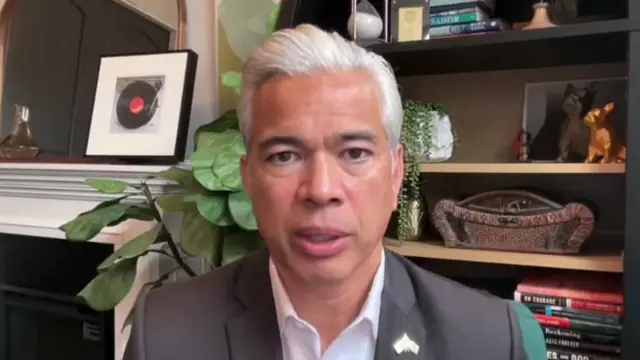
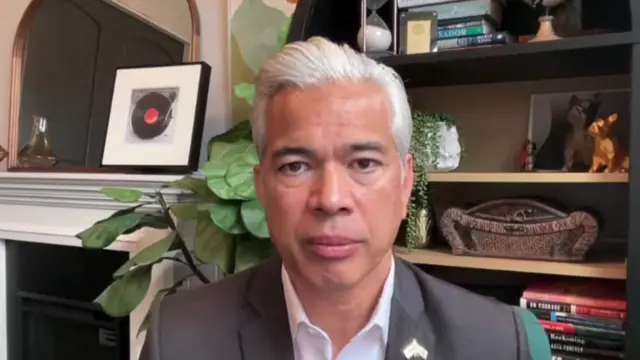
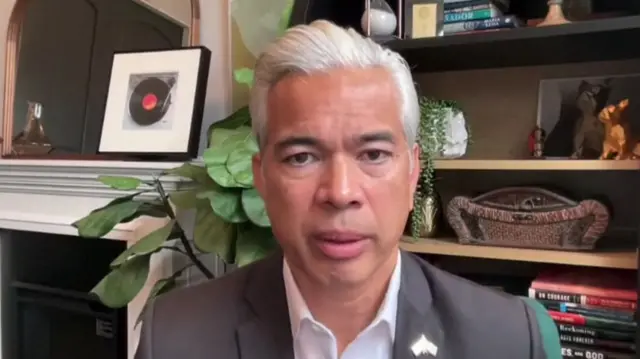
    California Attorney General Rob Bonta said on Wednesday that the trial in California "did not go well for Meta" over just five days of testimony.

    He pointed out during a video press conference on Wednesday morning that Meta's decision to settle the case came as Adam Mosseri, the head of Instagram, had begun to give testimony before the jury. Bonta also noted that the deal came before Mark Zuckerberg could be called to testify.

    As for why the states decided to settle with Meta for roughly $18bn, instead of pursuing through trial a potentially much higher amount, Bonta pointed to the expected speed of the changes Meta has agreed to make.

    "Instead of getting tied up in years of trials and appeals, we have secured the changes we were after", Bonta said. "Most of these changes will be made within months -- no more waiting."

    He added that California alone may receive up to $2.1bn of the total settlement amount, which is intended for the "remediation and prevention" of social media harms caused to young people.

  10. A 'big tobacco' moment for social media?published at 16:47 BST

    California Attorney General Rob BontaImage source, California Office of Attorney General

    Asked whether the settlement should be compared to action taken against the tobacco industry, California Attorney General Rob Bonta said there were some similarities but also important differences.

    He said that, regardless of the comparisons, this was a major moment for tackling harms linked to social media and protecting children online.

    Bonta said the settlement would bring greater accountability to the industry and argued that, like restrictions introduced for tobacco, it would have benefits for public health.

    He also suggested lawmakers had been too slow to act, describing the agreement as a "major step forward" in efforts to keep children safe everywhere, including online.

    "This is transformative, this is momentous," he said.

    Bonta added that he had heard from many parents who told him they "feel safer, they feel seen, they feel protected" and are more confident following the settlement.

  11. What does this mean for Meta’s rivals?published at 16:44 BST

    Imran Rahman-Jones
    Technology reporter

    Meta has been the target in the courtroom, but it is trying to bring close rivals TikTok and YouTube into the firing line too.

    Part of its deal with US states hinges on others implementing the same child safety features it has agreed to.

    “These protections will only be effective if we work with our peers - TikTok and YouTube - to put the same measures in place," Meta said.

    The big unanswered question here is whether they will put aside their competitive rivalries and all join up on this. We’ve asked both companies for a response, but so far haven’t heard anything from them.

    YouTube and TikTok have paid out multi-million-dollar settlements relating to child safety in the past.

    TikTok’s $400m (£293m) settlement, agreed just last week, did not come with any other terms.

    Interestingly, Meta did not call on another app popular among young people - Snapchat - to join them too.

  12. Hope for 'commitments across the industry' from Meta settlementpublished at 16:39 BST

    A journalist asks Bonta if other social media companies - Snapchat, YouTube and TikTok - have already committed to the terms set by Meta.

    In its statement on the proposed settlement, Meta called on TikTok and Youtube to "join us in supporting teens" by implementing the same changes.

    Bonta says he can't comment on any "current potential" but that he hopes "heightened restrictions" will be put in place, giving the example of the two-hour limit becoming one hour if "other industry players" make commitments similar to Meta.

    "My hope and my belief is that we will see commitments across the industry," he says

  13. 'I don't think we compromised on anything here' - California attorney generalpublished at 16:29 BST

    Bonta is now taking questions from reporters. He is asked what compromises the attorneys general made to secure this deal, and what still needs to be done.

    "I don't think we compromised on anything here," he answers, but agrees there is more to do.

    He reiterates that this is a "watershed moment", and says that what needs to be done now is getting Meta's main competitors - TikTok, Snap, YouTube - to follow suit on making changes to their platforms to protect children and teens.

    "We're happy to talk in the boardroom to get to those results, or we can see folks in the courtroom," he says.

    The reporter presses Bonta, asking for clarification that the states really didn't give up anything in this settlement.

    Bonta answers they achieved what they would have in litigation.

  14. Funds from settlement to be used to address mental health issues in young peoplepublished at 16:28 BST

    California Attorney General Rob BontaImage source, California Office of Attorney General

    California Attorney General Rob Bonta says during his news conference that the state could receive between $1.1bn and $2.1bn if the settlement is approved by the courts.

    Bonta said the money would be used to help prevent and address mental health issues and other harms linked to young people's use of social media.

    "If you're a parent like I am, sadly you've likely seen some of that," he said.

    He added that while parents like himself try to protect their children from many everyday dangers, they cannot always protect them from harms that "Meta hides and lies about".

    "With this settlement, that is changing," he said.

  15. Changes to social media platforms coming within monthspublished at 16:19 BST

    Bonta says the settlement addresses "some of the concerns at the core of the lawsuit" and it will force "transformative changes" necessary to protect children online.

    These changes to how Meta's social media platforms operate will be made within months, he confirms.

  16. California's lead attorney hails 'watershed moment' in protecting children's mental healthpublished at 16:19 BST

    California Attorney General Rob Bonta is now speaking, outlining the implications of the settlement and the specific details of what changes Meta has agreed to make to its platforms.

    "This is a significant victory for families across the country, for parents, for children, for those who are suffering in silence, and those who are suffering in public," Bonta says.

    "This is a major breakthrough, a milestone moment, a watershed moment. Because when it comes to protecting our children's mental health, there is no time to lose," he adds.

    He congratulates the attorneys general for securing the changes to Meta's platforms so soon into the trial, without getting tied up in years of trials and appeals.

    California Attorney General Rob BontaImage source, California Office of Attorney General
  17. What we do and don't know about Meta's settlementpublished at 16:13 BST

    We know:

    • Facebook and Instagram owner Meta will pay up to $18bn (£13.2bn) to settle claims brought by 29 US states that its platforms harmed children
    • It stemmed from a lawsuit filed in 2023, which claimed numerous violations of federal and state privacy laws for children
    • Meta has agreed to set a default daily time limit of two hours for users under 18, among other measures - but it denies any wrongdoing
    • It is calling on TikTok and Youtube to put the same measures in place
    • The majority of changes will remain in place for 10 years - but some of the most noticeable changes like the daily time limit for children will only last for five unless "industry peers" agree to take similar steps

    What we don't know:

    • When the changes will be implemented
    • How fellow social media sites TikTok and Youtube will respond
  18. California officials to speak to press shortlypublished at 15:57 BST

    California's chief attorney is expected to speak to the press in just a few moments about today's settlement with Meta.

    California is one of the US states and territories that sued Meta over claims its practices harmed children.

    We'll bring you the important lines from the press conference here, and you can watch live at the link above.

  19. Meta calls on app stores to verify user agespublished at 15:51 BST

    Tom Gerken
    Technology reporter

    One of the themes coming out of the settlement today is Meta calling on other companies to do their part.

    While it agreed to strengthen the tech it uses to estimate whether accounts are being used by teens, the tech giant said it wanted app stores to provide it with “verified age information”.

    In other words, Meta wants Apple and Google to check the age of people first, and share that information. This is nothing new.

    Three years ago, I reported on Meta calling for the introduction of laws which would put the onus on the app stores, not social media companies.

    Whether that pressure worked or not is unclear. But in the UK at least, Apple and Google have brought in age checks.

  20. 'Settlement will make social media less dangerous for our kids' - California's attorney generalpublished at 15:49 BST

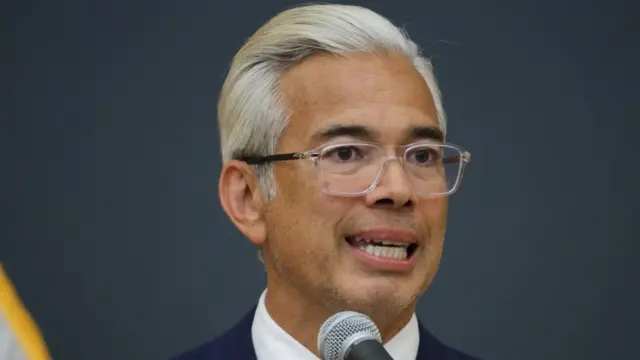
    Rob Bonta speaking into a microphone, from the neck upImage source, Reuters

    California Attorney General Rob Bonta says the settlement "will make social media less dangerous for our kids and make a world of a difference for children and their families".

    “Meta has agreed to make massive transformations that will reduce the risk of harm from its platforms — and will do it within months," Bonta says.

    He mentions time limits, stopping notifications during school, a block on the app during critical overnight hours, and a ban on plastic surgery filters.

    "I am proud to deliver this settlement that addresses the concerns at the core of our lawsuit and institutes real change, real transparency, and real enforceable protections for children on Facebook and Instagram — right now, no more waiting," he adds.