Summary

  1. Double data drop shows net migration and asylum hotel use down, but small boat crossings uppublished at 14:08 BST

    Freya Scott-Turner
    Live reporter

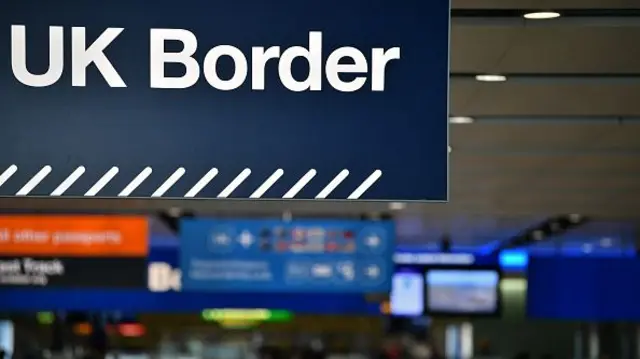
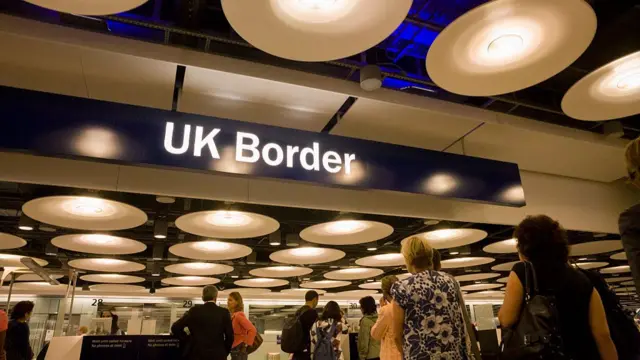
    A border control signImage source, AFP via Getty Images

    Two sets of data on UK migration dropped this morning - both the Office for National Statistics and the Home Office shared releases covering different time periods - we've got a fuller breakdown in our earlier post.

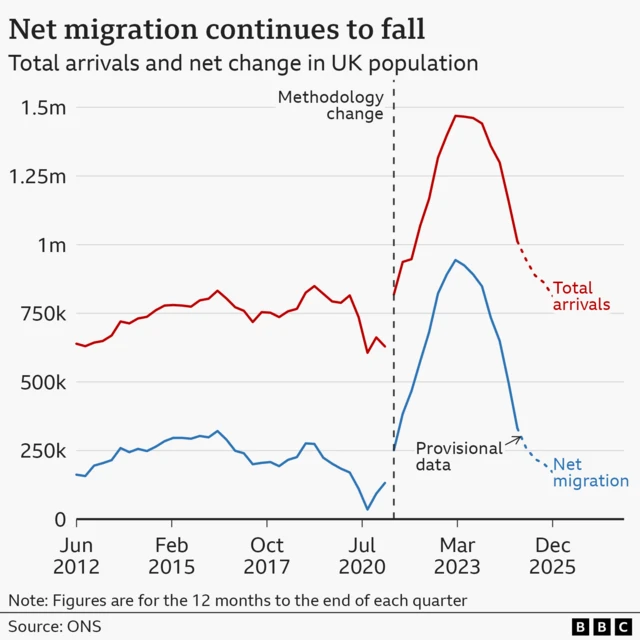
    Data revealed that net migration in the year to December 2025 was 171,000 - its lowest level since 2012, excluding the Covid pandemic.

    Meanwhile, the number of asylum seekers living in hotels while waiting for their claims to be processed in the UK has fallen by a third in the 12 months to March 2026.

    But alongside this, statistics show a rise in the number of small boat arrivals, up by 3% in the year to March.

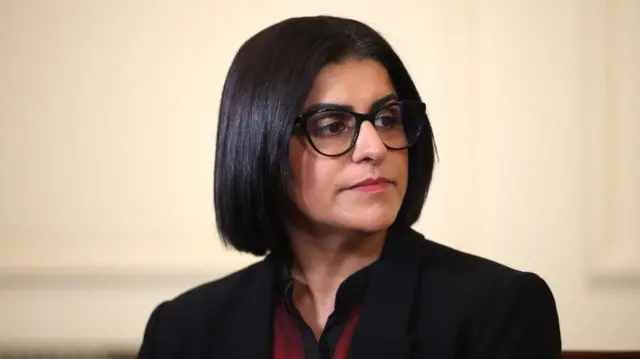
    The government has been quick to claim victory. With Prime Minister Keir Starmer touting the data as evidence that it is "delivering" on its pledge to introduce a "skills-based migration system". While Home Secretary Shabana Mahmood's declared that it was "restoring order and control to our borders".

    There was criticism from other quarters, including from shadow home secretary Chris Philp who said that British citizens were "leaving the UK on a massive scale, driven by Labour’s high taxes" and that immigration from outside the EU was "far too high".

    Amid warnings from the Migration Observatory - a high-profile, independent research centre - that the net migration fall is "likely to be temporary", the government says there is still "more to do" in meeting its pledges on migration.

    We're closing our live coverage now, but you can keep up-to-date with the latest in our full piece, and track the numbers here.

  2. What’s been happening with small boat crossings so far in 2026?published at 13:45 BST

    Rob England
    BBC Verify senior data journalist

    Although in the figures released today small boat crossings were up slightly in the year to March 2026, this hides a recent trend seen in the English Channel.

    Small boat crossings are down by 40% so far in 2026 compared with the same period last year, according to the Home Office.

    Between 1 January and 20 May, 7,576 people arrived in the UK in small boats after crossing from France.

    That is lower than the equivalent period in 2025, 2024 and 2022, despite annual totals rising slightly in the year to March 2026.

    There are usually fewer crossings between January and June, before numbers rise during the summer and autumn months.

    This Flourish post cannot be displayed in your browser. Please enable Javascript or try a different browser.

    Several factors can affect the number of people arriving by small boat, including weather conditions - though this is thought to dictate when crossings happen rather than affect overall numbers.

    Boats arriving in the UK between 20 May 2025 and 19 May 2026 carried an average of 65 people. That is more than double the average recorded in 2021.

    Overall there were about 41,000 small boat arrivals in 2025, this was higher than the total for 2024, but lower than the record year of 2022 when 45,000 people arrived in the UK.

  3. Returns and deportations from the UK - what you need to knowpublished at 13:34 BST

    The government requires people who are in the UK, but no longer have permission to live or work in the country, to leave.

    This is called a return and can happen voluntarily or involuntarily.

    "Enforced returns", which includes deportations, means the government arranges transport to return people to a different country. In some cases, people are escorted by officers.

    All other returns are "voluntary". This means a person has agreed to leave and may receive government help with travel and other costs to help facilitate the return.

    Some people classed as leaving the country voluntarily do so completely independently and without any government knowledge or involvement.

    Independent returns made up 33% of the total from April 2025 to March 2026.

    This Flourish post cannot be displayed in your browser. Please enable Javascript or try a different browser.

  4. 'It's the Starmer Exodus': Some reaction to new migration figurespublished at 13:03 BST

    Headshot of Jenrick speaking at a lectern into to mics on standsImage source, PA Media
    Image caption,

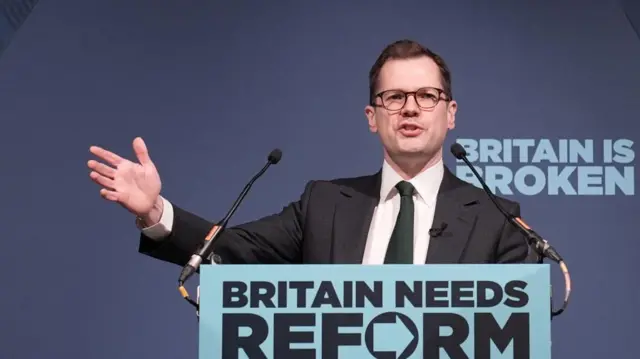
    Reform UK MP Robert Jenrick

    In the hours since the latest migration figures have been published, we've been hearing some reaction to the data:

    Reform UK MP for Newark Robert Jenrick - who defected to Reform after being sacked by the Conservatives - calls the long-term emigration of 246,000 British nationals "the Starmer Exodus".

    In the year to December 2025, 110,000 British nationals arrived in the UK, making the net difference between emigration and immigration 136,000.

    He says this figure is equivalent to a "city the size of Watford".

    "Many are entrepreneurs, investors, small businesspeople. It’s the Starmer Exodus. Reform will Bring Brits Back," he adds in a post on X.

    Meanwhile, Conservative MP James Cleverly says "Labour will try and take credit for this reduction in net migration".

    He says that the drop is "mainly due to the visa changes that I introduced as home secretary in December 2023 and which Labour opposed at the time", he adds.

    We are yet to hear any official reaction from the Liberal Democrats and the Green Party on the recently announced migration figures.

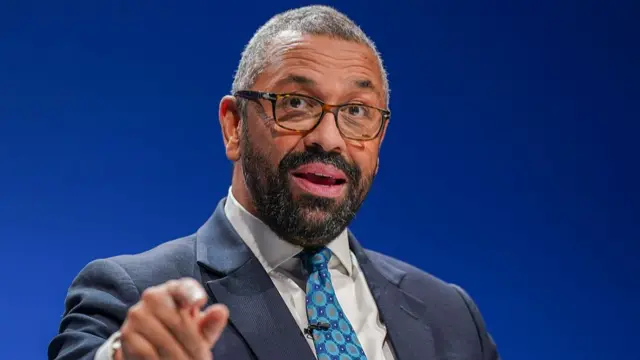
    Conservative MP James Cleverly.Image source, Getty Images
    Image caption,

    Conservative MP James Cleverly

  5. How big is the asylum backlog?published at 12:40 BST

    It can take years for the government to decide whether someone should be granted asylum.

    In March 2026, 48,758 people across 35,744 asylum applications were waiting for an initial decision. The number of people awaiting an initial decision was down by 55% on the previous year.

    As of December 2025, a further 80,333 refused asylum applications were part of a second backlog, waiting the outcome of an appeal in the courts. This was up by 91% on the previous year.

    Together, these initial decision and appeal cases form the government’s total asylum applications backlog, which it has pledged to clear.

    This Flourish post cannot be displayed in your browser. Please enable Javascript or try a different browser.

  6. 'A skills-based migration system': What changes has the government made?published at 12:28 BST

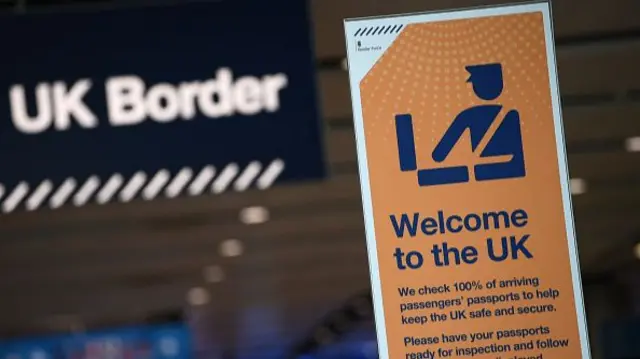
    A sign at UK border control reading "Welcome to the UK"Image source, AFP via Getty Images

    Reacting to this morning's net migration data, Prime Minister Keir Starmer said that the government is "introducing a skills-based migration system".

    His comments follow a spate of changes to the UK immigration system introduced in a government white paper in May 2025. Here's a reminder of what was included:

    English language skills:

    Migrants applying for skilled worker or scale-up visas (for people employed by fast-growing businesses) must speak English at an A-level standard.

    Applicants are now tested on speaking, listening, reading and writing at Home Office-approved providers, and must achieve a B2 level - a step up from the previous B1 requirement, which was equivalent to a GCSE.

    Minimum income:

    To come to the UK on the skilled worker visa, migrants have to work for a government-approved employer and earn at least £41,700 a year, or the "going rate" for their type of work, whichever is highest.

  7. Home secretary to focus on bringing migration numbers down further, sources saypublished at 12:07 BST

    Sima Kotecha
    Senior UK correspondent

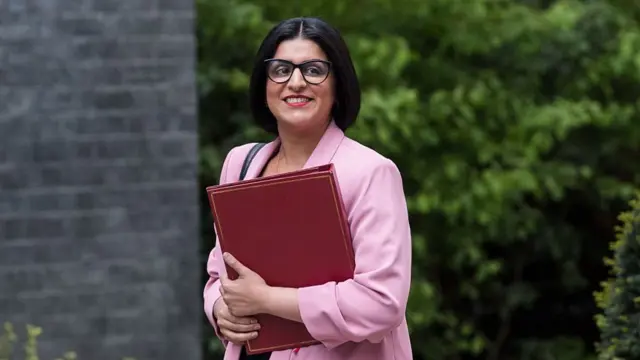
    Secretary of State for the Home Department Shabana Mahmood.Image source, Getty Images

    Home Office sources tell me me there's a feeling in government that even though net migration figures have fallen again, there is still a lot more to do to maintain the momentum.

    There is an understanding of the importance of the issue, with Home Secretary Shabana Mahmood said to be adamant to focus on bringing numbers down even further.

    Some recent polls have suggested that people feel ministers are not doing enough to reduce immigration.

    I'm told "there’s an awareness of this perception", and there is an effort to do more to publicise falling figures, even though some argue this government is not totally responsible for them.

  8. Fall in net migration likely to be temporary, Migration Observatory sayspublished at 11:50 BST

    Sign showing UK boarder, where people are lined up.Image source, Getty Images

    The decrease in net migration is "likely to be temporary", according to the Migration Observatory at the University of Oxford.

    "That’s because lower immigration will eventually feed through into lower emigration," explains researcher Ben Brindle, whilst also noting that net migration "may well have further to fall" due to the decline in visa grants since 2026.

    The economic impacts of net migration also "depend more on who is - or is no longer - migrating" rather than how many people there are, Brindle says.

    He says migration of groups "that make positive or broadly neutral economic impacts" is "down", whereas "asylum related migration remains high".

    "Since refugees have lower employment rates and often need a lot of support from the state, this means that the composition of recent migration has probably become less favourable from an economic perspective," Brindle explains.

  9. A brief look back at the numberspublished at 11:42 BST

    Two new sets of data on UK migration have been published this morning - and we're continuing to distil what the figures show us.

    We've been crunching the numbers and here's a look at the key stats so far:

    On net migration

    Net migration drops to 171,000 in the year to December 2025, figures from the Office for National Statistics (ONS) show.

    This is the lowest level since 2012, excluding the Covid pandemic. The decrease has been driven by fewer people arriving from outside the EU, the ONS says.

    The ONS provisionally estimates 642,000 people left the UK to live in another country long term during the year ending in December 2025.

    It also provisionally estimates 813,000 people arrived in the UK for total long-term immigration in the year to December 2025.

    On asylum, and small boats

    Home Office figures show the number of people claiming asylum has dropped by 12% compared to last year. In the year March 2026, 93,525 claimed asylum, but this is still more than double the level seen just before the pandemic.

    The number of asylum seekers living in hotels is down by a third on the year before. Figures show it stands at 20,855 people - the peak was about 56,000 in September 2023 under the last Conservative government.

    Home Office figures show that in the year to March 2026, some 39,271 people arrived in the UK on small boats - a 3% increase on last year's figure.

  10. Number of successful asylum claims up, as more reviewedpublished at 11:33 BST

    Robert Cuffe
    Head of statistics

    In the year to March 2026, 48,581 people’s asylum claims were granted. That’s slightly up on the year before because more claims were processed.

    Their success rate has actually been falling steadily over the last four years.

    It peaked in 2022 when 70% of decisions on asylum claims granted asylum. That success rate is now down below 40%.

    Asylum seekers from Eritrea and Sudan are most likely to have their claim granted: roughly nine out of every 10 applications from those countries were successful.

    By contrast only 1% of claims from India were approved.

    Overall, nearly 80,000 people had their claim rejected when it was first heard.

    They can go on to appeal, but we don’t get figures today on the number of appeals that were granted last year.

    Below, you can see our graphic on the number of people applying for asylum in the UK:

    This Flourish post cannot be displayed in your browser. Please enable Javascript or try a different browser.

  11. Arrived to or left the UK recently? Applied for citizenship? Get in touchpublished at 11:31 BST

    A red long thin graphic that says Your Voice in white writing

    Have you moved to the UK or left the country to live abroad? Are you an employer who has been affected by the changes in migration levels? We want to hear from you.

    You can get in touch in the following ways:

    Please read ourterms & conditions andprivacy policy

    In some cases a selection of your comments and questions will be published, displaying your name and location as you provide it unless you state otherwise. Your contact details will never be published.

  12. Number of people granted British citizenship drops by 12%published at 11:16 BST

    We're continuing to comb through the data released this morning by the Office for National Statistics and the Home Office.

    Figures from the Home Office show that 236,512 people were granted British citizenship in the year ending March 2026.

    This is a 12% drop compared to the number of people who were granted citizenship the year before.

    Home Office data also shows there were 165,429 grants of citizenship through "naturalisation", which is granted following a period of residence in the UK.

    People with British citizenship have the right to live and work and access public services in the UK without any immigration control, and can apply for a British passport.

    The Home Secretary has previously put forward plans to extend the standard wait to qualify for permanent residence from five years to 10 years.

  13. How have policy changes affected net migration levels?published at 11:03 BST

    Sima Kotecha
    Senior UK correspondent

    There are several reasons why net migration has fallen substantially.

    Policy changes from early 2024 under the former Conservative government are likely to have made an impact.

    They included most overseas students being restricted from bringing family members to the UK.

    Care and senior care workers were restricted from bringing dependents with them.

    Ministers also increased the general salary threshold for those arriving on skilled visas by 48% from £26,200 to £38,700.

    And they increased the minimum income requirement to sponsor someone for a family visa.

    After Brexit, there was a large increase in immigration.

    Conservative ministers relaxed salary thresholds and some other routes for health and social care workers. Critics of the previous government have dubbed it as the "Boriswave". Some inside the previous government have told the BBC the 2024 measures helped bring down those numbers.

    The current government has announced further plans in recent months to reduce net migration even further including migrants coming to the UK having to speak English at an A-level standard.

    It’s also announced a further increase in the income threshold for a skilled worker visa to £41,700.

  14. Immigration from outside the EU 'remains far too high,' Philp sayspublished at 10:56 BST

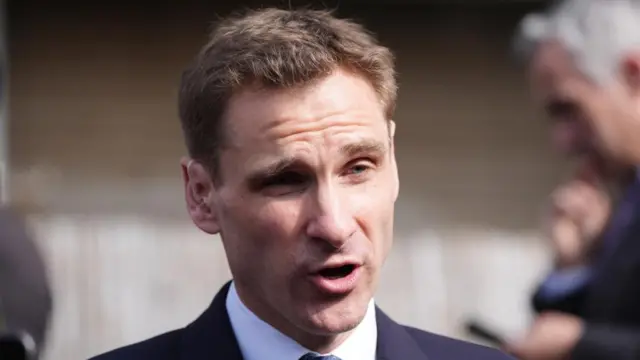
    Chris Philp speaks during an interview in MarchImage source, PA Media
    Image caption,

    Chris Philp speaking during an interview in March

    We're now hearing from shadow home secretary Chris Philp, who says that British citizens are "leaving the UK on a massive scale, driven by Labour’s high taxes".

    The Conservative MP also says that immigration from countries outside the EU "remains far too high".

    • As a reminder, the Office for National Statistics has provisionally estimated that 627,000 non-EU+ nationals arrived in the UK in the year to December 2025 - here's a reminder of the key figures

    "Mass low-skill immigration undermines our society and low wage immigration is bad for the economy," he writes in a post on X.

    "British families feel it in lower wages, longer waiting lists for public services and housing shortages."

    Philp calls for Labour to reform indefinite leave to remain (ILR) before their "hard-left flank" forces the measure to be abandoned.

    He says that a Conservative government would "introduce a binding annual immigration cap at a very low level, close the loopholes that let temporary visa holders stay indefinitely and tighten and extend the conditions for ILR".

    "We want a small number of highly skilled migrants and no low-skilled migration at all. But sadly, Labour do not have the backbone to do any of it."

  15. Asylum hotel numbers hit lowest level on recordpublished at 10:50 BST

    Rob England
    BBC Verify senior data journalist

    The number of asylum seekers living in hotels while their claims are processed in the UK has fallen by a third to just under 21,000.

    It is the lowest figure since the government began publishing the data in 2022, and down from a peak of about 56,000 in September 2023 under the previous Conservative government.

    But the overall number of asylum seekers being housed by the government remains much higher, at nearly 94,000.

    That total fell by about 9,700 compared with December 2025, while more people were moved into longer-term accommodation such as houses of multiple occupation (HMOs) and former military sites.

    The government must provide accommodation for asylum seekers who cannot support themselves financially while their claims are being considered.

    Hotels were first used as emergency accommodation during a rise in asylum applications after the Covid-19 pandemic.

    They later became a routine part of the system after housing stock ran out.

    The National Audit Office said the hotels cost £5.7m a day in 2024-25 and were significantly more expensive than longer-term housing.

    Labour pledged in its election manifesto to end the use of asylum hotels, saying the move would save taxpayers billions of pounds.

    This Flourish post cannot be displayed in your browser. Please enable Javascript or try a different browser.

  16. 'My government is delivering,' says Starmerpublished at 10:44 BST

    Prime Minister Keir Starmer, commenting on the fall of net migration, says: "I promised to restore control to our borders. My government is delivering.

    "I know there’s more to do, we’re introducing a skills-based migration system that rewards contribution and ends our reliance on cheap overseas workers," he writes in a post on X.

    This comes after similar comments from Home Secretary Shabana Mahmood, who says the net migration figure shows the UK is "restoring order and control to our borders".

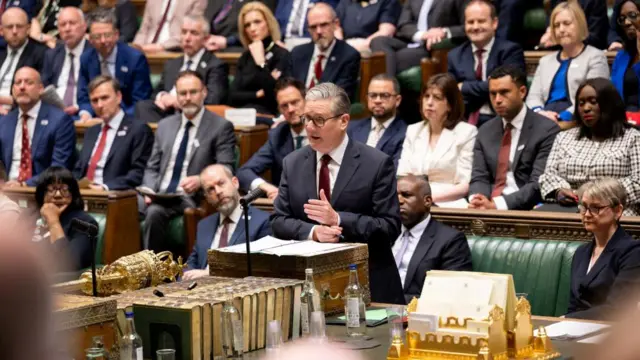
    Keir Starmer in the Commons.Image source, Reuters
  17. Fewer people from outside the EU coming to UK for workpublished at 10:30 BST

    Robert Cuffe
    Head of statistics

    Let’s break down the figures behind that fall in immigration we described earlier.

    The number of people leaving the UK hasn’t changed much. Just over 640,000 people emigrated last year, down by about 6%.

    But the number coming has fallen much faster.

    Last year, just over 800,000 people immigrated to the UK, down 20% from the 2024 data.

    The biggest driver of migration patterns is people who come from outside the EU, as they are still the largest group of arrivals.

    When you dig into the visas data you can see far fewer people from outside the EU coming for work and fewer family members coming with them.

  18. Small boat arrivals up slightly from previous yearpublished at 10:25 BST

    A French Warship escorts an inflatable 'small boat' carrying migrants across the channel.Image source, Getty Images

    In the year to March 2026, some 39,271 people arrived in the UK on small boats, according to the Home Office figures.

    That's a 3% increase on last year's figure to March 2025, which was 38,023. It is still lower than the 2022 peak of 45,774.

    Small boat arrivals accounted for 90% of the 43,806 people who arrived via all illegal routes in the year to March 2026. That's roughly the same number as the total for the previous year of 43,822.

  19. Mahmood: 'Real progress has been made, but there is still work to do'published at 10:18 BST

    We can bring you more now from Home Secretary Shabana Mahmood following the announcement that net migration has dropped to its lowest since the Covid pandemic:

    "We will always welcome those who contribute to this country and wish to build a better life here. But we must restore order and control to our borders," she says.

    "As these statistics show, real progress has been made, but there is still work to do.

    "That is why I am introducing a skills-based migration system that rewards contribution and ends Britain’s reliance on cheap overseas workers."

    A graph showing net migration is two-thirds lower in the year up to June 2025 than it was the previous year. A blue line shows the total arrivals to the UK and a red line shows net migration from 1991 to the year ending December 2025.
  20. Labour is restoring order - home secretarypublished at 09:58 BST
    Breaking

    Shabana Mahmood looks to the side.Image source, Dan Kitwood/PA Wire

    Home Secretary Shabana Mahmood says the drop in net migration shows "this government is restoring order and control to our borders".

    In a post on X, she adds: "Net migration down 82%. Net migration is now at 171,000, down from a high of 944,000 under the Conservatives."