Summary

  1. Temperatures reach hottest so far this year - but warmer weather is on the waypublished at 17:39 BST

    Dan Woodland
    Live reporter

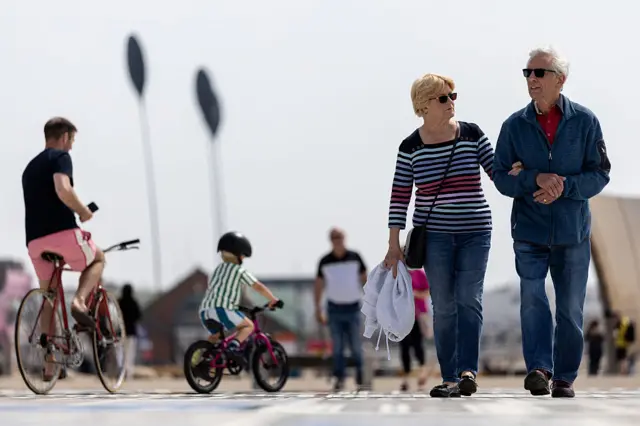
    An elderly couple wearing sunglasses make their way Holidaymakers make their way along Blackpool Promenade as a child and middle aged man cycle past themImage source, Getty Images

    Today marked England's hottest day of the year so far as the mercury reached 28.4C in Heathrow.

    Elsewhere, Cardiff recorded a high of 25.8C - making it Wales' warmest day of the year so far too - whereas Belfast and Edinburgh remained at a relatively cool 19C.

    Temperatures are forecast to rise throughout the weekend, potentially reaching up to 33C on bank holiday Monday, which would mark the UK's warmest day in May ever.

    The UK Health Security Agency (UKHSA) has issued heat health warnings across large parts of England until 17:00 on Wednesday 27 May, including:

    • Amber warnings in the East and West Midlands, London, East England and South East England
    • Yellow warnings in North East England, North West England, Yorkshire and Humber and South West England

    Football fans, dog walkers and travellers on trains are being advised to take care in the hot weather while the London Fire Brigade is also warning the risk of wildfire is "very real".

    With many people expected to make the most of the sunny weather this bank holiday weekend, here are some top tips for keeping safe in the sun. And for those planning on staying indoors, we've also put together a quick guide on how to keep your home cool.

    We're ending our live coverage now - but you can read our news story here on the warmest day of the year so far for the latest developments.
  2. Socks in the fridge - and other tips to keep cool at nightpublished at 17:25 BST

    It can be hard to get a good night's sleep when the weather is hot. Here are some simple tips which could help:

    Don't nap: If your sleep is disturbed at night, try to avoid napping during the day. When it's hot, sleepiness can be precious - save it for bedtime.

    Keep to routines: Changing your habits can disrupt sleep. Try to keep to your usual bedtime and routines, and do the things you normally do before bed.

    Make your bedroom as cool as possible: During the day, draw the curtains or blinds to keep out the sun. Close the windows on the sunny side of your home to keep out hot air, and open all the windows before you go to bed to get a through breeze.

    Use thin sheets: Reduce your bedding but keep covers handy. However hot it is in your bedroom, your body temperature will fall during the night.

    Chill your socks: Cool socks in the fridge and put those on. Cooling your feet lowers the overall temperature of your body. Using even a small fan can be sensible, or if you do not have one, fill a water bottle with ice cold liquid.

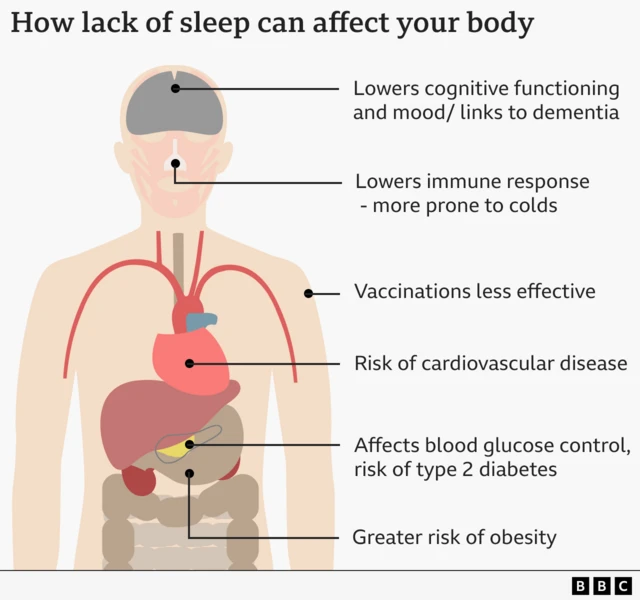
    Graphic showing how lack of sleep can affect your body. Lowers cognitive functioning and mood/links to dementia. Lowers immune response - more prone to colds. Vaccinations less effective. Risk of cardiovascular disease. Affects blood glucose control, risk of type 2 diabetes. Greater risk of obesity.
  3. Charity urging Britons to protect their skinpublished at 17:16 BST

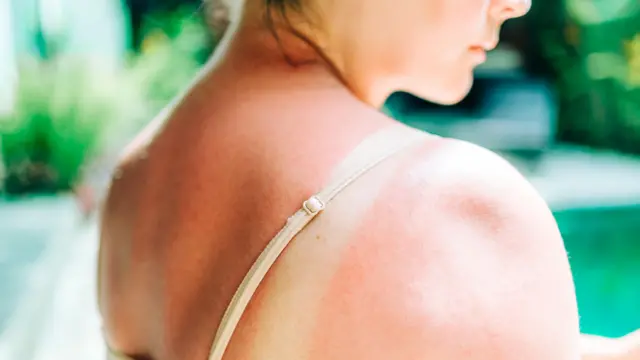
    A close-up photo showing a young woman with sunburn on her back and shouldersImage source, Getty Images
    Image caption,

    Sunburn is a sign of sun damage

    The charity Cancer Research UK is warning Britons about the importance of protecting your skin from the sun over the weekend, as the number of new melanoma skin cancer cases diagnosed in a year has now risen above 20,000 for the first time.

    The charity says that too much exposure to ultraviolet (UV) light from the sun - or from sunbeds - is part of the cause, with an estimated nine in every 10 cases thought to be avoidable.

    • What to do: Use sun cream with at least SPF 30 and four of five stars - and seek shade
    • Why sunburn matters: Sunburn is a clear sign of skin damage, and anyone can get it - including people with darker skin tones
    • But it's not just that: You do not need to burn - or even turn pink - to sustain skin damage
    • When to contact your GP: If you notice any unusual changes to your skin - like a new or changing mole, or a sore that doesn't heal

    Find out more about melanoma., external

  4. BBC Weather Watchers share sun-drenched snapspublished at 16:57 BST

    The BBC's Weather Watchers have been out enjoying the sunshine, and sharing their snaps in the process. Here's a selection from this afternoon.

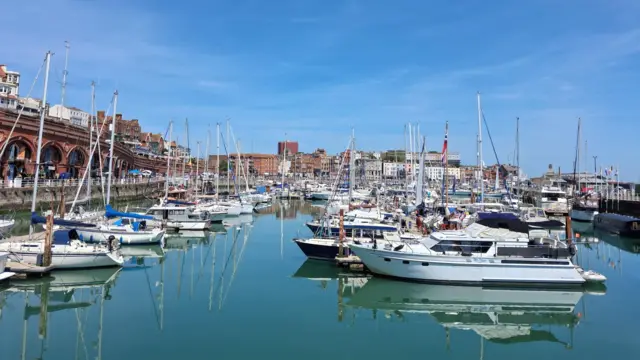
    Harbour scene in Ramsgate with clear sky and crisp blue waterImage source, Steve/BBC Weather Watchers
    Image caption,

    Anyone jealous of Steve in Ramsgate?

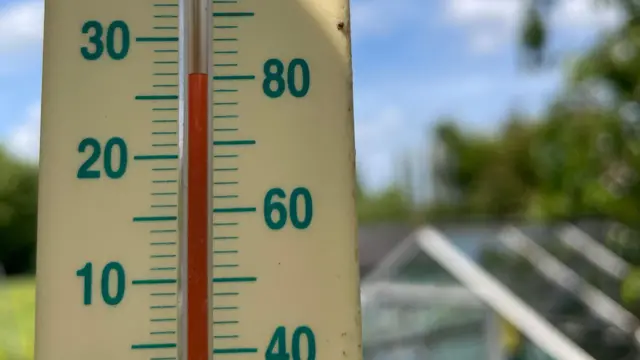
    Thermometer showing temperature of 27CImage source, Sky girl/BBC Weather Watchers
    Image caption,

    Evidence that the temperature has climbed for this Weather Watcher in Leicestershire

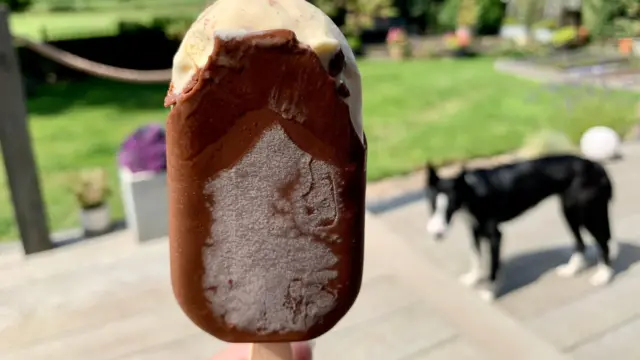
    Part-eaten choc ice is held up in front of garden scene as dog looks onImage source, Littleacorns/BBC Weather Watchers
    Image caption,

    Our Warwickshire Weather Watcher is enjoying a choc-ice - and hoping the sun (or someone else) doesn't finish it first

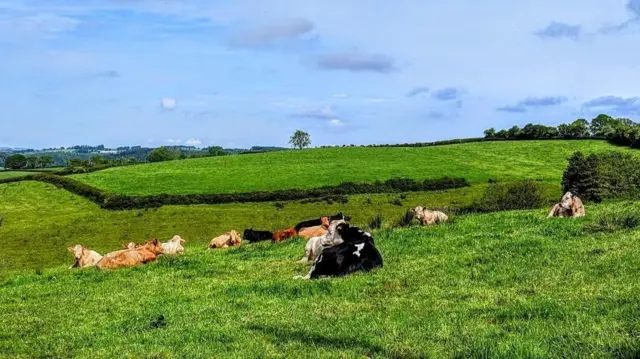
    Cows laying on a field of grassImage source, Merch Cwmwl/BBC Weather Watchers
    Image caption,

    It's not just the dogs taking advantage of the sunshine today

  5. Temperatures peak above 28C on warmest day of the year so farpublished at 16:40 BST
    Breaking

    BBC Weather

    Heathrow seems to have peaked at 28.4C, making it the UK's and England's warmest day of the year so far.

    Cardiff reached 25.8C, making it Wales's warmest day of the year so far too.

    We will get the final maximal later this evening.

    Temperatures could climb into the low 30s for parts of England and Wales over the bank holiday weekend and if they surpass 32.8C, it will be a new record for May.

  6. How to enjoy the water safely this weekendpublished at 16:24 BST

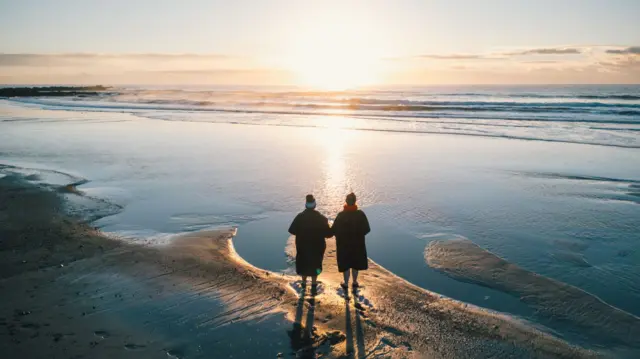
    Swimmers at the beach in Cornwall at sunriseImage source, Getty Images

    Taking a cold dip when the weather is hot sounds appealing - but it can be dangerous.

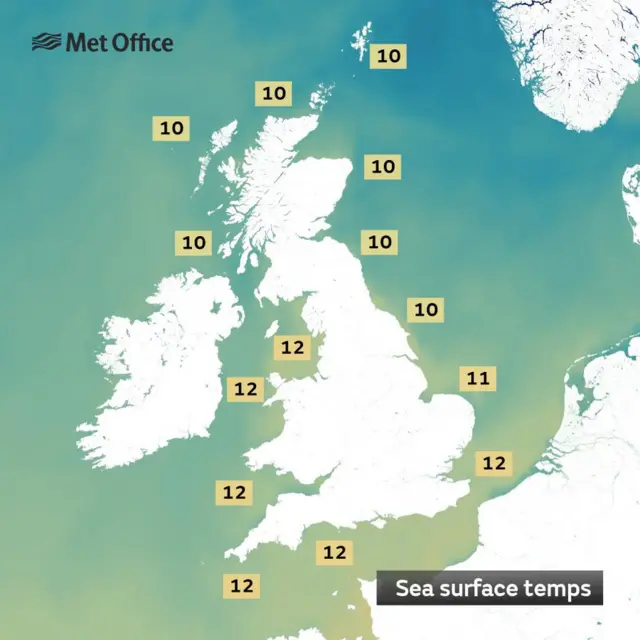
    Plunging into cold water (below 15C) can send your body into shock, making it difficult to breathe and stopping your swimming abilities. Our previous post shows the Met Office expects sea surface temperatures to remain low despite the heat we're currently experiencing.

    Meanwhile, strong currents in rivers or the sea can overwhelm even the strongest swimmers. Some safety tips include:

    • Stay calm if you enter the water unexpectedly. Relax and follow the RNLI's "float to live" advice. Tilt your head back with your ears submerged, breathe normally, spread your limbs out for stability and gently move your hands and legs if you need to
    • Know your limits and the risks
    • Go with others and make sure your phone is charged so you can call for help
    • Stick to lifeguarded beaches and follow the flags. Red flags mean do not enter the water
    • Do not enter the water to save others - throw them a line if you can, and call 999 or 112 and ask for the coastguard
    • If you're doing watersports, wear a floatation device
    • Make sure someone always knows your plans - where you are going and what time you'll be back
    • If you are walking near the water, keep away from the edge and stick to paths. Seek local advice on tides so you don't get stuck, and avoid walking alone or at night
  7. Don't forget the chill factor if sea-swimmingpublished at 16:07 BST

    Despite unseasonably warm weather for this time of year, meteorologists have reminded would-be sea swimmers that the sea will still feel quite cold.

    British summers usually see water temperatures of around 15 to 20C - especially towards the end of the season.

    But a map from the Met Office, external shows sea temperatures are still fairly cold despite the balmier conditions.

    Sea temperature forecasts for the weekend.Image source, Met Office
  8. A snapshot of the weather in Europepublished at 15:54 BST

    Stav Danaos
    BBC Weather

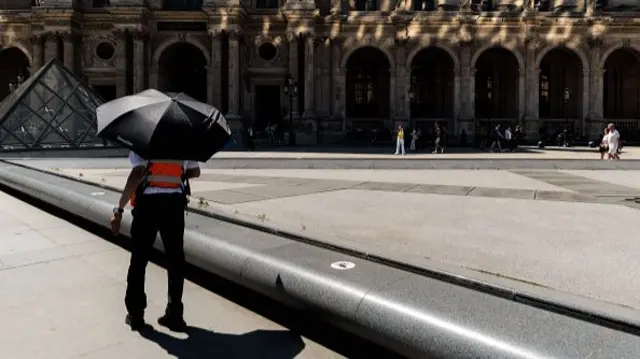
    A security guard at the Louvre in Paris takes shelter under an umbrellaImage source, AFP via Getty Images
    Image caption,

    A security guard at the Louvre in Paris takes shelter under an umbrella

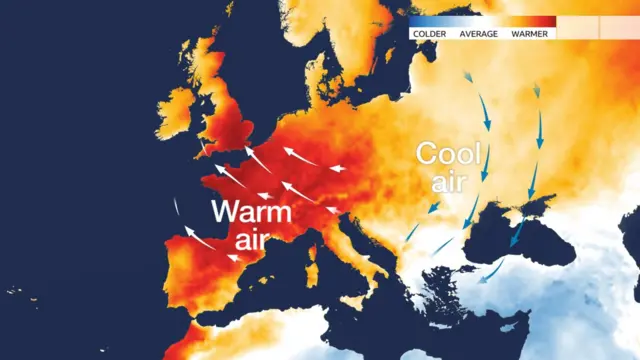
    A broad dome of unusually hot air has now expanded beyond the Iberian Peninsula and is affecting much of western Europe, with temperatures climbing well above seasonal averages in countries including France, Spain, the United Kingdom, and parts of Germany.

    Cities across the region are seeing early-season heat more typical of midsummer. Across northern and western France they've widely seen low to mid 30s. Bilbao in northern Spain has reached 36C.

    Concerns have been raised about drought stress, wildfire risk, and pressure on infrastructure.

    In contrast, south-eastern Europe has remained comparatively cooler and more unsettled, as troughs of low pressure over the Balkans and eastern Mediterranean continue to bring cloudier conditions, rain, and below-average temperatures to areas such as Greece, Bulgaria, and Romania.

    This sharp west–east contrast highlights the uneven atmospheric pattern currently shaping weather across the continent.

    A map of Europe showing warm air moving over the western side and cool air moving down across eastern europe
  9. How to handle the heat whether staying in or stepping outpublished at 15:39 BST

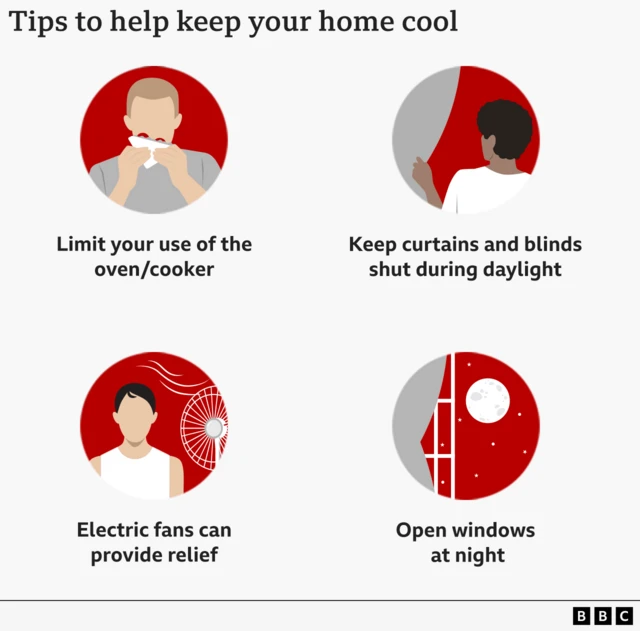
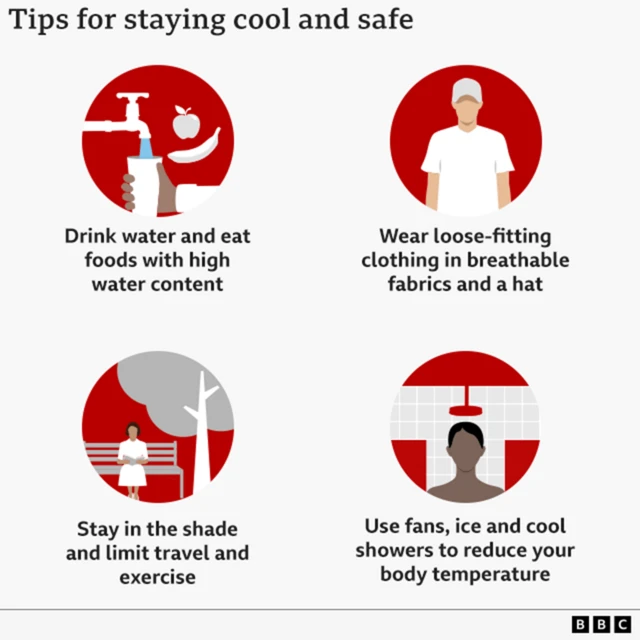
    Whether you're planning to stay indoors or head outside in the coming days, there are several things you can do to stay safe and cool.

    Infographic titled “Tips to help keep your home cool.” Four circular illustrations with accompanying text provide advice: limit use of the oven or cooker; keep curtains and blinds closed during daylight; use electric fans for relief; and open windows at night. The images depict a person holding a cloth near their face, a person closing curtains, a person beside a fan, and a window open at night with the moon visible. BBC logo appears at the bottom.
    Infographic titled “Tips for staying cool and safe,” showing four circular illustrations with advice for hot weather. Top left: a tap filling a glass of water alongside fruit, with text reading “Drink water and eat foods with high water content.” Top right: a person wearing a hat and loose clothing, with text reading “Wear loose-fitting clothing in breathable fabrics and a hat.” Bottom left: a person sitting on a bench under a tree, with text reading “Stay in the shade and limit travel and exercise.” Bottom right: a person under a showerhead, with text reading “Use fans, ice and cool showers to reduce your body temperature.” A BBC logo appears in the bottom corner.
  10. Managing health conditions in the heatpublished at 15:29 BST

    Woman sitting on a sofa in her living room using an inhaler to manage asthma symptomsImage source, Getty Images

    For people with asthma and lung conditions, symptoms like breathlessness and wheezing can become worse when temperatures rise. Higher pollen levels can also increase the risk of an asthma attack, according to charity Asthma + Lung UK. Keep your inhaler on hand.

    It is particularly important to stay cool if you have heart failure as the body works harder in the heat, putting strain on the heart, according to the British Heart Foundation. If you have been told to restrict your fluids to manage it, speak to your GP about other ways of keeping cool.

    Those with diabetes may find it more difficult to manage their blood sugar levels in the heat. Charity Diabetes UK suggests checking blood sugar levels more often, if you usually check them yourself. Store any medications like insulin correctly so they stay cool.

    Those with kidney disease need to take extra care to maintain their fluid balance. Staying hydrated is important but some patients - such as some dialysis patients - will be on fluid restriction. Charity Kidney Care UK says there is no "one-size-fits-all" advice - speak to your doctor if you are unsure.

    People living with dementia may struggle to recognise the signs that they're too hot. The Alzheimer's Society recommends checking in on the elderly and leaving glasses or jugs of water within easy reach to help combat dehydration.

    And remember, most medications need to be stored at temperatures below 25C (and some in the fridge).

  11. How hot will it get this weekend?published at 15:11 BST

    Simon King
    Lead weather presenter, BBC Weather

    Looking ahead to this weekend, temperatures are set to soar across most of England and Wales so that by Sunday they will be into the high 20s.

    The hottest weather will be across eastern and south-eastern parts of England.

    There’ll also be lots of strong sunshine with unusually high UV.

    If you’re heading to a beach then coastal areas will be slightly cooler and it’ll continue to be significantly cooler across Scotland and Northern Ireland where there won’t be a heatwave.

    However, it will warm up later in the week ahead.

  12. A temperature check, as UK sees warmest day of 2026published at 15:05 BST

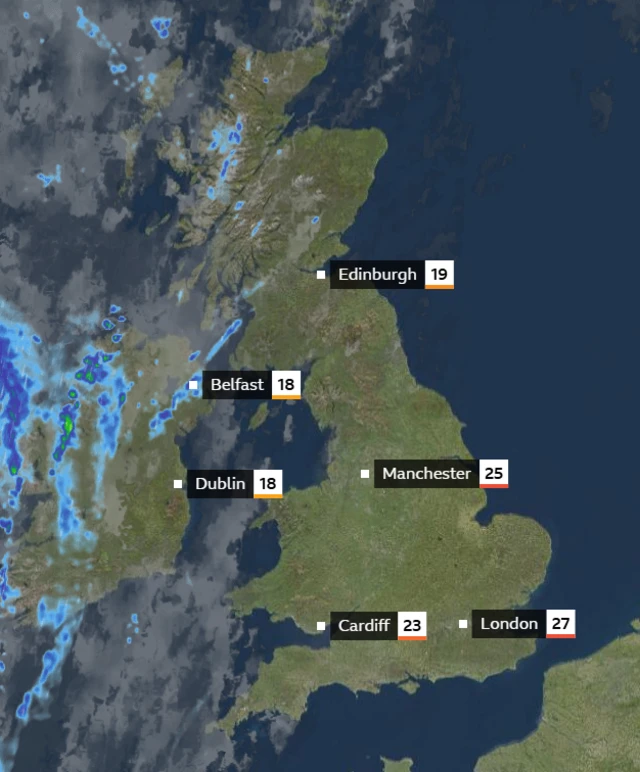
    We've just ticked past 15:00 BST and temperatures have continued to climb across parts of the UK.

    It's officially the warmest day of the year - that milestone was reached when Heathrow hit 26.9C.

    The latest temperature recorded for London is 27C, whereas Belfast and Edinburgh are experiencing cooler weather.

    Here's a closer look at the picture across the UK:

    London: 27°C

    Manchester: 25°C

    Cardiff: 23°C

    Edinburgh: 19°C

    Belfast: 18°C

    A map of the UK marking the temperatures as London: 27°C Manchester: 25°C Cardiff: 23°C Edinburgh: 19°C Belfast: 19°C
  13. A stylish pooch and an icy treat: Your pictures of the sunny weatherpublished at 15:00 BST

    The sun is out, and so are BBC Weather Watcher's cameras.

    From dogs, to statues, to sheep, here's a look at some of your pictures from across England.

    Among the photos are some pooches basking in the sunshine - here's a link to our earlier post on keeping them safe in warm weather.

    Dog licks a ice lolly stick in a garden.Image source, littleacorns/BBC Weather Watchers
    Image caption,

    An icy treat seems to have gone down well with this dog in Warwickshire

    Bronze statue of human figure wearing head piece laying sideways in the grass.Image source, Sunny Sim/BBC Weather Watchers
    Image caption,

    Over at the Chelsea Flower Show in London, this statue of Mother Nature looks glorious in the sunshine

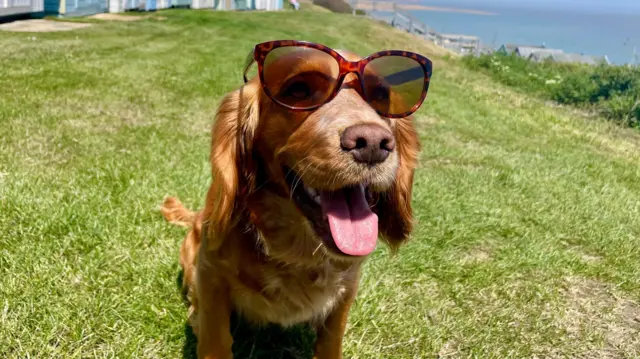
    A dog sits outside a row of blue beach huts on grass wearing sunglasses.Image source, Bettys Hot Spot/BBC Weather Watchers
    Image caption,

    A trip to the seaside in Suffolk wouldn't be complete without a pair of sunglasses

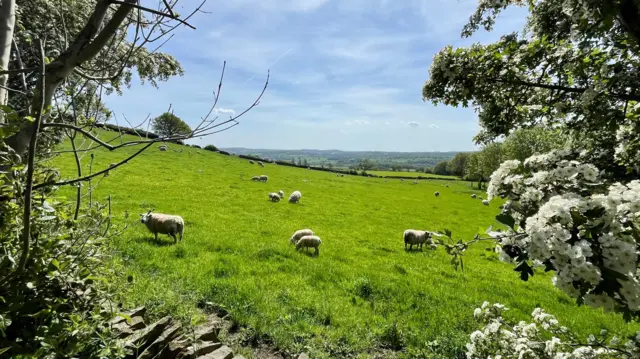
    A heard of sheep graze on a sunny hill.Image source, Little Leo/BBC Weather Watchers
    Image caption,

    It isn't sweater weather, but a woolly coat isn't stopping these sheep from soaking up some sun in Kirklees

  14. Sunscreen - what you need to knowpublished at 14:38 BST

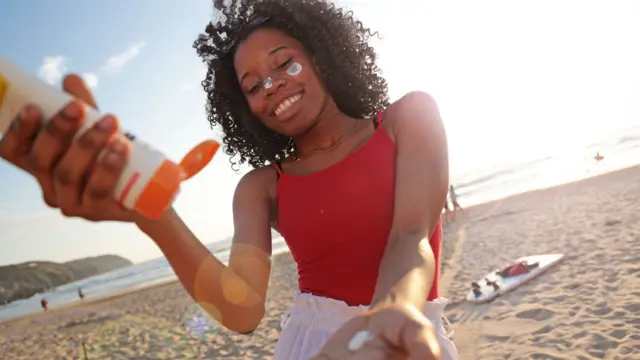
    Young woman squeezes sunscreen on beach.Image source, Getty Images

    As the weather heats up you might find yourself reaching for your sunscreen.

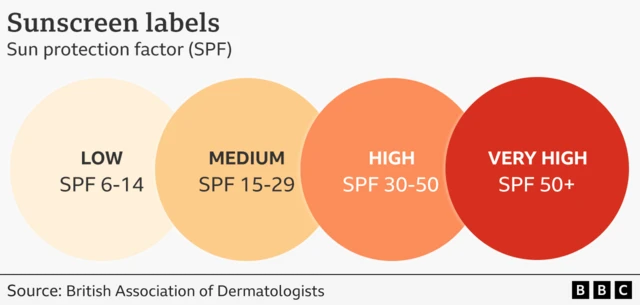
    The most prominent number on sunscreen bottles is the sun protection factor or SPF. The larger the number, the greater the protection.

    According to the British Skin Foundation,, external the SPF rating tells you how much protection your sunscreen provides from ultraviolet B rays.

    For instance, correctly applying sunscreen with an SPF of 30 it means that it would take your skin 30 times longer to go red than if you used none.

    Infographic titled “Sunscreen labels” explaining sun protection factor (SPF) categories. Four large coloured circles are displayed side by side, each labelled with a level of protection: - Light beige circle: “LOW – SPF 6–14” - Light orange circle: “MEDIUM – SPF 15–29” - Orange circle: “HIGH – SPF 30–50” - Red circle: “VERY HIGH – SPF 50+” A caption at the bottom credits the British Association of Dermatologists, and a BBC logo appears in the corner.

    Many sunscreen brands also carry a star rating from one to five.

    The NHS says, external the star rating measures the amount of ultraviolet A protection, with more stars denoting increased protection. It recommends using sunscreen with at least four stars.

    If the letters "UVA" appear inside a circle on the sunscreen bottle, the product meets EU safety standards.

    Ideally, your sunscreen should have both a high SPF rating and a high star rating. The NHS recommends that adults use around six to eight teaspoons of sunscreen if they are covering their entire body.

  15. Top tips from the NHS for staying safepublished at 14:15 BST

    Young woman drinking fresh water from a plastic bottle under the hot summer sunImage source, Getty Images

    A heatwave can be dangerous for your health.

    The NHS warns that during a warmer spell of weather more people than usual get seriously ill or die.

    It says the biggest risks are:

    Those over the age of 75, especially women, are the most at risk, the NHS says.

    Others at risk include those with long-term illnesses, babies and those who find it hard to keep themselves cool, those who work outside and homeless people.

    To manage the risks, it advises:

    • Staying out of direct sun between 11:00 to 15:00
    • Wearing sunscreen, a hat, and light clothing
    • Consuming cold food and drink
    • Avoiding alcohol, caffeine and hot drinks
    • Closing windows during during the day and opening them at night and using an electric fan to circulate the air
  16. Want the latest forecasts at your fingertips? Download the BBC Weather apppublished at 13:58 BST

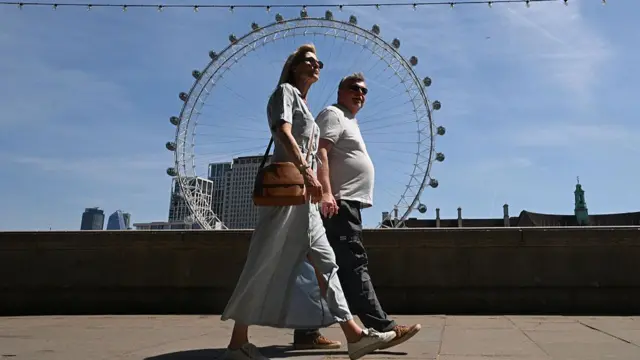
    A couple stroll along the Victoria Embankment on May 22, 2026 in London, England.Image source, Getty Images

    For the latest forecasts on the conditions outside, download the BBC Weather app.

    It's easy to do - just follow the relevant link for your device:

    The app is only available to download in the UK.

    You can also check out the weather in your area by entering your UK town, city or postcode on the BBC Weather website.

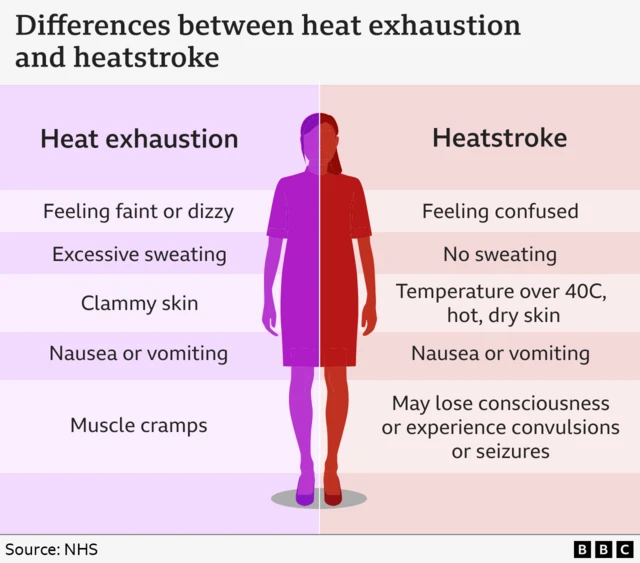
  17. Heat exhaustion and heatstroke - how to spot the signspublished at 13:49 BST

    Heat exhaustion happens when your body becomes too hot and struggles to regulate its temperature.

    An obvious sign is excessive sweating, as well as feeling very hot and unwell - which is your body's way of warning you to cool down, fast.

    Other symptoms include headache, dizziness and cramps, but it is not usually serious as long as you can cool yourself down.

    Heat exhaustion can turn into heatstroke, which is a medical emergency. It means your body can no longer manage the heat and your core temperature is rising too high. You should get urgent medical help.

    The signs to watch for and quickly act on include not sweating even while feeling too hot, a temperature of 40C or above, a seizure and lack of consciousness.

    Graphic showing a person's body with symptoms of heat exhaustion on the left side and symptoms of heatstroke on the other
  18. How unusual is this heat?published at 13:37 BST

    Mark Poynting
    Climate reporter

    A hand holds an ice cream in sunny weatherImage source, SunshineDan/BBC Weather Watchers

    It can be easy to forget just how quickly the UK’s climate is changing.

    Days exceeding 30C - known as "very hot" days by the Met Office - might feel normal, but they used to be much rarer.

    As a reminder, Heathrow reached 26.9C earlier, making it the warmest day of the year so far. Temperatures are forecast to reach up to 33C in parts of the UK over the bank holiday weekend.

    During the last decade, the number of these "very hot" days more than trebled compared with the 1961-1990 average, according to the Met Office.

    And these temperatures are especially rare in May.

    The Met Office says that 30C has been reached in May in only a handful of years since 1900.

    And forecasts suggest that the current May record of 32.8C could be beaten over the upcoming bank holiday weekend.

    The UK’s weather varies a lot naturally, but this early season heat is consistent with the long-term trend of rising temperatures because of human-caused climate change.

  19. The signs your dog is too warm, and what RSPCA says to do if they're in troublepublished at 13:25 BST

    Sean Dilley
    BBC News correspondent

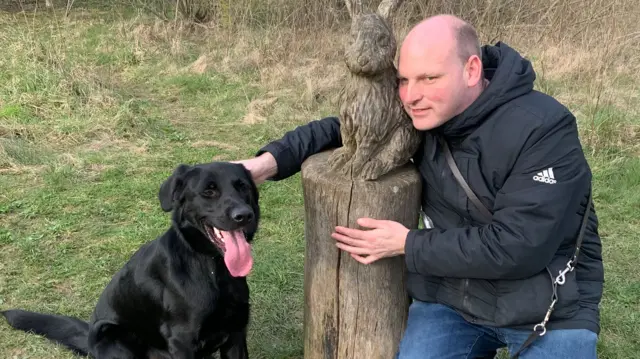
    Sean pets his guide dog next to a statue of a rabbit.Image source, LISA SINNOTT/BBC

    As a guide dog handler of 27 years, my heart falls every time I hear the fatigued pants of dogs in heatwave weather.

    Animal welfare charity the RSPCA says that dogs are 10 times more likely to suffer heat-related illnesses from exercising in hot weather than from overheating in cars. Both are tremendously bad for your dog.

    Canines have a very limited ability to regulate their temperature. They don't sweat like humans - only perspiring a small amount through the pads on their paws.

    Heavy panting, difficulty breathing, excessive drooling, lethargy and drowsiness are all key signs that your dog is too hot. In extreme cases, dogs vomit and finally lose consciousness.

    If your dog is in trouble, the RSPCA says, external you should move the dog to a shaded and cool area and immediately pour cool, but not very cold, water over the dog, avoiding their head.

  20. Shake, paddle and shade: Dogs keeping cool during sunny weatherpublished at 13:19 BST

    For these dogs, a walk by the water has been a key part of the day.

    Whether it's by the beach, river or canal these pictures from BBC Weather Watchers show the pooches basking in, or finding shade from, the sun.

    Keeping cool is essential for dogs in the warm weather. Remember, start with shorter walks and don't push your dog if they are panting heavily.

    In our next post, we'll bring you information from the BBC's Sean Dilley on the RSPCA's guidance on keeping dogs safe in the warm weather.

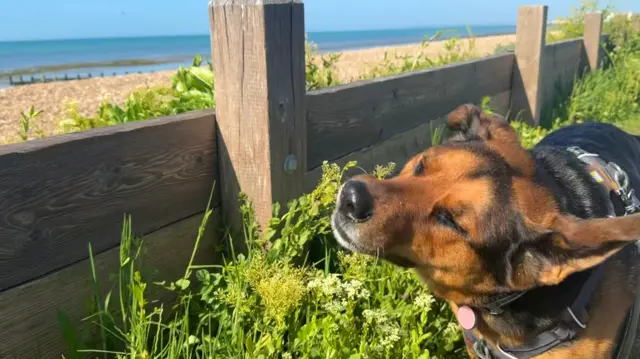
    Dog sniffing plants beside wooden fence by beach.Image source, Claire and Bella/BBC Weather Watchers
    Image caption,

    A walk on the coast in Middleton-on-Sea, West Sussex, for this four-legged friend

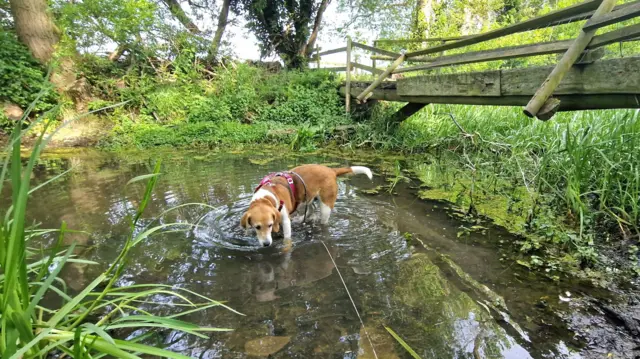
    Dog standing in shallow stream beneath wooden bridge.Image source, Helen Earth/BBC Weather Watchers
    Image caption,

    It's a paddle in the river for this dog in Cropwell Bishop, Nottinghamshire

    Black and white dog beside weathered stone bench in park.Image source, littleacorns/BBC Weather Watchers
    Image caption,

    This pooch in Southam, Warwickshire, has found a shady patch to cool down