Summary

  1. Israel launches retaliatory strikes on Iranpublished at 06:00 BST
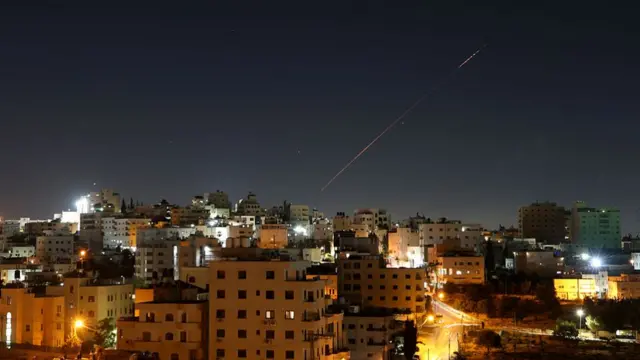
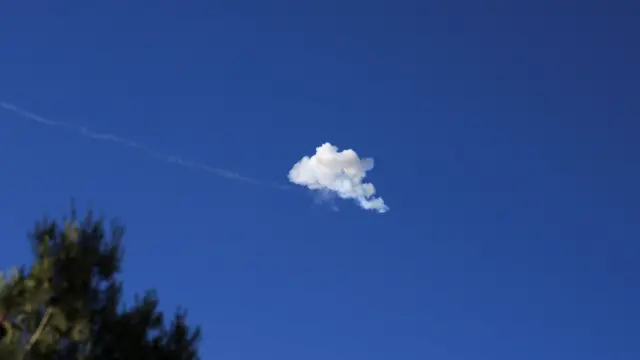
    Missiles launched from Iran toward Israel are seen in the sky over the West Bank city of Hebron on June 7, 2026.Image source, Anadolu via Getty Images

    If you're just joining us, Israel has launched retaliatory strikes on Iran following Tehran's attack on northern Israel. Here are the latest developments:

  2. Trump's concern is that Israel could derail US-Iran talkspublished at 05:37 BST

    Sarah Smith
    North America editor

    Israeli strikes were carried out despite Benjamin Netanyahu being told not to retaliate by US President Donald Trump, who was already angry that the Israeli prime minister had ignored his warnings not to attack Beirut.

    Trump's concern is that Israel’s actions could derail ongoing negotiations between the US and Iran.

    A US official quoted by Axios News said that Trump told Netanyahu to hold off because, in his words, "we are close to doing something good in terms of a deal".

    There had been a particularly angry phone call last week between the two leaders. Trump has not denied reports that he shouted and swore at Netanyahu over Israel’s escalating strikes on Lebanon.

    Earlier, the US president told the Financial Times that Netanyahu would have to accept any deal that the US secures with Iran because he "won't have any choice". He said, of Netanyahu: "I call all the shots. He doesn’t call the shots."

    Trump suggested the US and Israel were very close to concluding a deal. That's something he has said many times before, but as yet, no settlement has been agreed.

  3. More missiles launched from Iran towards Israel, IDF sayspublished at 05:08 BST

    Smoke from an Israeli interception of an Iranian missile above Jerusalem.Image source, Reuters
    Image caption,

    Smoke from an Israeli interception of an Iranian missile above Jerusalem

    The Israel Defense Forces (IDF) says another wave of Iranian missiles has been fired towards Israel.

    In a statement, the IDF says defensive systems "are working to intercept the threat".

    It urges the public to seek shelter if they receive an alert.

  4. What's happened since the April ceasefire?published at 05:03 BST

    A ceasefire between the US and Iran came into effect on 8 April. Israel had backed the deal but said it "does not include Lebanon".

    The Iranian Revolutionary Guard Corps (IRGC) promised a "regret-inducing response" if strikes on Lebanon continued.

    Since then, the shaky ceasefire has been tested and there have been mixed messages over the progress of a deal between the US and Iran to bring an end to the war.

    Here's a timeline of events since then:

    8 April: The same day the ceasefire began, at 14:15 local time: Israel announced it had struck 100 targets in Lebanon within 10 minutes. This kills over 300 people, Lebanese officials say, making it the country's deadliest day in decades. An Iranian minister calls this a "grave violation" of the ceasefire.

    13 April: The US begins a naval blockade on Iranian ports, after talks in Pakistan between Washington and Tehran failed to reach an agreement.

    16 April: An Israel-Lebanon ceasefire - announced by Trump - comes into effect and is set to last ten days.

    17 April: Iran saysthat the Strait of Hormuz - a key oil shipping channel blocked by Tehran during the war - has reopened for commercial ships. This lasts until 18 April, when Tehran said it would close the strait due to the continuing US naval blockade.

    23 April: A second round of talks is scheduled to take place in Washington between Lebanon and Israel. Trump says the ceasefire between Israel and Lebanon has been extended by three weeks.

    24 April: US envoys Steve Witkoff and Jared Kushner are meant to head to Pakistan for talks with Iran, but Trump cancels this trip, claiming the US has "all the cards". His words come after Iranian Foreign Minister Abbas Araghchi says his country is "yet to see if the US is truly serious about diplomacy".

    3 May: Trump announces Project Freedom - which aims tohelp guide ships stranded by Iran's closure of the Strait of Hormuz.

    By 5 May: However, he says the project will be paused "for a short period of time" to see whether the US and Iran can come to an agreement.

    12 May: Trump says the month-long ceasefire between the US and Iran is on "massive life support". Iranian parliamentary speaker Mohammad Ghalibaf says Iran's armed forces were, "ready to respond and to teach a lesson for any aggression".

    24 May: The US president says an agreement with Iran has been "largely negotiated" and details will be announced soon. An Iranian foreign ministry spokesperson warned that a convergence in US and Iranian positions did not mean agreements would be reached on key issues.

    6 June: US and Iran exchanged strikes in Gulf - American forces targeted Iranian drones and radar sites, and Iran fired missiles at US bases.

    7 June: Iran launches waves of missiles at Israel in what the Islamic Revolutionary Guard Corps calls the "beginning of a full week of continuous strikes". The Iranian strikes came hours after Israel said it struck Hezbollah targets in southern Beirut.

  5. Israel says missile fired from Yemenpublished at 04:06 BST

    The Israel Defense Forces says it has detected the launch of a missile from Yemen toward Israeli territory.

    Aerial defence systems are "operating to intercept the threat" it said.

    The Times of Israel reports warning sirens are sounding across Jerusalem, Tel Aviv and surrounding parts of central Israel.

    The IDF says following its "situational assessment" people are now "permitted to leave protected spaces in all areas of the country".

  6. No urban areas in Tehran targeted, says Iranian local mediapublished at 03:31 BST

    Iranian local media is reporting that Tehran's urban areas have not been targeted in Israel's strike on central and western Iran.

    Citing Tehran's Fire Department, local media said at least two explosions were heard in western parts of the Iranian capital in the early hours of Monday morning.

    We reported earlier that several explosions were also heard in the cities of Tabriz, Isfahan and near Karaj.

    The scale of damage is still unclear.

    Local authorities in Isfahan have been reported in state media as saying there were no casualties. No details have come through for other parts of the country.

  7. Iranian state TV reports explosions in multiple citiespublished at 02:51 BST
    Breaking

    Iranian state TV is now reporting explosions in three cities after Israel said its air force had struck military targets in central and western Iran.

    "Several explosions heard in Tehran, Tabriz and Isfahan," state TV posted on Telegram.

    Explosions were also reportedly heard near the central city of Karaj.

  8. Israel says it struck targets in western and central Iranpublished at 02:35 BST
    Breaking

    Israel says its has struck military targets in western and central Iran.

    "A short while ago, the Israeli Air Force struck military targets belonging to the Iranian terror regime in western and central Iran," the Israel Defense Forces (IDF) wrote on Telegram.

    No further details were provided on casualties or the exact location of the strikes.

    Stay with us as we bring you more updates.

  9. Iran suspends flights at Tehran airportpublished at 02:21 BST

    Iran has suspended all incoming flights to Tehran's Imam Khomeini International Airport "until further notice" after it launched a wave of missile strikes on Israel, according to local media reports.

    Imam Khomeini International Airport is one of two airports in Tehran and was recently reopened in April after being closed for weeks due to the ongoing Middle East conflict.

  10. Oil prices rise after Iran fires missiles at Israelpublished at 01:33 BST

    Osmond Chia
    Business reporter

    A man in a green jumper returns a green fuel pump at a petrol stationImage source, Anadolu via Getty Images

    Oil prices climbed on Monday morning trade in Asia after Iran fired missiles at Israel for the first time since a fragile ceasefire was agreed between the countries and the US in April.

    The price of the global benchmark Brent jumped by 2.6% to $95.50 (£71.60) a barrel, while US-traded crude rose by 2.5% to $92.75.

    Energy prices have made wild swings since the April ceasefire was agreed.

    Prices have floated around the $95 mark in the past week as traders weighed the long-term impact of the war on global energy flows.

  11. Trump urges Netanyahu not to retaliate against Iran - media reportspublished at 01:07 BST

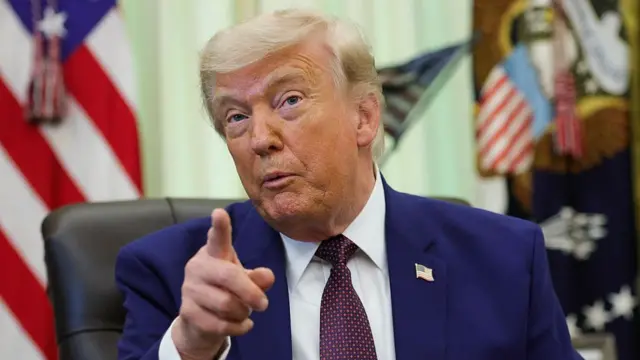
    US President Donald Trump wearing a blue suit and pointingImage source, Kevin Dietsch via Getty Images

    Donald Trump has spoken to several US and international media outlets in the wake of Iran's missile strike.

    Prior to his call with Israeli Prime Minister Benjamin Netanyahu, Trump told US media outlet Axios that he planned to urge Netanyahu not to retaliate against Iran's attack.

    The US president reiterated that message to Israel's Channel 12 news, saying he did not want to see "an additional attack tonight", according the Times of Israel.

    "The Iranian strikes didn’t hurt anybody," Trump said. "Each of them had their fun. Israel had its strike and Iran had its strike. We don’t need another one."

    He added that he was going to call Netanyahu "right now and tell him not to retaliate".

    We reported earlier on Trump's comments to the Financial Times, where he said Netanyahu would have "no choice" but to accept a deal with Iran.

  12. Israel closes Gaza crossings after strikespublished at 00:49 BST 8 June

    Israel says it is closing crossings into Gaza again after Iran's strikes in the north of the country, including the Rafah Crossing and Kerem Shalom, a site for humanitarian aid to pass into Gaza.

    The Co-ordinator of Government Activities in the Territories (COGAT) says the move is a part of "a number of necessary security measures".

    COGAT, which is part of the Israeli Ministry of Defence, says the closure will not have an impact on the humanitarian situation in the Gaza Strip because "substantial quantities of food that have entered the Strip since the beginning of the ceasefire significantly exceed the nutritional needs of the population".

    Israel has closed crossings into Gaza before during the war with Iran, including briefly in February.

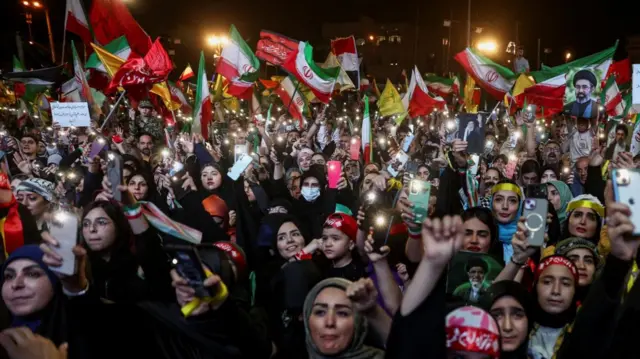
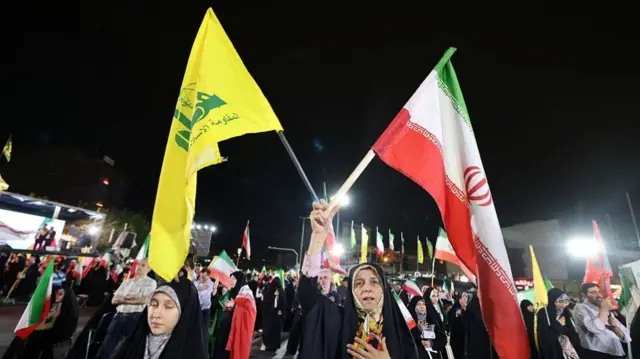
  13. Demonstrations take place in Tehranpublished at 00:19 BST 8 June

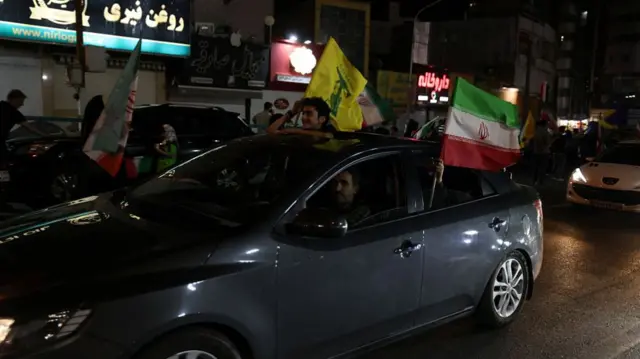
    We're getting some pictures now of pro-government demonstrations taking place in Tehran, following the Israeli strikes on Beirut's southern suburbs.

    Many of the protesters in the photos are carrying the flags of Iran and Hezbollah, the Iran-backed political and military group in Lebanon.

    People chant during an anti-U.S. and Israeli rally after Iran's missile attack on Israel.Image source, Reuters
    A woman holds the flag of Iran and Hezbollah at a protest.Image source, AFP
    Pro-government Iranian demonstrators wave flags of Iran and Lebanon's Hezbollah movement.Image source, AFP
  14. US embassy in Jerusalem closed on Mondaypublished at 23:57 BST 7 June

    The US embassy in Jerusalem will be closed on Monday due to the "current security situation in Israel".

    In a statement, the embassy said that it has directed all US government employees to "shelter in place, and be prepared to move to a protected shelter".

  15. Trump says Netanyahu will have no choice but to accept dealpublished at 23:39 BST 7 June

    Trump has just told the Financial Times that Israeli Prime Minister Benjamin Netanyahu will have no choice but to agree to whatever deal the US strikes with Iran.

    "He won’t have any choice," Trump told the Financial Times , externalover the phone. "I call the shots. I call all the shots. He [Netanyahu] doesn’t call the shots."

    Trump told Axios earlier that he was going to ask Netanyahu not to retaliate against Iran for the latest attack to make sure the three sides could salvage a deal.

    Trump told the Financial Times that the latest strikes have not had "any impact on the deal".

    "We’ll see how it ends up," Trump said. "It’s one of those things that’s been going for 3,000 years, or 47 years, depending on how you count."

  16. Analysis

    Fears of escalation drive questions over the limits of US influencepublished at 23:25 BST 7 June

    John Sudworth
    Reporting from Beirut

    As we've been reporting, the IDF earlier said it was "preparing for potential fire" after it struck what it called Hezbollah targets in the Lebanese capital Beirut.

    Beirut has become a geopolitical battleground of its own within the wider Israel-Lebanon conflict.

    In many ways, what is happening in the capital pales in comparison to the fighting in southern Lebanon, where Israel's ground offensive and aerial bombardment have continued daily and intensified in recent weeks.

    But Beirut has been treated differently for political reasons. While there have been one or two targeted strikes in recent weeks, there has also been a sense that US pressure was helping to restrain Israeli action in the capital.

    That appeared to end today, not just with the strike on Beirut's southern suburbs with the scenes of heavy damage to an apartment building, people rushing the wounded to hospital, and reports of fatalities, but with the warning from the IDF that more was to come.

    "To be continued", one of its spokesmen wrote on X.

    The strike came after a warning from the Israeli military that further action could follow.

    Israeli officials said two Hezbollah projectiles crossed the border earlier in the day, and Hezbollah later claimed responsibility.

    From Israel's perspective, this appeared to mark a final loss of patience.

    Despite US pressure, Israel has consistently maintained that it reserves the right to strike Beirut if it deems it necessary for its security.

    But today's attack raises fears of the very escalation many had been warning about.

    And with reports out of Washington suggesting Trump did not authorise the strike, it also raises questions about the limits of US influence over its Israeli partner and the narrowing range of options available to the world's biggest superpower as it tries to get itself out of a war it began three months ago with such confidence.

  17. Who has said what?published at 23:12 BST 7 June

    So far, we've heard from Trump, Iran's foreign ministry as well as the Israeli military about today's strikes.

    • Israel's National Security Minister Itamar Ben-Gvir said in a post on X that Tehran "must burn" after the strikes, while a spokesperson for the Israel Defense Forces said Iran made a "grave mistake"
    • Iran's foreign ministry said any attack from Israel against Lebanon or Iran would be met with a "crushing and comprehensive response", blaming the US for strikes on Iranian ships last week
    • US President Donald Trump, meanwhile, told Axios that he would call Israeli Prime Minister Benjamin Netanyahu and ask him not to retaliate because he was worried the attacks would "blow up" a deal between the three sides
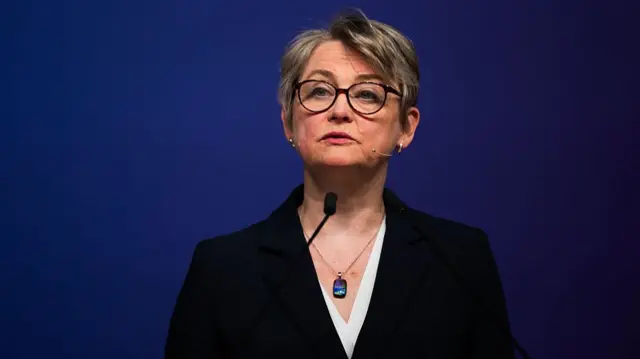
  18. 'Both sides must show restraint and de-escalate immediately' - UK foreign secretarypublished at 22:56 BST 7 June

    Yvette Cooper, UK foreign secretary, during the Global Partnerships Conference in London, UK, on Wednesday, May 20.Image source, Getty Images

    UK Foreign Secretary Yvette Cooper says the "resumption of conflict between Iran and Israel is in no one’s interest".

    "Both sides must show restraint and de-escalate immediately," she adds in a post on X.

    Cooper also says "negotiations must continue towards the lasting settlement that we all need, for peace and stability in the region, and for the full restoration of global trade".

  19. Iran's foreign ministry warns of 'crushing' response if Israel retaliatespublished at 22:37 BST 7 June

    Iran's foreign ministry says its armed forces hit several "military targets" north of the "occupied Palestinian terroritories".

    In a statement, the ministry says the strikes come after a "repeated violation" of the April ceasefire between the US, Iran and Israel, including US attacks on Iranian ships and targets in the south of the country.

    A ceasefire has been in force since 17 April - in name only - and has been violated repeatedly by both Israel and Iran.

    The US said last week that it hit Iranian military sites over the weekend, while Tehran said it responded by targeting a US base.

    Iran's foreign ministry adds the country is defending its security and national interests, warning that any attack from Israel against Lebanon or the Islamic Republic of Iran would be met with "a crushing and comprehensive response".

  20. Israel will 'strike the enemy as soon as the order is given' - military chiefpublished at 22:30 BST 7 June

    In a post on Telegram, the Israel Defense Forces (IDF) says its chief of the general staff is conducting a situational assessment.

    Israel's military says Lt Gen Eyal Zamir vows the country "will strike the enemy with determination as soon as the order is given".