Summary

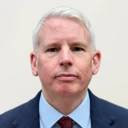
  • New Scottish Labour Party leader Michael Marrra says the 11% rise in drug deaths, revealed yesterday, shows the Scottish government's "complacent disgrace" over the "emergency" issue

  • First Minister John Swinney says his government is working on tackling the scourge of drugs which has been exacerbated by inter-generational trauma and poverty and an increase in synthetic substances

  • Reform UK Scotland's leader Malcolm Offord also raises the annual drug deaths as well as the government's record on poverty

  • Further questions on Scotland's drugs crisis come from Scottish Conservative leader Russell Findlay and Scottish Lib Dem leader Alex Cole-Hamilton

  1. FMQs: The Headlinespublished at 15:04 BST

    Here is a summary of the main talking points from this week’s party leaders’ FMQs:

    • John Swinney described the latest drug-related death statistics as "unacceptable and intolerable" and expressed his "deepest sympathies" to everyone who had been affected.
    • The first minister told newly elected Scottish Labour leader Michael Marra the Scottish government was working to address these issues.
    • Swinney said that without the Thistle drug consumption room in Glasgow, the latest drug figures would have been worse.
    • Scottish Liberal Democrat leader Alex Cole-Hamilton said "warning signs were there" when he first mentioned nitizenes in the chamber three years ago.
    • Swinney said the government had engaged with Police Scotland and said more people were being convicted for drugs-related offences.
    • Reform UK Scotland leader Malcolm Offord claimed Swinney did not care about the issues affecting Scotland - with the exception of independence. Swinney said there were challenges and he must face the realities.

    That’s all for now. Today’s editor was Catherine Lyst and the writers were Paul O’Hare and Claire Thomson.

    Thanks for joining us.

  2. Analysis

    Serious debate that needs more than point scoringpublished at 14:57 BST

    Andrew Kerr
    BBC Scotland political correspondent

    The high number of drugs deaths absolutely dominated First Minister's Questions today.

    Labour's new leader Michael Marra cemented his approach to co-operative working, demanding a change of course from the government but offering to help John Swinney get there.

    That was warmly welcomed by the first minister - who seemed genuinely pleased with the offer.

    After all, it's an incredibly difficult problem.

    But both Malcolm Offord of Reform UK and Scottish Tory leader Russell Findlay took a far more critical line.

    Liberal Democrat leader Alex Cole-Hamilton also offered his critique of what he saw as a slow approach from the government - with them being "trapped in the headlights".

    Swinney emphasised that it was a serious debate that needed more than political point scoring.

  3. Swinney backs drug consumption roomspublished at 14:52 BST

    In response to Cole-Hamilton, Swinney highlights the value of drug consumption rooms.

    The Thistle, the UK's first drug consumption room, opened in Glasgow in January last year.

    Drug laws are set at Westminster but are enforced by the Scottish courts.

    This Thistle scheme only went ahead because Scotland's senior prosecutor, the Lord Advocate, announced a change in policy which meant users would not be prosecuted for possessing illegal drugs while at the facility.

    The UK government said it had no plans to introduce other consumption rooms but it would not interfere in the Glasgow project.

    Swinney told MSPs: "If I had my way I would have other drug consumption rooms in other parts of the country but I have to respect the legal process that we undertake."

  4. Analysis

    Similar stance to UK government over Israel linkspublished at 14:51 BST

    Andrew Kerr
    BBC Scotland political correspondent

    The Greens have been doggedly pursuing what they call an "end to trade with companies that profit from exploiting the occupied territories" - rooting out what they view as companies with problematic Israeli links.

    In First Minister's Questions, co-leader Gillian Mckay identified three firms with links - CAF which is in the running to build new Scottish trains, an NHS provider and Barclay's which is involved with Scottish government bonds.

    The first minister kept emphasising that he always had to act within the law when it came to Barclays - likewise he was seeking information on the train company and liaising with the NHS on the other issues.

    This is a pretty similar stance to that taken by the UK government which has announced sanctions on Israeli settlements in the occupied West Bank.

    So there are three shades of onion as you sweep through the chamber - the Green position, the government's legalistic approach - and then the Conservatives.

    Their leader Russell Findlay said today it was a "great shame" that Barclay's wasn't being backed - chiming with his position in last week's debate.

    He said: "We should distinguish clearly between action against unlawful settlement activity and the indiscriminate exclusion of Israeli-linked companies" - adding that he thought such actions risked promoting anti-semitism.

  5. What impact does deprivation have on drug deaths?published at 14:47 BST

    This Flourish post cannot be displayed in your browser. Please enable Javascript or try a different browser.

    The deprivation gap continues to play a significant role in Scotland's drugs death crisis.

    Figures from the National Records of Scotland, external show the drug use death rate in the most deprived areas of the country was 15 times higher than in the least deprived areas in 2025.

    Whereas for all causes of deaths, the rate is about two times higher in the most deprived areas compared with the least deprived.

  6. Cole-Hamilton: 'Why has the SNP's national mission failed?'published at 14:45 BST

    Alex Cole-Hamilton

    Scottish Liberal Democrat leader Alex Cole-Hamilton begins by congratulating the new Scottish Labour leader.

    He also praises the "tireless work" Michael Marra has carried out on drugs mortality.

    Cole-Hamilton turns to Swinney and accuses him of talking about the spike in synthetic drugs as if it was unexpected.

    But he says he first mentioned nitizenes in the chamber three years ago and adds: "The warning signs were there."

    Deaths over that period have soared from nine to 247.

    He asks: "If this truly is the SNP's national mission why has it failed?"

    Swinney says he heard the warnings and highlights measures such as increasing rehabilitation services and improvements in community support organisations.

    He adds that the government has engaged with Police Scotland and says more people are being convicted for drugs-related offences.

  7. Analysis

    Finding a new way to word the same questionpublished at 14:37 BST

    Kirsten Campbell
    BBC Scotland political correspondent

    It's perhaps no surprise that politicians want to challenge the SNP government over its record on drugs deaths.

    As one MSP pointed out yesterday, more than 1,6000 Scots, the equivalent of the population of St Andrews, have lost their lives to drugs over the last 20 years.

    But the challenge for the leaders when more than one party picks the same topic, is to find a new angle, or a different way of wording the question so it hasn't been asked already.

    Otherwise the first minister can avoid the substance of the issue and instead chide them for not listening to his earlier responses.

    An adept politician will be aware that on an issue of this magnitude it's likely they will not be the only person demanding answers as to what the government is doing to improve outcomes, and will have prepared a range of potential options to keep up the pressure.

  8. Findlay questions whether drug consumption rooms will cost more livespublished at 14:37 BST

    Findlay says the SNP's approach is sending thousands of drug addicts "to an early grave by pedalling the lie that inherently dangerous drugs can be taken safely".

    He asks whether this approach will cost more lives.

    Swinney defends Minister for Drugs and Alcohol Policy of Scotland Maree Todd, adding that she is taking forward "a very difficult responsibility".

    The first minister accepts full responsibility for everything that happens in the name of his government.

    He adds that he will improve the lives of those affected by drugs and will confront the severity of addiction.

  9. Which communities are worst affected by drug deaths?published at 14:35 BST

    This Flourish post cannot be displayed in your browser. Please enable Javascript or try a different browser.

    Glasgow remains one of Scotland's worst affected communities for drug use deaths, according to new figures published by the National Records of Scotland, external.

    Last year the council recorded 196 drug use deaths - more than any other local authority.

    It also had the highest drug death rate in the country with 38 per 100,000 people (based on registrations within the five-year period from 2021 to 2025).

    But Glasgow isn't the only area affected by Scotland's drug crisis.

    Dundee, North Ayrshire, Inverclyde, West Dunbartonshire, and East Ayrshire also had higher drug death rates than the national average.

  10. Findlay also chooses to focus on the drug death statspublished at 14:35 BST

    Russell Findlay

    Scottish Conservatives leader Russell Findlay also questions Swinney on the latest drug death statistics.

    He discusses the drug consumption unit which opened in Glasgow last year and claims the evidence shows the city's drug deaths has increased in that time - the opposite of what is intended.

    Findlay calls for Swinney to stop spending money of these facilities - to which one is proposed for Edinburgh - and instead focus on rehab.

    Swinney claims Findlay is "plain wrong" in relation to the Thistle drug consumption room in Glasgow.

    He says he understands the concern but the figures would have been worse if staff at the unit had not intervened.

  11. Background: Greens back train drivers over ScotRail contract rowpublished at 14:33 BST

    ScotRail train at platformImage source, Getty Images

    The Greens have voiced support for Scotland's train drivers after it emerged they will refuse to work on new ScotRail trains if a company which operates in the occupied Palestinian Territories is given the contract.

    The Herald newspaper reported, external that five companies have been shortlisted to provide at least 69 new electric and battery-electric trains for routes in Glasgow, Lanarkshire, Fife and the Borders.

    Construcciones y Auxiliar de Ferrocarriles has been named by the United Nations Human Rights Office on its updated database of companies involved in unlawful Israeli settlements in the occupied West Bank.

    The Aslef union has written to Transport Secretary Stephen Flynn making clear that drivers will refuse to work on the trains if the company is awarded the contract.

    The paper reports that the Scottish government has adopted a Boycott, Divestment and Sanctions position against Israel but has been criticised for failing to implement it.

  12. Mackay asks if company should be blocked from trains contractpublished at 14:33 BST

    Gillian Mackay

    Greens co-leader Gillian Mackay reminds MSPs that they backed a motion last week in relation to companies who work in the occupied West Bank.

    She says they should be disqualified from public contacts and Scottish government support.

    It has since emerged that a company called Construcciones y Auxiliar de Ferrocarriles (CAF) has been shortlisted for a new trains contract.

    Aslef members have said they will refuse to drive trains if they are manufactured by a company which "profits from apartheid".

    Mackay asks if CAF should be blocked from the contract?

    Swinney says he is aware of the issue and confirms Scottish Rail Holdings are seeking further advice and will update ministers.

  13. Postpublished at 14:32 BST

    This Flourish post cannot be displayed in your browser. Please enable Javascript or try a different browser.

  14. 'Is Swinney ever ashamed?' asks Offordpublished at 14:24 BST

    The Reform UK Scotland leader calls the first minister "shameless Swinney", claiming that he does not care about the homelessness crisis, education standards, drug deaths and child poverty.

    For the third time, he asks Swinney if he "is ever ashamed".

    Swinney says he has to face the reality of the country he leads but does not deny there are challenges.

    He adds that there are swings and roundabouts for each of the topics Offord mentions.

    The first minister says Marra suggests dialogue to address situations but Offord comes forward with "depressing critique".

    He concludes that the government will take the action needed.

  15. Offord questions an increase in homelessnesspublished at 14:22 BST

    Offord takes Swinney's response as a "no".

    He moves on to question Swinney on whether he is "ashamed" of the increase in rough sleeping and asylum seeker applications.

    Swinney says the government is investing in housing infrastructure in Scotland, including bringing properties back into use and affordable housing.

  16. Offord asks Swinney if he is 'ashamed' of child poverty numberspublished at 14:22 BST

    Malcolm Offord

    Reform UK Scotland leader Malcolm Offord questions Swinney on whether he is "ashamed" of the number of children who live in poverty in Scotland.

    Offord claims one in five children grow up in poverty and 10,715 live in temporary accommodation.

    Swinney says he is in office to improve the lives of people in Scotland.

    The first minister adds that his government has used powers to address the situation and child poverty rates in Scotland are lower than in the rest of the UK.

  17. Analysis

    First exchange between Marra and Swinney constructivepublished at 14:21 BST

    Andrew Kerr
    BBC Scotland political correspondent

    The shocking toll of Scotland's high number of drugs deaths was bound to be brought before the first minister in parliament today.

    Yesterday, it was left to the Drugs Minister Maree Todd to field all the questions on this deep problem.

    There's been criticism of the minister and SNP MSPs for saying the Scottish government's hands are essentially tied on this with powers being reserved to Westminster - notably the Misuse of Drugs Act 1971.

    In his first appearance at First Minister's Questions, the new Labour leader Michael Marra demanded a change of course from the government.

    It was interesting that he brought in his own expertise, referring to his "past life" as as deputy director of the Leverhulme Research Centre for Forensic Science in Dundee.

    The new leader was able to construct a supportive narrative - once again emphasising that he was willing to co-operate with John Swinney.

    That found favour with the first minister, in a sense welcoming any help to overcome one of Scotland's systemic issues.

    Their first exchange was certainly constructive - and victims' families will no doubt hope this will now be productive.

  18. Marra says the SNP's record is 'indefensible'published at 14:20 BST

    John Swinney

    Marra says "the scourge of nitizenes and synthetic opiods" was cited as a cause for the rise but adds that this is not a new issue.

    He says: "People buy these pills by the handful because in 2013 prescriptions for Valium were withdrawn under this government."

    Marra says the policy opened a Pandora's box and adds: "Deaths in Scotland skyrocketed to over two-and-a-half-times that of England with the same drug laws."

    He says Swinney's record is "indefensible" and asks if he agrees.

    The first minister says two factors are behind the the figures.

    The SNP leader says they are being driven by inter-generational poverty and trauma.

    He also highlights the upsurge in "grossly harmful synthetics".

    Swinney says his government is working to address both issues.

  19. Why is Scotland the drug deaths capital of Europe?published at 14:11 BST

    Media caption,

    Why is Scotland the drug deaths capital of Europe?

  20. Marra calls for a change of course on drug policypublished at 14:09 BST

    Michael Marra

    Labour leader Michael Marra, who was announced as Anas Sarwar's successor on Saturday, says Scotland's soaring drug death numbers require answers for grieving families.

    He also brands Alcohol and Drugs Minister Maree Todd's response at Holyrood on Wednesday as a "complacent disgrace" and calls for a change of course.

    Marra asks First Minister John Swinney if he agrees that Scotland faces a "public health emergency?"

    Swinney agrees about the gravity of the situation and expresses his "deepest sympathies" to everyone who has been affected.

    He describes the statistics as "unacceptable and intolerable" and adds that his government is focused on addressing them.