Thank you for readingpublished at 14:52 BST 25 June
Thank you for keeping up to date with our live page after South East Water announced a hosepipe ban for customers in Kent.
If you would like to read more, please click here.
Our live coverage has now ended
South East Water has announced a hosepipe ban will be brought in for people living in Kent
Customers are asked to adhere to the temporary ban "immediately" but it will not be enforced until 3 July
The ban, which affects about 850,000 customers, is in response to high temperatures and record demand for water across Kent
We know how frustrating it is, says South East Water chief executive
Where is the hosepipe ban in place?
Watch: The ban explained - in a minute
Analysis: BBC South East Environment Correspondent Fiona Irving on why this hosepipe ban is different
Thank you for keeping up to date with our live page after South East Water announced a hosepipe ban for customers in Kent.
If you would like to read more, please click here.
The Consumer Council for Water has welcomed South East Water's hosepipe ban.
Cath Jones, head of relationship management at the watchdog, says: "Many customers in Kent are fed up of experiencing disruption to their water supply.
"Introducing temporary hosepipe restrictions is the right move by South East Water to help ensure taps keep running for essential use in the face of soaring temperatures and demand for water."
She adds that "other small changes to people's everyday water use can also make a big difference – like taking slightly shorter showers or turning off the tap while brushing your teeth".But customers say they expect the company to lead by example by getting a firm grip of its supply network and doing everything it can to quickly fix burst pipes and reduce leakage, Jones says.
Businesses that use hosepipes as a core part of its commercial operations do not have to adhere to the ban, South East Water says.
The company gave the examples of car washes and window cleaners.
However, all other businesses that do not rely on hosepipes will need to comply with restrictions.
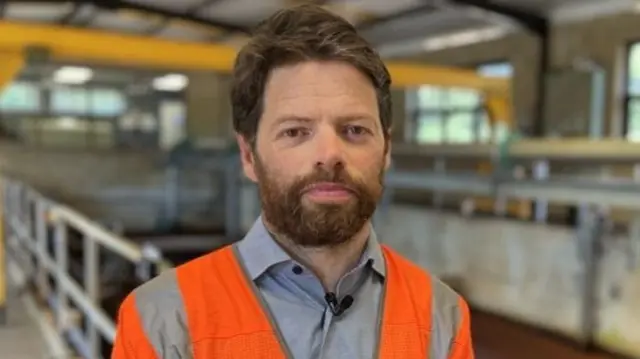
Nick Price, South East Water’s head of water resources, says the company saw a "record-breaking level" of demand on Wednesday.
He says that during a typical day in June, about 580 megalitres are used in the area. But this was at 680 megalitres on Wednesday.
The extra 100 megalitres is the equivalent of supplying three towns the size of Maidstone, Price adds.
He says that the ban is only for Kent as the county is seeing higher demand – but Sussex is "closely under review".
Price says Kent's ban will be reviewed on a weekly basis.
"We will only keep it on as long as it's necessary. I can promise that. And we will only take it off when the risk of further heat waves and possible interruptions has passed," he adds.
Reacting to South East Water's hosepipe ban, Annette Cox, who owns Even Flow cafe in Tunbridge Wells, tells the BBC that she is "amazed" that the ban did not happen sooner.
“I'm not surprised. I wouldn’t have expected them to react any other way. I think we've been through so much with them that it's standard behaviour," she says.
The mother-of-two says that one of her biggest concerns is not being able to fill up a paddling pool for her children.
Meanwhile, George Witcomb, from Tonbridge, tells the BBC that he is “concerned”, but mainly for his father who is a keen gardener.
Gardening is his father’s "stress relief", he says.
"It has been one thing after another, but the one thing that I do think is almost quite good about it is it does make you appreciate the things you have more. So when these things get taken away, you realise how much you actually value them," he adds.
"I would say that it is probably for the best as long as its not a long-term thing."
For those asking how temporary is temporary, South East Water says it is keeping its hosepipe ban in Kent "under constant review".
"It is likely that it will continue until we are confident that the demand for water has reduced back to manageable levels," it adds.
"This really is just a temporary measure to help us in these very unusual circumstances."
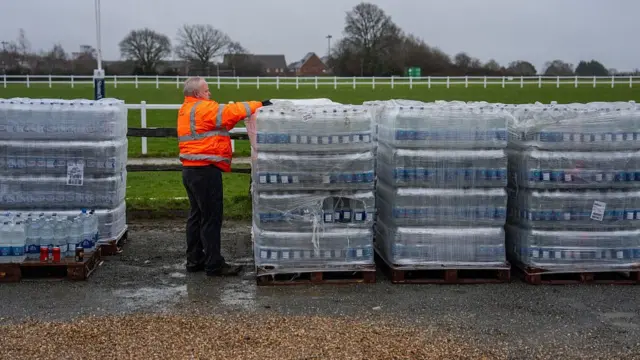 Image source, Getty Images
Dry Wells Action, a consumer action group based in Tunbridge Wells, says that South East Water has failed in its sole mission to supply homes in Kent and is “admitting it is struggling again”.
Chairman Jonathan Hawker says: “We can live without using hosepipes in the garden or to wash a car. We can’t live without drinking water or with a water company that doesn’t know what it’s doing.”
The group is calling for a “common sense” suspension of new home developments within the South East Water network until the “crisis is resolved finitely”.
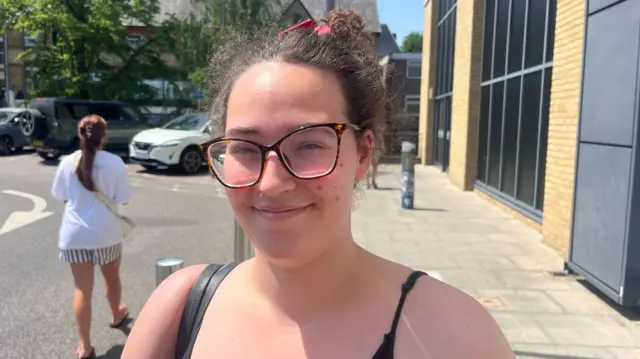
Emilia Pound, from Sevenoaks, says the hosepipe ban is a "little bit ridiculous".
"You have parents who can’t keep kids cool by chucking them in a paddling pool," she tells BBC Radio Kent.
"You’ve got people wanting to cool down their dogs. How are we supposed to keep cool?”
Tom, also from Sevenoaks, says the hosepipe ban is "not ideal".
"Obviously the temperatures are really high and ultimately they should prepare better for children and the elderly who need water when it’s unusually hot," he adds.
And Jason Bradshaw, from Sevenoaks, says the ban is "to be expected".
"People need to prepare by having water butts and containers to collect rainwater, and it’s good to support a hosepipe ban to store up the water for others and keep supply high," he adds.
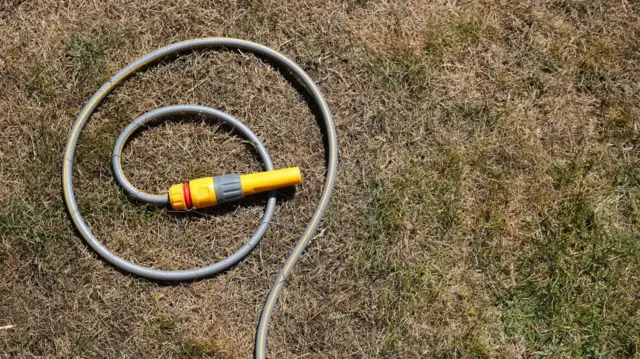 Image source, Getty Images
Millions of people in England have faced temporary hosepipe bans before, but how are they enforced exactly?
Water companies are allowed to prohibit uses of water during times of serious water shortage under the Water Industry Act, and this includes the use of hosepipes.
South East Water says customers are "very supportive and understanding of the need to save water".
However, it adds that contravening the ban is a convictable offence, which can lead to fines of up to £1,000.
"Prosecution is very much a last resort and something no company wants to have to do," the company says on its website.

We have been getting some more reaction to the South East Water's hosepipe ban in Kent.
Howard, from Maidstone, tells the BBC "people will just use their hosepipes anyway on a day like today".
"Why shouldn’t they," the 78-year-old adds.
South East Water says its temporary hosepipe ban applies to all customers across its Kent supply area and will be enforced from 3 July..
It is not being implemented in Sussex or Berkshire, Hampshire and Surrey.
But the company says it is monitoring the situation "closely" in those areas.
Environment correspondent Fiona Irving explains why South East Water is restricting hosepipe use in Kent.
Why is there a hosepipe ban in Kent?
 Image source, Getty Images
South East Water has put in place a hosepipe ban in Kent.
The water company says the restriction will not be enforced until 3 July, but it wants customers to abide by the ban "immediately".
Affected areas are Sevenoaks, Tunbridge Wells, Snodland, Maidstone, Tenterden, Ashford, Faversham, Canterbury and Herne Bay.
South East Water adds it does not know how long the ban will last, although it's keeping things under "constant" review.
Anyone caught breaking the ban - which comes after a slew of bad headlines for the company - could be fined up to £1,000.
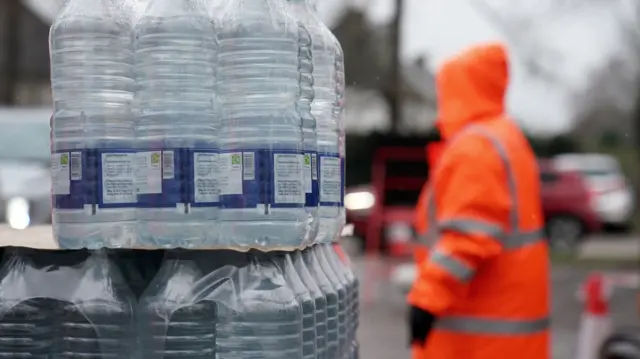 Image source, PA Media
The hosepipe ban in Kent comes amid a backdrop of bad headlines for South East Water in recent months.
The company has been under scrutiny since last November, when 24,000 customers lost water supply or pressure in the Tunbridge Wells area.
Customers were then advised to boil their water before consumption for a nine-day period after supply returned.
Weeks later, about 30,000 households in Kent and Sussex faced days of supply issues, which bosses blamed on freezing temperatures and Storm Goretti.
With intense pressures from customers and MPs, the company went on to announce its chair had departed and its chief executive would also leave following the earlier failures.
Regulator Ofwat proposed fining South East Water £22m over supply issues between 2020 and 2023.
Last month Moody's downgraded its credit rating for South East Water, citing the "fallout" from supply failures and "continued resilience risk the company faces".
Temporary hosepipe bans have been put in place for South East Water customers in 2022, 2023 and 2025.
The last hosepipe ban put in place on 18 July 2025 affected 1.4 million customers in Sussex and Kent.
It wasn't lifted until 5 February this year after one of the wettest Januarys since records began.
This has led some to start asking if they will become permanent.
South East Water says it is seeing the impact of accelerated climate change, with hotter and drier summers and increasing demand for drinking water.
But it adds that it is making changes to try and reduce the risk of bans in the future.
The company says it's investing significantly in "enhancing resilience" in its water supply network in the short, medium and longer term.
It adds that it is also developing a new surface reservoir at Broad Oak near Canterbury and a new water treatment works in Maidstone.
Only time will tell if this is enough to avert future restrictions.

We've been getting some reaction from people affected by the hosepipe ban in Kent.
Naomi Scarborough, from Maidstone, tells BBC Radio Kent she thinks it is "absolutely disgusting".
"Everything has been left to go to the dogs to pay the shareholders," she says.
"It’s despicable," she adds.
"I want the water companies to be brought into public ownership again."
However, others have a different view.
Elizabeth Wood, who has a one year old child, tells the BBC the "hosepipe ban is to be expected".
She says she just gets on with it and when there are water supply issues she just uses "bottled water and baby wipes".
Some customers say they're furious after South East Water increased bills and then put the hosepipe ban in place.
The company raised prices by an average of 7% from April, bringing the average yearly bill to £324.
Many of its customers reacted angrily to the move, with one woman in Kent telling the BBC she felt like she was being "robbed".
The industry trade body, Water UK, says bill increases are needed to fund vital upgrades to the system and tackle the spillages which have caused a public outcry.
.
South East Water has spelt out why it is putting in place a hosepipe ban in Kent.
It says it wants to reassure customers that it has "plenty of water" in its reservoirs and underground aquifers thanks to a wet winter.
However, the company adds the "recent sustained heatwave has understandably driven customer demand for treated drinking water to near record levels".
"Despite producing up to more than an additional 100 million litres of water a day, equivalent to supplying in the region of three towns the size of Maidstone... water is being drawn from our local drinking water storage tanks faster than they can physically be refilled," the water company says.
"To make sure we can maintain a consistent public water service and protect essential supplies for hygiene, drinking and cooking for everyone, especially our vulnerable customers, we must reduce overall demand."
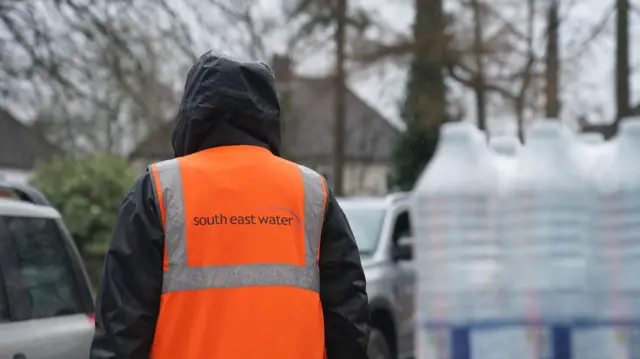 Image source, Getty Images
The South East Water hosepipe ban in Kent follows revelations earlier this month that the firm is wasting more than 100 million litres of water per day through leakages.
That's equivalent to around 500 million cups of tea every single day.
Kent County councillor Bill Barratt said the "gigantic scale" of leaks showed "how shocking our water infrastructure and resilience actually is".
"It's absolutely shocking."
South East Water has said it's working hard to reduce leakage across its network.
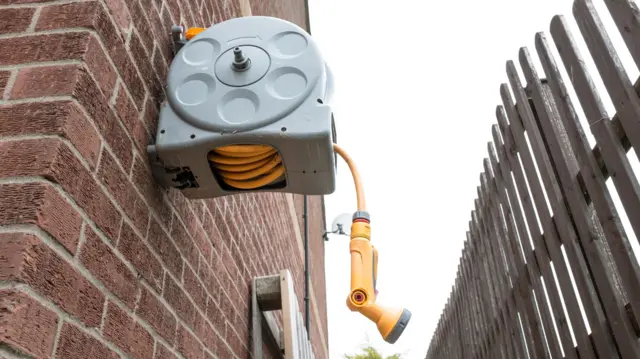 Image source, Getty Images
South East Water says it will enforce the hosepipe ban in Kent from 3 July, although it is urging customers to adhere to it "immediately".
It says this means that affected customers should refrain from:
