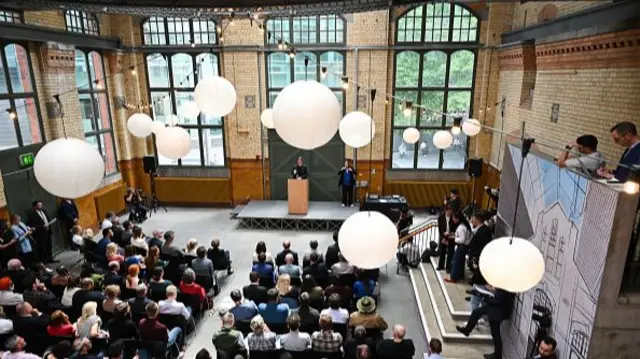
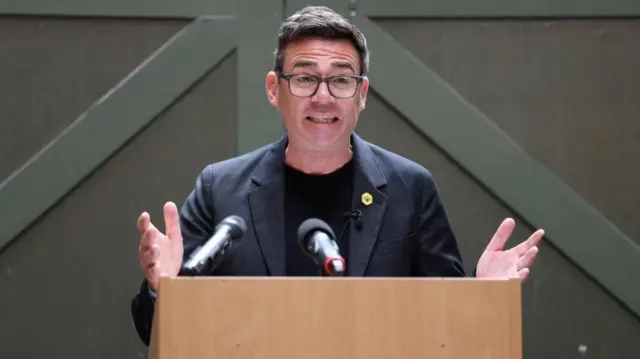
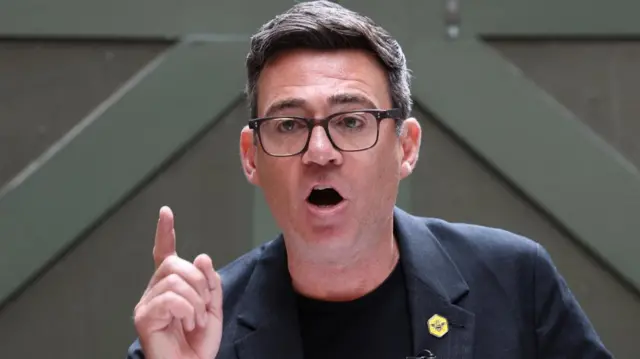
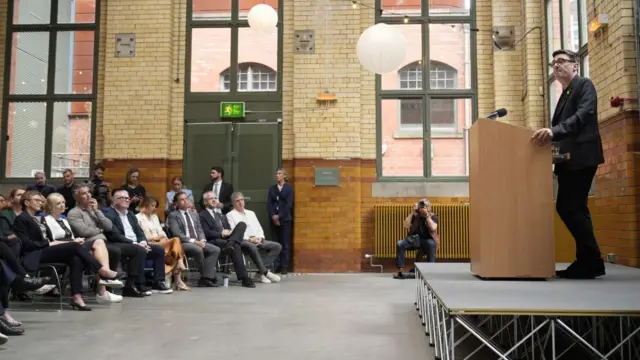
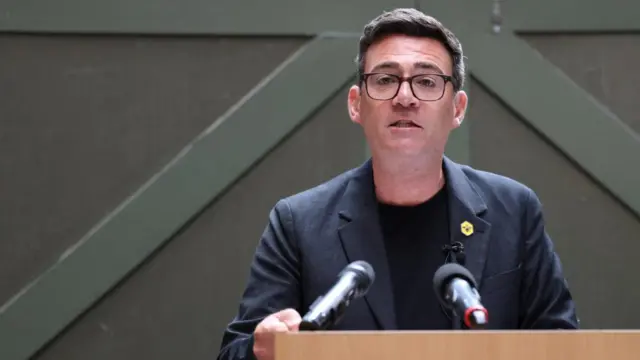
Devolution of power away from Westminster was at the heart of Burnham's speechpublished at 13:43 BST
Paul Seddon
Politics reporter
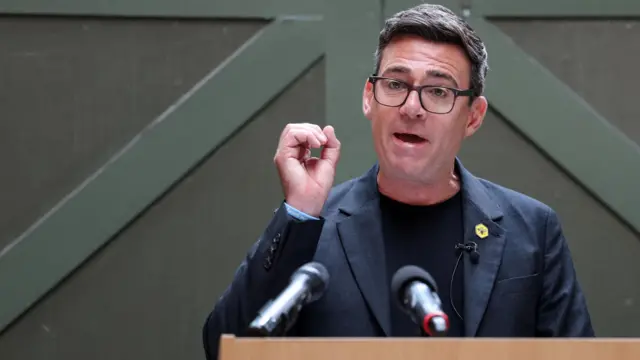 Image source, Reuters
The central theme of the speech was devolution of power away from Westminster, while making central government “more streamlined”.
Key to his plans is the creation of a new No 10 unit based in Manchester, which he said would help local leaders take greater “public control” of housing, transport, water and energy.
Another big theme was housing, where he repeated his promise to deliver the biggest programme of council house building since the post-war period.
Specific proposals mentioned included promoting building on vacant public land to reduce costs, and promoting higher density residential development in towns.
Burnham said he wanted to bring down welfare spending, but did not outline cuts to specific benefits. Instead, he said expenditure could be reduced in a “fair and lasting” way by giving regional mayors more power over employment support schemes, and greater “in work” mental health support.
After nearly a decade outside Parliament, he also laid out an ambition to chance the political culture at Westminster, including to the ‘whipping’ system of party management, which he argued had been used to “create fear” and shut down debate.
He also said he wanted to end an “adversarial” culture in Whitehall, in which government departments battle the Treasury for cash.
He made a pledge to restore “sovereign manufacturing” capabilities in sectors such as steel, defence, energy and farming. He said this could be achieved by offering British firms greater chances to win government contracts, in exchange for offering more work placements.