Summary

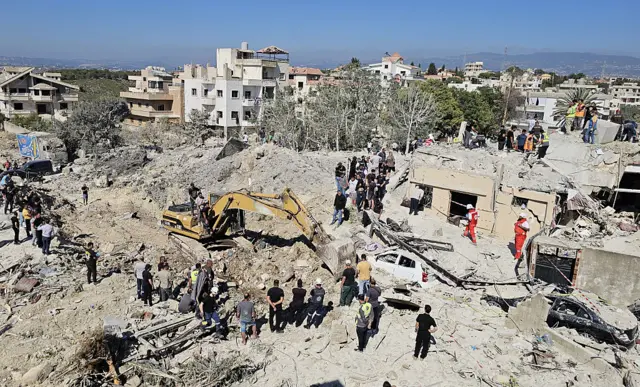
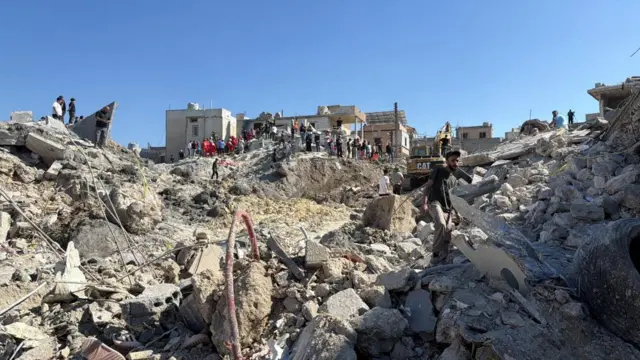
  1. Images show aftermath of strikes in southern Lebanonpublished at 18:45 BST

    As we've been reporting, at least 20 people were reportedly killed by Israeli strikes less than 24 hours after a new ceasefire between Israel and Hezbollah was announced.

    Both acknowledge attacking the other, but each claimed they were responding to violations by the other side.

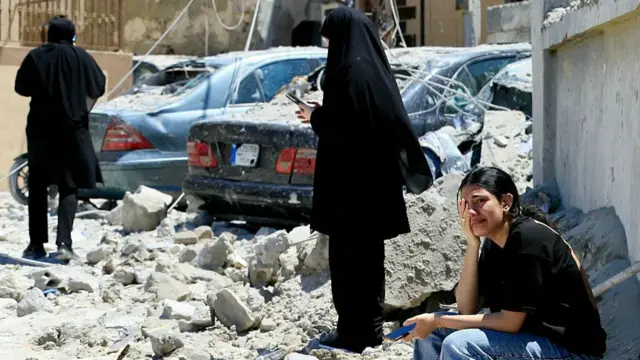
    A Lebanese woman weeps as she sits on the rubble at the site of an Israeli airstrike in Qennarit, southern Lebanon, 20 JuneImage source, Getty Images
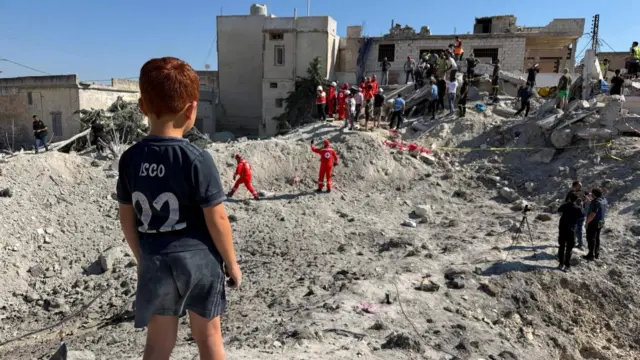
    A child stands next to the rubble of a building damaged in an Israeli strike in Qennarit, southern Lebanon, 20 JuneImage source, Reuters
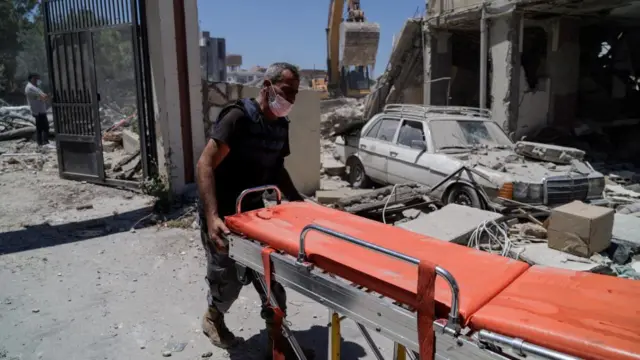
    A rescuer prepares a stretcher at the site of an Israeli air strike on a house in Barish, Tyre district, southern Lebanon, 20 JuneImage source, Reuters
    Civilians and Lebanese Red Cross personnel stand on the rubble of a damaged building after an Israeli strike on the village of Qennarit in southern Lebanon, 20 JuneImage source, Reuters
  2. Centcom says Iran does not control strait and traffic there continues - reportspublished at 18:07 BST

    US Central Command spokesperson Tim Hawkins has told Al Jazeera, the Washington Post and Reuters: "Iran does not control the Strait of Hormuz".

    He reportedly told them that "traffic continues to flow", with US forces "monitoring the situation to ensure this remains the case".

    The BBC has contacted Centcom for comment.

  3. What Israel and Hezbollah have said about the ceasefire todaypublished at 18:03 BST

    A US official announced a ceasefire between Israel and Hezbollah on Friday - but fighting between the two has continued, with both sides blaming the other for ceasefire violations. Here's what both sides have said:

    Israel Defense Forces

    • The IDF said Hezbollah had launched more than 50 projectiles toward IDF soldiers in southern Lebanon overnight
    • It described these as "repeated and ongoing violations of the ceasefire agreement"
    • The military said it had struck dozens of Hezbollah targets in response, including rocket launch positions and command centres
    • The statement said the IDF remains "committed" to the ceasefire agreement, "and will continue to operate to remove any threat posed to the State of Israel and IDF soldiers"

    Hezbollah

    • The armed group has also released statements today, saying it is committed to the ceasefire and accusing Israel of making "falsehoods" about Hezbollah violating the ceasefire "in an attempt to justify its ongoing aggression"
    • Hezbollah says Israel is attempting to "sabotage" the agreement between Iran and the US, and accuses it of repeated violations ceasefire violations
    • It says it has attacked Israeli forces, but says it was responding to attempts to make advances further into Lebanon, saying the Lebanese people have a right to defend their "land and sovereignty"
    • Israeli "aggression" will "not pass without a response", it says, adding: "The expulsion of the occupation from our land is only a matter of time"
  4. Fighting in Lebanon raises questions about future of US-Iran negotiationspublished at 17:31 BST

    Hugo Bachega
    Middle East correspondent in Beirut

    If there was ever a ceasefire in Lebanon, it did not last long. All day, waves of deadly Israeli air strikes took place across the south and the eastern Bekaa Valley, both areas where Hezbollah has a strong presence, hours after another truce was announced.

    In one of the attacks, in the town of Barich, a family of four was killed - a father, a mother and their two children. In another, on the Kafr Raman-Nabatieh road, a soldier of the Lebanese national army, which is not a party to the conflict, was killed.

    The Israeli military said it hit what it described as targets linked to Hezbollah, and that this was in response to the firing of around 50 projectiles by the group against Israeli troops occupying parts of southern Lebanon.

    Hezbollah confirmed attacks, saying it had targeted Israeli forces who were trying to make advances in the south of the country. It said that, while it is committed to the ceasefire, it will not tolerate attempts by Israel to seize more Lebanese territory.

    The conflict here raises questions about the future of negotiations for a permanent deal between the US and Iran. A halt to the fighting is a condition for those talks to go ahead. Israel, which was not involved in the talks, says its troops will continue in Lebanon.

  5. Vance: Jared Kushner and Steve Witkoff in Switzerland for negotiationspublished at 17:04 BST

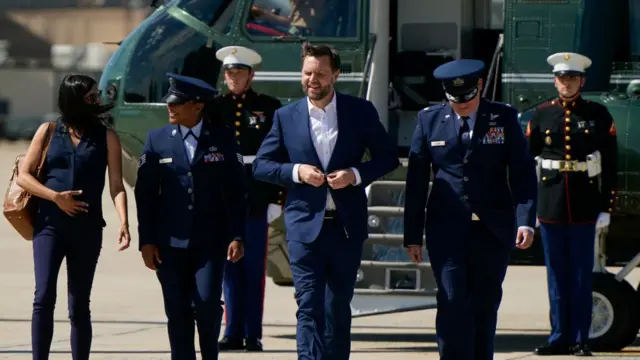
    JD Vance speaking at a press conference in the White HouseImage source, Reuters

    US Vice-President JD Vance said Jared Kushner, Donald Trump's son-in-law, and envoy Steve Witkoff were already on the ground in Switzerland ahead of planned talks with Iran.

    Vance said the pair are "dealing with some of the technical elements of this negotiation".

    "My understanding, talking to Jared and Steve this morning, is things are going well," Vance said,

    Asked if he has any plans to join them, he says he expects he will leave "sometime in the next couple of days".

  6. Iranian delegation led by parliamentary speaker departs for Switzerland - state mediapublished at 17:01 BST

    Mohammad Bagher Ghalibaf pictured in 2024Image source, EPA
    Image caption,

    Parliamentary speaker Mohammad Bagher Ghalibaf pictured previously

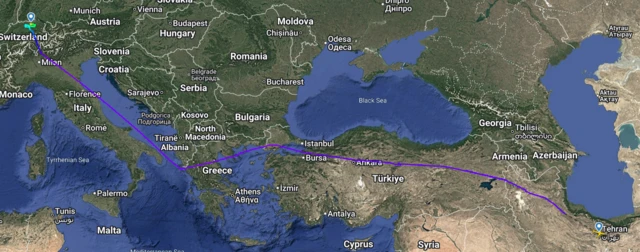
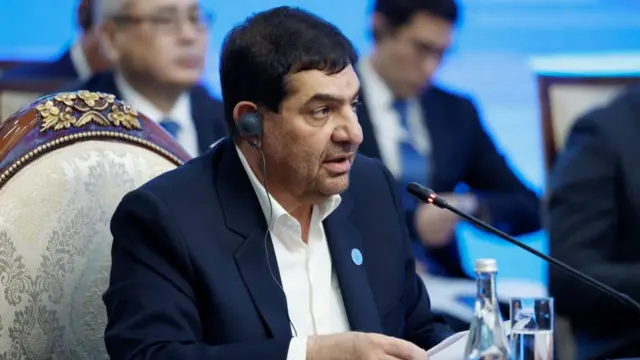
    An Iranian delegation, headed by parliamentary speaker Mohammad Bagher Ghalibaf, has now departed for Switzerland, state media reports.

    Abbas Araghchi, Iran's foreign minister, is also in attendance along with other officials including national security, central bank and oil representatives.

    Deputy foreign minister Kazem Gharibabadi and foreign ministry spokesman Esmail Baghaei are also reported to be on board the flight.

    Baghaei said earlier that Iran will demand the US "fulfils its commitments".

  7. Analysis

    Failure in Lebanon could endanger attempts to make wider peace dealpublished at 16:43 BST

    Joe Inwood
    World news correspondent

    The situation in Lebanon always looked like the thing most likely to endanger attempts to find a wider peace deal.

    Iran has always insisted that the fighting between Hezbollah, its ally and proxy, and Israel must also cease if progress was to be made elsewhere. The US, as well as the mediating parties, agreed to this.

    Israel initially wanted Lebanon to be considered separately from the deal with Iran. When Iran made clear this was a red line, pressure from the US seemingly forced agreement from Israel.

    But, attempted ceasefires in Lebanon have all failed, with both sides accusing the other of violating the terms. That is exactly what we have seen over the last 24 hours, with both Israel and Hezbollah putting out statements saying that they were responding to provocations by the other.

    Whatever the truth of it, the end result is the same. The wider ceasefire, which has broadly held in the rest of the region since April, has not brought respite to Lebanon. This failure now looks like it could endanger the entire deal.

  8. Why is the Strait of Hormuz so significant?published at 16:32 BST

    This Flourish post cannot be displayed in your browser. Please enable Javascript or try a different browser.

  9. Israel and Hezbollah have continued strikes despite ceasefire agreementpublished at 16:18 BST

    Smoke billows from southern Lebanon with hills with buildings and trees in the foreground and two huge plumes of smokeImage source, Reuters
    Image caption,

    Smoke billows from southern Lebanon on Saturday

    As we've been reporting, the Iranian military says it is closing the Strait of Hormuz, blaming "America's blatant breach of promise" on the deal to bring about an end to the war.

    It highlights the first paragraph of the 14-point deal, which declares an "immediate and permanent termination of military operations on all fronts, including in Lebanon".

    It comes after reports that at least 20 people have been killed by Israeli strikes in southern Lebanon - less than 24 hours after a new ceasefire between Israel and Hezbollah was announced.

    A US official said yesterday that Israel and Hezbollah had agreed a ceasefire, following concerns that continued clashes would undermine the deal to end the war between the US and Iran.

    The Israeli military confirmed that a ceasefire was in effect, but later a spokesman said its forces would "continue to remove immediate threats".

    A Hezbollah official told the BBC it does not recognise the ceasefire that was announced by US officials on Friday afternoon, and it rejects the Israeli objective to operate freely inside Lebanon.

    Earlier today, local officials said 16 people have been killed in the Nabatieh district and seven in neighbouring Saida, in Lebanon.

    The Israeli military said it had struck "dozens" of Hezbollah targets after the group fired more than 50 projectiles at Israeli forces in the region.

    The Israel Defense Forces (IDF) and Hezbollah have both accused each other today of repeated ceasefire violations.

  10. Iran will demand US fulfils its commitments at upcoming talks, foreign ministry sayspublished at 15:58 BST

    Iran's Foreign Ministry spokesman Esmaeil Baghaei pictured earlier this yearImage source, Reuters
    Image caption,

    Iran's Foreign Ministry spokesman Esmaeil Baghaei pictured earlier this year

    Iran's foreign ministry spokesman Esmail Baghaei says his country's attendance at talks in Switzerland will be aimed at "demanding that the other side fulfil its commitments".

    Mediator Pakistan said earlier that talks will be held in Bürgenstock in Switzerland tomorrow, attended by US and Iranian representatives.

    "Negotiations for a final agreement will begin only when the commitments set out in paragraphs 1, 4, 5, 10 and 11 have started to be implemented and continue to be carried out," Baghaei says, referencing the 14-point US-Iran deal signed earlier this week.

    He says this is not the situation at present, adding that Iran will be "pressing" the US to implement its commitments at the upcoming talks.

  11. What was in the US-Iran dealpublished at 15:57 BST

    Here's a reminder of the US and Iran's agreement, signed by both parties on Wednesday, which centres around 14 points:

    1. "The immediate and permanent termination of military operations on all fronts, including in Lebanon"

    2. US and Iran to "respect each other’s sovereignty and territorial integrity and to refrain from interfering in each other’s internal affairs"

    3. They "commit to negotiating and achieving the final deal in maximum 60 days, extendable with mutual consent"

    4. Immediately, the US "will begin the removal of its naval blockade... and will fully end the naval blockade within 30 days"

    5. In the Strait of Hormuz, Iran "will make arrangements using its best efforts for the safe passage of commercial vessels with no charge, for 60 days"

    6. The US undertakes "with regional partners to develop a definitive, mutually agreed plan with at least USD $300 billion for the reconstruction and economic development of" Iran

    7. US to "terminate all types of sanctions against" Iran

    8. Iran "reaffirms that it shall not procure or develop nuclear weapons", but other parts of the programme are still to be negotiated. The two parties "agreed to discuss the issue of enrichment and other mutually agreed matters related to the Islamic Republic of Iran’s nuclear needs"

    9. Pending the final deal, the US and Iran "agree to maintain the status quo"

    10. Upon signing, and until the termination of sanctions, US Treasury will "issue waivers for the export of Iranian crude oil, petroleum products, and derivatives, and all associated services"

    11. US undertakes "to make fully available for use the frozen or restricted funds and assets" of Iran

    12. "An executive mechanism will be established to monitor the successful implementation" of this memorandum

    13. After signing - subject to implementation of points 1, 4, 5, 10 and 11 - the US and Iran "will start negotiations regarding the final deal exclusively on the other paragraphs"

    14. "The final deal will be endorsed by a binding UNSC (United Nations Security Council) resolution"

  12. US military says safe passage through strait 'remained intact today'published at 15:51 BST

    Vessels waiting at the Strait of Hormuz in between land with a hazy viewImage source, Reuters
    Image caption,

    Vessels near the Strait of Hormuz as seen from Musandam, Oman, on Thursday

    US Central Command (Centcom) says commercial ship traffic in the Strait of Hormuz increased today and that 55 merchant ships transited.

    In a statement on X posted after the Iranian military's announcement that it is closing the strait, Centcom says: "Commercial ship traffic in the Strait of Hormuz increased June 20 as US forces continued operating in the general area to support freedom of navigation.

    "Safe passage through the international waterway remained intact today as 55 merchant ships transited, moving large amounts of cargo and more than 17 million barrels of oil to global markets."

    It adds: "US forces remain present and vigilant to ensure all aspects of the agreement with Iran are adhered to, obeyed, and in full force and effect."

    Iran's Islamic Revolutionary Guard Corps (IRGC) said earlier that the strait is closed to all vessels, citing US and Israeli ceasefire violations.

  13. Analysis

    All eyes will now be on Trumppublished at 15:44 BST

    Jon Donnison
    Middle East correspondent in Jerusalem

    The deal between Iran and the United States was always fragile and torturous in the making.

    Already there are signs it is unravelling.

    The partial reopening of the Strait of Hormuz, through which 20% of the world’s oil passes, was the principal achievement of the Memorandum of Understanding and a key priority for the United States seeking to avoid a global economic crisis.

    Now after just a few days, the Iranian military says it’s closed again, with Iran citing "relentless and continuous" breaches of the ceasefire in Lebanon by Israel which continues to occupy a large chunk of the south of the country.

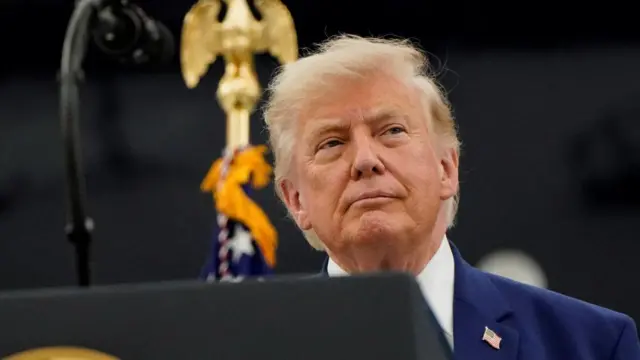
    All eyes will now be on President Trump to see what pressure can be applied to its ally, Israel to force it to rein in its military operation in Lebanon.

    It comes after a week of unprecedented criticism of Israel by the White House over its actions in Southern Lebanon, accusing the Israeli military of using excessive force.

  14. Talks in Switzerland to take place tomorrow - Pakistan foreign ministrypublished at 15:32 BST

    Pakistan's foreign ministry says talks will be held in Bürgenstock in Switzerland on 21 June, attended by US and Iranian representatives.

    Mediators from Pakistan and Qatar will also attend, with Pakistan facilitating the process as mediator, according to a statement on X posted after the announcement from the Iranian military that it is closing the Strait of Hormuz.

    The aim of the talks is "advancing the understandings reached" in the 14-point memorandum of understanding, it adds.

    It comes after talks in Switzerland - due to be attended by Vice-President JD Vance - were postponed earlier this week, with the White House saying the logistics had not been "simple or predictable".

    Hours before the White House issued its statement, Hezbollah-linked Lebanese media reported that the talks had been suspended due to Israeli air strikes in Lebanon.

  15. JD Vance says there's no evidence Iran has closed straitpublished at 15:23 BST

    A file photo of Vance speaking at a podiumImage source, Reuters

    US Vice-President JD Vance tells Fox News that the Strait of Hormuz remains fully open, after being asked about reporting in the Wall Street Journal suggesting the Iranian navy were turning away ships.

    "We’re not seeing any evidence that the Iranians are still closing down the Strait of Hormuz," Vance says.

    "We actually got 16 million barrels of oil out of the Strait of Hormuz yesterday," Vance says. "So you’re seeing those ships move."

  16. 'Do not approach': IRGC warns vessels strait is closedpublished at 15:11 BST

    Iran's Revolutionary Guard Corps Navy says the Strait of Hormuz is closed to all vessels, citing US and Israel ceasefire violations.

    The Navy issued a strict warning to all vessels: "Do not approach the Strait of Hormuz; otherwise, your security will be jeopardized."

  17. Iran says it is closing Strait of Hormuz over Israeli strikes in Lebanonpublished at 15:05 BST
    Breaking

    Iran's military says it is closing the Strait of Hormuz over continuing Israeli strikes in Lebanon.

    It accuses the US and Israel of violating the ceasefire deal.

    This is a breaking news story, stay with us for the latest.