Summary

  • Donald Trump insists the Strait of Hormuz will open "toll-free" under the US's deal with Iran to end the war

  • Speaking at the G7 summit in France, the US president also says Iran will "never have a nuclear weapon" and criticises Israel over Lebanon

  • Trump's comments - among his most outspoken yet - show the extent of his angry spat with Israeli PM Benjamin Netanyahu, our correspondent writes

  • Pakistan, a key mediator, announced on Sunday that the US and Iran had reached an agreement but its contents are yet to be shared - here's what we do know

  • On Monday, Trump administration officials said the deal had already been signed electronically by both sides, with a formal ceremony due to take place in Geneva, Switzerland later this week

  • Meanwhile, the price of oil continues to fall, with a barrel of Brent crude dropping below $80 for the first time since early March

  1. Strait of Hormuz to re-open 'toll-free', says Trump, as Israel strikes Lebanonpublished at 19:55 BST

    Kieran Kelly
    Live reporter
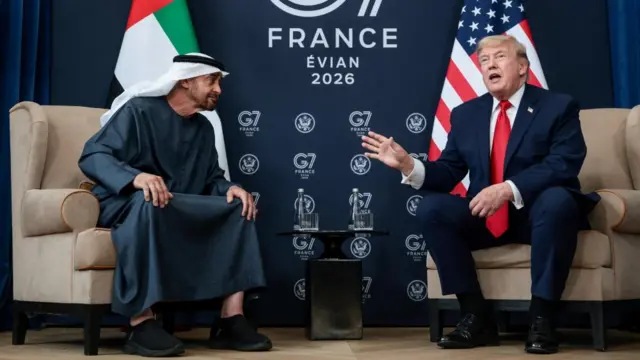
    Donald Trump speaks during a bilateral meeting with the President of the United Arab Emirates (UAE) Mohamed bin Zayed Al Nahyan, on the sidelines of the G7 summiImage source, Reuters

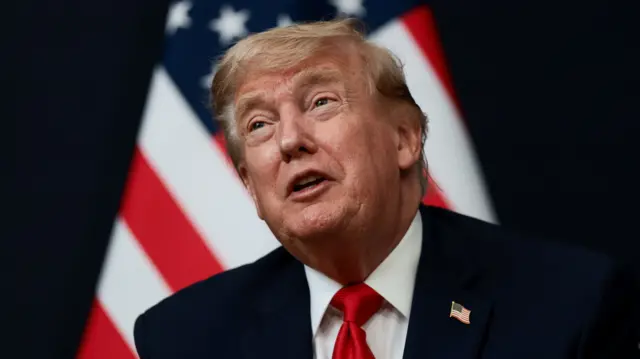
    US President Donald Trump has laid out the two primary components of his deal to end the war with Iran: Tehran will “never have a nuclear weapon” and the Strait of Hormuz will re-open and be "toll-free" .

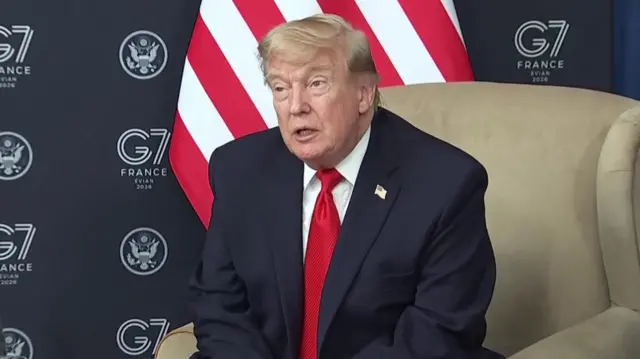
    Speaking to reporters at the G7 summit in France this morning, Trump said the deal agreed between the two countries was "fair" and "good".

    In a second chat with reporters later on, Trump said he would likely hold a news conference to publicly read the agreement between the US and Iran "word by word”.

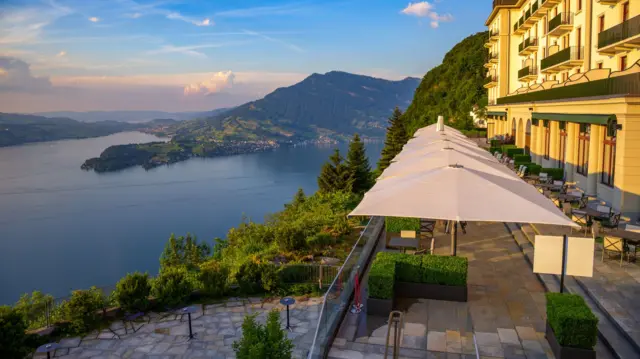
    Tehran and Washington are set to sign the deal in the Swiss resort of Burgenstock on Friday.

    The full details of the agreement have not been made public yet, but in the US, the Wall Street Journal has reported that Iran will be able to immediately start selling oil.

    The price of Brent crude oil - the global benchmark for oil prices - has fallen today, with the price falling to $78 (£58) a barrel this evening.

    Meanwhile, the Israel Defense Forces says it carried out strikes in southern Lebanon today, claiming it intercepted rockets and destroyed a rocket launcher Hezbollah militants fired at its troops. Hezbollah says it has received assurances from Iran that it will demand the IDF withdraws from southern Lebanon.

    Trump described the Lebanon conflict as a "minor war" and insisted it would not derail the US's deal with Iran - but he continued his public criticism of Israeli Prime Minister Benjamin Netanyahu.

    His comments about Israel are among his most outspoken yet, showing the extent of his current angry spat with Netanyahu, writes our correspondent Tom Bateman.

    We're ending our live coverage here, but you can read how Iranians are feeling about the deal here.
  2. Iranian World Cup travel restrictions are for 'safety', DHS sayspublished at 19:31 BST

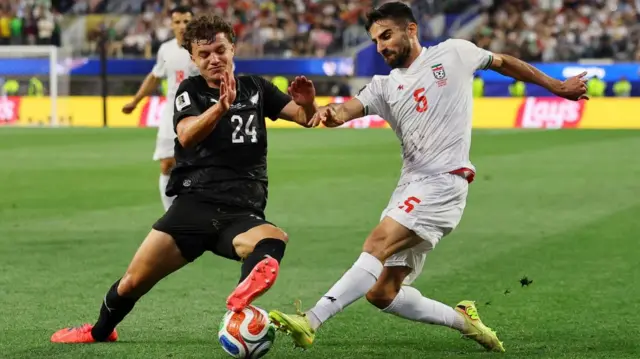
    New Zealand's Callan Elliot and Iran's Milad Mohammadi both go for the ballImage source, Reuters

    The US Department of Homeland Security (DHS) is defending telling the Iranian squad to return to their training base in Mexico after Monday's World Cup game against New Zealand, which finished 2-2.

    Iran had expected to stay in Los Angeles overnight and have a recovery session the following day but were told after the final whistle to immediately return to their training base in Mexico.

    Head coach Amir Ghalenoei said they were the "most oppressed" team at the World Cup.

    Earlier Andrew Giuliani, White House executive director for the tournament, told the BBC's US media parnter CBS News that President Trump wants to make sure that the conversation is centred around “what actually happens on the pitch.”

    "A lot of that is making sure that things are safe and secure, not just around the stadiums, but around base camps and training sites," he said.

    A spokesperson for the DHS told the BBC the Iranian team had agreed to the terms.

    You can read more here.

  3. Oil sanctions relief hinted under 'performance based' US-Iran dealpublished at 18:57 BST

    Bernd Debusmann Jr
    White House reporter

    We still don't have the specifics of the agreement between the US and Iran - and, crucially, what sanctions relief will look like in practice.

    Earlier, Reuters reported that the US is already prepared to offer a sanctions waiver allowing Iran to export its oil abroad almost immediately, in what would be an economic lifeline after the US-imposed blockade.

    Asked about that report, a senior US official described the deal as "performance-based", a description that we have heard from the White House repeatedly in recent days.

    According to the official, Iran can only access the "benefits" of the agreement if they comply with all the points they have agreed to, including a commitment to not having a nuclear weapon, the "neutralisation" of its highly-enriched uranium and not interfering with the flow of maritime traffic through the Strait of Hormuz.

  4. Iran's top negotiator says Israel must withdraw from southern Lebanonpublished at 18:38 BST

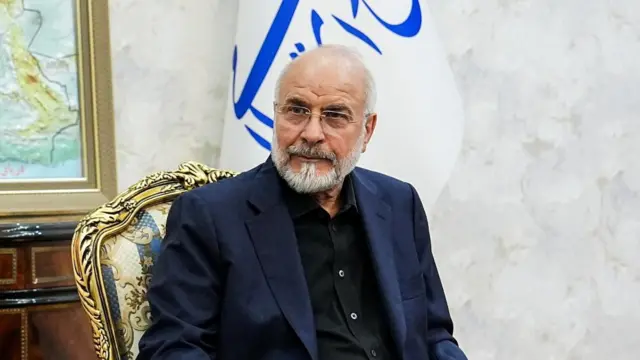
    Mohammad Ghalibaf in front of a blue and white flagImage source, Iranian Parliament Speaker Office

    Iran's parliamentary speaker has said Israel must withdraw from southern Lebanon in a phone call with his Lebanese counterpart.

    In a new statement on Telegram, Mohammad Ghalibaf, who signed the US deal on Iran's behalf electronically on Sunday, says he told his Lebanese counterpart that the "war must end on all fronts, including Lebanon".

    He says the "occupiers" - meaning Israel - "must withdraw from the occupied areas", allowing residents to return to their homes "with dignity and pride".

    Earlier, Iran'sforeign affairs spokesperson Esmail Baghaei said Lebanon was an "inseparable" part of any agreement to end the war.

    However, Donald Trump earlier said he believed his deal with Iran could survive if Israel continued to attack Lebanon.

  5. BBC Verify

    Did Obama’s deal allow Iran to have a nuclear weapon?published at 18:19 BST

    By Tom Edgington

    Earlier Donald Trump said the former Obama administration’s 2015 nuclear deal allowed Iran “to have a nuclear weapon”.

    Under the Joint Comprehensive Plan of Action (JCPOA) Iran had to:

    • Reduce its enriched uranium stockpile (a key component of a nuclear weapon) by 98%,
    • Cap enrichment at 3.67% purity - far below the 90% needed for weapons
    • Accept international monitoring

    The International Atomic Energy Agency reported Iran was complying, and the US State Department said in April 2018 Iran was "fully implementing" it weeks before Trump withdrew from the deal.

    JCPOA critic Jacob Olidor, from the America First Policy Institute, argues so-called "sunset clauses" meant Iran could eventually have expanded its nuclear programme.

    But the JCPOA's chief negotiator Cathy Ashton argues it stopped Iran from developing a nuclear weapon, telling BBC Verify if Trump felt that the deal was inadequate, “the answer was to build on it, not to rip it up”.

  6. Brent crude price drops further as constraints set to be easedpublished at 18:02 BST

    Michael Race
    Business and economics reporter

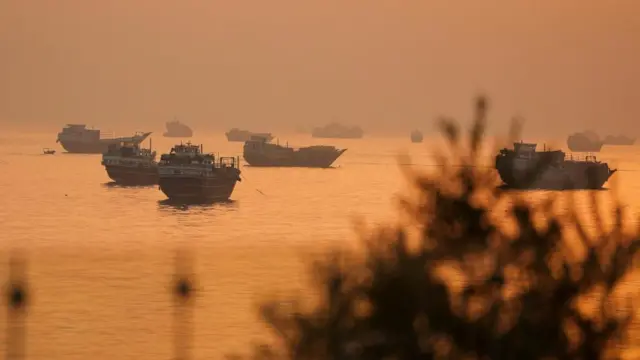
    Vessels at the Strait of Hormuz, as seen from Musandam, Oman, June 16, 2026.Image source, Reuters
    Image caption,

    Expectations over the reopening of the Strait of Hormuz are growing

    Oil prices fell further this afternoon as expectations grew that the Strait of Hormuz, a key waterway for the global shipment of the fuel, would reopen under a deal between the US and Iran.

    Brent crude, the global benchmark for oil prices, fell to $78 (£58) a barrel on Tuesday evening as constraints on oil supplies are set to be eased.

    The Wall Street Journal also reported that Iran would be able to immediately start selling oil under its agreement with the US, which extended price falls.

    The conflict in the Middle East has pushed up energy bills, petrol prices and overall inflation across the world, raising the prospects of interest rate hikes.

    However, the latest deal has increased the likelihood rates will be left on hold when the US central bank, the Federal Reserve, meets on Wednesday.

    The Bank of England is also set to hold rates on Thursday.

  7. IDF says it has undertaken strikes in Lebanon todaypublished at 17:45 BST

    The Israel Defense Forces says it has undertaken several strikes in Lebanon today.

    It claims to have intercepted several rockets launched by Hezbollah from the south of the country.

    The IDF also says it struck the rocket launcher, which it claims was firing towards its forces in southern Lebanon.

  8. How are Iranians reacting to the deal?published at 17:25 BST

    Amir Azimi
    BBC Persian editor

    Iran's leadership is trying to present its emerging deal with the US not as a retreat, but as the result of resistance and victory.

    But the reaction from our BBC Persian audience suggests the official victory narrative is landing unevenly.

    One person told us they had been very worried about another Israeli attack, but even after hearing about the agreement, said they had "no trust" and were worried about whether the country would be properly managed if the deal lasted.

    Another anti-regime Iranian, who initially supported US military action, said: "Our hope was that the ruling system would change. But apart from misery, inflation, and further damage to the economy, what benefit did it have?"

    Others were more sympathetic to the government's line. One person described Iran as the winner, saying the war showed sanctions are lifted not through "begging", but through power.

    But for many Iranians, success will not be measured by slogans. It will be measured by whether the war stops, prices ease and if the leadership can manage the next phase without another sudden escalation.

  9. Four killed after strikes in southern Lebanon, state media reportspublished at 16:58 BST

    Four people have died in strikes in southern Lebanon, according to the state-run National News Agency (NNA) and daily newspaper L'Orient-Le Jour, after separate attacks on at least three vehicles reported between Mayfadoun and Shoukin today.

    A further four people have been injured after a bomb was dropped in Hadatha, southern Lebanon, the NNA reports.

    Israel has not yet commented. Prime Minister Benjamin Netanyahu has previously said his forces would not withdraw from southern Lebanon in light of the deal agreed by the US and Iran.

    US President Trump has been critical of Netanyahu's continued strikes in Lebanon - describing an Israeli strike on Beirut this weekend as "vicious".

  10. Analysis

    US deal is a chance to breathe - but difficult issues still have to be thrashed outpublished at 16:50 BST

    Jon Donnison
    Reporting from Jerusalem

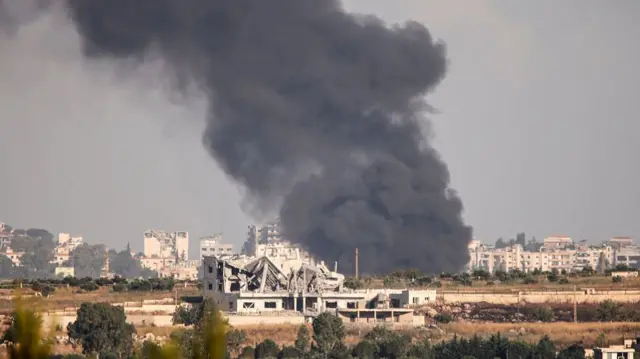
    A photo of a black cloud of smoke billowing from a destroyed area in Lebanon. We can see debris from buildings in the foreground and more buildings in the backgroundImage source, AFP via Getty Images
    Image caption,

    Smoke rises from southern Lebanon on Monday, where strikes were reported

    Two days after the US-Iran deal was announced, there’s scant detail of what’s in it.

    US Vice President JD Vance has acknowledged the Memorandum of Understanding is only about a page-and-a-half long, and "very general".

    So, a lot of the negotiations over the more difficult issues still have to be thrashed out.

    Crucially those issues include Iran’s nuclear programme. In southern Lebanon the fragility of this deal has already become apparent. Overnight, Israel’s military carried out strikes on figures it said were approaching Israeli soldiers, with four people "eliminated". Hezbollah said it had fired missiles and drones in return.

    Iran has insisted Lebanon must be part of its deal with the US, while Israeli PM Benjamin Netanyahu said on Monday his forces would not withdraw and would maintain operational freedom.

    So, while this deal gives the region a chance to breathe, there is still much that could see negotiations unravel.

  11. Friday's ceremony comes after deal already signedpublished at 16:26 BST

    As we've reported, the signing ceremony for the US-Iran deal will take place at the Burgenstock resort, near Lucerne in central Switzerland.

    The ceremony takes place after Donald Trump, JD Vance and Iran's speaker Mohammed Bagher Ghalibaf already electronically signed a memorandum of understanding to end the war in Iran on Sunday.

    Vance previously hinted Trump may decide to release the contents of the deal earlier than Friday, describing the document as being "about a page and a half" and "very general".

    But the US President has since played down the idea, saying he wanted to "get a formal setting first".

    "I'll not only release it, I'll probably have a press conference and read it to you word by word so that the press covers it accurately," he said at the G7 Summit.

    The signing will kick off a 60-day period in which Tehran and Washington will negotiate a permanent peace deal, with the future of Iran's nuclear programme expected to be a prominent talking point.

  12. Analysis

    Zelensky hopes Trump will soon put Iran in the rear-view and focus on Ukrainepublished at 16:02 BST

    Paul Adams
    Diplomatic correspondent

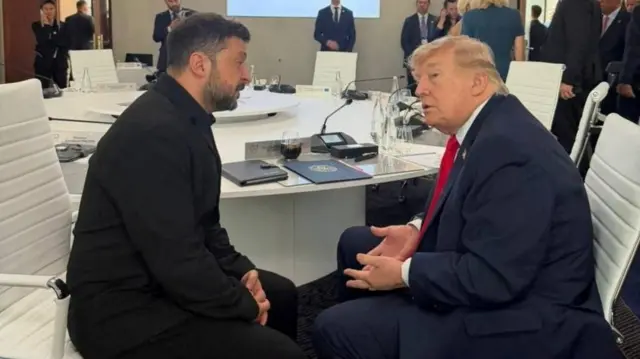
    Donald Trump and Volodymyr Zelenskiy speak to each other during the G7 summit in Evian-les-Bains, France, June 16, 2026.Image source, Reuters

    With an agreement signed between the US and Iran, Ukraine's Volodymyr Zelensky sensed a moment of opportunity.

    Before Donald Trump launched the war on Iran at the end of February, his negotiators were holding near simultaneous rounds of negotiations on Iran and Ukraine.

    After the war began, the Ukraine talks stopped. As energy prices rose and the US eased sanctions on Russian oil, Ukraine complained that this would merely help to fund Russia’s war chest.

    The war also diverted precious air defence equipment away from Ukraine, as the US sought to protect its bases and allies in the Middle East.

    Now, Kyiv hopes that Donald Trump will start to view the conflict with Iran through his rear-view mirror and can once again focus his efforts on Ukraine.

    “We…believe that now President Trump will be much freer to get engaged back into Ukrainian-Russian war,” Ukraine’s former foreign minister Vadym Pristaiko told the BBC. “We need his presence.”

    Despite earlier doubts that he would meet Donald Trump at the G7, Zelensky was able to sit down with the most powerful man in the world.

    According to the Ukrainian leader, Donald Trump listened to his request for additional all-important Patriot air defence missiles.

    “He was very positive about their ability to help us,” Zelensky told Reuters.

    There was more promising news for Zelensky, as Donald Trump said “soon we will be able” to reimpose sanctions on Russian oil.

  13. 'Not a single cent of US money goes to Iran' as part of deal, JD Vance tells Fox Newspublished at 15:50 BST

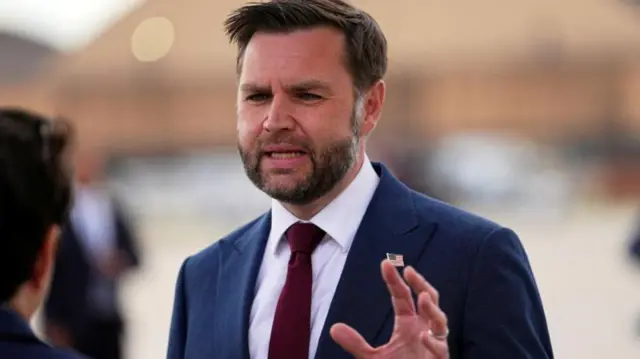
    US Vice President JD Vance pictured on 28 May 2026Image source, Reuters

    US Vice President JD Vance says "not a red cent of American money" will go to Iran as part of the peace deal with the US.

    Speaking to Fox News, Vance contrasts the Trump administration with former US President Barack Obama, who Vance says gave Iran "over $1bn (£746,000,000) in a pallet of cash".

    When asked if there was $300bn in repatriations coming from Qatar and “$24bn in unfrozen assets, Vance says that is “basically Iranian propaganda”.

    "What is happening is that some elements in their society are trying to sell this deal as positively as possible to their domestic audience,” he tells the channel.

    "Not a single cent of American money goes to Iran, not $300bn, not $24bn, not any of the money."

    However, there could be "benefits to Iran if they perform their end of the obligation," Vance says - adding Qatar, the UAE, or Saudi Arabia may choose to invest in Iran.

  14. Analysis

    Trump's comments about Israel are his most outspoken yetpublished at 15:22 BST

    Tom Bateman
    US State Department correspondent

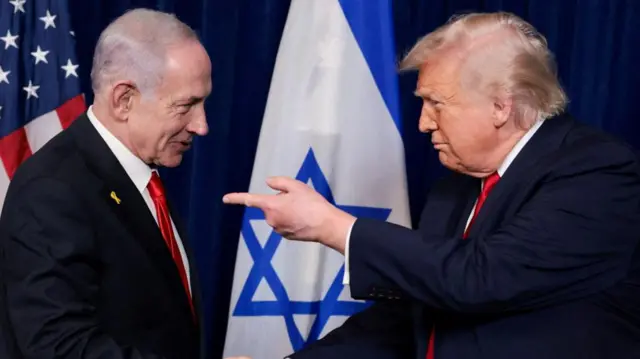
    Netanyahu and Trump in front of US and Israeli flags. They are looking at each other and Trump is pointing his finger at the Israeli leaderImage source, Reuters
    Image caption,

    Trump and Netanyahu following a news conference last year

    President Trump’s comments about Israel are among his most outspoken yet, showing the extent of his current angry spat with Prime Minister Benjamin Netanyahu.

    On several occasions as Trump has moved closer to diplomacy with Iran, the Israeli leader has escalated in Lebanon - Israel says this is in response to drone or missile fire by Hezbollah.

    But Trump described the Israeli strike on Beirut this weekend - just as he was on the verge of a deal with Tehran - as "vicious".

    He diminished the importance of the Israel-Hezbollah conflict, called on Netanyahu to be more responsible and appeared to accuse him of using disproportionate force.

    "You don't have to knock down an apartment house every time you're looking for somebody," Trump said. "If Israel can't do the job without killing everyone else... Syria will do the job," he said, referring to the Syrian president Ahmed al-Sharaa.

    Trump suggested al-Sharaa had, unlike Netanyahu, dealt with Hezbollah more quickly in Syria.

    Al-Sharaa is a former Sunni jihadist militant now leading Syria with Western backing, who Trump appeared to be suggesting to lead a fight against Hezbollah in Lebanon. This was another remarkable comment, given Lebanon’s sectarian fragility and history of civil conflict aggravated by past Syrian intervention.

    As for Netanyahu, he is again likely to brush off Trump’s latest reprimand - he will point to him also saying the pair had an "unbelievable relationship".

    But the president’s readiness to publicly excoriate his ally is becoming more pointed as he feels Netanyahu has threatened his ability to extricate himself from the war on Iran.

    It also highlights the deepening backlash within a faction of Trump’s MAGA movement against traditional Republican support for Israel.

  15. US and Iran to sign deal at Swiss resortpublished at 15:06 BST

    Iran and the US will be officially signing the deal in the Swiss resort of Burgenstock, Switzerland's Foreign Ministry tells the Schweiz Heute newspaper.

    The delegations are expected to meet on Friday. According to Swiss media, negotiators Pakistan and Qatar proposed the location.

    It’s the second time in two years that the resort has been picked to host diplomatic talks, after world leaders met there for the Summit on Peace in Ukraine in June 2024.

    Wide shot of Lake Lucerne in Switzerland taken from the resort of BurgenstockImage source, Getty Images
  16. Hezbollah says it has assurances Iran will demand Israeli troop withdrawalpublished at 14:55 BST

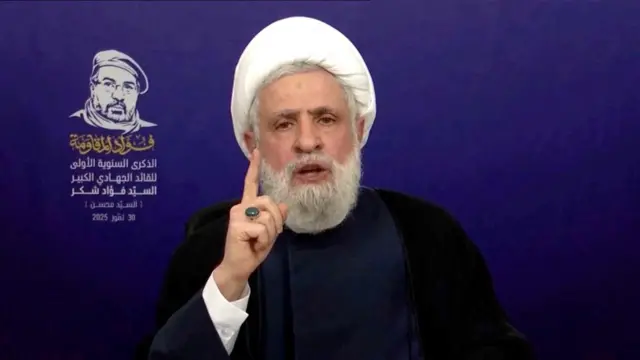
    Lebanon’s Hezbollah chief Naim Qassem pictured previously during a televised speech wearing black robes and white headdress while pointing at cameraImage source, Reuters
    Image caption,

    Lebanon’s Hezbollah chief Naim Qassem pictured during a televised speech broadcast last year

    Hezbollah says it has received assurances from Iran that it will demand a withdrawal of Israeli troops from Lebanon in its next phase of talks with the US - according to the Reuters news agency, citing the group’s media relations office.

    Meanwhile, Naim Qassem, Hezbollah's secretary general, has expressed his "profound gratitude" to Iran's Parliamentary Speaker Mohammad Bagher Ghalibaf on the matter.

    In a post shared on the Telegram account of the Hezbollah-affiliated Al-Manar TV station, Qassem thanks him for his "strong and supportive" stance towards Lebanon - including "compelling" Israel to cease military operations as a "fundamental clause" of the deal between Iran and the US.

  17. Analysis

    What did Trump do differently to Obama on Iran?published at 14:40 BST

    Gary O'Donoghue
    Chief North America correspondent, reporting from Washington DC

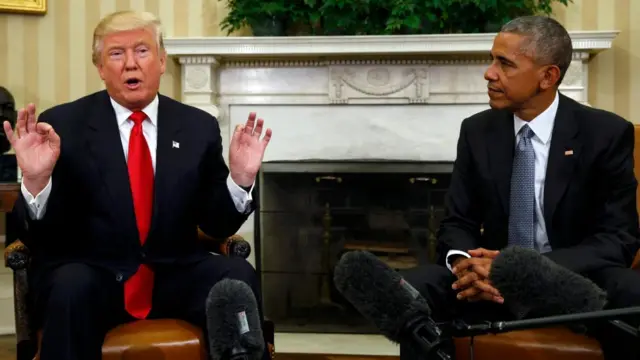
    Donald Trump and Barack Obama in the Oval Office in 2016, three boom microphones for television broadcasts are held out in front of them.Image source, Reuters
    Image caption,

    Trump and Obama in the Oval Office in 2016

    If there’s one thing Donald Trump has been clear about regarding the US deal with Iran, it’s promising that it will be better than the one Barack Obama signed in 2015.

    “We didn't pay for it like Obama did. He paid billions of dollars,” President Trump told reporters at the G7 summit in France this morning.

    Both deals, however, involve sanctions relief and unfreezing Iranian money - though the current White House says that will all depend on Iran meeting its obligations under the agreement.

    We were also briefed that one of the proposals still being discussed is a $300bn (£224bn) fund to help rebuild Iran. Who would pay for that was uncertain, but the president has now dismissed the idea as "fake news".

    There is undeniably some overlap. Both Trump’s deal and Obama’s Joint Comprehensive Plan of Action (JCPOA) involved inspections to ensure Iran doesn’t develop a nuclear weapon.

    What neither deal has directly addressed is the political plight of the Iranian people - they are no freer than before.

    The obvious difference, of course, is that Barack Obama never bombed Iran.

    Donald Trump did and said US strikes have destroyed much of the country’s nuclear facilities and buried its stockpiles of uranium.

    But war has come at a cost. Iran launched attacks on many of its neighbours in the region including Israel, further destabilising an already volatile Middle East.

    It also closed the Strait of Hormuz, pushing up energy and fertiliser prices worldwide - that was new and hugely damaging.

    That’s why Trump’s deal - at least in the first phase being announced this week - focuses less on the detail of limiting Iran’s nuclear programme, and more on containing a conflict.

  18. Price of Brent crude oil drops below $80 for first time since Marchpublished at 14:15 BST

    Nick Edser
    Business reporter

    We reported earlier that the oil price has fallen further on hopes that the US-Iran deal will lead to the Strait of Hormuz reopening.

    Now the price of Brent crude, the global benchmark, has dropped below $80 (£60) a barrel for the first time since early March, falling to $79.90.

    The price of Brent is now well below the peak it hit during the war, which was about $120 a barrel.

    Before the conflict began it was trading at around $70.

  19. No rush on confiscating enriched uranium - Trumppublished at 14:05 BST

    President Trump speaking at the G7 summitImage source, Reuters

    Trump adds that the agreement is about one thing - Iran never having a nuclear weapon - "the rest of it's irrelevant frankly," he says.

    He describes the agreement as a "wall against a nuclear weapon," comparing it with former US President Barack Obama's JCPOA, which Trump says "could have destroyed the Middle East".

    Asked about retrieving the enriched uranium in Iran, Trump says there's no rush to when they confiscate it.

    Trump adds the deal will be sent to the United States Congress for approval.

  20. 'Iran wants to get it done,' Trump tells reporters at G7 summitpublished at 13:54 BST

    Trump and President Sheikh Mohammed bin ZayedImage source, Reuters

    US President Donald Trump has been speaking alongside UAE President Sheikh Mohammed bin Zayed at the G7 Summit in France.

    Asked what he expects from the second stage of negotiations with Iran, Trump says he thinks "it's going to happen fairly on time".

    "Iran wants to get it done, they have to get back to business," he tells reporters.

    Asked why there's been no release of the text so far, he replies saying he wants "to get a formal setting first".

    Elaborating, he continues: "Iran will never have a nuclear weapon, that's what it says... That's about 99.9 per cent of what I wanted."

    He says the Strait of Hormuz is going to be opened "toll-free", including beyond the 60-day time period.

    Trump says he will hold a news conference to read out the agreement document "word by word".

    "Because it's a very important document," he says.