Death toll hits 1,430 - officials saypublished at 18:20 BSTBreaking
The death toll has risen to 1,430, with 3,238 injured, according to top lawmaker Jorge Rodriguez, speaking on state TV now.
We will bring you more from his comments.
Rescue efforts are continuing for a third day after two back-to-back earthquakes struck Venezuela, killing at least 920 and injuring more than 3,360 people
One family is anxiously listening for signs their loved one survived, telling BBC Mundo they heard him "groan" under the debris
A newborn baby is among the survivors rescued from the rubble - watch the emotional moment
Venezuela's acting President Delcy Rodríguez says she is hopeful that teams will find survivors
An update from Rodríguez on Friday put the number of trapped people at 172 - but tens of thousands of people are reported missing on a civilian-led rescue database
The quakes, with magnitudes of 7.2 and 7.5, hit less than a minute apart while most were home for a national holiday - how locals are describing the scenes
The death toll has risen to 1,430, with 3,238 injured, according to top lawmaker Jorge Rodriguez, speaking on state TV now.
We will bring you more from his comments.
 Freya Scott-Turner
Live reporter
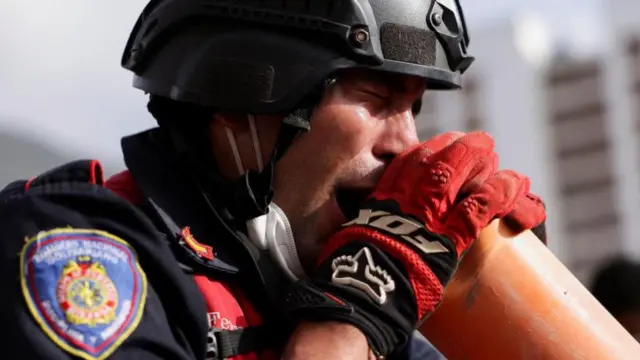 Image source, Reuters
A firefighter shouts through a tube to people trapped under rubble of a building in La Guaira
It has been more than 60 hours since Venezuela was struck by twin earthquakes, and the race to find survivors is more urgent than ever.
Here is what has been happening.
The search continues: Acting President Delcy Rodríguez said in an overnight briefing that she still had "faith and hope" survivors would be rescued.
In La Guaira: Rodríguez said 60% of electricity services had been restored in the worst-affected state.
No update on the death toll: The acting president did not give an update on the death toll. The most recent official figure came on Friday - confirming 920 deaths and more than 3,300 injuries.
Global response: Countries around the world continue to send rescue missions to Venezuela. The UN's co-ordination system shows at least 20 international rescue teams have been deployed, with 32 others mobilising.
Number of missing unclear: UN aid chief Tom Fletcher told AFP it could be more than 50,000. A website, external - which lets Venezuelans self-report their missing loved ones - has received reports of about 68,000 people missing at the time of writing. About 13,000 are reportedly located - but because the website relies on people actively reporting people as missing and found, the true figure is uncertain.
Nicole Kolster
Contributor to BBC Mundo, in La Guaira
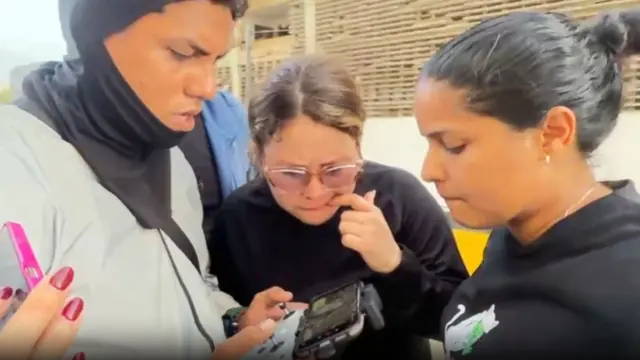
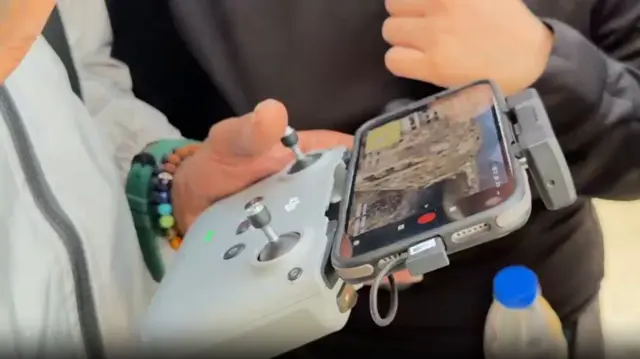
In La Guaira, a local man with a drone has become an unlikely source of hope. For two days he has been flying his drone over the destruction. He is a volunteer, and families come to him desperate for news or a sighting of their loved ones they cannot reach.
We all gather around the screen; seeing the scale of the destruction and devastation from above is shocking. Amongst the rubble in the top corner of a high-rise building, we see a motionless body, a woman. She is still unidentified.
“This is the only confirmed fatality I’ve seen on my drone,” he tells a young woman who is searching for her relative. She stands opposite nervously biting her nails as she directs the man flying the drone.
“What other angle do you want to see?” he asks her.
The search is cut short by what feels like an aftershock. Panic sets in, and people begin to run.
 Dan Johnson
Reporting from Cúcuta, Colombia
The situation in Venezuela is desperate.
There is a sense that the next few hours will be critical for saving anyone who is still trapped. People with search and rescue experience talk about a 72-hour window.
Around 2,000 search and rescue officials are heading into Venezuela from right across world - but getting people to the right area with the right equipment is a complex task.
Despite being in a risk zone, Venezuelan authorities were ill-prepared for this sort of disaster - both in terms of building standards and the emergency response.
Political instability and corruption have contributed to an underfunded health system and search and rescue service.
There is widespread poverty, communications are difficult, and infrastructure is poor, meaning getting around the country is complex.
There are reports of tens of thousands missing - whether this translates into deaths will take time to see.
We will also have to see how open and transparent Venezuelan authorities are in terms of recording and reporting this information.
At the moment, the death toll still stands at less than 1,000 - the fear is that the total will climb significantly.

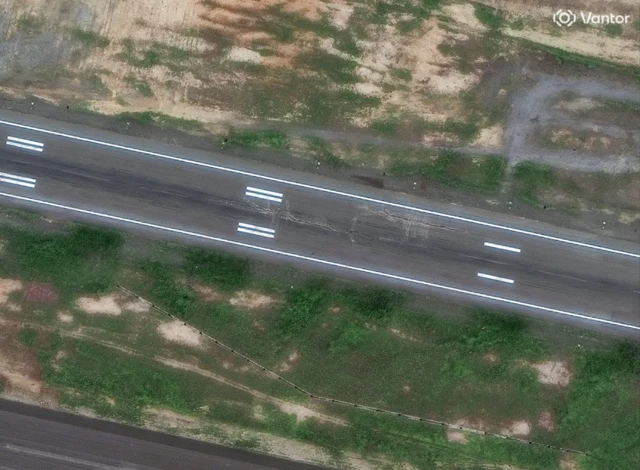 Image source, Vantor 2026
By Paul Brown and Daniele Palumbo
Cracks have appeared on the runway of Simon Bolivar International Airport following this week's earthquakes, new satellite imagery has revealed.
The image, captured by Vantor yesterday, shows at least two cracks in the surface of the runway, although it is unclear how deep they are.
Damage is also visible to the airport terminal building, seen in the before and after photos below.
The image shows what appears to be the partial implosion of two raised sections along the main concourse. Debris can be seen scattered across the roof, but there are no signs of a complete structural collapse.
The location of this damage corresponds to dramatic footage showing people running in panic as sections of the ceiling fell to the ground.
The video was filmed near gate 8, which is just next to one of the damaged sections.
The airport has been largely out of operation since Wednesday's earthquakes, although some rescue teams and aid supplies have arrived in the last 24 hours.
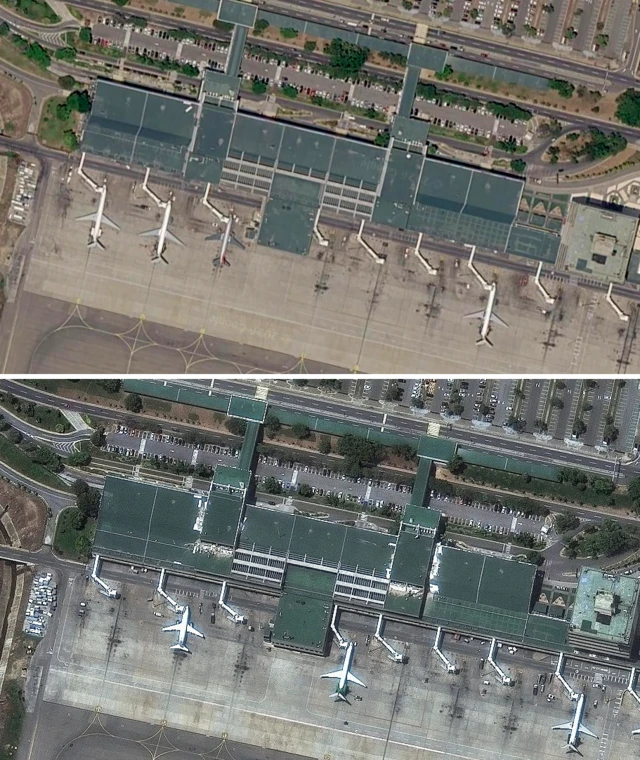 Image source, Google/Vantor 2026
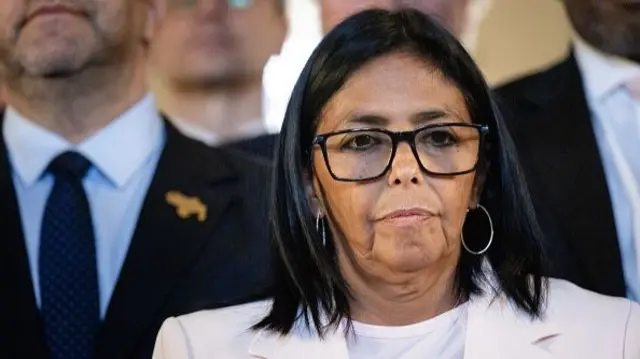 Image source, AFP via Getty Images
File photo of Venezuelan acting President Delcy Rodríguez, taken in May 2026
Acting President of Venezuela Delcy Rodríguez has just given another update on social media, saying that more machinery has been mobilised to help with life-saving recovery efforts in the aftermath of the earthquakes.
This follows an overnight update from Rodríguez, a video of which has been circulated by Venezuelan media. In it, she says:
At least 20 international search and rescue groups have been sent to Venezuela, according to the UN's Global Disaster Awareness and Coordination System.
This includes nine teams classified as "heavy", eight as "medium" and three as "light".
Countries that have sent teams include Switzerland, the US, the Netherlands, France, Qatar, the Czech Republic, Jordan, the UK, Spain, Chile, Colombia, Ecuador, Germany, Turkey, Italy and Lithuania.
Thirty-two other teams are currently mobilising, the UN says, bringing the total to 52 teams - and over 2,265 rescuers.
It adds that the total number of rescue dogs currently being sent is 140.
Specialised teams have already started arriving and are working with other personnel on the ground, it says.
Earlier, we shared pictures of rescuers at various airports en route to Venezuela.
Venezuela's Simón Bolívar International Airport was damaged in the earthquake but is open to charter flights, the UN says.
In an overnight address, Venezuela's acting President Delcy Rodríguez said 14,000 military and police members were in La Guaira - the worst-affected area - to patrol and administer sanitary measures.
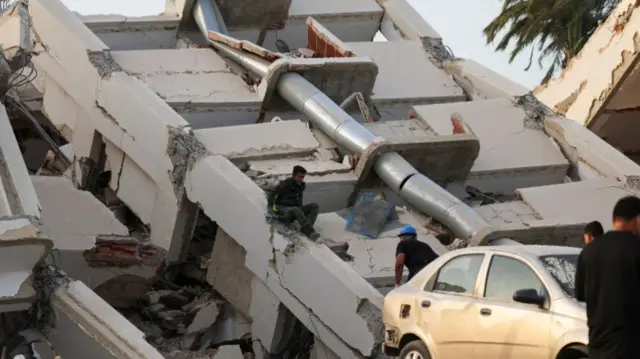 Image source, Reuters
The International Red Cross says rescue efforts are being slowed by blocked roads and widespread destruction following the earthquakes in Venezuela.
Regional director for the Americas, Loyce Pace, tells the BBC World Service's Newshour that rescue teams "have had to convert to motorcycles and other forms of transportation [rather than ambulances] because the streets are quite crowded with people."
Strong aftershocks continue to threaten damaged buildings, making rescue operations more dangerous.
"Time is very much running out for any survivors that might still be under the rubble. We need to reach them as quickly and as easily as possible," she says.
There have also been extraordinary tales of survival and humanity.
Pace describes how one Red Cross worker rescued his family from the rubble "with his bare hands", while others have been singing to people trapped beneath collapsed buildings to reassure them they had not been forgotten while rescue teams worked to reach them.
We are now receiving images showing how the earthquakes have damaged the state of La Guaira, one of the worst-affected areas.
Rubble from buildings can be seen in multiple places - and even buildings that are still standing, walls have fallen off.
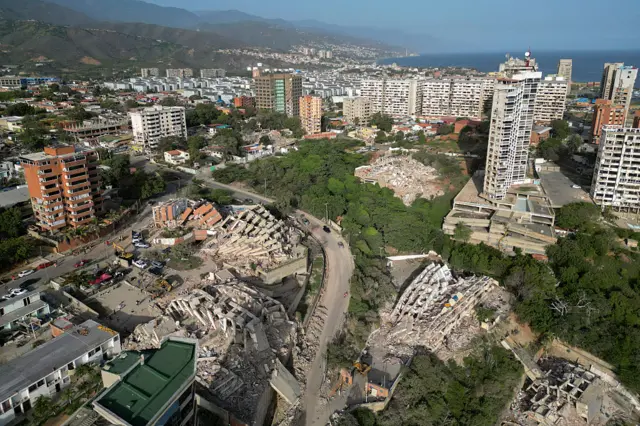 Image source, AFP via Getty Images
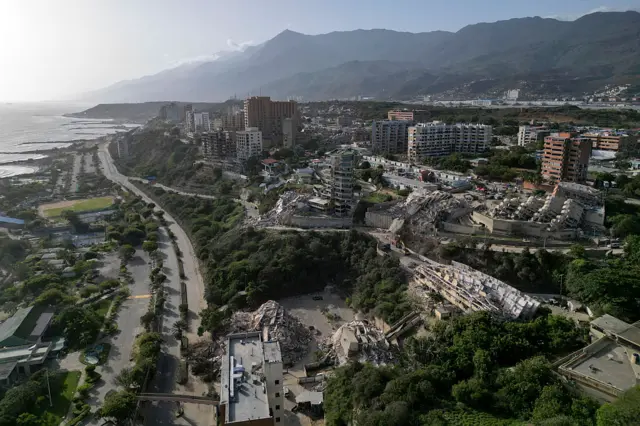 Image source, AFP via Getty Images
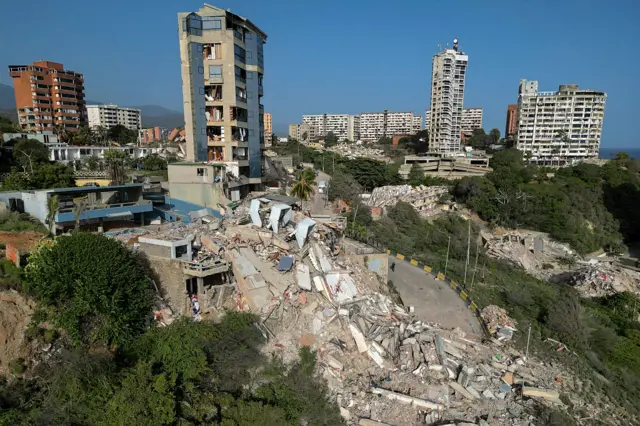 Image source, AFP via Getty Images
Warning: This post contains distressing details.
One man in La Guaira tells BBC Mundo "there is no sophisticated equipment" to carry out rescue operations.
Civilians have joined the search and rescue efforts and are calling for a stronger presence from the state, contributor to BBC MundoNicole Kloster says.
A young person can be seen using a drone to try to locate people.
Meanwhile, some families have returned to damaged buildings to try to recover belongings. "We are trying to recover... clothes and documents," a woman with a child says, adding that she lives on the 15th floor.
"We are sleeping at the airport, in the car... we have nothing. It is very sad," she says.
One woman says "you can already smell the deceased".
She says two buildings collapsed in the immediate vicinity.
 Orla Guerin
Reporting from an aid flight to Venezuela
We are on board a commercial flight set to take off from Panama City for Valencia in Venezuela.
Search and rescue workers streamed on to the plane, some wearing their white helmets, all in high visibility jackets, most loaded with backpacks.
A sniffer dog has also come on board. There’s just been a round of applause for all the search teams and for the airline - COPA - which is transporting them and their equipment free.
One of the passengers is a Venezuelan from La Guaira, the worst affected area. He is rushing home to try to support relatives and friends. He looks exhausted and says he has suffered heavy losses, including four family members, a cousin, and many friends.
The teams on this flight are from Spain, Costa Rica, Chile, Mexico, Ecuador and Panama.
One experienced paramedic tells us he believes survivors can still be found.
Steven Salazar Vasquez is part of a small team of specialists including doctors. He tells us that after 72 hours the chance of finding people alive under the rubble falls rapidly, but he "still has hope" because there are many tall structures that have only partially collapsed.
He says there may be some buildings where collapsed walls have created a viable space, which rescue workers call "the triangle of life".
Nicole Kolster
Contributor to BBC Mundo, in La Guaira
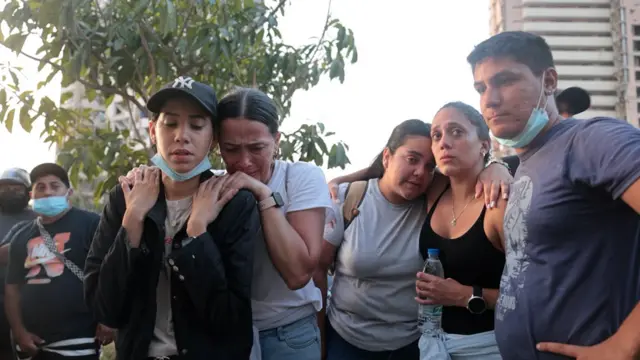
The family of Carlos Eduardo
Carlos Eduardo, 31, is trapped under the rubble. His family have been calling out to him for two days.
"About an hour and a half ago, more or less, we heard from him. Well, he didn’t really speak, he groaned," his cousin tells me anxiously. He hasn't responded since.
Spanish rescuers and sniffer dogs arrived at the building, but withdrew after they found no sign of life.
But Carlos’s family have remained there, continuing to remove debris to find him.
They are clinging onto hope he can still be rescued alive.
Rescuers are continuing to search for survivors trapped in rubble.
Among them was a newborn baby, who was reunited with family in an emotional rescue, sparking cheers from relief workers.
Watch the moment below.
Nicole Kolster
Contributor to BBC Mundo, in La Guaira
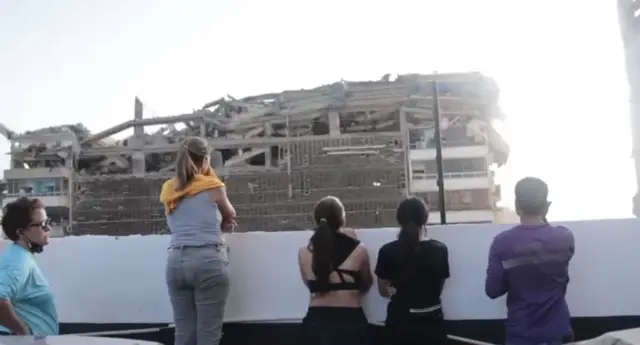
Rescue efforts are under way in La Guaira, but residents are pleading for more help from the state.
Many buildings are dangerously unstable. Yet out of desperation some families are returning to partially collapsed structures to retrieve essential belongings.
Drones are being used to survey the damage and to try to find victims and survivors.
Occasionally people run into the streets in a panic fearing further aftershocks.
The mood here is dizzying, surreal. It feels like when you come off a boat onto dry land.
Drone footage taken above La Guaira shows the scale of destruction caused by two back-to-back earthquakes in Venezuela.
La Guaira, a region north of the capital Caracas, was the area hardest hit by Wednesday's quakes.
Earlier, we reported at least 40 foreign nationals have been killed in the Venezuelan earthquakes.
We can bring you an update now from Chile. Its foreign ministry says a Chilean national has died.
"The foreign ministry is in contact with their family, providing assistance, guidance, and support," it says in a statement on X.
The double earthquakes have wrought destruction on Venezuela and many of those who survived them now find themselves homeless after their homes were levelled.
Many are now in temporary shelters - such as in tents or repurposed schools - while others are sleeping on the streets.
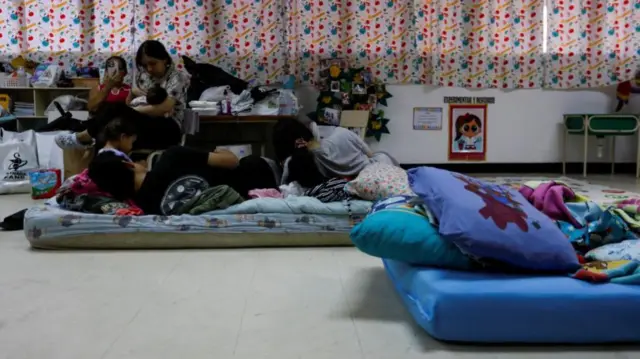 Image source, Reuters
A family from La Guaira - where hundreds of structures were destroyed in the earthquake - rest at a temporary shelter in Caracas
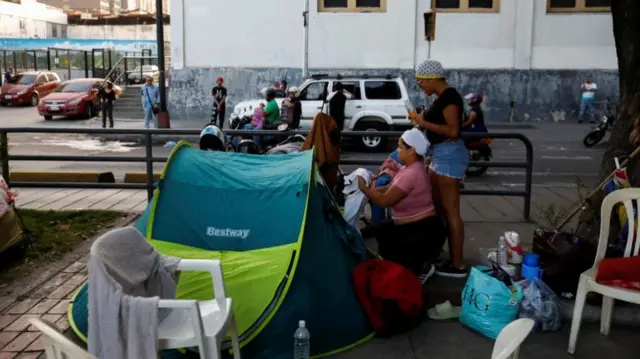 Image source, Reuters
Some people - like these women in Caracas - have taken to sleeping on the streets out of fear of aftershocks hitting the country
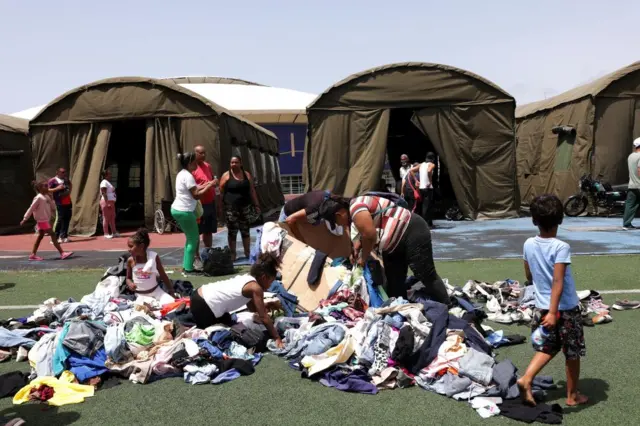 Image source, Reuters
People go through donated clothes at a temporary refugee camp in La Guaira
 Will Grant
Reporting from Caracas
With each morning that Venezuelans wake to the aftermath of the dual earthquakes, it is a little darker, a little more grim.
It is another night in which the prayers for the miraculous recovery of missing loved ones went unanswered, in which the fitful sleep for the survivors is interrupted by nightmares of collapsed buildings and moments of sheer panic.
For ex-policeman Jan Carlos Roa Garcia and his family, it was another night sleeping rough. Their building in Caracas wasn't brought down but is too dangerous to return to.
Tears rolling down his cheeks, he says he’s not sure he even knows how to rebuild his family’s life again. "If I was thirty and not fifty, then maybe. But I don't know where to begin. And so far, no-one in authority has contacted us."
At the scene of the worst-hit areas - particularly the coastal town of La Guaira - the rescue teams have worked through another night showing impressive resilience and focus to try to reach those trapped relatives.
Videos are circulating on social media of the workers successfully pulling out survivors with typical Venezuelan good humour and spirit which brings a lump to the throat.
This feels like the hardest moment in Venezuela's modern history in a country that has had more than its fair share in recent years.
 Matt Spivey
Live reporter
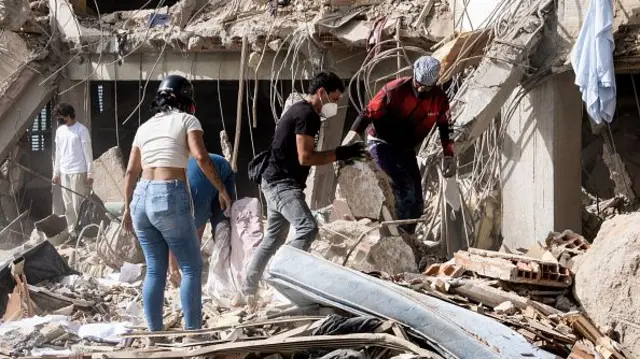 Image source, Getty Images
Wednesday
At 18:04 local time (23:04 BST) an earthquake of magnitude 7.2 strikes in the north of Venezuela.
About 39 seconds later a second earthquake of magnitude 7.5 strikes 28km (17.4 miles) south-east of Yumare, a town in Yaracuy state. This was the strongest to hit the country since 1900.
Thursday
At around 00:50, Venezuela’s acting president Delcy Rodríguez reports at least 32 deaths and more than 700 injured. She says this doesn’t include any figures from the state most affected by the earthquakes, La Guaira.
As rescuers and the army mobilise to clear debris, aid groups around the world scramble to deliver help to Venezuela, with the US pledging $150m (£113.4m) in assistance.
Friday
By the morning, support teams from countries including Mexico, El Salvador, Switzerland and Spain land in Venezuela, with personnel from more countries and organisations expected.
Around 08:30 local time (13:30 BST) Rodriguez says the death toll has risen to 589 people and the number of injured stands at 2,980. She adds that the hard-hit state of La Guaira will be "militarised".
The death toll updates again at around 13:30, asVenezuelan lawmaker Jorge Rodríguez said at least 920 people have been killed and at least 3,360 injured.
Saturday
The search for survivors continues, as Rodríguez says she has faith teams will find the survivors among the rubble.
The UN's aid chief Tom Fletcher has praised the global response to the earthquakes, telling Radio 4's Today programme that almost 2,000 international workers have come to Venezuela to help with rescue efforts.
These are some of the latest pictures of international rescue teams heading to the country.
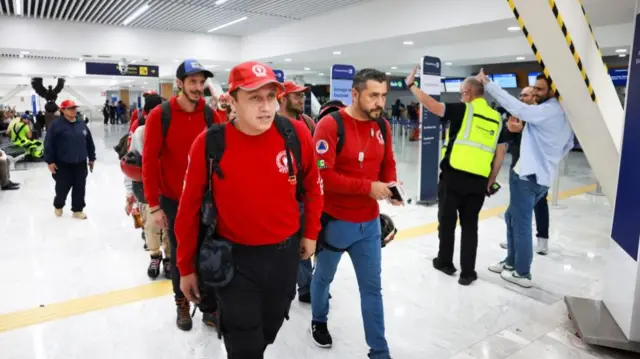 Image source, Reuters
A Mexican rescue team prepares to head to Venezuela
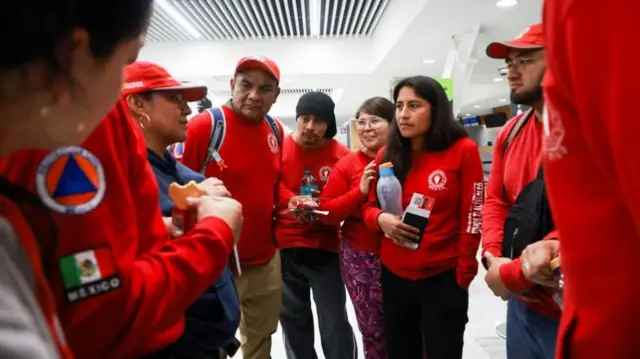 Image source, Reuters
This group of rescue workers - the Topos Tlatelolco Rescue Brigade - follows a large number of rescue personnel already sent by Mexico on Friday
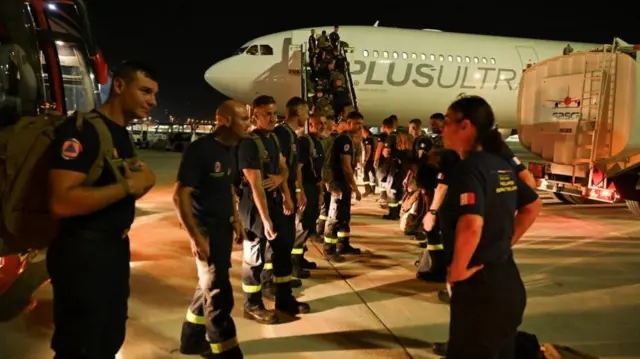 Image source, Reuters
French rescue troops also departed the country for Venezuela late on Friday night
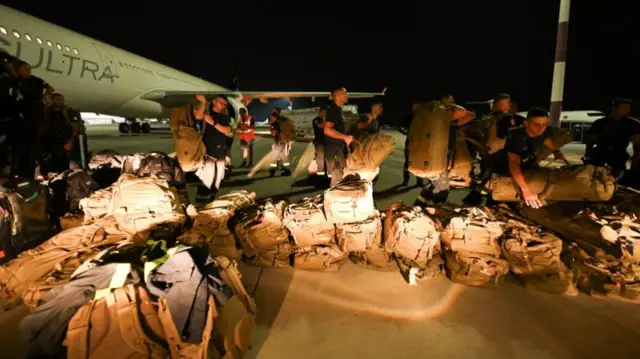 Image source, Reuters
The troops are drawn from France's 7th Civil Security Training and Intervention Regiment
