

EXPLORE EPISODE SEVEN - 16 to 13
Local Navigation

Bringing to life spectacles of natural wonder on our doorstep
No.14
Boxing Hares
There’s no evidence of Brown Hares (Lepus europaeus) living in the UK before Roman times and it has been suggested that the Romans introduced them. The UK’s only native hare is the Mountain Hare (Lepus timidus) which is quite common in Scotland and Ireland, and there’s also a colony in the Peak District. Unlike Brown Hares, the Mountain Hare’s fur turns white in the winter, apart from the black tips of its ears.
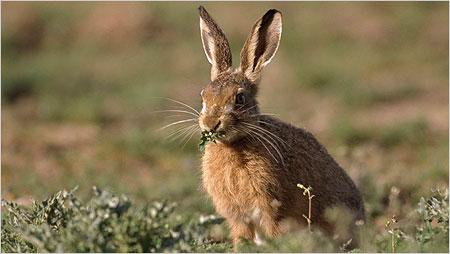
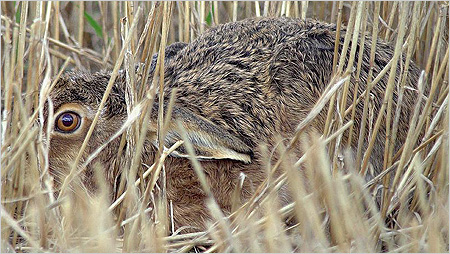
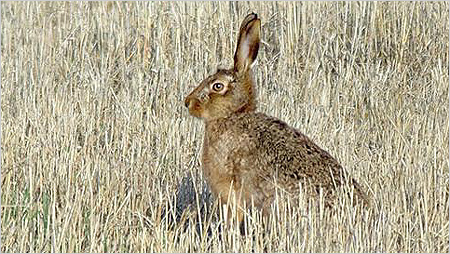
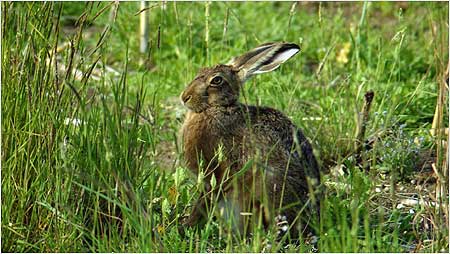
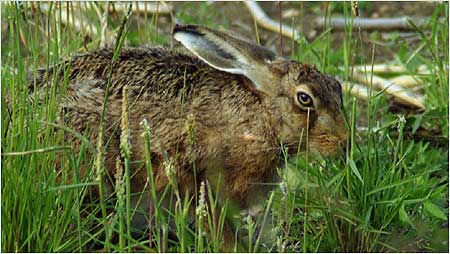
The Brown Hare is one of the best known UK mammals. It has distinctive, long, black tipped ears and very long powerful back legs. It doesn’t hop like a rabbit, which is much smaller, it has a loping run and a top speed reputed to be around 45 mph.
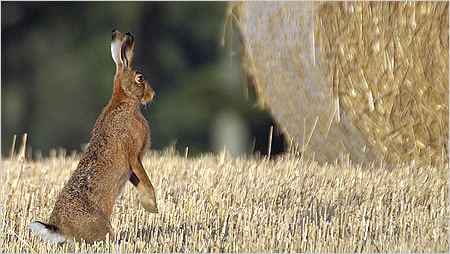
Courtship involves hares chasing each other across fields and standing on their hind legs ‘boxing’ – typical ‘Mad March Hare’ behaviour. They run up to each other, get onto their hind legs and then scratch and hit each other with their front paws. It could be two males (known as Jacks) in a fight for dominance or a female (known as a Jill) rejecting a male’s advances in no uncertain terms.
Hares can breed all year round and will have three or four litters a year. Baby hares are called leverets and unlike rabbits they’re born with fur and with their eyes open. The mother moves away from her litter and only visits for a short time each day to feed them. The weather is a major factor determining whether leverets survive. They’re also subject to attack from birds of prey and foxes. The average life expectancy of a hare is about three years.
Find out more about hares...
North Wales Brown Hare Project
The BBC is not responsible for the content of external internet sites.
Photo gallery
Watch and Listen
Sanjida O'Connell watches a group of ' Mad March Hares' as they chase each other and 'box' in the fight for dominance:
Help playing audio/video
Tips
Tips for viewing this species:
- There are hares in all areas of the UK countryside. The best places to look are in areas where there are fields, grassland and arable land.
- Although hares breed all year round their courtship displays, boxing and chasing each other are most easily seen in March and April.
- Because hares are nocturnal the best time to see them is around dawn or dusk.
- Brown Hares are easily distinguished from rabbits, although superficially similar they are in fact quite different, in some cases weighing twice as much. Hares have long back legs and run rather than hopping. They also have black tips on their ears.
- Across the world there are many myths and superstitions about hares. For example in Cornwall there’s a superstition which says that a girl who dies after being abandoned by her lover will turn into a pure white hare and will return to haunt him.
Habitat
Brown Hares like a combination of arable and grassland. They also like a mixture of heights of vegetation and access to some woodland as well as fields.
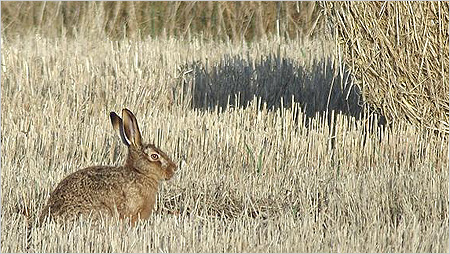
The Brown Hare usually spends its day in its ‘form’ – a shallow depression in the ground often in a ploughed field or amongst vegetation. It lies there digesting food from the previous night and remaining very still, hoping to avoid predators. Although they can run very fast the hare’s initial response in the presence of a threat is often to try not to be seen by lying very still - however this makes them vulnerable to farm machinery.
Hares are generally active at night. They forage at dawn and dusk and feed on young shoots including cereal crops and grass.
Numbers of Brown Hares have declined over the past 100 years and records suggest that there was a widespread decline after the introduction of the Ground Game Act 1880. Changes in farming methods are also thought to be part of the reason for the decline.
Hares don’t hibernate and therefore need a supply of food all year round. In the past farms grew a mixture of crops which provided the hares with food around the year.
Unlike rabbits, hares are not affected by myxomatosis.
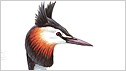
No. 16 - Courting Great Crested Grebes
Increased road and rail building managed to turn round the fortunes of the Great Crested Grebe.
Best places to see - Lowland Britain and Ireland.
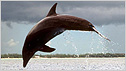
No. 15 - Pods of Dolphins
Find out where to see one of our most engaging mammals in the sea around the British Isles.
Best places to see - Moray Firth in Scotland, Cardigan Bay in Wales, Dorset and Cornwall coasts.
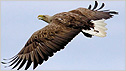
No. 13 - Hunting Sea Eagles
The Sea Eagle is the UK's largest bird of prey, and the fourth largest eagle in the world.
Best places to see - Scotland's Highlands and Islands.


Also on Nature's Top 40
BBC Nature & Wildlife
More from bbc.co.uk nature

BBC iD
BBC iDBBC navigation
BBC links

BBC © 2014The BBC is not responsible for the content of external sites. Read more.
This page is best viewed in an up-to-date web browser with style sheets (CSS) enabled. While you will be able to view the content of this page in your current browser, you will not be able to get the full visual experience. Please consider upgrading your browser software or enabling style sheets (CSS) if you are able to do so.
