

EXPLORE EPISODE THREE - 32 to 29
Local Navigation

Bringing to life spectacles of natural wonder on our doorstep
No.31
Swarms of Swallows
‘One swallow doesn’t make a summer’ - just as well then that they arrive in their thousands from early April to spend the summer months here in the UK. Swallows (Hirundo rustica) are from the same family (Hirundinidae) as Sand Martins (Riparia riparia) and House Martins (Delichon urbica). They’re one of the UK’s commonest and most familiar wild birds, visiting to breed before flying thousands of miles back to Africa.
Follow the migration of the swallow with BBC Radio 4.
It’s an epic journey, taking them around 10,000 miles, across Europe then down to South Africa crossing the Sahara desert on the way. They fly by day, finding food as they go, covering about 200 miles each day. Much of what we know about the Swallows’ migration comes from work done by research teams measuring, weighing and ringing the birds before they leave the UK.
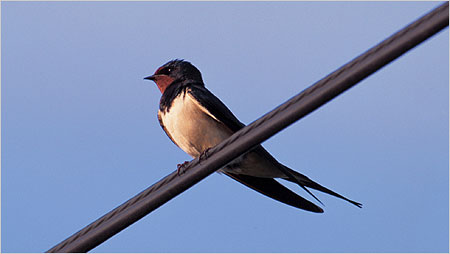
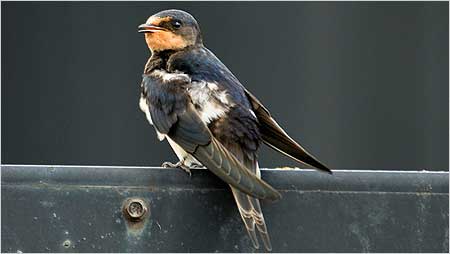
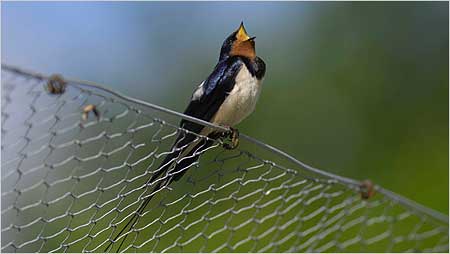
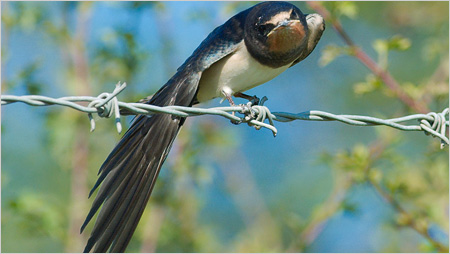
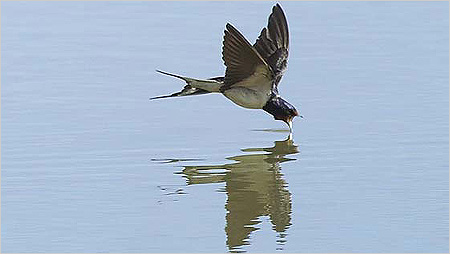
Swallows are small (17 – 19cm long) with long deeply-forked tails. They have glossy dark blue backs with whitish underbellies and a dark red throat. They catch insects whilst flying and are very agile flyers themselves, spending most of their time ‘on the wing’.
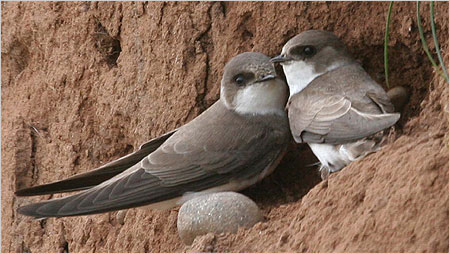
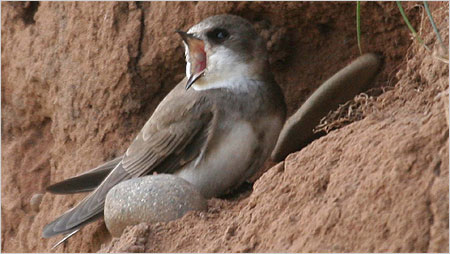
Sand Martins, which are known as Bank Swallows in North America, are smaller than Swallows (about 12cm long). They’re brown with white underbellies and a brown stripe across the breast. Their tails are very distinct from Swallows as they are only slightly forked.
Sand Martins are one of the first birds to return to the UK in the spring and with their razor sharp thin claws they excavate burrows in sandbanks where they nest. The vertical sandbanks they need for this are normally found close to rivers or sand/gravel quarries.
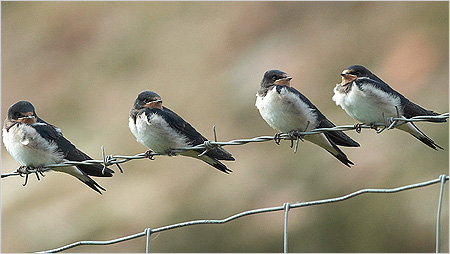
In August the flow of Swallows and Martins back to Africa begins. The first sign of this is when they gather together on telegraph lines.
Find out more about Swallows...
Weblinks
The BBC is not responsible for the content of external internet sites.
Photo gallery
Watch and Listen
Sanjida O'Connell watches Swallows gathering at a reed bed before migrating for the winter:
Sanjida O'Connell visits a sand bank of Sand Martins nests where they're being ringed before leaving for the winter:
Listen to the sound of Swallows on the RSPB website:
Help playing audio/video
Tips
Tips for viewing this species:
- Swallows often gather on telephone wires before they start their migration back to Africa.
- Reed beds, like the one at Icklesham which is featured in the programme, are popular sites for roosting before the Swallows migrate.
- Swallows will return to old nests, so if you see some nesting one year check the same site again the following year.
- Binoculars will help you get a closer look at the Swallows as they swoop to feed on flying insects.
- Although similar to swifts, it’s relatively easy to tell the difference. The swift is from a different family (Apodidae). It’s a plain brown colour but in flight appears black and it has a short, forked tail. The Swallows’ tail streamers are much longer. Swifts also feed at a much higher altitude than swallows.
- Useful Swallow facts from the BBC One Show
Habitat
Swallows are found in areas where there’s a ready supply of insects for them to feed on. They’re often seen in the countryside where there’s open farmland, and as they often nest in buildings they tend to live quite close to people.
Reedbeds are a favourite site for Swallow roosts prior to migrating. Thousands of Swallows can gather at these roosts arriving together like a swooping, swirling dark cloud. As they fly together in these large numbers some will be picked off by birds of prey including hobbys and sparrowhawks. Hobbys also migrate and experts suspect that they may actually follow the flocksof migrating Swallows.
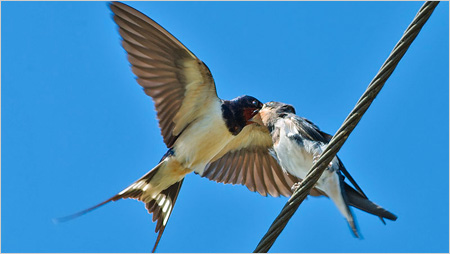
Swallows build their nests from mud and bits of vegetation against a beam or shelf often on a building, for example under the eaves of a roof. They will return to existing nests and mend them each year. Both male and female birds build the nest and when the eggs have hatched both feed the young with insects, including wasps.
After breeding Swallows gather in roosts before migrating. Some roosts involve thousands of birds which provide a fantastic spectacle as they fly en masse.
No. 29 - Roosting Rooks
The fascinating behaviour of a bird regarded as one of the UK's most intelligent, but not necessarily one of our most loved.
Best places to see - Norfolk and Aberdeenshire in Scotland.
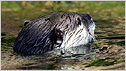
No. 30 - Hunting Otters
Find out about the animal now making a come back after once being considered as vermin.
Best places to see - Northumberland, Morven Peninsula on the West Coast of Scotland and the Isle of Skye.
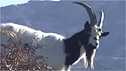
No. 32 - Goats
See the rutting Goats of Snowdonia. These feral animals live wild on the hillsides.
Best places to see - Nant Gwynant Valley in Snowdonia.


Also on Nature's Top 40
BBC Nature & Wildlife

More from bbc.co.uk nature

BBC iD
BBC iDBBC navigation
BBC links

BBC © 2014The BBC is not responsible for the content of external sites. Read more.
This page is best viewed in an up-to-date web browser with style sheets (CSS) enabled. While you will be able to view the content of this page in your current browser, you will not be able to get the full visual experience. Please consider upgrading your browser software or enabling style sheets (CSS) if you are able to do so.
