Making radio relevant in the digital age
The transformative journey of a community radio station in Nepal

Deep in the transition zone between Nepal’s Tarai plains and its Chure hills, surrounded by rivers, lakes and streams, sits the forested municipality of Bansghadi. Its community radio station, Radio Gurbaba, has been a trusted local voice for years. Anuj Tharu, its dedicated radio producer, and the team have traditionally focused on news and talk shows covering topics relevant for the local community.
But as radio listenership declined, and audiences becoming more likely to turn to their mobile phone than turn on a radio, his team realised they had to move into more modern video production and digital tools alongside their radio programming.
Under our Bridges project, in partnership with the Community Information Network (CIN), we arranged video production training and mentorship, focused on weather and climate communication. The mentorship aimed to strengthen the radio teams’ ability to produce digital and multimedia content alongside radio broadcasting. Radio Gurbaba’s team received practical guidance on topic selection, scriptwriting in simple understandable language, camera operation, filming techniques, voice-over, editing and publishing content on social media that connects weather and climate information to local community needs.
In today’s digital age, fewer people listen to the radio than before. We realised we must move forward with this change. This training helped not only me, but our whole team became more aware of the need for the use of video contents on digital platforms. Now, we’re slowly learning video production and modern storytelling techniques."
Through our partner Association of Community Radio Broadcasters (ACORAB), the umbrella body representing community radio stations in Nepal, we then continued online mentoring with Anuj and his colleagues for four months.
This learning was essential in keeping their audience engaged, at a time when the people of Bansgadhi are facing increasingly extreme weather conditions: floods, river erosion, heavy rainfall, thunderstorms, windstorms, heatwaves, drought and forest fires.

Over that time, Anuj and his team had to produce 20 video stories focused on weather and disaster awareness, putting into practice all they had learned while covering a range of formats: weather updates and explainers, agrometeorological advisories, agricultural methods and disaster preparedness videos covering floods, waterlogging, lightning safety and windstorm risks. All had to be in understandable and actionable language.
And, Anuj said, drawing upon local scenes, local language and the experiences of local people did make it easier for communities to understand the messages. “Farmers can now not only hear weather information but also see how it relates to their farming activities and daily lives,” he said.
The training and mentorship significantly strengthened the station’s digital footprint. A story about ways to protect children and crops from cold weather, featuring a local community member sharing practical advice, received nearly 665,000 views on social media. The station’s Facebook following increased from 300 to 16,000 as they started publishing video content. Their YouTube followers also rose significantly.
The mayor of Bansgadhi municipality, Khadak Bahadur Khadka, said that sharing information through videos and social media along with radio helped the messages reach people more quickly and reduces disaster-related risks. The videos showing real local situations, experiences of farmers and community members and advice from experts can help people better understand risks and prepare accordingly.
Motivated by this experience, the team members used their new skills to create paid video content as an additional source of revenue. “Now we collaborate with different local groups and organisations to create video content during our free time,” said Anuj.
Under the Bridges project in Nepal, we have supported 14 community radio stations and the Community Information Network (CIN), and trained 208 media professionals.
Across Nepal, Bangladesh and Kenya Bridges is supporting locally relevant approaches to climate communication, helping communities access information they can understand, trust and use. Funded by NORAD, this project aims to make weather and climate information services more understandable, accessible and actionable for communities most affected by climate change.
Read more about our work on Bridges

Making radio relevant in the digital age
The transformative journey of a community radio station in Nepal
In depth radio: Supporting farmers and families to adapt
We support local radio stations in Kenya to deliver in-depth climate and environmental programming that helps communities respond to climate change
From social media to the fields
How accessible and practical climate information is protecting livelihoods in Nepal
To save a community in the Sundarbans
How journalism is amplifying voices and calling for action for a community locked in a battle for survival against the changing climate
The voice that helped protect a town
How local-language radio saved lives and crops in Nepal as a cyclone threatened a popular religious festival
Not just another travel vlog series
How we're sharing stories of local adaptation from remote Bangladeshi communities, bringing adventure and knowledge together for effective climate measures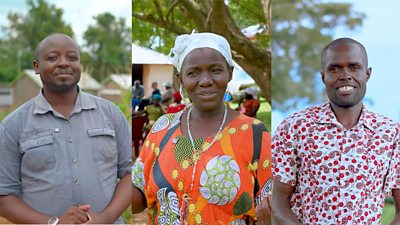
In depth radio: keeping people safe and sustaining livelihoods
We support local radio stations in Kenya to deliver in-depth climate and environmental programming that helps communities respond to climate change.
Radio for climate action
We are making climate information accessible and actionable for communities across Bangladesh with the stations of state-owned radio Bangladesh Beter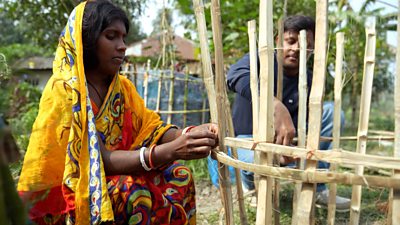
Tower gardens: sharing climate-smart solutions in Bangladesh
Through the Bridges project, Hello Check has been producing practical weather and climate content that helps people adapt to climate change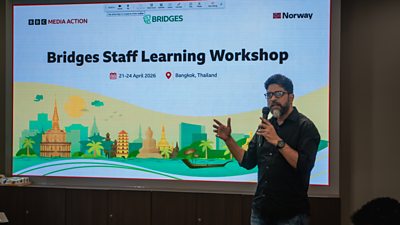
Bridging the gaps in weather communication
Over the past two years, we worked closely with governments, media organisations, and communities to ensure accurate and timely weather information reaches people and helps them make better decisions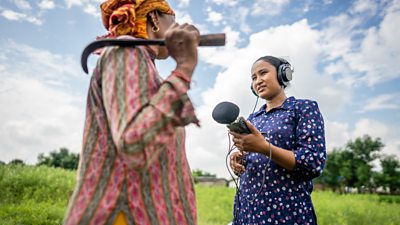
Radio and resilience: saving lives in the Himalayan monsoon
The story of Bindu Chaudhary, a young journalist in Nepal saving lives from devastating flooding through her radio broadcasts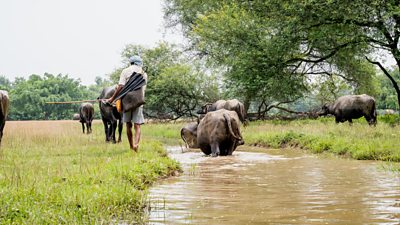
How Bridges is changing lives
We support media professionals to turn complex climate data into information that helps communities prepare, adapt and stay safe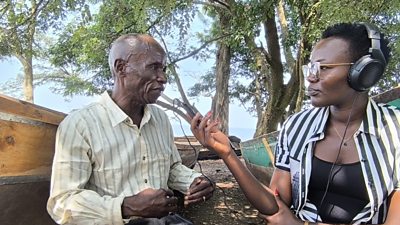
'Radio can bridge the gap between scientists and communities'
Presenter and journalist Oloo Molly Akinyi is building trust, tackling misinformation, and helping communities prepare for climate shocks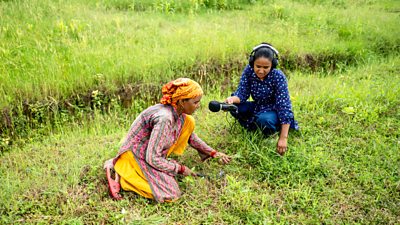
Read our research briefings
We talked to over 5,000 people across three countries to find out how they're using climate information - and whether they believe what they hear. Read our fascinating insights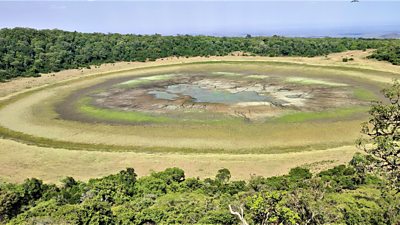
Return to Bridges home
Read all about our exciting three-country project supporting stronger weather and climate information


Latest news from Nepal
Our projects in Nepal

Mobile innovation to improve the health of mothers and children in Nepal
Through an innovative mobile-phone based tool, we’re supporting families in Nepal to make healthier decisions around reproductive, maternal, new-born and child health.
Improving knowledge of health and hygiene practices through radio
We’re supporting local radio stations in remote districts of Nepal to help improve local knowledge of important health and hygiene practices.
Tackling sexual violence through drama in Nepal
Powerful dramas – helping challenge attitudes and behaviours leading to sexual violence – are produced and broadcast across two local FM stations in Nepal with editorial and technical support from BBC Media Action.
Helping save lives through radio in Nepal
Milijuli Nepali (Together Nepal) is a radio programme providing people affected by the Nepal earthquake with practical, actionable information – on shelter, sanitation, food, water, health and employment – for survival and recovery.


