From social media to the fields
How accessible and practical climate information is protecting livelihoods in Nepal

For 21-year-old Nibha Kumari Yadav, farming was part of growing up in Mahottari, nearly 250 km away from Kathmandu, in the southern plains of Nepal where most people make a living through agriculture. From a very young age, she followed her father to the fields, helping him look after the harvest and carry fodder for their animals.
But helping in the fields did not mean having a say in how the family farmed. Most decisions were traditionally made by the elders.
That began to change when Nibha discovered Hello Mausam (Hello Weather), a YouTube channel dedicated to weather and climate content. One day, while browsing through Facebook, Nibha came across a post by Radio Juntara that introduced her to the channel.
At first, she listened casually. Then a forecast caught her attention.
There was a weather forecast in the programme saying it would rain in three or four days, and that happened! Then I started trusting it fully."

Listening to Hello Mausam gradually changed her understanding of farming. She started taking an interest in what crops to plant and when to harvest based on the changing weather. She also shared what she learned with her father. For her family, this information has made a real difference in the harvest.
Mahottari is home to many farming families like Nibha’s, whose livelihoods depend on accurate forecasting and practical guidance on how to protect their crops during extreme weather events. Heavy rainfall can bring floods, while drought and heatwaves can dry out fields. Changing weather patterns also make it hard for farmers to decide when to plant, irrigate, and harvest.
Nibha’s family had suffered the consequences of making decisions without having weather information. One year, they planted rice, but that year saw very little rainfall. The crop failed to produce a harvest and was eventually used as cattle feed. If they had access to information about the expected weather, and which crops to plant, they mighthave avoided such loss.
With timely and actionable information through Hello Mausam, Nibha now helps her father make decisions to protect their crop. Once when her father had planned to harvest their sugarcane while frost was still present, Nibha advised him to wait until temperatures warmed.. She had heard on Hello Mausam that harvesting sugarcane during frost can reduce its sugar element and quality, resulting in a low price at market. With Nibha’s advice, waiting protected the value of the crop that season.

During the paddy harvest season, Hello Mausam warned farmers about heavy rainfall and advised them to delay harvesting. This is important because after harvesting, rice is often left in the field for several days to dry before it is collected and stored. If heavy rain falls during this period, the cut crop will be damaged.
The farmers in their area who harvested early, suffered losses when the rains came. But Nibha’s family followed advice and waited until the rain had passed.
If we had harvested earlier, it would have all been ruined."
Weather information is useful not simply when it predicts an extreme event, but when it helps people decide how to act to protect their lives and livelihoods. Effective climate information turns forecasts into action and information into solutions.
Through our Bridges project, we are making weather and climate information more useful to communities in Nepal. Our project has supported 14 radio stations and 208 media practitioners across the country, providing training, mentoring, and technical guidance. The support has helped journalists and broadcasters better understand weather and climate information so they can communicate it clearly in local languages, tailored to the needs of communities. Our support has also helped reporters use forecasts from Nepal’s Department of Hydrology and Meteorology to bring weather information into their regular programming.

Hello Mausam brings together video stories produced by the 14 partner radio stations trained by BBC Media Action. People can access these stories through their dedicated YouTube channel, complementing radio broadcasts, and social media updates.
This digital approach to effective weather communication is helping to connect young people like Nibha and spread essential information and guidance to their families. The young woman who once simply followed her father into the fields now helps him make informed decisions to navigate climate events and help their family thrive.

Across Nepal, Bangladesh and Kenya Bridges is supporting locally relevant approaches to climate communication, helping communities access information they can understand, trust and use. Funded by Norad, this project aims to make weather and climate information services more understandable, accessible and actionable for communities most affected by climate change.
Read more about our work on Bridges

Making radio relevant in the digital age
The transformative journey of a community radio station in Nepal
In depth radio: Supporting farmers and families to adapt
We support local radio stations in Kenya to deliver in-depth climate and environmental programming that helps communities respond to climate change
From social media to the fields
How accessible and practical climate information is protecting livelihoods in Nepal
To save a community in the Sundarbans
How journalism is amplifying voices and calling for action for a community locked in a battle for survival against the changing climate
The voice that helped protect a town
How local-language radio saved lives and crops in Nepal as a cyclone threatened a popular religious festival
Not just another travel vlog series
How we're sharing stories of local adaptation from remote Bangladeshi communities, bringing adventure and knowledge together for effective climate measures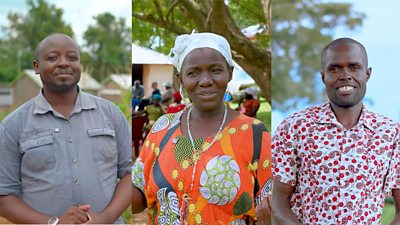
In depth radio: keeping people safe and sustaining livelihoods
We support local radio stations in Kenya to deliver in-depth climate and environmental programming that helps communities respond to climate change.
Radio for climate action
We are making climate information accessible and actionable for communities across Bangladesh with the stations of state-owned radio Bangladesh Beter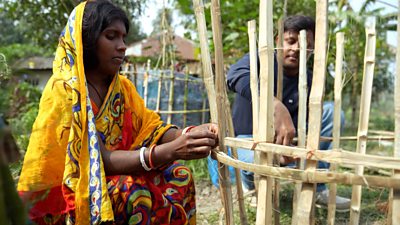
Tower gardens: sharing climate-smart solutions in Bangladesh
Through the Bridges project, Hello Check has been producing practical weather and climate content that helps people adapt to climate change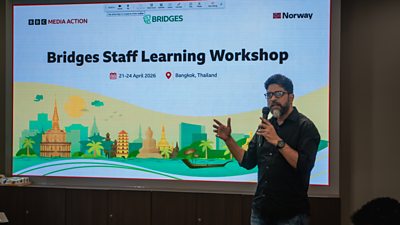
Bridging the gaps in weather communication
Over the past two years, we worked closely with governments, media organisations, and communities to ensure accurate and timely weather information reaches people and helps them make better decisions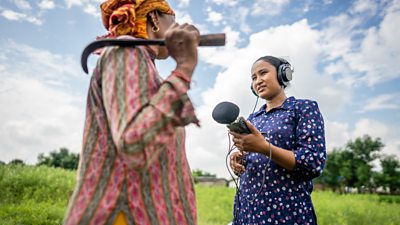
Radio and resilience: saving lives in the Himalayan monsoon
The story of Bindu Chaudhary, a young journalist in Nepal saving lives from devastating flooding through her radio broadcasts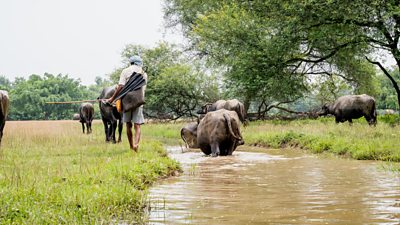
How Bridges is changing lives
We support media professionals to turn complex climate data into information that helps communities prepare, adapt and stay safe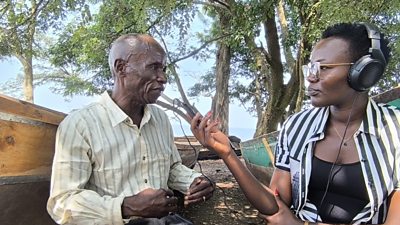
'Radio can bridge the gap between scientists and communities'
Presenter and journalist Oloo Molly Akinyi is building trust, tackling misinformation, and helping communities prepare for climate shocks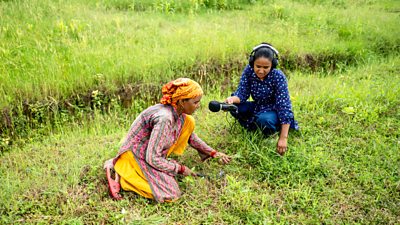
Read our research briefings
We talked to over 5,000 people across three countries to find out how they're using climate information - and whether they believe what they hear. Read our fascinating insights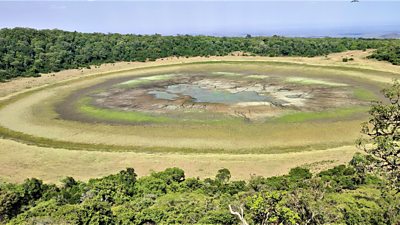
Return to Bridges home
Read all about our exciting three-country project supporting stronger weather and climate information


Latest news from Nepal
Our projects in Nepal

Mobile innovation to improve the health of mothers and children in Nepal
Through an innovative mobile-phone based tool, we’re supporting families in Nepal to make healthier decisions around reproductive, maternal, new-born and child health.
Improving knowledge of health and hygiene practices through radio
We’re supporting local radio stations in remote districts of Nepal to help improve local knowledge of important health and hygiene practices.
Tackling sexual violence through drama in Nepal
Powerful dramas – helping challenge attitudes and behaviours leading to sexual violence – are produced and broadcast across two local FM stations in Nepal with editorial and technical support from BBC Media Action.
Helping save lives through radio in Nepal
Milijuli Nepali (Together Nepal) is a radio programme providing people affected by the Nepal earthquake with practical, actionable information – on shelter, sanitation, food, water, health and employment – for survival and recovery.


