The buried voices that still sing
Mabinty Kamara amplifies the voices of survivors of gender-based violence in mines across Sierra Leone, to try and stop it happening again.
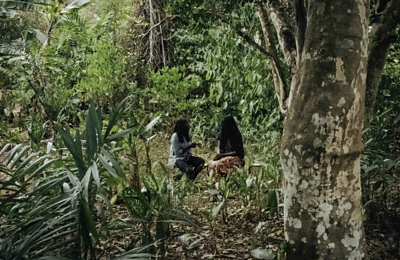
Deep in an abandoned pit in north-eastern Sierra Leone, Haja and Janet (not their real names), sift through thick mud, bent-backed, to find dust-like particles of gold.
Their voices dance round the mine pit, singing in Krio, Sierra Leone’s primary language – “Come and see what the Lord has done for us women!”
They offer this song up in anticipation of finding enough gold to feed themselves and their daughters, which normally translates to a few dollars a day.
Across Sierra Leone, there are many mine sites which have been abandoned by large companies and are now used by local communities as a way to generate their own income. For Haja and Janet, dredge mining, in pits as deep as four kilometres, is their primary source of livelihood. Both live in a small village in the rural Kono district of north-eastern Sierra Leone. Whilst this work is laborious and pays very little, there is also a hidden danger – the sexual and gender-based violence that frequently occurs at these mine sites.
Mabinty Magdalene Kamara is a journalist from Sierra Leone, amplifying the voices of women like Haja and Janet through her brave and impartial reporting. Trained, mentored and funded by BBC Media Action for this investigation, she is building awareness of this terrible toll on women, so that their daughters and generations of women ahead of them won’t have to face the same horrors.
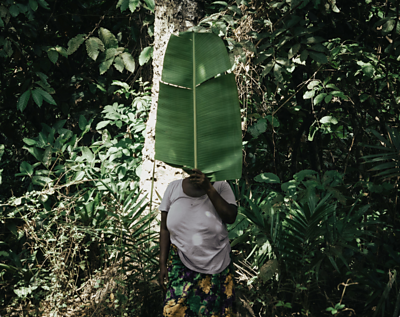
For Janet, and many other women like her, working in the mines was one of the few means of earning money following the end of Sierra Leone’s brutal civil war. After the death of her parents, the abandoned mines in the diamond and gold-rich region of Kono were the easiest sources of income.
Here, women were able to partake in dredge mining – excavating minerals from sand, gravel and dirt using water, bowls and just their hands. And so, as a young girl, Janet ventured into the pits.
Janet leans closer to Mabinty’s recorder as she describes how she was raped whilst working at the mine.
I was just a child at the time - between the ages of 11 and 12. It felt like I was dead.”
Janet was ostracised and isolated, even more so when she discovered a month later that she was pregnant. “This was a time when if you don’t have money, your case will not be attended to by the chief (of the local community). I had no money, no parents to support me.” Despite having the courage to report the rape, Janet was unable to identify her rapist, who attacked her from behind. He remains at large.
For Haja, mining was a means to support herself and her three children after the death of her husband. After she was raped at the mine, Haja was so ashamed she fled. Unlike Janet, she knew who her rapist was; he incurred no punishment for his crime. It was only years later, when her family begged her to come back, that he finally left the village.
I believe sharing my story will also help other women with similar stories. We want them to help other women get justice and also be able to afford a living."
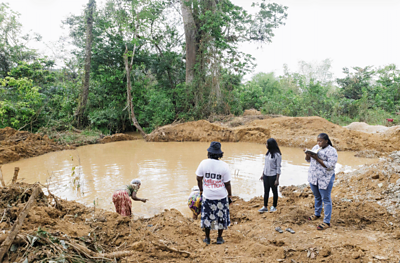
There is currently no official data on the number of female miners who have experienced sexual violence. Since the publication of her article on the female miners, Mabinty has been working with a grassroots organisation, WOME (Women in Mining and Extractives Sierra Leone), who believe it is widespread and say this is likely connected to the culture of silence and shame amongst survivors, many of whom are too scared to report the attacks when they happen.
Trained by BBC Media Action, Mabinty is on a mission to amplify the voices of these women. Her investigation, funded by BBC Media Action, sparked a discussion around transparency, accountability and the unseen impact of dredge mining on women. Despite there being existing regulatory and legal frameworks for artisanal miners, such as the Mines and Minerals Act of 2009, challenges still exist for women who rely on mining for income, and the dangers they face every day still prevail.
Change takes time. For now, perpetrators still go unpunished, data on the scale of the violence is still scarce, and the culture of silence runs deep. But Haja and Janet were brave enough to speak up, and Mabinty gave them a platform to finally be heard by those who are in power. Townhalls have also been held across communities like Haja and Janet's, bringing together community leaders, local authorities and the miners themselves, to highlight concerns and discuss potential solutions.
“Journalism is really important because it's a public service,” she says simply. “Truth matters.”
In a place where these women’s voices have gone unheard for so long, journalists telling their stories is crucial for hope of lasting change.
Mabinty's story won the award for Best Gender Story for her report titled "I Was Raped at 15 in a Mining Site-Women and the Dangers in the Mines" at the Sierra Leone Association of Journalists and Independent Media Commission Media Awards.
More about BBC Media Action

Read more about our support for investigative journalism
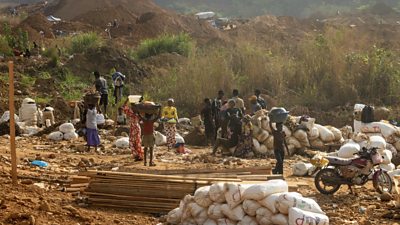
Digging for the truth
Holding those in power to account, Davida Spaine-Solomon reports on hidden truths in Sierra Leone's mines.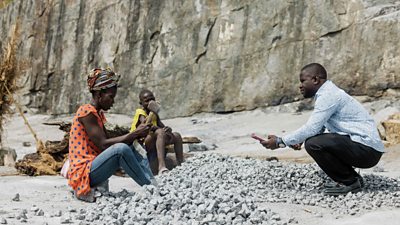
Hands that hold hammers instead of books
The children working at mines rather than school in Sierra Leone and the journalist trying to change that.
Search by Tag:
- Tagged with Sierra LeoneSierra Leone
- Tagged with Media developmentMedia development
- Tagged with AfricaAfrica
