_____________________________________________________________________________________________________
Download a free 6 Minute English worksheet and transcript!
Try our free interactive quiz!
______________________________________________________________________________________________________


______________________________________________________________________________________________________
Introduction
Does life on another planet exist? Will we ever be able to live on a planet that isn't Earth? We hear from a science and space journalist as she explains the latest research and data collected from planet TRAPPIST-1e. Neil and Becca teach you some new language to understand this potentially habitable planet.
This week's question
How long would it take to drive to the Sun at 100km an hour? Is it:
a) 70 years
b) 170 years
c) 1,700 years
Listen to the programme to hear the answer.
Vocabulary
habitable
describes a place or habitat that is suitable for something to live
zone
an area with a particular feature
potential
describes possibly having qualities or abilities to do something
rule out
dismiss the possibility or idea of something
dominated
controlled by or is the most significant element of
fingers crossed
an expression we use to wish for hope or luck

TRANSCRIPT
Note: This is not a word-for-word transcript.
Neil
Hello. This is 6 Minute English from BBC Learning English. I'm Neil.
Becca
And I'm Becca. Neil, do you believe that life exists away from planet Earth?
Neil
Well, I'm not sure about the kind of little green men that you see in science fiction movies, but also, I think we cannot be alone in the universe. What about you, Becca? What do you think?
Becca
I agree, I think that maybe life does exist beyond our planet, but maybe not as we see in alien movies.
Neil
Well, in this episode, we'll be learning from science and space experts about whether the conditions for life exist on a planet 40 light years away.
Becca
Yes, and as usual, you can find a transcript for this episode, along with all the vocabulary and a worksheet, on our website bbclearningenglish.com.


Neil
OK, a quiz question for you, Becca. How long would it take to drive a car to the Sun at 100km an hour? Is it:
a) 70 years,
b) 170 years, or
c) 1,700 years?
Becca
Well, Neil, the Sun seems very far away so I’ll go for c) 1,700 years.
Neil
I hope you have enough petrol for that. Well, we’ll find out the answer to the question later. Now, though, some science and space experts are excited about a planet in a different solar system from our own. Science journalist, Caroline Steele, talks about this discovery on the BBC World Service programme What in the World.
Caroline Steele
So, scientists have been looking at an exoplanet. So, that's a planet that exists in a solar system that isn't our own, called TRAPPIST-1e, um, and it's a rocky planet like Earth. It's a similar size to Earth, and it exists in the habitablezone around its sun, and its sun is called TRAPPIST-1.
Becca
Caroline explains that scientists have discovered that the planet, TRAPPIST-1e, exists in the habitable zone around its sun. The adjective habitable describes a place or habitat that is suitable for something to live.
Neil
Yes, and a zone is an area with a particular feature. For example, people who live in earthquake zones have to be prepared for danger.
Becca
So, a habitable zone is an area where something could live. Caroline goes on to explain why they think TRAPPIST-1e may be habitable.
Caroline Steele
Scientists have been looking at the potential atmosphere around TRAPPIST-1e and they've ruled out that it's really full of hydrogen or carbon dioxide, which is a great thing because they're greenhouse gases, which would make the planet really hot. And there are some small clues that it might be a nitrogen-dominated atmosphere, which, again, is another sort of clue that there could be life there.
Neil
Caroline Steele says that scientists are looking at the potential atmosphere around TRAPPIST-1e. That is, that they want to find out if the atmosphere is capable or likely to become able to host life. If something has potential, it already has the qualities or abilities to do something. The adjective potential has a similar meaning but refers to future capability.
Becca
Exactly. We could say the data has potential in that it shows signs of helping the research. But when we talk about potential data, we're referring to data that could help us with future research.
Neil
She also mentions how scientists have ruled out that TRAPPIST-1e is full of hydrogen or carbon dioxide. The phrasal verb rule out means to dismiss the possibility or idea of something. Scientists have found that TRAPPIST-1e is not full of those greenhouse gases, they’ve ruled it out.
Becca
Indeed. And Caroline goes on to say how the atmosphere of TRAPPIST-1e is dominated by nitrogen. If something is dominated by something else, it is controlled by it or is the most significant element of it. TRAPPIST-1e is full of nitrogen, which is exciting because nitrogen is a sign of life and habitability.
Neil
So, what if nitrogen is actually found on this planet? Caroline Steele has more.
Caroline Steele
My guess is what we'll do is try and see what other gases are in the atmosphere and use models to work out how warm the planet could be and whether or not it's a temperature that basically could support life, or maybe it's too hot or too cold, but fingers crossed it has nitrogen. There's enough of it to keep the planet a decent temperature. And then that's one step closer to finding life.
Becca
Caroline guesses that scientists will focus on the planet’s temperature and whether it could support life. She uses the expression fingers crossed to express hope for a positive outcome.
Neil
Yes. We often make the physical gesture of crossing our fingers for good luck.
Becca
We do. That reminds me Neil, the answer to your question! Fingers crossed that I answered correctly.
Neil
I see what you've done there, Becca. Yes, I asked you how long it would take to drive to the Sun at 100km an hour, and you answered c) 1,700 years. Well, the Sun is very far away, but the answer was b) only 170 years.
Becca
Oh well, that’s still longer than my lifetime! Now let’s have a recap of the language we've learnt in this episode, starting with habitable, which describes a place or habitat that is suitable for something to live.
Neil
A zone is an area with a particular feature.
Becca
Potential describes possibly having qualities or abilities to do something.
Neil
The phrasal verb rule out means to dismiss the possibility or idea of something.
Becca
We also had dominated. If something is dominated by something else, it is controlled by it or is the most significant element of it.
Neil
And finally, the expression fingers crossed is used to wish for hope or luck. Once again, our six minutes are up, but head over to our website, bbclearningenglish.com, for a quiz and worksheet for this episode. See you soon. Goodbye for now.
Becca
Bye!
Next
Find an A-Z list of our programmes.
Learn English from the news.
Practise your reading skills with The Reading Room.
Learn more about environments in English.
6 Minute English dhihoo kanaa

Climate change and extreme weather
Episode 260903 / 03 Sep 2026
Every year we see damage, death and destruction caused by hurricanes, cyclones and typhoons - tropical storms. Is climate change making this impact worse?

Sharing the road with driverless cars
Episode 260820 / 20 Aug 2026
Would you trust a robot to drive you around a city?

Who does the housework?
Episode 260813 / 13 Aug 2026
When you were growing up, did your mum or dad do more household chores?
How do climate scientists make predictions?
Episode 260806 / 06 Aug 2026
What is the difference between a prediction and a projection?

The Enhanced Games
Episode 260730 / 30 Jul 2026
Would you watch a sport if you knew the athletes had taken drugs?


What's in a footballer's brain?
Episode 260716 / 09 Jul 2026
How do footballers cope with high-pressure scenarios like penalties and corners?


Stress-free family meals
Episode 260625 / 25 Jun 2026
What foods did you dislike when you were growing up?

Limiting screen time for children
Episode 260618 / 18 Jun 2026
Children are spending too much time with electronic devices.

How advertisers make us spend money
Episode 260611 / 11 Jun 2026
When was the last time you bought something you didn't need?



How reading shapes your brain
Episode 260514 / 14 May 2026
Can learning to read alter the way your brain works?

Should we eat ultra-processed food?
Episode 260430 / 30 Apr 2026
Ultra-processed food can be tasty, but what is it doing to our health?



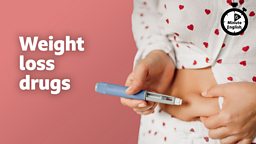
Weight loss drugs
Episode 260326 / 26 Mar 2026
How do weight loss drugs like Ozempic and Mounjaro help people lose weight?

How do we adapt to the cold?
Episode 260319 / 19 Mar 2026
Would you prefer to be too hot or too cold?

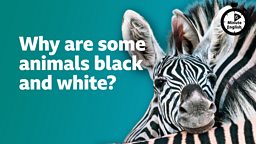
Why are some animals black and white?
Episode 260305 / 05 Mar 2026
The answer is not as black and white as you might think!





Why are billionaires building bunkers?
Episode 260129 / 29 Jan 2026
Is the end of the world closer than we thought?

Scared of speaking English?
Episode 260122 / 22 Jan 2026
Beth and Pippa talk about why we often find speaking a new language scary.
What English phrases really mean
Episode 260115 / 15 Jan 2026
Why don't British people say what they mean, or mean what they say?