What gives a place an identity?
A place's identity is formed by a complex and interconnected set of factors but a place does not need all of these factors to have an identity. The place can be any size - as small as a bedroom or as large as a city or even a country.
Physical
Places can be recognised and given an identity through their physical features. These can range from buildings and streets to mountains, forests and rivers. Many people will associate a place with a certain physical feature such as the coal mines in the valleys of south Wales or the mountainous landscape of the Eryri National Park.
Historical
Other factors that give a place its identity can relate to its history. This can have a role in how both local people and others might connect to a place because of its historic significance to them. That could be through the history of an industry that has played an important part in the local area or through battles that have been fought there.
Personal
We can also perceive an identity of a place on a much more personal level through our feelings, emotions and connections to it. People might see an area differently based on their experiences or connections they might have. This might be through language, culture or even sport.People will often have an affinity with a place due to a local sports team. Wrexham is an example of this where the local football team plays a significant part in the lives of many of the people living there and is an important part of their identity.
The experiences we have of an area may also shape its identity. News reports about a place can portray the area in either a positive or a negative way to people who don’t live there.
Watch: Identity of place video
Watch this short clip to learn how a place can form an identity.
Whether we realise it or not, our home has a huge effect on our identity. In terms of culture, language… even sports. You could say that a place has its own identity. And, just like our own, that identity can change over time.
For much of the 19th and 20th centuries, Aberfan near Merthyr Tydfil was an unremarkable coal mining village – no different than any number of other industrial villages throughout the valleys of south Wales. But on the morning of 21 October, 1966, disaster struck. The colliery tip above the village collapsed, engulfing much of Aberfan – including Pantglas Junior School. 28 adults and 116 children died.
Aberfan was now much more than just an unremarkable coal mining village. As it came to the attention of Wales, the UK, and the world, it was plunged into the media spotlight. And while this media attention brought hundreds of people into the village in order to help in the aftermath of the disaster, it also changed the identity of Aberfan overnight.
Today, the children of Aberfan are brought up in the shadow of the disaster. Understandably, the identity of the village will be forever shaped by that terrible morning in 1966. Elsewhere in the world, terror attacks have had a similar effect.
In the immediate aftermath of the attack on the World Trade Center on 11 September 2001, New York City changed overnight. Political, cultural and religious differences were forgotten - temporarily - as the city came together to rebuild.It’s a bitter irony that the darkest moments in our history can often bring out the best in people. But changes in the identity of place can occasionally cause us to react a little more violently.
Between 1979 and 1991, over 200 holiday homes in Wales were set ablaze. Various groups claimed responsibility, among them Meibion Glyndŵr - who were protesting against the rising house prices and language shift caused by incomers from England. To these people, the identity of their area was identical to their own. And they were willing to go a very long way to stop it changing.
The identity of a place can also be changed deliberately. In the 19th century, the rapid rise of industry in Wales led to the equally rapid development of Tiger Bay in Cardiff. During this time, workers from up to 45 countries made a new home in Cardiff, making it one of the most multicultural areas not only in Wales, but in the United Kingdom as a whole.
But as coal exports slowed, the fortunes of Tiger Bay declined. And so, at the end of the 20th century, it was transformed. Its old landscape cleared away, becoming the home of iconic buildings like the Millennium Centre, and the Senedd. Oh, and the name was changed – to Cardiff Bay.
Tiger Bay may be gone, but there are still people who remember it. Who have equally vivid memories of both Tiger Bay and Cardiff Bay. It goes to show the importance of keeping history alive. And that while places can change over time, we don’t always have to change with them.
Changing identities of place
A place’s identity can change substantially over time. Migration can bring in people from different backgrounds which can influence local culture and habits. Governments may choose to invest in an area. After redevelopment, an area that was once seen as old and derelict can be given a new lease of life as a modern and influential area filled with shops, apartments and green spaces.
Cardiff Bay
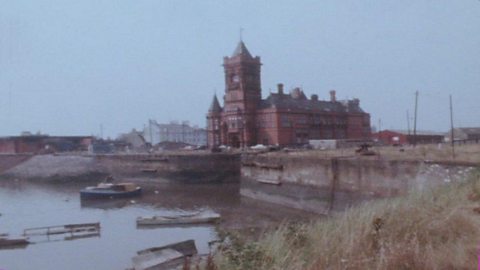
The area that we now know as Cardiff Bay once had a very different identity. It was originally known as Tiger Bay due to the fierce currents around the local tidal stretches of the River Severn. It was a very important location during the industrial age.
The docks in Cardiff exported coal from the south Wales valleys to the rest of the world. The building of the Glamorganshire Canal, which connected Merthyr Tydfil and Cardiff, made transporting iron and coal easier and led to the growth of the docks. The development of the docks brought sailors and dock workers from around the world to Cardiff. They settled in areas such as Butetown, contributing to the city's growth in population and giving the area its unique multicultural character.
Decline
The docks declined during the 1960s and 70s because of increasing competition from other ports. By the 1980s large parts of the docks were derelict, paving the way for its redevelopment.
Redevelopment
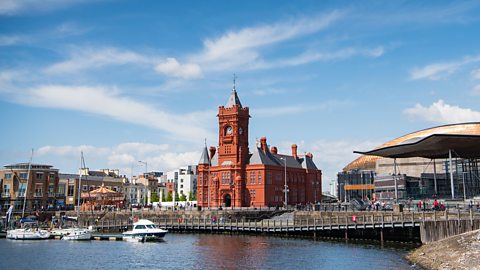
In the 1990s the Cardiff Bay Development Corporation began redeveloping the area. A new barrage was built to create a new freshwater lake within the bay, completely changing the bay's appearance. Over the following years, there were many developments such as the St David’s Hotel, Techniquest, Mermaid Quay, Wales Millennium Centre and the Senedd.
These changes have reimagined the identity of the area - from an industrial area to an area that is now home to political decision making.
Like many other areas which have undergone redevelopment of their own, the transformation of the docks into Cardiff Bay was met with opposition by many local people. Reports suggested that the redevelopment plans had not included the local community of Butetown whose residents argued that the changes would disrupt local communities and wildlife habitats.
Canary Wharf
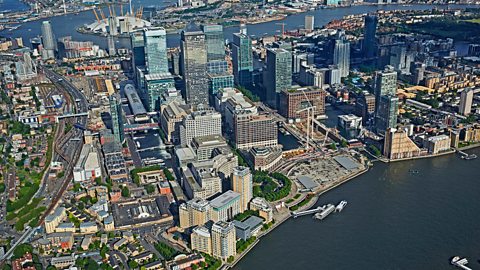
Another area in the UK that has undergone similar changes is Canary Wharf in London, on the site of the former West India Docks. Once one of the busiest docks in the world, they closed in 1980.
Decline
The decline of the docklands began during the Second World War when the docks were a primary target for air raids during the Blitz. The increasing use of container ships also contributed to the decline. These could transport larger amounts of goods but were too big to sail along the River Thames to reach the London Docklands.
Redevelopment
During the 1980s and 1990s, the London Docklands Development Corporation (LDDC) began to redevelop the area from a derelict site into one that could be used by the financial sector. New roads and railway links were built to connect the area with the rest of London and large skyscrapers were built to accommodate offices, shopping centres and restaurants.
Some local people who continue to live in the surrounding areas are unsure of the changes to Canary Wharf. Many believe the new jobs created there are for highly skilled workers who have a degree or come from elsewhere.
Some critics have argued that the economic benefits generated by Canary Wharf are not retained within the local area, as many employees commute from other parts of London and the South East. This has contributed to a growing divide between existing boroughs and Canary Wharf because of the very different identities they now have.
Loss of identity
There are areas in the UK where people are concerned that their communities are with losing their sense of identity. One example is the county of Gwynedd, where there are a large number of second homes in some villages.
Some people feel that it is increasingly difficult to maintain the area's local and national identity. In recent years, demand for housing in some rural and coastal areas as properties are purchased as second homes or holiday homes. This can contribute to rising house prices, making it more difficult for some local people to afford to buy a house in the area.
Critics argue that, because some second homes may only be occupied for part of the year, local businesses may experience periods of lower demand. This can affect their ability to remain open throughout the year, particularly in smaller communities, which often play an important role in community life. However, others argue that second-home owners and tourists can also bring investment and spending to local areas.
Protests
In recent years local people have held several protests to raise awareness of the problem and to call on the Welsh Government to take action.

In 2023 the Welsh Government gave local authorities extra powers to allow them to:
- charge up to four times the standard rate of council tax on second homes
- introduce planning measures to help manage the growth of second homes and holiday accommodation
In September 2024, Cyngor Gwynedd introduced a requirement for owners to get planning permission before changing the use of a main home into a second home or short-term holiday let. The policy was introduced as part of efforts to address local housing shortages. However, the measures were challenged in the courts by opponents who argued that they could have negative effects on the local economy and property market. In September 2025, the High Court ruled that Cyngor Gwynedd's decision-making process had been flawed because councillors had been given misleading information about the scope of the policy. The council then announced its intention to appeal the ruling.
More on Identity
Find out more by working through a topic
- count1 of 3

- count2 of 3