Who is Tim Peake?

Tim Peake is a British astronaut who became the first British European Space Agency (ESA)astronaut to visit the International Space Station (ISS).
Tim Peake was born on 7th April 1972 in Chichester, England.
Before becoming an astronaut, he was a helicopter pilot and a major in the British Army.
Tim Peake is a real-life space hero and his mission has inspired many people, especially young students, to learn more about space and science!
Meet Tim Peake
Find out about Tim Peake’s journey to space, from his early interest in science to life on the International Space Station. Learn how his training, career and curiosity led him to become an astronaut.
Tim Peake: Hello, I'm British astronaut Tim Peake, and I'm here at the fantastic Royal Observatory in Greenwich. I first got interested in space when I was quite young. I used to look out my bedroom window up at the stars. Like many people do, and ask the big questions of how did we get here? What's the universe all about?
And then my passion really grew into flying. And I joined the British Army and had an incredible 18 year career. Firstly flying helicopters. But then later in life I became a test pilot. And as a test pilot we fly all sorts of aircraft, fast jets, big heavy transport aircraft as well. And that gave me the skills I needed to join the European Space Agency in 2008, when they had their selection.
Training to be an astronaut can be tough. Some of the most difficult things for me were learning languages. I had to learn Russian language because we speak Russian inside the Soyuz spacecraft, and everything is written down in Russian too. My mission to space lasted for six months. I went to the International Space Station. During that time, we did about 250 scientific experiments, and that's the main purpose of the International Space Station. It's a laboratory in space.
One of the moments that really stuck with me from my mission was out on a spacewalk, and I had about ten minutes to wait until we could get work on the solar panel. And that was the most magical ten minutes. Just looking at the sun setting over planet earth. Since my mission to the space station, I've been trying to inspire young people to get involved in science and technology, engineering and mathematics, because I think those subjects really open up doors of opportunity for the future.
How did Tim Peake become an astronaut?

Tim joined the European Space Agency (ESA) in 2009 after being selected from over 8,000 applicants.
During his astronaut training, Tim had to learn how to speak Russian as he travelled to space on the Soyuz rocket. He also learned how to perform minor surgical procedures and dentistry.
Underwater training allowed him to practise simulated spacewalks, while parabolic flights gave him the first taste of weightlessness.
To prepare for the forces of launch and re-entry, Tim trained in a machine called a centrifuge which simulated the intense forces his body would experience.
Tim blasted into space in December 2015 as part of the Expedition 46/27 crew. He spent six months on the ISS conducting scientific experiments, spacewalks and educational activities.
On 15th January 2016, Tim became the first British ESA astronaut to complete a spacewalk (EVA). He spent 4 hours and 43 minutes outside the ISS helping with repairs and upgrades.
During his mission, Tim was involved in many educational programs inspiring children to become interested in science, technology and space exploration.
Tim returned to Earth in June 2016. Since then, he's been an advocate for space exploration, science and education, often giving talks and writing books about his experiences.
Slideshow: Tim Peake

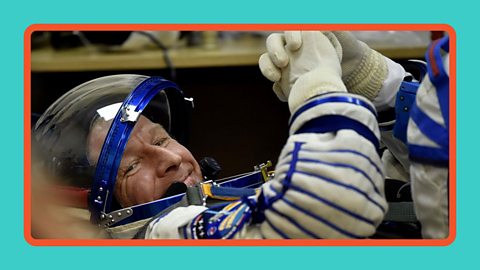
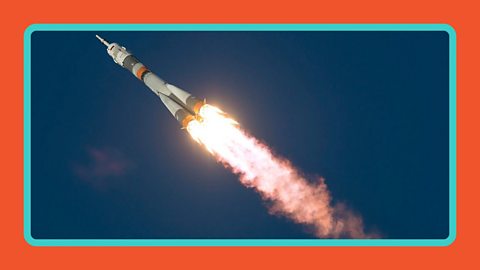
Image caption, Tim Peake is a retired British European Space Agency (ESA) astronaut, who flew into space, staying on the International Space Station as part of Expeditions 46 and 47.

1 of 4
Let's ask Tim Peake
Find out what it’s really like to be an astronaut as Tim Peake answers questions from young people. He explains everyday life in space, from training and spacewalks to food, science and future careers.
Tim Peake: People have always had questions about space. I'm Tim Peake and I'm here at the Royal Observatory in Greenwich, and your questions are coming straight to my astro pad. So on with the first question.
Holly: Hi, Tim, it's Holly. How is it colder in space if you're closer to the Sun?
Tim Peake: Holly, that's a great question. Well, when you're in space, you can be very cold or you can be very hot. And that depends on whether the Sun is hitting you. So if the sun is hitting you, temperatures can get up to about 150°C. That's clearly hot enough to boil water. But if we go into the shade, then we can go to about -120 Celsius, which is way below freezing. And so it really depends whether that Sun is actually hitting you or not.
Aaron: Hi Tim, my name is Aaron. And my question is, what's the most fascinating thing you've found out about space?
Tim Peake: Hi, Aaron, what a brilliant question. I actually think one of the most fascinating things about space is how much we don't know. There are things like dark energy, dark matter that we don't really know much about. How big is the universe? Is it infinite or is there an edge to it? So there are so many things that your generation still have to find out. And that's what's so exciting about space.
Lujan: Hi, Tim, my name is Lujan. And my question is like, what kind of food did you have to eat in space?
Tim Peake: Hi, Lujan. Um, great question. Well food in space has changed over the years. In the very early missions, it was pretty disastrous. It was just tubes of mushy paste. But thankfully today it's got a bit better. It's a bit like camping food. So things that you can heat up in a food warmer, pastas, sauces, noodles, that kind of stuff or things you can add water to. So we have dehydrated food that we rehydrate. So it's really just like a six month camping trip. But one thing they do is remove lots of the salt because salt, it's not really good for us here on Earth, but it's really not good for us up in space because it makes us lose our bone density more quickly. So the food ends up being a bit bland and a bit tasteless. Okay, on to the next question.
Deborah: Hi, Tim Peake I'm Deborah, I'm gonna ask you a question. If young people dreaming to be an astronaut, would you recommend them being an astronaut?
Tim Peake: Hi, Deborah. That's a really important question. I absolutely would recommend being an astronaut. It's been an incredible career. I've enjoyed every step, and I think it's important to have dreams and be able to work towards those. But there are also loads of really exciting careers to have in the space industry, whether you're an astronaut or an engineer or a scientist or a mission specialist, there are just so many things to do. So if you do enjoy space, then there are some great careers out there. Okay, on to the next question.
Theo: Hi, Tim Peake, I'm Theo and I have a question for you. What is it like walking in space?
Tim Peake: Hello, Theo. Walking in space is probably the best thing you can do when you're up there. Actually, just being in weightlessness is so much fun because there are no pressure points on your body. You're just floating. And it's a really liberating experience. You could do somersaults. You can push yourself from one end of the space station to the other. But then actually going outside the space station and floating around with the universe all around you, it's the most magical experience. On to the next question.
Chris: Hi, Tim. I'm Chris and I have a question for you. What is the worst smell you've ever smelt in space?
Tim Peake: Chris, that's a fun question. I'm not sure I should really give you this answer, but one day my crew mate. He was changing out the loo and this is the solid waste container. And he was emptying it and putting it into the cargo vehicle that was going to take it back and burn up in the atmosphere. And he accidentally kicked the lid off. And that was the worst smell I smelt in space by far. There were some really thoughtful questions there. So thank you so much for asking them. We don't have all the answers yet to the universe around us, but that's what makes space so exciting. Thanks for watching.
Fascinating facts

On December 15th, 2015, Tim became the first British astronaut to travel into space on a Russian space capsule (Soyuz) to stay on the ISS as part of the European Space Agency (ESA).
On January 15th, 2016, Tim completed his first spacewalk at the ISS and became the first British astronaut to spacewalk.
Before becoming an astronaut, Tim was a Major in the RAF and flew Apache helicopters.
Tim spent a total of 185 days, 22 hours and 11 minutes in space.
All astronauts, like Tim, need to learn to speak and read Russian as it is used on the ISS and in the Soyuz space capsule.
Astronauts can grow up to 3% taller whilst in space, although they go back to their usual height when back on the Earth.
The International Space Station (ISS) does 16 orbits of Earth every day (24 hours).
Important words
Astronaut – A person trained to travel in space. In Russia they are called cosmonauts.
Centrifuge – A machine that astronauts use to train for the extreme forces encountered during space flight due to acceleration. The centrifuge spins around extremely fast to simulate the effects of space travel.
European Space Agency (ESA) – A space agency made up of 23 countries in Europe, including the United Kingdom, France and Germany.
Launch – When a spacecraft or rocket takes off and leaves our atmosphere to journey into space.
Re-entry – When a spacecraft returns to Earth, precise measurements are needed so that it can return safely. Re-entry is extremely dangerous, with the spacecraft reaching high temperatures on its return.
Spacewalk (EVA) – When an astronaut puts on a space suit and leaves a spacecraft to go out into space.
Weightlessness – In space there is no gravity, Astronauts can float around and are weightless.
Quiz
Guided reading

New game! Horrible Science: Stinky Space. game
Join Pipette on her epic mission and learn some revolting facts about space along the way.
More on Space
Find out more by working through a topic
- count1 of 9
- count2 of 9
- count3 of 9
- count4 of 9