What is World Poetry Day?

A poem is a piece of writing that expresses a thought, a feeling or a story.
World Poetry Day is a day that celebrates poems and all things poetry!
It is celebrated every year on 21 March.
World Poetry Day is a time to celebrate poets and encourage everyone to enjoy and share poetry.
Watch - Poems
Poetry can be about absolutely anything. Poems can be serious or silly, happy or sad. They can explore feelings and tell amazing stories.
Watch this video to learn more about the wonders of poetry!
What sort of poem will you write?
What do you know about poetry?
It's like a song, but only the words. It can be spoken or written down, it can take you to different worlds.
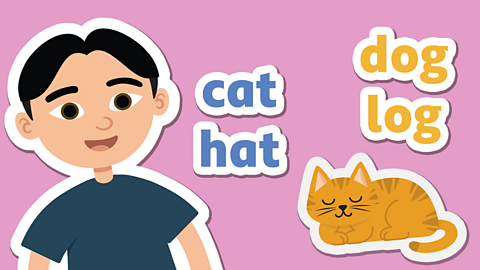
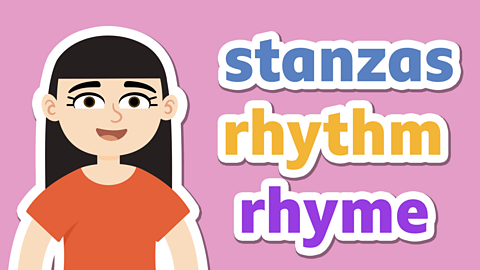
Lots of poems love to rhyme, it's a fun way to pass the time.
You could write about a clever fox, who keeps his treasure in a box.
And some poems have a beat that can move your feet. A da-dum da-dum. That's fun to repeat.
They can also be silly, to give you a great big giggle. Like, what if your favourite teacher was secretly a giant wobbly pickle?
But they're not always for laughs. Some poems can be dramatic, or even a little bit sad.
They can help you explore big, important feelings you've had.
And some poems tell a story, like "The Owl and the Pussycat who went to sea in a beautiful pea green boat".
I think everyone's a poet, but some just don't know it.
So, what will your poem be about ? A friend or a pet?
Or simply, the best day you've had yet?
English

There are many different forms of poetry - but why read or write poetry at all?
Explore the information, videos and activities below to discover different types of poetry and find out why so many people enjoy reading and creating poems.
What is the purpose of poetry?
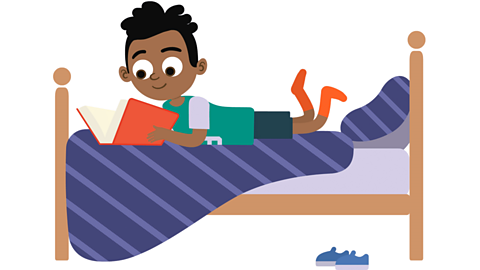
For the writer, a poem is a way of expressing a thought, emotion or even a story.
Often, people choose to write about subjects that they are passionate about or experiences they have had.
For the reader, poetry can be a way of connecting with a topic that you feel strongly about.
Sometimes though, poetry can simply put a smile on your face or make you laugh.
Different types of poetry
There are many different types of poetry, such as:
- limericks
- haikus
- sonnets
- nonsense poems
Sometimes poems are short and rhythmic like a song. Sometimes they are long narratives with characters and plot lines like a story.
Watch this video and learn more on the different types of poetry with poet Joseph Coelho.
Poems are like trees.
They come in all shapes and sizes.
There are big ones.
Messy ones.
Ordered ones.
Small ones.
Haikus are small poems that share a moment in time with very few words.
They have a set number of syllables (sounds) in each line.
Every word is made up of sounds.
If I place my hand under my chin, I can count the syllables.
Each time my chin hits my hand, that’s one.
The word assembly has three: AS-SEM-BLY.
The word today has two: TO-DAY.
There are just three lines in a Haiku, with a set number of syllables in each line:
Five in the first.
Seven in the second.
And five in the third.
You have to keep trying different words until you have the right number of syllables.
The winter trees shimmer.
Hmm, that’s six. Too many syllables for the first line. I need just five.
The winter trees sway.
OK, that can work for my first line. Now I need seven syllables for my second line.
Their branches creak into song.
Good. Now for the final line I need just five syllables.
I can hear them grow.
Haikus are often written about the different seasons. But you can write one about anything.
I raced to the goal.
The match is almost over.
The ball hits the net.
That’s one of the things I love about different forms of poems. They force you to redraft and edit, which is a vital tool for anyone interested in writing. There are longer forms, like sonnets, that also use rhyme. They have fourteen lines split over four verses.
Verses one, two, and three have four lines. The last verse has two lines.
He is old and tall—the Oldman tree.
His branches reach into the sky.
The Oldman tree has knobbly knees.
He towers tall, he towers high.
His bark is rougher than a rock.
There are leaves curled in his hair.
His canopy hides an eagle flock.
You must not climb him, you must not dare.
Oldman tree sings a sappy song at night.
He hides in every forest path.
His songs are gooey-sweet, filled with delight.
Listen out for his creaking laugh.
Oldman tree grows in every wood.
Singing songs and doing good.
Just like there are trees that are balanced and ordered, and others that are wild and messy, you can write poems without any form, with verses that just sound right to you.
The monkey puzzle tree was like a giant’s hug.
Embracing me and my friends with its green hands.
Lifting us up to the sky and always caught us if we fell.
With poetry, there is no right or wrong. In fact, anything grows!
Top tips on writing a poem
Coming up with ideas for a poem can be hard, so where do you start?
Have a look at this slideshow to learn some tips to writing a great poem.
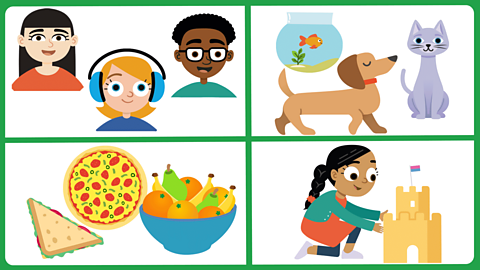
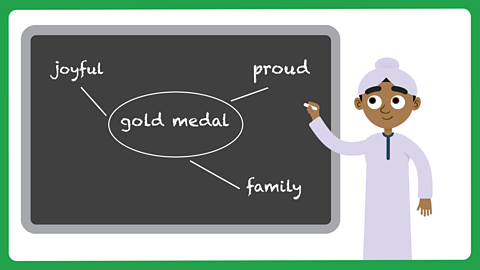
Image caption, Firstly, pick a subject. For example, you could write a poem about a special friend who did something nice for you, or even your favourite food. You could write about a beloved pet or an exciting day out.
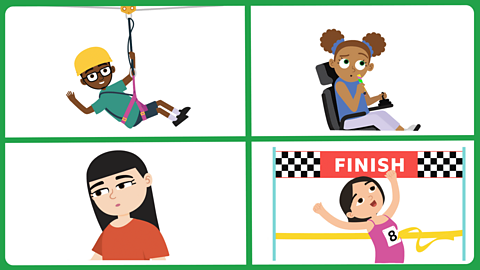
1 of 3
Acrostic poems
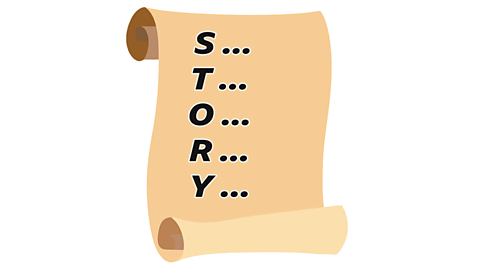
In an acrostic poem, the first letter of each line spells a word or phrase.
The word is the subject of the poem.
Here is an example using the word STORY:
S - Surprising characters and plot twists
T - Titles that grab your attention
O - Old fairytales or new adventures
R - Reading every page
Y - You never know what could happen next!
You can use any words, names or places to create an acrostic poem.
Activity - write an acrostic poem
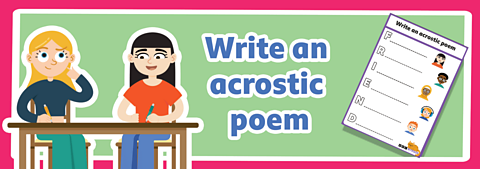
Have a go at writing an acrostic poem for someone you know using the first letters of the word FRIEND.
It could be about your best friend, a special family member or even your favourite pet!
You can download this activity sheet or create your own.
Acrostic poem activity sheet. activity
Topic packs
Discover more on KS2 English
Look at these articles to brush up on your poetry skills!
History

Poems have existed in different forms for thousands of years.
People throughout history have spoken, written and read poetry.
Have a look at the information, videos and activities below to learn more.
Watch - Poetry through time
From Ancient Greece and earlier, right up to modern day, poetry has been used to express thoughts, feelings and ideas.
Watch this video to explore some famous poets past and present.
NARRATOR:
Come with me on a journey through history and time, exploring the world's best poets and the whole thing's going to rhyme!
[Cough]
Hopefully…
First to Ancient Greece and one guy we've gotta see - the famous poet, Homer who wrote the Iliad and Odyssey.
Spanning nearly twenty years, these two epic tales show a king's heroic journey through monsters, storms and gales.
Now leaving Greece for China, the country of this poet's birth. Li Bai was thought of as a god, exiled from Heaven to Earth.
Children still memorise his poems to this very day, and it's believed nearly a thousand were written along the way.
Now, you probably know this next guy, for his work's upon the stage. But did you also know he was the poet of his age?
Shakespeare's collection of sonnets numbered over one hundred and fifty.
And he made up words we still use today, which I think is pretty nifty!
And now to my personal favourite - my fellow Scotsman, Robert Burns, whose most famous poem, 'Auld Lang Syne' each New Year's Eve returns.
He even has a national day where he is celebrated with haggis, whiskey and recitals of poems he created.
Some poets are renowned in their lifetimes, and are popular far and wide, but others like Emily Dickinson found more fame once they had died.
Only ten of her poems were published while she was alive, but now one thousand eight hundred of her amazing poems survive.
And to a poet who's a doctor! Well, not a proper one that's true. He brought us the 'Cat in the Hat' and 'Horton Hears a Who'.
His colourful stories were fun and amusing, but like 'Green Eggs and Ham', they were sometimes confusing!
This poet and author wrote of singing caged birds. Spoke out on oppression and urged change with her words:
You may write me down in history with your bitter twisted liesYou may trod me in the very dirtBut still, like dust, I'll rise
Our final poet shows us that with passion we can succeed, when he left school aged just thirteen, he could neither write or read.
Birmingham's dreadlocked Bard, or Benjamin Zephaniah uses humour in his poems to educate and inspire.
Poems can be beautiful or powerful, and whether they rhyme or not, I think they're pretty amazing.
And now folks, that your lot!
Activity - Perform a poem
It's time to perform your poem!
You can perform to a friend, family member or even to yourself in the mirror.
Top tips:
Stand up straight and face forward.
Speak clearly and say each word carefully.
Change your speed and volume as you are performing, as this can make your performance more dramatic.
Don’t rush!
Follow this link to the Blue Peter Book Club page for more great tips on performing poetry, from Joseph Coelho's book, Poems Aloud.
Poems Aloud
Blue Peter Book Club
Discover more on KS2 History
Have a look at these articles to learn more about ancient civilisations and world history.
Ancient Greek culture
KS2 History
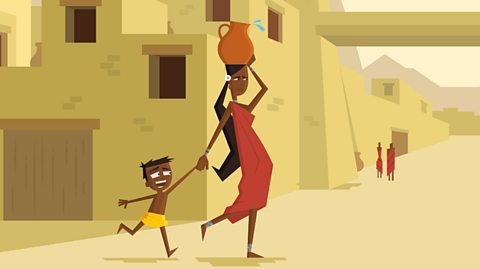
Who were the Indus people?
KS2 History
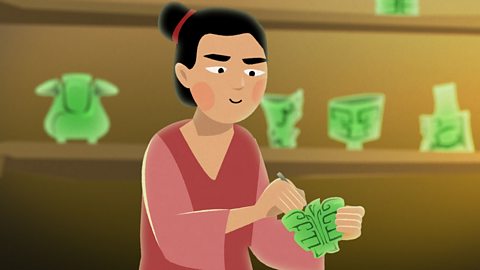
The Shang Dynasty 1600 - 1046BC
KS2 History
More resources from Bitesize for Teachers
You can find many more amazing resources on poetry from Bitesize for teachers.
Understanding poetry
Bitesize for Teachers
Primary poetry
Bitesize for Teachers
National Poetry Day assembly
Bitesize for Teachers
Where next?
Play BBC Bitesize educational games! game
Fun, interactive games for children aged 4-11, with maths, English, science, history and many more subjects.

More on Poems
Find out more by working through a topic
- count1 of 13
- count2 of 13
- count3 of 13
- count4 of 13