What is Remembrance Day?
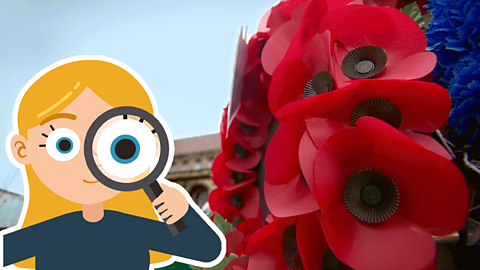
Remembrance Day marks the end of World War One . The fighting stopped when a truce, called the Armistice, was agreed at 11am on the 11th day of the 11th month in 1918.
Remembrance Day is held to remember all those who have died in wars and is marked by a two-minute silence at 11:00am every 11th November.
It is also an opportunity for people to learn from history and to think about the importance of peace.
Watch - What is Remembrance Day?
Learn more about this special day in this video.
Remembrance Day is held on the 11th of November each year.
It marks the day the fighting in World War One ended, at 11am on the 11th day of the 11th month, in 1918.
On Remembrance Day, people in the UK and around the world hold a two minute silence to remember all those whose lives have been affected by war and conflict.
A tune called ‘The Rouse’ is played on a bugle to signal the end of the silence.
Millions of people participate in Remembrance Day commemorations, including the Royal Family and politicians who pay their respects by laying wreaths at the Cenotaph in London.
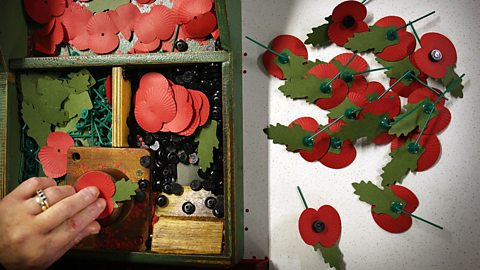
You might have seen people wearing a poppy in November but why is the symbol a poppy?
A poppy is worn around the world to remember those who have died in war.
When World War One ended, poppies were one of the only flowers that grew on the battlefield, so it became a symbol of hope for a peaceful future.
The use of the poppy symbol was also inspired by the poem 'In Flanders Fields'.
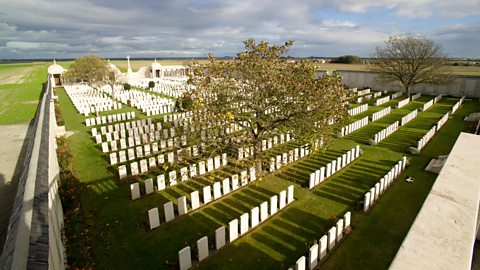
A Canadian soldier called John McCrae wrote a poem about the poppies growing among the graves of soldiers in Belgium.
“In Flanders fields, the poppies blowBetween the crosses, row on row”
Although World War One ended over 100 years ago, many believe it is important to remember those who have lost their lives in war.
As well as remembering the past, Remembrance Day gives us all the opportunity to think about peace and think about how we can help make the world a kinder, safer place for everyone.
What happens on Remembrance Day?
On this day, people all around the world pause and hold a two-minute silence to remember all everyone whose lives have been affected or lost through war and conflict.
Learn more about Remembrance Day
Take a look at this slideshow to discover interesting facts and traditions linked to Remembrance Day.
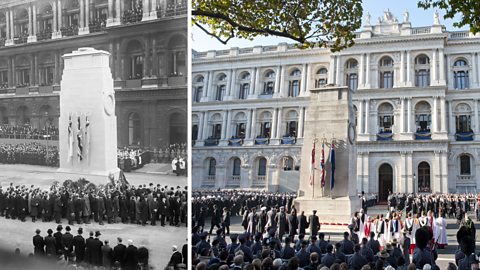
Image caption, Memorials
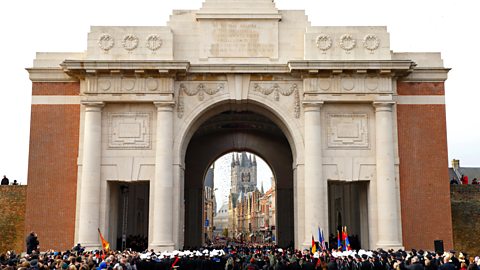
When the Cenotaph, a war memorial in London, was built in 1920, people laid flowers there in memory of loved ones. The tradition continues to this day. Every second Sunday of November, Remembrance Sunday takes place, where servicemen and women lay poppy wreaths.
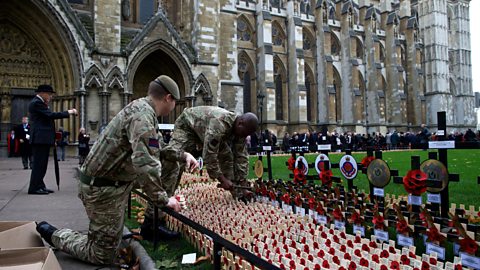

1 of 7
History

World War One began on 4 August 1914.
It became known as 'The Great War' because it involved many countries and affected people all over the world.
Have a look at the information, videos and activities below to learn more.
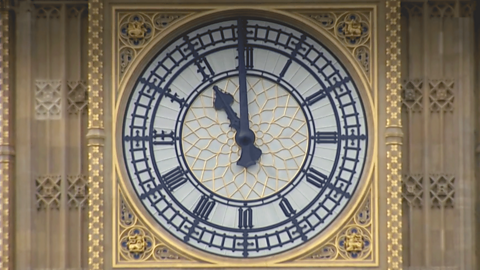
When did Remembrance day start?
On 11 November 1919, one year after World War One ended, people all over the country stopped what they were doing when the church bells struck 11 o’clock in the morning.
People bowed their heads, buses and trains stopped moving, shopkeepers stopped serving and the electricity was cut off to stop trams from running.
World War One
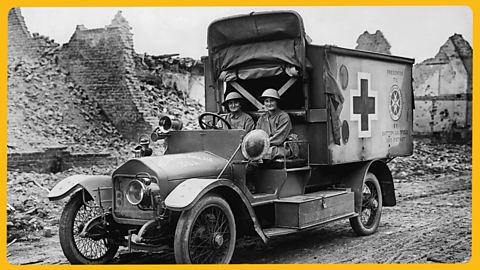
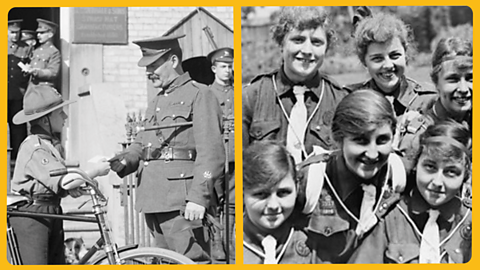
Between 1914 and 1918, everyone was expected to 'do their bit' to help with war work.
Take a look at this slideshow to learn some of the work that men, women and children did for the war effort.
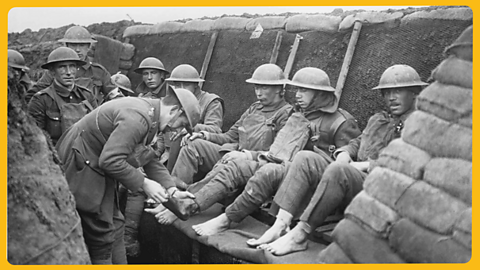
Image caption, Soldiers in the trenches
On the Western Front, the war was fought by soldiers in trenches. Trenches were long, narrow ditches dug into the ground where the soldiers lived. They were very muddy, uncomfortable and the toilets overflowed. Because of the cold and damp conditions, some soldiers developed a painful condition called trench foot.
1 of 3
How did animals help in the war?
Many animals held important roles too. For example:
Horses pulled heavy artillery, carried supplies and helped move wounded soldiers. The British Army used hundreds of thousands of horses on the Western Front and without them army could not have transported the food, ammunition and equipment.
Pigeons were used to carry messages from the front line.
Chickens were kept by some British soldiers in the trenches so they could have fresh eggs to eat.
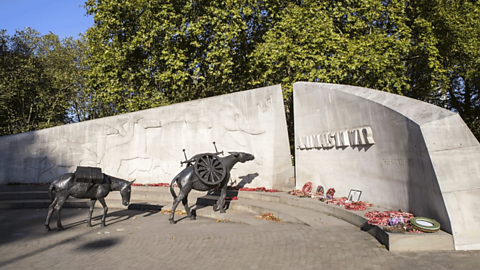
In 2004, a memorial was opened in London to remember animals that died in wars, including animals that served and died in World War One.
Learn more about the important jobs that animals did in the war.
Watch - The story of Sergeant Stubby
Have a look at this video to learn about a very special dog!
NARRATOR: Sergeant Stubby, courageous canine.
One day in 1917 some soldiers in America made friends with a dog after he wandered onto the field they were training in.
One of the soldiers, Corporal Robert Conroy, especially liked the dog and named him Stubby because of his short tail.
The USA joined World War One in 1917 and Corporal Conroy was sent to fight in France.
He didn’t want to leave Stubby so had him smuggled onto his ship.
Stubby had a greater sense of smell than the soldiers.
When he smelt gas he barked to warn the soldiers so that they could put on their gas masks in time.
He had excellent hearing and would move his tail to warn the soldiers that the enemy was approaching.
Stubby also searched the battlefield for injured soldiers. He would bark for help when he found one.
On the Western Front, Stubby was involved in many battles and also suffered from injuries.
He was made an unofficial Sergeant and was given many medals and awards for his bravery.
After the war, Stubby lived with his friend Corporal Conroy.
Stubby died in 1926 but is still remembered for helping so many soldiers in such a difficult time.
Activity - History Explorer game
Play this game and explore the battlefields of World War One. Move through the trenches, discover life in wartime Britain and take part in the Christmas Day Truce.
History Explorer: Secrets Through Time. game
KS2 History game
Discover more on KS2 History
Check out these articles to learn much more about World War One and what life was like for the people who lived through it.
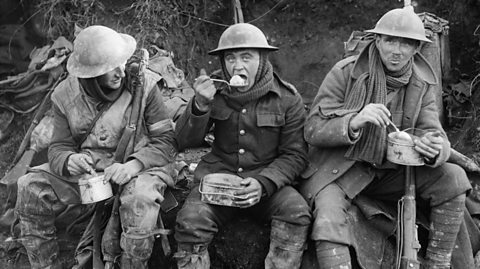
How did children help in World War One?
KS2 History
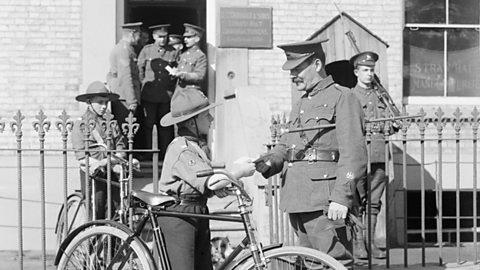
Women in WW1
KS2 History
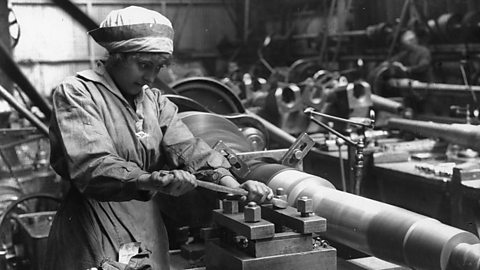
Art and Design

Poppies have become a globally recognised symbol of Remembrance Day.
Their distinctive appearance has made them an enduring subject in art for many years.
Learn more with the information and activities below.
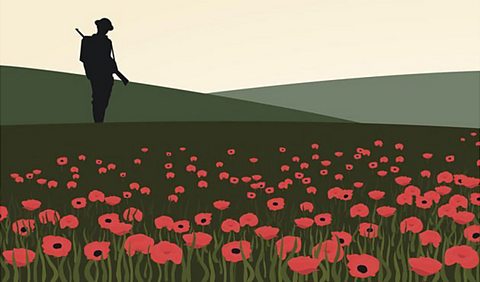
Why do people wear poppies?
The reason poppies are used to remember those who have given their lives in battle is because they are the flowers which grew on the battlefields after World War One ended.
John McCrae a famous wartime poet, wrote about them in his famous poem ‘In Flanders Fields’.
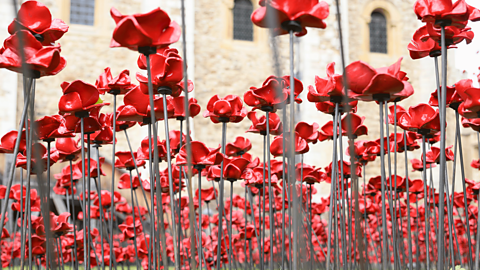
Poppies in art
The poppy has been drawn, painted and sculpted over hundreds of years. For example:
Claude Monet painted The Poppy Field near Argenteuil in 1873.
Paul Cummins and Tom Piper designed and created this art installation of ceramic poppies in 2014. The poppies represent the many thousands of people who died during World War One.
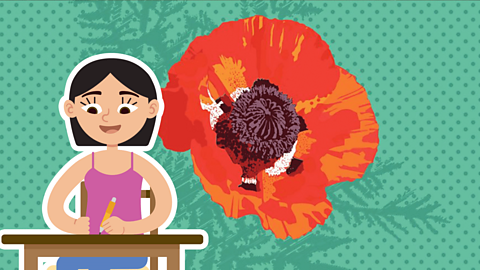
Activity - Create your own poppy
Have a go at creating your own poppy artwork in a style of your choice. Here are some ideas:
You could use lots of colourful dots called Pointillism like the artist Georges Seurat.
Create a print like the famous pop artist, Andy Warhol
Use a combination of styles, tools and materials to create your masterpiece. This is called mixed media.
Discover more on KS2 Art and Design
Learn about more types of art and some famous artists in these articles.
What is Cubism?
KS2 Art and Design
What is landscape painting?
KS2 Art and Design
Who was Frida Kahlo?
KS2 Art and Design

English

Some soldiers wrote poems about their experiences of the war.
They wanted to help people at home understand what life was like for those serving on the front line.
These soldiers became known as the war poets.
Have a look at the information and activities below to learn more about some of them.
War poets
Many soldiers wrote poetry about their experience of war. Wilfred Owen is perhaps one of most famous war poets.
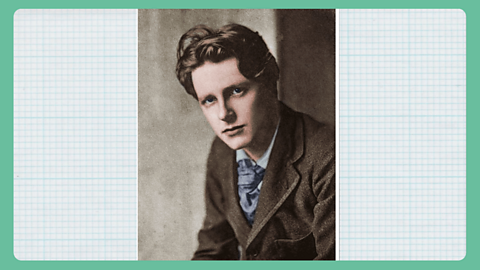
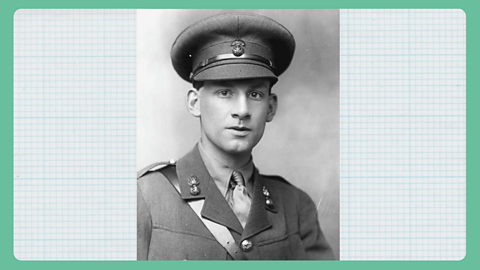
Have a look at this slideshow to learn more about him and other famous war poets.
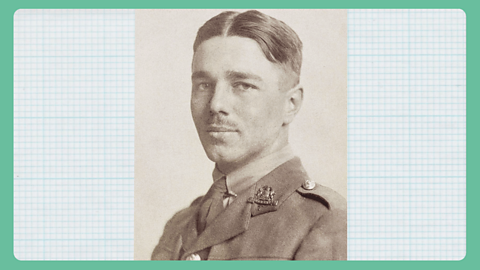
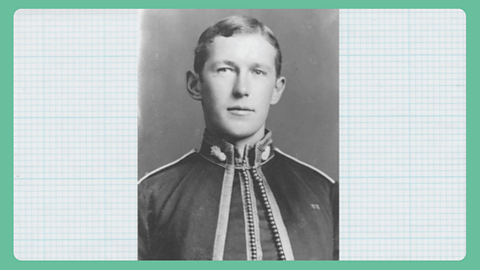
Image caption, Wilfred Owen
Wilfred Owen is one of the most famous poets of World War One. He wrote a poem, 'Dulce et Decorum Est,’ when he was in hospital recovering from a shell explosion. This is perhaps one of the most famous war poems ever written and is still studied and read today.
1 of 4
Watch - ‘For the Fallen’ by Laurence Binyon
Laurence Binyon was an English poet.
Although Binyon was too old to fight in World War One, he travelled to France and helped wounded soldiers as a volunteer in a British hospital.
In 1914, he wrote ‘For the Fallen’. Watch this video to hear the poem.
‘For the Fallen’ by Laurence Binyon.
[TRUMPET PLAYS]
With proud thanksgiving, a mother for her children,
England mourns for her dead across the sea
Flesh of her flesh they were, spirit of her spirit,
Fallen in the cause of the free.
Solemn the drums thrill; Death august and royal
Sings sorrow up into immortal spheres,
There is music in the midst of desolation
And a glory that shines upon her tears.
They went with songs to the battle, they were young,
Straight of limb, true of eyes, steady and aglow.
They were staunch to the end against odds uncounted
They fell with their faces to the foe.
They shall grow not old, as we that are left grow old
Age shall not weary them, nor the years condemn.
At the going down of the sun and in the morning
We will remember them.
They mingle not with their laughing comrades again
They sit no more at familiar tables at home
They have no lot in our labour of the day time
They sleep beyond England's foam.
But where our desires are and our hopes profound,
Felt as well as a well-spring that is hidden from sight,
To the innermost heart of their own land they are known
As the stars are known to the night,
As the stars will be bright when we are dust,
Moving in marches upon the heavenly plain,
As the stars that are starry in the time of our darkness,
To the end, to the end, they remain.
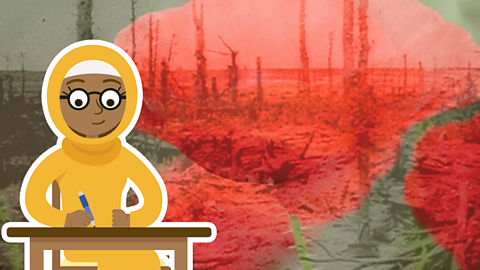
Activity - Write a poem review
Read or listen to a war poem such as:
- ‘For the Fallen’ by Laurence Binyon
- 'In Flanders Fields’ by John McCrae
Think about how the poem makes you feel. What can you see or hear?
What kind of language do the poets use to create these feelings?
Discover more on KS2 English
Have a look at these articles to learn more about poetry and improve your writing skills.

Remembrance Day quiz
Test your knowledge with this quiz.
More resources from Bitesize for Teachers
You can find many more amazing resources on World War One and Remembrance Day from Bitesize for teachers.
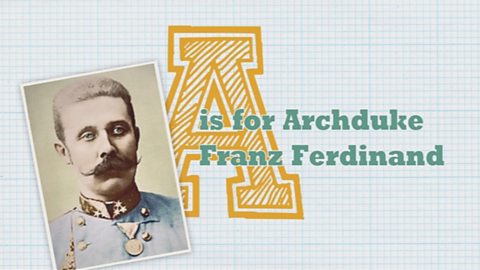
World War One A - Z
BBC Teach
Remembrance Live Lesson
Bitesize for Teachers
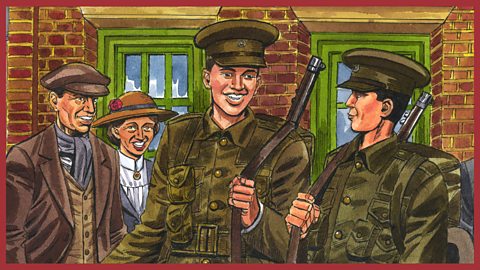
Remembrance Day - A Soldier's Tale
Bitesize for Teachers
Where next?
Play Bitesize Primary games. game
Fun and educational primary games in science, maths, English, history, geography, art and design, computing and modern languages.