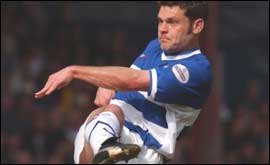
Well we've enlisted the help of loyal royal Ray Curry to put together a potted history of Reading FC... By 1871, most of the larger towns in the Thames Valley had at least one football club, but the game had not yet caught on in Reading. Near the end of the year, local jeweller Joseph Sydenham called together a group of his friends and suggested that they form a club themselves. Only a handful of professional clubs in England have an earlier formation date than this, and none of those are in the South. It's unlikely that those early pioneers would have expected their club to still be going over 130 years later. The first matches of the new Reading Football Club were all non-competitive, with home games initially played at Kings Meadow next to the River Thames. The first competition entered was the FA Cup in 1877/78. A year later, Reading also entered the newly created Berks and Bucks Challenge Cup and became the first winners. Perhaps the most significant period in the club's history began in 1894 with the decision to join the Southern League. A year later, at a stormy AGM, the club decided to turn professional, although this also meant the resignation of a number of long-serving members who had wanted to remain amateur. Then in 1896, the club ended a fairly nomadic 25 years by moving into their fifth ground, at Elm Park in the west of the town. The decisions of those few years ensured that Reading today has an established professional club. The club's performances in the Southern League normally ended with a mid-table finish, but there were a couple of notable FA Cup runs, and one season spent in the Southern League Division 2 after relegation. By 1920 almost all of the clubs in the Southern League, including Reading, had gained entry to the Football League, and took part in the new Division 3 (South) of the Football League. Within a few years, Reading had embarked on the club's most successful spell, with promotion to Division 2 and a losing appearance in an FA Cup semi-final. The record Elm Park attendance of 33,042 was set against Brentford as part of that cup run. By 1931, though, Reading were back in Division 3 and set for a long spell at that level. The Second World War interrupted Division 3 football, but the close proximity of the military base at Aldershot saw many famous players turn out for the Elm Park club as guests in wartime games. The club also won the London War Cup in 1941. Floodlights were first installed at Elm Park in the 1950s and Reading continued to put in decent performances in the League without ever gaining promotion. Some supporters believed that this apparent lack of ambition was deliberate in order to avoid both the increased costs of promotion and the threat of some unsuccessful years in a higher division. As it was, the club's centenary season of 1970/71 saw a severe blow to this policy as it ended with Reading relegated to Division 4 for the first time. In the next decade, the club yo-yoed between Divisions 3 and 4 until nearly going out of existence altogether. A proposal to merge Reading with Oxford United to form the Didcot-based Thames Valley Royals rallied fans of both clubs to protest. This public support eventually led to a change of ownership at Reading. Things also improved dramatically on the field as Reading gained promotion to Division 2 after a 55-year absence. At the start of that promotion season, Reading set a Football League record by winning the first 13 games. Although only two years were spent at the higher level, it did allow Reading to enter and win the Simod Cup in the club's first appearance at Wembley Stadium. The next move to Division 2 came with the formation of the Premiership and the re-naming of other divisions! But the mid-1990s did see another genuine step up, as an exciting Reading team won Division 2 and then the following season reached the Division 1 play-off final at Wembley. Despite being within a few minutes of reaching the Premiership, a late equaliser and an extra-time defeat ended that dream. With the imminent move from Elm Park to the new Madejski Stadium, there was real optimism about the future of the club. A couple of disastrous managerial appointments severely slowed the club's progress, but Reading returned to Division 1 in 2002 and again threatened to gain a Premiership place. In 2002/03, the promotion push ended at the play-off semi-final stage, but the club appeared to be in a good position to go a stage further the following season. And that brings us to today!
|