|
 |
 | | | | | | |||||||||||||||||||||||||||||||||||||||||||||||||||||||||||||||||||||||||||||||||||||||||||||||||||||
| | | You are in: UK | |||||||||||||||||||||||||||||||||||||||||||||||||||||||||||||||||||||||||||||||||||||||||||||||||||||||
|
| | Wednesday, 4 September, 2002, 14:51 GMT 15:51 UK High and blighty? 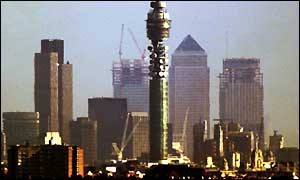
 In the immediate aftermath, many predicted the age of the skyscraper was over. Tall buildings were too much of a liability, they said. Office staff would refuse to work in them, no-one would want to live in them, and besides, the cost of building and maintaining skyscrapers could no longer be justified in these more cautious times.
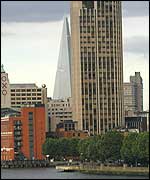
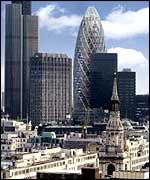
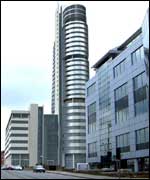
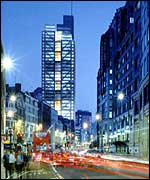
In London, the authorities have been inundated with plans for new tall buildings. Britain's tallest building, the 237m Canada Tower at Canary Wharf in Docklands, is now framed by two other skyscrapers. Two more of similar height are planned for the area. In the historic City of London, work is underway on the 180m Swiss Reinsurance tower (nicknamed the "erotic gherkin"). Of a similar height is the Heron Tower, which has been approved and work will start next year.
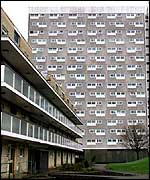
But it's not just the capital where developers have got the "build tall bug". In Birmingham, there are plans for the Holloway Circus Tower (192m) and the Arena Central Tower (232m). Manchester is also seeing a spurt of new tall buildings, such as One Deansgate. At 62m it doesn't match London's high rises, but buildings are considered tall in the context of the surrounding skyline. After the much decried concrete tower blocks of the post-war period, it seems the UK is again learning to love sky-high buildings.
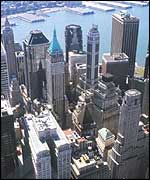
The report, compiled by 11 MPs, concludes that all too often high-rise buildings are more about the ego of architects and multi-national companies than enhancing the environment. "Tall buildings are more often about power, prestige, status and aesthetics than efficient developments," it rather scathingly concludes. 'Eyesore' The authors draw a distinction between the likes of Manhattan and British cities. While recognising that high-rise developments can enhance an area if they are well designed, "few skyscrapers in England do," it says.
The argument that tall buildings are more eco-friendly - it's claimed they can be heated more efficiently than low-rise structures - is largely dismissed. The greater safety regulations post-11 September, with the need for more stairwells and fire compartments, negate this. It is also more difficult to convert them to another use - and they cost more to demolish. Good design So is the desire to build up, rather than out, driven by a cabal of modernists and gung-ho capitalists with no interest in what public really want?
"A good building is a building that contributes to its surroundings. A bad building is one that doesn't," says Mr Newman, editor of the website Skyscraper News. The selling point of skyscrapers is that by putting office space in the air, they free up space on the ground for public areas. Sick buildings "Unfortunately, developers don't always see it that way and so I can understand a little bit why this report is being critical."
"The problem with groundscrapers - huge, low-rise buildings - is that most workers can't even see a window. They get no natural light and this is a major cause of 'sick building syndrome'. "Skyscrapers are tall and thin, and so they can be flooded with natural sunlight."
"Ever since the beginning of time people have been building tall for their egos. That's why we have those beautiful cathedrals and Big Ben, which is the tallest clock tower in the world. "We cannot stand in the way of progress. Instead we have to embrace it and turn it to our advantage." Some of your comments so far: London is one of the ugliest cities in the world - the new developments can ruin what is already an eyesore of eight million people. I'm all in favour of more skyscrapers. The key is to get the mix right. They need not be spread out all over London, but can be concentrated in certain areas, such as the City and Docklands. The big threat to skyscrapers is 'tele-working'. Once we get the message across that most London office workers can now work from home (or local drop in centers) at least a couple of days a week there is a lot less requirement for office space. Skyscrapers are symbols of progress, and if designed well, can greatly enhance a city. But it is important these buildings should have mixed usage areas and public spaces, so they're not just seen as pillars of corporate might. In a country that is already over-crowded, and land at a premium, does it not make more sense to build up rather than out? What about transport? How can the transport infrastructure with the extra burden of centralising so many workers in such a small space. Skyscrapers increase centralisation, and therefore increasing the number of people that have to commute. It's all very well having lots of sky scrapers in places like New York where they fit in with the general atmosphere and surroundings however, Britain's cities' strength lies in their difference and almost uniqueness in having virtually no major skyscrapers. Merely copying America for the sake of it would be a mistake. There are also many other important developments which you have failed to mention, such as Bridgewater Place in Leeds, which when completed will be the tallest building in the North of England. Full planning consent has been given for the building, which, at 110 metres high, will dominate the Leeds skyline once it is completed in October 2004. Interesting to note that two architects (one quoted in the story and one responding to it) yoke together the building of skyscrapers and the idea of progress. Would they care to explain precisely why they think one is emblematic of the other, and indeed why there should be any connection between them at all? Is bigger and taller better? Or should Britain's cities stay low-rise? | | Internet links:  The BBC is not responsible for the content of external internet sites Top UK stories now: Links to more UK stories are at the foot of the page. | |||||||||||||||||||||||||||||||||||||||||||||||||||||||||||||||||||||||||||||||||||||||||||||||||||||
| |
|  E-mail this story to a friend E-mail this story to a friend |
| |
| Links to more UK stories |
| | | ||
 | ||||
 | | Back to top
| ||
| ---------------------------------------------------------------------------------- To BBC Sport>> | To BBC Weather>> | To BBC World Service>> ---------------------------------------------------------------------------------- © MMIII | News Sources | Privacy |