
Script Essentials 2026 Summary Notes - Session 1: Writers Voice & Ideas For Screen
Our wrap up notes for the first session in our 2026 Script Essentials Webinar series
Published: 27 May 2026
Our first session in our 2026 Script Essentials webinar series was hosted by Alice Ramsey (Commissioning Executive, BBC Drama) and features William Mager (writer and creator, Reunion) as well as Gwen Gorst (Executive Producer, Warp Films).
You can watch the full recording of our session on the Script Essentials page, accessible by clicking this link here. Or, you can read the summary notes below to get some key takeaways from the session! (Questions were put to the panel by Alice Ramsey)
Q: Billy, when did you start to write?
- Billy always wrote for himself growing up but ‘officially’ started writing whilst studying English Literature at University.
- More scripts became available to read at the time Billy was at university and it became something that seemed like a form of writing that he could take up.
- After graduating Billy did an MA in Writing for Film and Television where he learnt more about the craft of scriptwriting.
- With few screenwriting opportunities available Billy started a career in factual TV.
Q: What were you watching and consuming that you felt inspired by when working in factual TV?
- Billy watched a lot films and TV growing up and says it’s important when you’re a writer to develop your own taste for what you like and don’t like so you can write to your own strengths.
- Indiana Jones and the Raiders of the Lost Ark is a favourite of Billy’s and a film he’s watched repeatedly. He observed that watching back with a critical eye, the story of the film would be the same if Indiana Jones wasn’t there.
- Alice mentioned the importance watching for pleasure and seeing what inspires you as well making the time to watch things through a critical lens, keeping in mind ‘What works, what doesn't work, and thinking what am I enjoying, where am I losing concentration?’ whilst watching.
Q: When did you start sharing your writing?
- After Billy left his career in factual TV he knew he want to become a creative writer and successfully applied for Arts Council grants to develop writing.
- He begun with prose writing and was part of a small writing group where he would share his work.
- Billy talked about how one of the hardest things as a writer is to show other people your work but it’s what you must do to develop.
- Something else which held Billy back was that he would think of ideas for scripts but wouldn’t actually sit down to write the script.
- When he wrote the script for what later became the BBC One series Reunion, it was the first time he told himself to sit down and write a whole script.
- Billy wrote Reunion as something for himself, that he would want to watch and encourages new writers to do the same.
Q: Can you tell us about your experience on BBC Writers’ Scripted programme?
- For Billy, the most important part of the BBC Writers' Scripted programme was being part of a group with other writers.
- New collaborations and networking is really important for Billy and as a deaf person, it's hard go out and network because events can be often be held in dark, noisy spaces with lots of people.
- The BBC Writer's programme offered a collaborative writing group with people who have different experiences, ways of working and have navigated through the industry and their careers.
Q: Gwen, please explain your role of Executive Producer?
- Gwen is an Executive Producer at Warp Films working in the development team.
- Her role involves meeting writers, establishing relationships with writers and talking to them about ideas.
- If their ideas feel like a good fit for Warp as a company, Gwen works with writers to develop the idea into a show and share the idea with commissioners.
- If a show is commissioned Gwen works on an idea through production to delivery.
Q: Gwen, when we’re talking about the writer’s ‘voice’, how you do you know that the writer has a strong voice, even if the script is not super polished yet?
- A strong ‘voice’ can be hard to define but as someone who reads a lot of scripts Gwen mentioned that a writer who knows their characters and their worlds really well will come through in the writing rather than a perfectly polished script.
Q: Billy, when you were first writing and getting feedback from your peers in your writers’ group did you know your ‘voice’ or is it something that you found through that process?
- Billy found his ‘voice’ by developing his taste through reading scripts and thinking about what he liked and didn’t like.
- He downloads scripts for TV series and reads them alongside watching the show.
- Rather than copying those shows, he advised seeing what works on the page for you when you read the script and then bringing in your own unique way of writing.
- Scriptwriting is a craft, like being a plumber or a woodworker it's something that you learn.
Q: Gwen, how did Billy’s script for Reunion first come to you at Warp?
- Gwen read Billy’s script after knowing him through his factual TV role.
- Reunion is set in Sheffield where Warp Films are based and Gwen thought the script was brilliant, so when she shared the script with Mark Herbert (CEO of Warp) they took the project into development.
Q: Billy, what was it about Reunion that worked for TV rather than a film?
- Billy started writing Reunion as a film script but when he sent the outline to development opportunities, he received useful feedback and made changes to the script.
- The format of a film felt too short for Reunion but creating a series for TV is challenging because you need so much story, characters need to move around enough and changes need to happen.
- Billy had a clear idea of the beginning and the end of the story, so he and Gwen spent time developing the series and working on the middle of the series in particular.
- It was a useful learning process for him to work out how many episodes worked and to find the right structure.
Q: Did the process of Reunion help you identify which ideas make a good film script and which make a good TV series?
- Billy said he’s still figuring out what makes a perfect idea but for any idea for screen you must really love and 100% believe in your idea because the process of working on something can be long – sometimes even 4-6 years.
- He received a lot of ‘nos’ but persevered because he really believed in the idea of Reunion.
- If you put your idea away for a while you can bring it back out again to continue working on it and refresh it until you get it to a place that you're happy with.
- Secondly, it’s important to think about who is going to be watching this, and why you want them to watch it. Ask the question ‘is this going to be something different for our audiences to watch?’.
Q: Where do your ideas come from and where do you look for inspiration?
- Billy finds inspiration absorbing as much information as he can through reading books and the news, talking to friends and family and looking at what’s happening in the world.
- He advises looking introspectively at your own experiences, something that might have happened to you recently that could become a good story.
- Often there’s a pressure to force yourself to come up with loads of ideas but when doing something mundane like walking the dog an idea can hit you, so write it down and keep coming back to it.
Q: Gwen, you read pitches, scripts and treatments, what are common mistakes you see from writers?
- A common mistake is a script being led by an issue the writer wants to talk about rather than focussing on the character.
- Gwen advised knowing your character really well because no matter how obscure the world that you want to explore or the issue that you want to discuss, you will only grab an audience to come to it through a character who is intriguing, compelling, and that they to want to stick with.
- Warp Films always look for shows with a unique perspective on the world so when it came to Reunion. the character of Brennan and the experience of a deaf person in prison hooks you in, you care about him and the audience want to go on the rest of his revenge journey with him.
- A character doesn’t have to be likeable, but you need to want to follow them for 4-10 episodes because that’s a lot of time.
Q: A lot of writers comes from different mediums such as prose, theatre, short film. Gwen, what makes an idea for TV rather than a film or theatre piece?
- An idea can be a brilliant book or theatre piece but it doesn’t mean it will make a great TV show and vice versa.
- TV doesn’t have a captive audience that theatre or film has. Those audiences have chosen to go to the cinema, theatre or to buy a book.
- There are many viewing options with TV and 10 episodes is a time commitment so if an audience isn’t grabbed by characters initially, there’s a choice to change what they’re viewing or switch off.
- TV needs a story engine that will keep people watching and intrigued enough to stick with the story rather than sitting with a thought or concept which you can explore in a book.
Script Essentials Additional Resources

My Writing Life with Neurodiversity
Writers, Kat Rose-Martin and Nk'iru. Njoku share how they deal with deadlines and organise their days whilst managing their neurodiversity.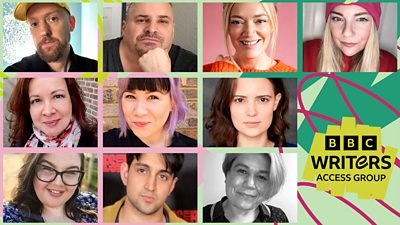
Learn more about our Writers Access Group
Lou Burns provides a summary of her experience as part of our Writers' Access Group
Learn About Medium and Format
Presenting your work appropriately suggests a professional approach and an understanding of the medium and format for which you are writing


Disabled and deaf-led organisations
- Access All Areas
- Beacon Films
- Birds of Paradise Theatre Company
- CRIPtic Arts
- DaDaFest
- Deaf and Disabled People in TV
- Deafinitely Theatre
- Disability Arts Cymru
- DYPSLA
- Extant
- Graeae
- Hijinx Theatre
- Hot Coals Productions
- Inevitable Foundation (US based but open to international entries)
- LumoTV
- Oska Bright Film Festival
- RespectAbility (US based but open to international applications)
- Shape Arts
- Triple C and DANC (the Disabled Artists Networking Community) including the Scotland Talent Directory
- Unlimited
- Vital Xposure Theatre Company
Latest blog posts
More blog postsSearch by Tag:
- Tagged with Writers Access Group Script EssentialsWriters Access Group Script Essentials
- Tagged with BlogBlog
- Tagged with 20262026
- Tagged with TipsTips
