 | 13 November 2014 |

| |
| BBC Homepage | | |
| |||
| Contact Us | | |
Local HistoryYou are in: Wiltshire > History > Local History > The 1830 The Salisbury Swing Riots The 1830 The Salisbury Swing RiotsHundreds of farmers across Wiltshire were deported or killed, for protesting against poor conditions. 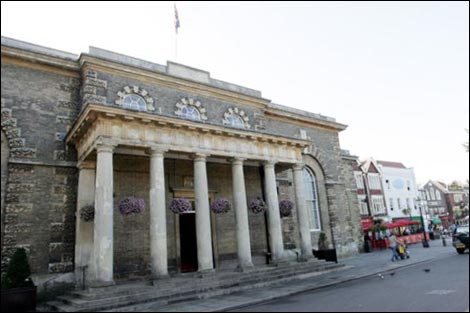 Where the trials took place in Salisbury At first the Salisbury Swing Riots sound like a fabulous party you should have gone to in the 1960s, dig a tiny bit deeper and you soon discover they were any thing but a party. The Salisbury Swing Riots were in fact an uprising of agricultural labourers, protesting at the conditions they were forced to work in and the poverty they were forced to live in. In Wiltshire alone the Riots resulted in the deaths of 252 people and around 1,000 workers being deported to Australia. Farm life was never easy in the 19th Century, but things really began to deteriorate at the end of the Napoleonic War in 1815. Then as machinery was introduced into farming and factories, less workers were needed and things began to get really grim. Labourers didn't have the vote or any way of protesting lawfully. 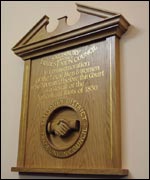 Plaque to mark the Swing Riots. Frustrations began to build as working conditions continued to slide, wages fell and jobs became scarce. The final straw came with the introduction of the threshing machine (used to separate grain from stalks and husks) which labourers knew would deprive them of their winter work. In August 1830 farm workers set fire to a threshing machine, in Kent, in a desperate bid to highlight their plight and need for fairer wages. This was the first reported incident of the Swing Riots. A Special Commission was quickly set up to deal with the worst affected counties which included Wiltshire and North Dorset. All the trials took place in the Guildhall, Salisbury. As a result of these trials around 1,000 workers were then deported to Australia, while 252 labourers were sentenced to death. During the riots, it's thought around 100 threshing machines were destroyed, at least one cottage was burnt down and 20 instances of rick burning were reported. Recently a Plaque was unveiled to commemorate the Swing Riots of 1830 inside the Guildhall, Salisbury. Cllr Ian McLennan, Chairman of Salisbury District Council, unveiled the plaque. He said: "Their treatment was very harsh and I am pleased we can have this plaque as a permanent reminder of what they experienced." last updated: 25/02/2009 at 12:40 SEE ALSOYou are in: Wiltshire > History > Local History > The 1830 The Salisbury Swing Riots   On Film: Archive footage of Swindon and Wiltshire |
| | About the BBC | Help | Terms of Use | Privacy & Cookies Policy |
