Children are natural storytellers. When they watch animals, they love to imagine what they'll do next.
Storytelling encourages children to use their creativity and imagination.
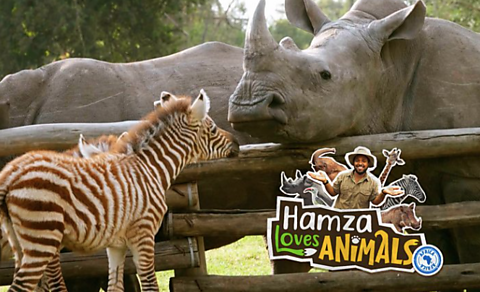
In Hamza Love Animals, wildlife expert Hamza meets a whole host of exotic creatures in Africa, including lions, elephants and monkeys.
Watch our exclusive film with Hamza below, to gain ideas for how to encourage your child’s imagination.
HAMZA:
Welcome to Kenya, where the African Bush is full of stories.
Children are natural storytellers. When they watch animals, they love to imagine what's going to happen next.
They might make up voices or go on adventures, or create whole new worlds.
Storytelling encourages children to use their imagination - and their creativity.
They also learn to express themselves and improve their social skills.
Let me and my animal friends show you ways that you can help your child improve their skills by watching Hamza Loves Animals together.
Within the series, there are so many amazing animals who can help spark your child's storytelling skills.
Why not watch a clip with your child; simply ask, 'What happens next?'
(child's voiceover) Oh, I'm getting something else. What can I smell here?
(parent and child interact)
HAMZA:
At the end of an episode, play a fun storytelling game. Your child chooses an animal from the series.
(parent and child interact - 'Mahati' ')
HAMZA:
Choose a place
(child's voice) 'I'm going to go to the watering hole.'
HAMZA:
And you could both decide the ending.
(parent and child - 'Hide and seek')
HAMZA:
You could make it even more fun by using silly voices and simple props from around the home.
(child's voice)
HAMZA:
Retelling or inventing stories about animals builds children's imagination, communication and social skills. They are playing with language, organising ideas, using new words and expressing themselves.
So why not let my animal friends help fuel your child's imagination?
You never know what adventure is in store!
Watching CBeebies shows together
Watching CBeebies shows together like Hamza Loves Animals is a great way to start conversations and games with your child.
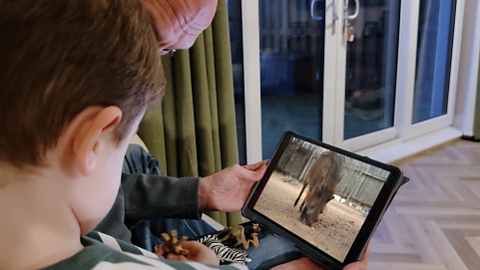
Just like in the film above, you could pause the show and chat about the different animals you've seen together and what your favourites were.
You can use moments from the series to talk with your child about how animals might feel about things that happen and each other.
Three ideas to help create the perfect animal story
1. Play pretend animals
One easy way to use Hamza Loves Animals for imaginative play is to watch a clip and then encourage your little one to play at being different animals.
Within the series, there are so many amazing animals who can help to spark your child's storytelling skills.
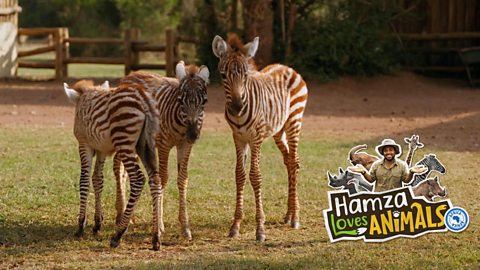
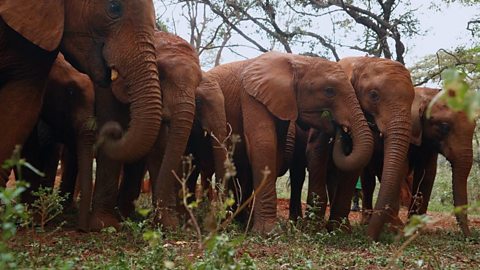
For example, elephants, giraffes, zebras, rhinos, hippos, lions, warthogs, antelopes, and buffalo are all animals in the series that you can include in your story.
You could:
Ask your child to make the noises and actions that match the animals you name, inspired by the series
For example, they could roar like a lion, stride like a giraffe, grunt like a wart-hog or stomp like an elephant
You could ask them to make the noises and actions that match the animals you name. Or switch it up and try and guess which animal they are trying to be
Get creative! If you choose an elephant, for example, you could use cushions as grass, and blankets as water! Encourage your child and keep describing what they're doing and asking them questions to further their play
Let your child lead in the activity and help them explore their imagination.
2. Play a fun storytelling game
Making up stories is a great way to start imaginative conversations with your child.
At the end of an episode, play a fun storytelling game to give one or more animals a life of their own, using your child's imagination.
You could follow these steps:
Your child chooses one of the animals from the series and says who they are (eg. 'I'm an elephant')
Then they choose a place where it would go (e.g. 'I'm going to go to the forest')
And you could both decide the ending of the story (i.e. what happens when the elephant gets to the forest? For example, it could graze on the grass.)
You could make it even more fun by using silly voices and simple props from around the home to bring the story to life.
3. Play 'What happens next?'
You could phrase the story in terms of 'What happens next?'
Why not watch a clip from the series of a favourite animal, and follow these steps:
- Play the clip showing the animal to your child (it might help you to watch it first)
- Pause the video just before an action is about to take place
- Ask your child "What happens next?"
- Wait a few seconds for them to respond. If they don't use words yet, they might use gestures, point at pictures, or make sounds
- Respond encouragingly to their idea, and then help them to complete the story by playing the rest of the clip.
Important skills for your child to practise if storytelling with others are sharing and taking turns.
Here's more advice and inspiration for parents about imaginative play.