Working and playing well with others is an important skill for your child as they start nursery and pre-school.
However, turn-taking, sharing and compromise can be tricky concepts for a child to pick up.
You might be surprised to know that you can get them started with a plant pot!
In the film below, Katy Spiers from Redcatch Community Garden in Bristol explores the different ways a green-fingered approach can help your child learn about collaboration and teamwork.
Sharing
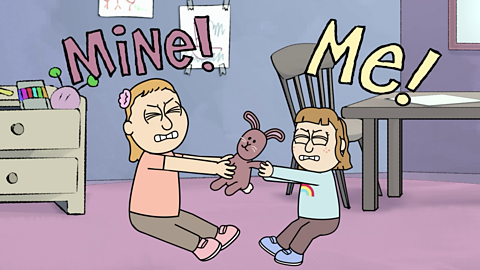
One of the fundamentals of working and playing well together is sharing.
It’s a difficult skill for children to learn. You might see them start to share or take turns at around two-and-a-half years old, but they often don’t develop the emotional regulation involved until they’re three to five years old.
It’s important to be patient and recognise the small wins, especially when it comes to social skills!
By sharing watering cans, tools and pots, like in the film above, children can learn from you as their role model.
Remember to use words like ‘share’, ‘fair’ and 'taking turns' clearly around them. Explain to your child what belongs to them, what doesn't, and what is meant to be shared with others.
You can also use imaginative play to promote sharing, like hosting a teddy bear’s picnic, letting your child pass around the teapot or divide a cake.
Taking turns
In the film above, we see how shared activities like planting, watering and harvesting can help teach your child skills like cooperation.
In particular, they’ll have to think about turn-taking.
Turn-taking is not only important in play, but it is also a key part in learning about the rhythm of conversation.
It supports children's communication skills and helps them build stronger friendships.
Alongside gardening activities together like planting seeds or watering plants, you could try a few simple games to help them understand taking turns.
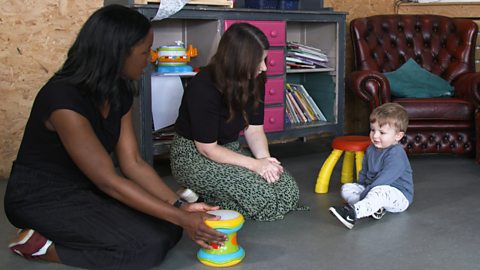
For example, try rolling a ball along the floor to each other, saying your names as you each have a go - e.g. ‘Mummy’s turn.’ Or swap names for animal sounds that represent each player.
Put their social skills to the test
There’s loads you can do at home to promote teamwork and consideration, but children can also learn from one another.
Try to give them lots of opportunities, whether that’s at nursery, on trips to the playground, or having friends around to your house.
You can start with very small steps, such as:
- Waiting their turn on a slide or swing
- Handing out snacks to friends or family and helping to put 'one each' on everyone's plate
At nursery or playgroup, you can also speak to the staff and explain that sharing and taking turns is something you’re working on with your child.
They may be able to offer advice or give you an insight into how your child is doing while you’re not there.
And don’t forget to do some online research - there might even be a gardening club for families near you!