
Persuasion: How to persuade when public speaking

Persuasive Speaking
In order to see this content you need to have both Javascript enabled and Flash installed. Visit BBC Webwise for full instructions

Alastair Campbell, Speaker Mentor
Alastair Campbell, Speaker Mentor - "Define your key message"

Dr David Holmes, Lecturer
Dr David Holmes, Lecturer - "Confidence breeds confidence"

Len and Arlene, Strictly Judges
Len and Arlene, Strictly Judges - "Just carry on"
How to Persuade an Audience
An element of persuasion is key to most speeches, ensuring that an audience are on the speaker's side. But how's this done?
Alastair Campbell, Speaker Mentor
Speaker MentorAlastair Campbell had one of UK's top persuasive remits as Tony Blair's Chief Strategist.
"The speaker's got to work out what the main objective is of their speech," Alastair told us. "That's all about the central argument".
Alastair believes that most people will listen to a well structured argument: "If you make a case, founded on factual analysis, values, your own experiences, history, colour... you can usually persuade somebody closer to your case, even if ultimately they're not going to necessarily agree with you".

Dr David Holmes, Lecturer
Dr David Holmes is a Senior Lecturer at Manchester Metropolitan University.
He talked us through the art of persuasion, and the psychology of speaking in public.
David believes a confident speaker can exude an air of credibility; "There's a certain amount of authoritarianism in this," David continued. "If somebody's very demanding and extremely definite about what they're saying, the tendency is that we all nod our heads, regardless of what we all personally thought beforehand".
According to David, non-verbal communication is as important to a speaker as the words they are delivering.
"We've been receiving non-verbal messages longer than we've been receiving language," David told us, "It comes naturally to some people, but other people are not very good at non-verbal communication, and therefore not very persuasive".
Ultimately, persuasion boils down to; "Behaviour, emotion and cognition," David explained. "You've got to get them in the mood, that they're going to be receptive; you've got to deliver the cognitive idea and have them accept that; you then need to get them to do something".
"Once they begin to commit... you've not only got your argument over, they are following that argument and it is now their argument - and they will take it somewhere else".
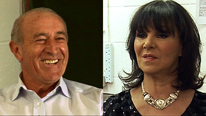
Len and Arlene talk us through the art of speaking 'in the moment'
Strictly Speaking
Persuasive speakers are often expected to respond to questions about their topic.
Strictly Come Dancing Judges Len Goodman and Arlene Phillips are masters of the bright lights of live television and the pressures of reacting in the moment.
"On Strictly Come Dancing there's no opportunity to be prepared," Len explained to us; "You have to watch what you're seeing, come out with something and hope that people can understand what you're talking about".
Arlene focussed on the possible pitfalls of a 'live' situation: "The worst thing that can happen is that you trip over your words. The very best thing to do if that happens, is to just carry on".
But the most important thing for Len is a natural response: "If you try and false it up, and be something else, it never works and you always come unstuck".
Things to Remember
Define your main objective
Use factual analysis, values, experiences, history and colour
Confidence breeds confidence
Consider what you body's saying
End with a practical outcome
Programme information
There are no upcoming episodes.
The Speaker series has now concluded. This site will no longer be updated.

More from The Speaker
More from bbc.co.uk
BBC iD
BBC iDBBC navigation
BBC links

BBC © 2014The BBC is not responsible for the content of external sites. Read more.
This page is best viewed in an up-to-date web browser with style sheets (CSS) enabled. While you will be able to view the content of this page in your current browser, you will not be able to get the full visual experience. Please consider upgrading your browser software or enabling style sheets (CSS) if you are able to do so.

