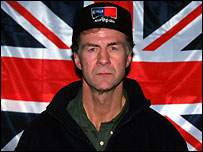
Sir Ranulph Fiennes spoke to BBC Somerset Sound's Adam Thomas on Monday, 19 March, 2007. To listen to the interview, click on this audio link: The adventurer scaled the mountain's 6,000-ft north wall in March 2007 in aid of Marie Curie Cancer Care. He aims to raise £1.5 million for the charity's Delivering Choice Programme, which allows terminally ill people to be cared for, and to die, in their place of choice. "The main problem was the technical difficulties of trying to climb up the various obstacles en route, and the sheerness of the face," said Sir Ranulph. 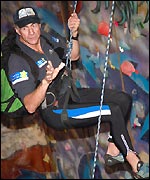 | | Sir Ranulph practises before setting off |
"Unless you're an expert climber, you need to have good weather, which we waited for." The Eiger, meaning 'ogre' in German, has one of the most daunting reputations in the climbing world. It took Sir Ranulph some five days to reach the top. "I've been doing expeditions for nearly 40 years, and the aim is what's usually important," he said. "It sometimes takes two years after the event before you know if you've raised the needed funds, and you only get them if the UK public are kind enough to dig into their pockets even in a small way." To find out more, and to sponser Sir Ranulph, click on this link: The explorer spoke to BBC Somerset Sound's Jo Phillips ahead of the challenge in February 2007. "Three years ago, my wife, my mother and two of my sisters died," said Sir Ranulph. "In the NHS cancer wards, some of the people didn't get any visitors. I would talk to them, and I usually found they wished they were dying at home. "Marie Curie does make this possible, but there needs to be more nurses - this is what this challenge is all about." To listen to the full interview, click on this audio link: |