Voice of a Killer
A skilled voice analyst proves the killer of a missing man is very close to home, and a UK fingerprint expert helps to overturn a miscarriage of justice.
The first case in this episode starts in 2008, and revolves around the discovery of a decomposed body at the side of a road in Goole, East Yorkshire.
From the way the body had been wrapped and dumped, detectives knew they were dealing with homicide. But with no immediate way to identify the victim, it was a tiny piece of medical tubing discovered during the post-mortem that gave them their first vital lead. Its unique serial number showed that the body was that of Frank Garner. Frank had been reported missing three years earlier by his son, Richard, who told police he had driven his father into Goole, dropped him off and never seen him again.
At the time, Richard’s account had sounded plausible. But once detectives began investigating Frank’s murder, they took a closer look at his son’s background and uncovered a possible motive: gambling debts. Frank’s bank records revealed that almost £50,000 had been moved out of his accounts after he disappeared, and someone claiming to be Frank had called the bank to authorise the transfers.
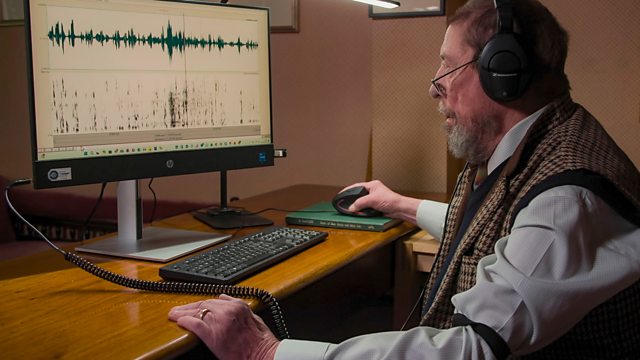
Richard denied any involvement, but detectives got the breakthrough they needed when they discovered that some of the banking calls had been recorded. To find out who was really on the line, they turned to renowned voice analyst and expert witness Professor Peter French.
Peter compared Richard’s police interview with the bank recordings. His specialist analysis revealed that the caller pretending to be Frank had tried to disguise his voice with an affected, pseudo-posh accent, but could not sustain it. On one call, the disguise slipped, allowing Peter to link the voice to Richard Garner.
The expert evidence helped detectives build the case that Richard had fraudulently accessed his father’s money after Frank’s death. Richard Garner was charged with his father’s murder, found guilty and sentenced to life with a minimum term of 16 years.
The programme includes revealing interviews from Christine Wilson, the senior investigating officer, and Ian Dobson, the family liaison officer from Humberside Police.
The second case examines a miscarriage of justice in a crime that shocked New Zealand in the 1990s and remained the subject of intense debate for years.
When five members of the Bain family were found shot dead, the only survivor was 22-year-old David Bain, who called the police after returning from his morning paper round. His mother and three siblings were found dead in their bedrooms. His father, Robin, was found in the living room beside a rifle, with a gunshot wound to his head, raising the possibility of murder-suicide. A note typed on the family computer appeared to suggest that David was the only member of the family who deserved to live.
But when investigators examined the crime scene in more depth, they found David’s fingerprints on the gun and on the family washing machine, marks they believed were in blood. They also questioned why David had taken nearly 30 minutes to call the police after arriving home and finding his family dead.
David was charged with five counts of murder, found guilty and sentenced to a minimum of 16 years in prison.
But the case divided the nation. When former All Black Joe Karam became convinced there had been a miscarriage of justice, he helped take the case all the way to the Privy Council in London, and David was granted a second trial.
This time, the defence brought in expert witnesses from the UK. One of the key strands of the original case had been the fingerprint evidence, and veteran fingerprint expert Carl Lloyd was asked to review the photographed marks from the crime scene. His findings were startling: neither of the key prints found on the gun and the washing machine was in blood, and both could have been made at any time before the killings.
Together with evidence from ballistics and blood spatter experts, and a new witness who suggested Robin Bain may have had a motive for familicide, Carl’s analysis helped change the course of the case. David Bain was found not guilty and freed after serving 13 years in prison.
Last on

More episodes
Previous
Next
You are at the last episode
Credits
| Role | Contributor |
|---|---|
| Presenter | Ashley John-Baptiste |
| Composer | Philip Guyler |
| Production Manager | Andrea McClelland |
| Executive Producer | Emma Barker |
| Executive Producer | Edward Hart |
| Series Producer | Lucy Wedlock |
| Producer | Gary Watson |
| Producer | Catriona Wright |
| Production Company | Rare TV |
Broadcast
- Fri 24 Jul 202610:45
