How a genetic discovery overturned a murder conviction
Kathleen Folbigg has suffered unimaginable tragedy in her life. Over the course of a decade she has lost not just one but four of her infant children. They all died, suddenly in their sleep. Then she was accused of killing her babies. Still protesting her innocence, she was convicted of murder and at the age of 35 sentenced to 40 years in jail.
Kathleen refused to accept the verdict but for decades all her appeals failed. Then a scientist called Carola Vinuesa came into her life. The “lab detective” who leads a team at the Francis Crick Institute in London used genetic sequencing to prove the children had almost certainly died of natural causes.
The tests revealed that Kathleen was carrying a previously undiscovered genetic mutation that could cause heart problems and had passed it onto two of her babies. Her conviction was overturned and in 2023 she was released from jail. Australia’s “worst female serial killer” had become the victim of its greatest miscarriage of justice who had spent 20 years in jail for a crime she did not commit.
The Lab Detective is the story of how science helped bring justice to a grieving mother and challenge the myths about motherhood that have skewed the law against women.
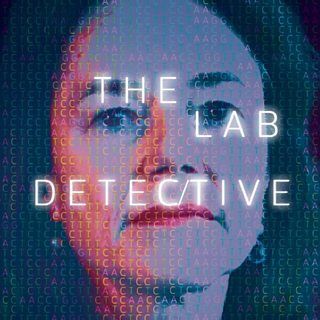
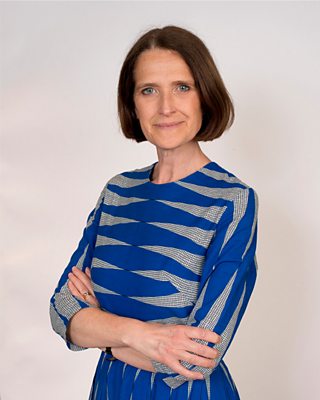
Journalist Rachel Sylvester speaks to Kathleen Folbigg and Carola Vinuesa about the extraordinary case that brought them together. She finds that, just as medicine is in “new age of cures” because of genetics, so the legal system is embarking on a remarkable new era of “justice by genomics”.
Genome sequencing is joining fingerprinting and DNA profiling as an essential tool of the courts, allowing investigators to discover an innocent explanation for sudden deaths.
And Rachel discovers that the Folbigg case is part of a troubling pattern of women falsely accused of murdering their children. As she says in the first episode, “this is not just a story about a single miscarriage of justice, it is also a story about how science can reshape the law. And about all the ways that our ideas - of women, of mothers, of motherhood - shape the law too.”
Over the years, there have been several women wrongly convicted in the UK too - including Sally Clark, who in 1999 was found guilty of killing her two sons. A British paediatrician called Roy Meadow testified as an expert witness. His mantra was that “one sudden infant death is a tragedy, two is suspicious and three is murder unless proved otherwise”.
It was a statistical nonsense which ignored the possibility of a genetic connection between the deaths. Sally’s conviction was eventually overturned but Rachel finds that there is another mother in prison now in Greece having been convicted of murdering her three children. Like Kathleen she insists she is innocent.
Kathleen is remarkably pragmatic about her experience. “I don’t have time to be angry about it. I’ve got too much catching up to do and experiences to have,” she says. But she worries that the lessons have not been learned from her case. “If you’re going to accuse a mother of killing their children, the first thing you should do is make sure there is nothing genetic going on,” she says. “It can happen to anybody. This is not something selective. It happened to me, it could happen to you.”
Carola believes there are other cases of mothers wrongly imprisoned for murder. “I can’t put a number on it but we do get approached by quite a few around the world, sadly.” The “lab detective” has found herself on the frontier between medicine and the law, Sherlock Holmes in a white coat. “I never set out to work on these things, but like all scientists we want to get to the truth.”
Listen to The Lab Detective on BBC Sounds.
More from Tortoise Investigates
![]()
Elon's Spies
How the world's richest man targets his enemies.
![]()
Dangerous Memories
What do we risk when we let someone else into our mind, and our memory?
![]()
The Gas Man
In the late 1980s, Agent Bass is tipped off about a shipment of suspicious chemicals.
![]()
Who Trolled Amber?
Alexi Mostrous investigates what happened to Amber Heard and who was responsible.