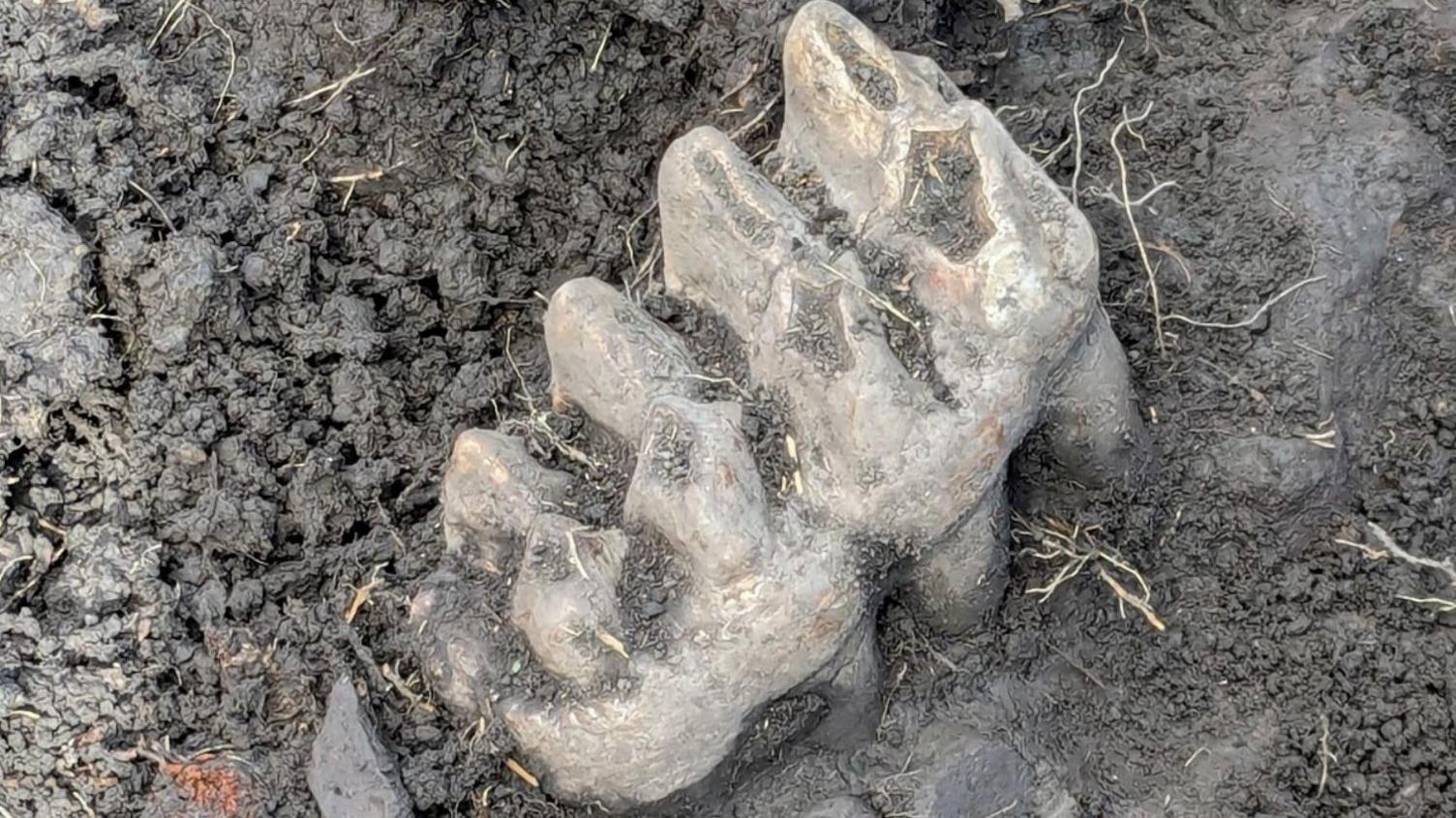
Massive rock turns out to be a set of ancient teeth

- Published
Who among us hasn't loved finding cool-looking rocks when we're out on a walk or just digging around?
But imagine if the rock you happened to stumble upon was in fact a set of... giant teeth?
That's what happened to geomorphologist Brigid Lynch, when she came across a set of mastodon molars in a creek bed in the US.
"As a geologist, I've gone out and seen stuff in the field, but definitely nothing as exciting as this," said Brigid.
More Newsround stories
Changes are coming to school dinners - what do you think of yours?
- Published4 days ago
'We shouldn't have to clean up plastic pollution on our beach'
- Published4 days ago
Could dino poo unlock answers to ancient bird mystery?
- Published5 days ago
What is a mastodon?

Mastodons are a close relative of our modern-day elephants.
But unlike modern elephants, mastodons had smaller ears, tusks and were covered with fur.
They roamed the Earth for millions of years up until around 10,000 years ago.
Mastodons were a different species to the more commonly known woolly mammoths - they measured slightly smaller and had flatter skulls.
It's thought they died out because of changes to the global climate and by early humans hunting them for food.
What's the big deal with these big teeth?

The teeth were found in a creek by geomorphologist Brigid Lynch
The massive tooth was discovered in California, USA.
The teeth were later confirmed as belonging to an adult Pacific mastodon.
"I had chills and shivers up and down my spine," said palaeontologist Wayne Thompson.
The scientist said it was rare to see such a well-preserved mastodon tooth, describing it as "spectacular".
The tooth has now been donated to Stanford University for further research.
More massive mastadon discoveries
- Published22 August 2024
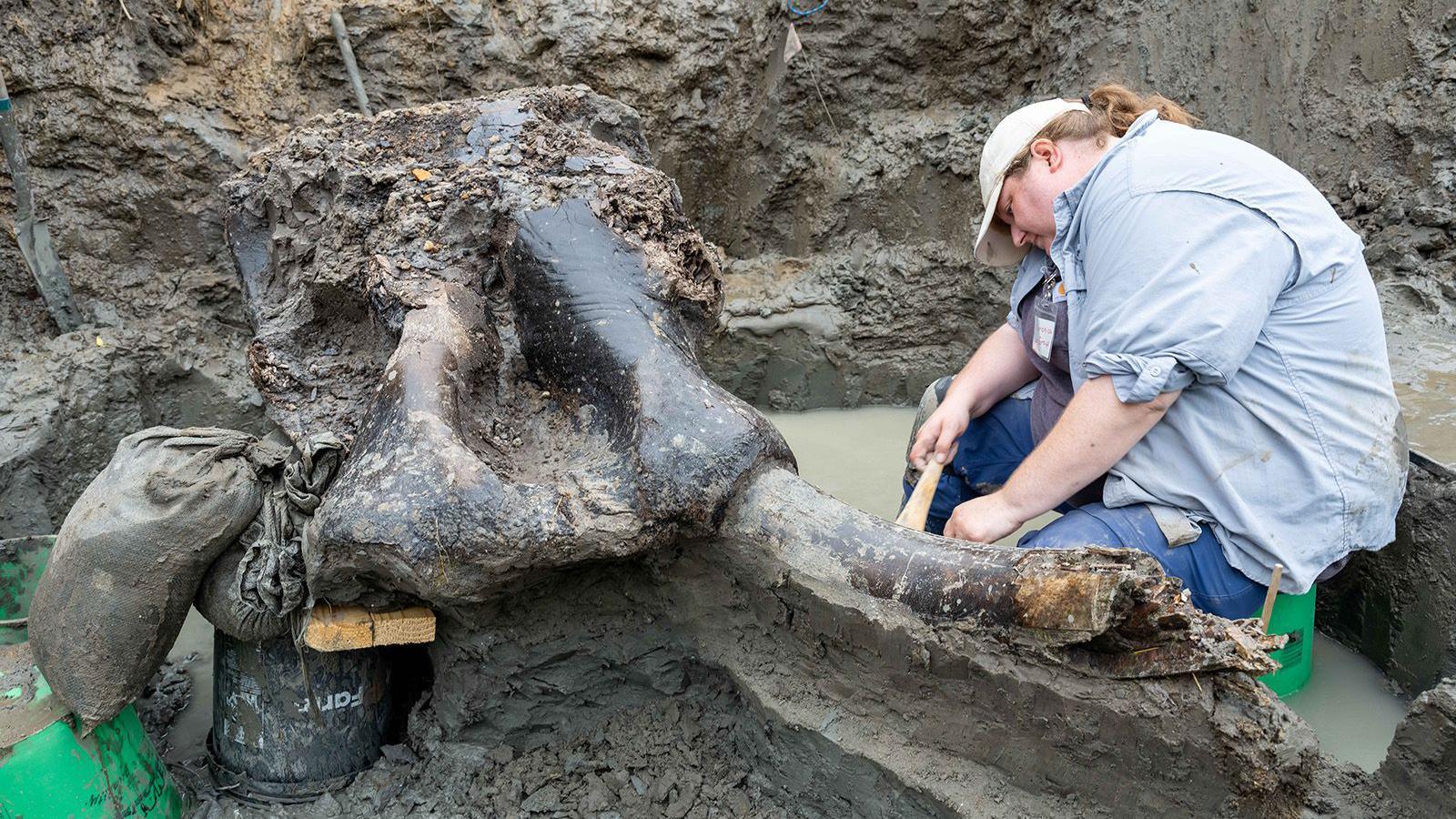
- Published7 June 2024

- Published20 December 2024