India's population is bigger than China's for the first time
- Published

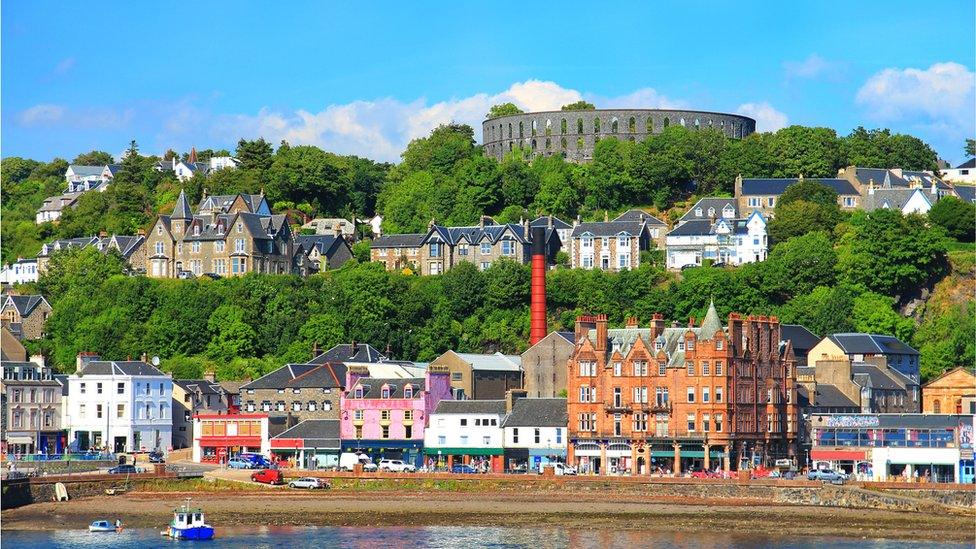
India, home to famous landmarks such as the Taj Mahal seen here, is now the world's most populous country
India now has the biggest population of any country in the world according United Nations (UN) estimates, overtaking China for the first time since records began.
China has held the top spot since 1950, which is when the UN started calculating the population sizes of countries.
So what's behind it? Read on to find out more and try our quiz about which are the biggest cities too.
Why is China's population shrinking?

China has had the largest population in the world since records began
China's population shrank for the first time since 1961 last year - there were a few reasons for this, such as the Covid-19 pandemic causing people to lose money and therefore not wanting to start families and have children.
And it's continuing to go down - China's population, which has been over 1 billion for since 1982, could drop below that for the first time by the year 2100.
If you can't see this quiz, click here.
Why is India's population growing?
On the other hand, in India, the population has grown by more than a billion since 1950.
It's slowing down now, but is still growing, and is thought to reach 1.7 billion by 2064 according to the UN's Department of Economic and Social Affairs (DESA).
There were initial concerns about India's population boom, but Poonam Muttreja, executive director of Population Foundation of India, says now that it's slowed down, there's not such a need to worry.

Although the population is rising, it's not happening at a rate that is worrying, some people have said in light of the news
"Earlier projections said we would overtake China in 2027 so it's happened four years faster, mostly because of our young population," she said.
"But at the same time, we have also reduced our population growth and reached population stabilisation faster than we had imagined and it will continue to slow down as long as we stay on the right track. So I don't think there's any need for alarm."
India's exact population size is not known, as the country's census still hasn't taken place after a delay.
It was due to be conducted in 2021, but was postponed due to the Covid-19 pandemic. The prime minister Narendra Modi, has not yet given a new date for it to take place.
Is having a big population a good thing?
If a population gets too big, it can put strain on public services such as hospitals.
However, if populations go down too much, or if there are more old people than young people, this can pose problems too.

If less people are dying, and less people are being born, this is called an aging population
Younger people are needed to work and pay taxes - money given to the government to pay for things like elderly care, hospitals and schools.
Whereas more elderly people means more healthcare needed for the problems people face as they get older - which costs money.
Some countries are trying to tackle this issue - in Japan for example, young families have been offered money to encourage them to move away from Tokyo and into the countryside, where the older population is bigger.
How did researchers work out China and India's populations?
The researchers at the UN use a number of different methods to do this, such as birth rates (how many babies are born), death rates (how many people die) and census data, which is information collected from people by governments.
- Published8 June 2021
- Published15 August 2023
- Published23 December 2021