Summary

  • As the government weighs up a possible social media ban for under-16s, BBC News has hosted a live programme bringing together young people from across north-west England

  • The audience of 12 to 18-year-olds discussed the role social media plays in their lives and the impact that regulation would have on their online world

  • Co-hosted by Pria Rai, De-Graft Mensah, and Kirsty Grant, the special programme explored all sides of the social media debate

  • 14-year-old Summer said she uses social media from the moment she gets home from school, while 12-year-old Riley said he could live without it

  • Emily said a ban of social media might make young people think it's a "cool or rebellious thing to do"

  • You can get in touch via WhatsApp +44 7756 165803

  1. Teenagers have their say on banning social media in BBC specialpublished at 18:35 BST

    Rachel Flynn
    Live reporter

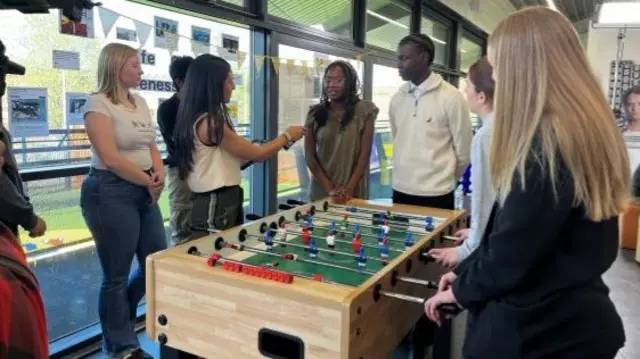
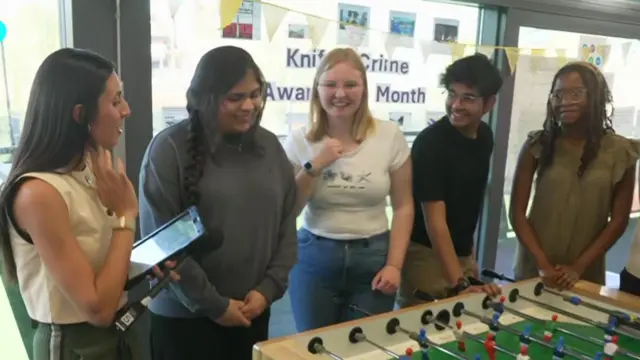
    A group of young people being interviewed around a foosball table.

    Dozens of teenagers in the north-west of England have had their say on the government's proposed ban on social media for under-16s.

    Many of them said social media takes up too much of their time - but admitted the benefits of staying connected with friends, family and online communities.

    One girl said a ban of social media might make young people think it's a "cool or rebellious thing to do". But another boy said he thought a ban would work, adding the government needed to help make sure social media is safe.

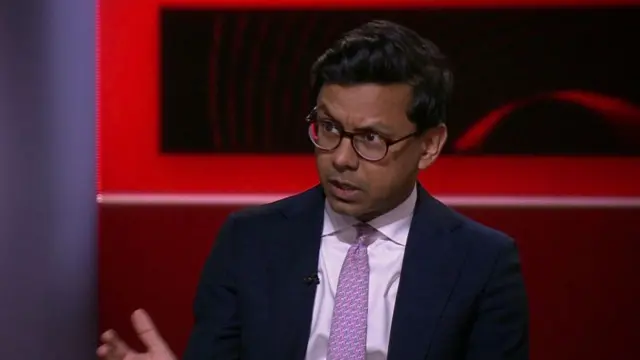
    The government's consultation on the ban has had 55,000 responses so far, online safety minister Kanishka Narayan told the BBC. He said the use of social media is a "defining question for young people in this country".

    The consultation closes on 26 May, and a government response is set for summer time.

    That's it for our live coverage - you can watch the 30-minute discussion here.

  2. Your thoughts on a social media ban: 'Common sense' or 'no different' to watching TVpublished at 18:16 BST

    Thank you for getting in touch with your views on a social media ban for under-16s.

    Addust says: "It should be the parent or carer's judgement, not a blanket regulation lobbied for by corporate interests."

    Luke says the ban is "100% common sense". "But in my opinion, it should be raised to 21 and over. Social media is making kids more mentally ill," he says.

    Emma says her 15-year-old daughter uses TikTok, which she used to help her revise for a chemistry test, and went on to score highly on.

    "Generations are changing and we need to move with it. When I was young and came home from school there were TV shows on. It's no different in the scheme of things," she says.

    A purple banner which says 'Your Voice'
  3. MPs reject Lords bill to ban under-16s from social mediapublished at 18:09 BST

    While the government consults on a social media ban a parliamentary debate on the issue has also been unfolding over recent months.

    This afternoon, MPs rejected a call to ban under 16s from social media, for a third time.

    In an attempt to move away from a blanket ban, Conservative former minister Lord Nash tabled an amendment in the House of Lords which would have restricted under-16s from accessing social media sites that advisers, such as OFCOM deemed "harmful".

    The Commons voted against this proposal.

    Education minister Olivia Bailey told the House that a comprehensive consultation was necessary before implementing any strategy to address harms linked to social media use.

    The bill will now return to the Lords, where debate over on a under-16 social media ban will continue.

  4. Online safety minister says government will 'do the right thing by our kids'published at 18:00 BST

    Online safety minister Kanishka Narayan speaking on BBC News

    Online safety minister Kanishka Narayan says the use of social media is a "defining question for young people in this country".

    He says there's a range of views on what to do next. Parents are worried about functionality of a ban, he tells the BBC, and how that might affect how they engage with their children.

    "We want to get it right. Do the right thing by our kids. That's what we'll do," he says.

    The minister says the proposed ban is "not about burdening parents" and will be enforced by a "powerful regulator". He adds that it's not a "one and done" situation - and that the government will maintain a "vigilant position".

    There has been 55,000 responses to the government consultation on a potential ban so far, he says, and after taking some time to analyse them they'll come back with answers "by the summer" .

  5. 'If you ban social media, you ban communities': What we've heard from those following alongpublished at 17:35 BST

    "Everyone's arguing in the comments," Host Kirsty Grant said as she read from some of the responses on the YouTube and TikTok streams.

    "If you ban social media you ban communities like musicians and writers," she relayed Kieran on YouTube as saying.

    Mary-Anne on TikTok said she hoped a similar ban happens in the US, while Miley on TikTok said better restrictions would be preferable to an overarching ban.

    Remember you can have your say too - do you think the government should ban social media for under-16s?

    Please read ourterms & conditions andprivacy policy

    In some cases a selection of your comments and questions will be published, displaying your name and location as you provide it unless you state otherwise. Your contact details will never be published.

    A purple banner which says 'Your Voice'
  6. A ban takes away parental responsibility, one teenager sayspublished at 17:22 BST

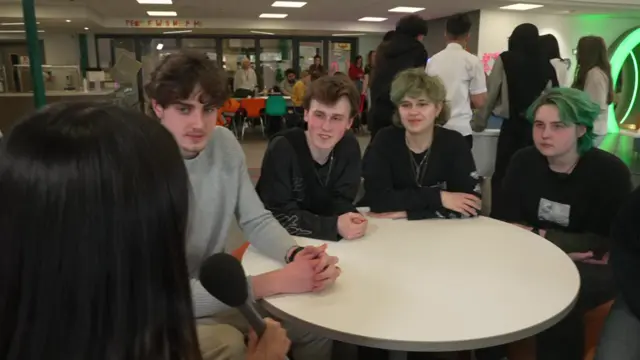
    A group of young people speak to the BBC about their thoughts on a social media ban for under-16s

    We've also heard from a group of 17 and 18-year-olds who have had access to the internet for most of their adolescence.

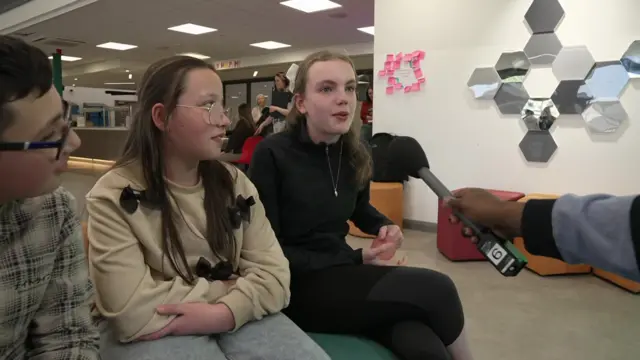
    Riley says he doesn't think a social media ban for under-16s would actually be effective. He says it would take away the parental responsibility of deciding what a child can and can't view on the internet.

    "It takes away that autonomy essentially, which I think a regulator or government body shouldn't enforce," he says.

    Asked if he'd want his parents to be that involved in deciding what he views online, Michael says: "I think personally, I'd say I'm open with my parents about most stuff.

    He says that's the important thing - communication between parents and children and what relationship they have.

    Another young believes a total ban for under-16s would prevent social media platforms from regulating what is inappropriate for children, which could lead to more harmful content being available for children to view who get around the restrictions.

  7. One 14-year-old says a ban could make social media appear more attractivepublished at 17:15 BST

    Host De-Graft Mensah has also spoken to 14-year-olds about their social media use.

    Adrian says social media is good "in moderation," while another, Summer, admits she uses social media from the moment she gets home from school until she falls asleep.

    "I could have done something more productive in that time," Summer says.

    Emily says a ban of social media might make young people think it's a "cool or rebellious thing to do".

    But Sean says he thinks a ban would work - he says the government is needed to help make sure social media is safe. "When your over 16, your mind is ready for social media," he says.

  8. Live discussion ends, but we'll bring you more soon on what's been saidpublished at 17:03 BST

    The live discussion has now ended, but we'll continue to provide you updates on what we've heard throughout the discussion.

  9. 'I use WhatsApp to connect with people'published at 16:58 BST

    A group of young people speak to the BBC about their views on banning social media for under-16s

    We are also hearing from the youngest cohort involved in today's discussion, who are asked what apps they are using and why, and whether they could live without social media.

    Olivia says she uses TikTok for six to seven hours a day, mostly for when she's bored and wants to see what other people's lives are like, or to show them what her life is like.

    "I use WhatsApp to connect with people", says Daisy. She says that she also uses YouTube for entertainment, but adds that it's important "we use it for good purposes" and not inappropriately.

    Riley says he thinks he could live without social media because other generations such as his parents did, while another says that he doesn't really use it because neither he or his parents agree with it.

    Media caption,

    Which apps do children use the most?

  10. Social media's role - a procrastinating tool and a way to stay in touch with family overseaspublished at 16:46 BST

    A group of young people speak to the BBC

    The discussion kicks off around a football table, where young people discuss the role social media plays in their lives.

    Peace admits she would "probably get more things done" as she spends "way too much time" on her phone.

    Iga says social media makes it easier to stay in touch with family who live outside of the country.

  11. Young people discuss proposed social media ban - watch livepublished at 16:32 BST

    Our live discussion about a potential ban on social media for under-16s in the UK has just begun.

    We will bring you the key lines from the panel's discussion here, and you can follow it in full by tapping watch liveat the top of this page.

    You can also watch the discussion on TikTok (@bbcnews), Youtube, external, or live on the BBC News channel.

  12. We want to hear from youpublished at 16:20 BST

    Do you think the government should ban social media for under-16s? Get in touch to share your views in the following ways: 

    Please read ourterms & conditions andprivacy policy

    In some cases a selection of your comments and questions will be published, displaying your name and location as you provide it unless you state otherwise. Your contact details will never be published.

    A purple banner with white writing that says 'your voice'.
  13. How the discussion will unfoldpublished at 16:10 BST

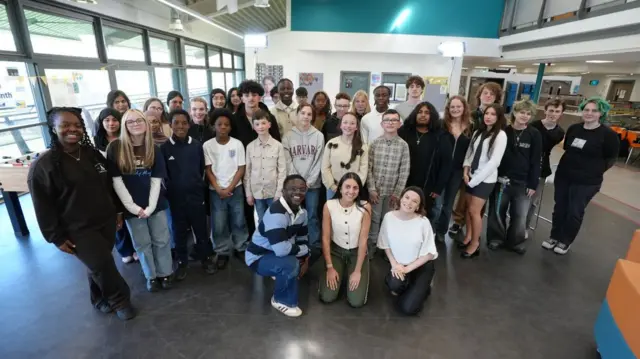
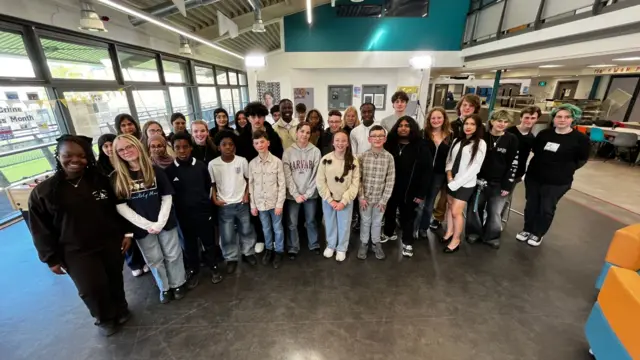
    A group of young people posing for a photo in the BBC studios.

    Our special programme will explore all sides of the social media debate - you can follow along by tapping watch live at the top of this page from 16:30 BST.

    The audience will be made up of around 30 young people who will be split into groups based on their age.

    The hosts will ask each group for their thoughts on the highs and lows of social media use, including its impact on their lives and what effects regulation might have.

    Some of the questions asked from those following along on YouTube, external and TikTok, external will also be put to the young people.

    From 17:30 online safety minister Kanishka Narayan will respond to what we've heard.

  14. Hundreds of UK teens involved in trial of social media bans and digital curfewspublished at 15:55 BST

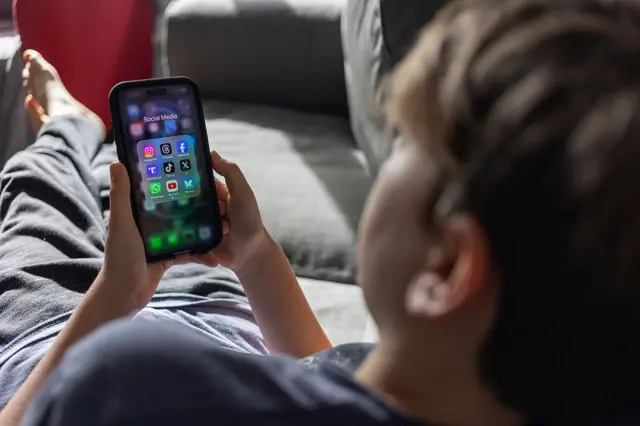
    A boy lying on the sofa and looking at the apps on his phoneImage source, Getty Images

    As well as the ongoing consultation, the government has announced a trial of social media bans, digital curfews and time limits on apps in the homes of hundreds of UK teenagers.

    The test, led by the UK government, sees 300 teens have their social apps disabled entirely, blocked overnight or capped to one hour's use - with some also seeing no such changes at all - in order to compare their experiences.

    Technology Secretary Liz Kendall said it was about "testing different options in the real world".

    "These pilots will give us the evidence we need to take the next steps, informed by the experiences of families themselves," she added.

  15. Australia's world-first social media ban - how does it work?published at 15:47 BST

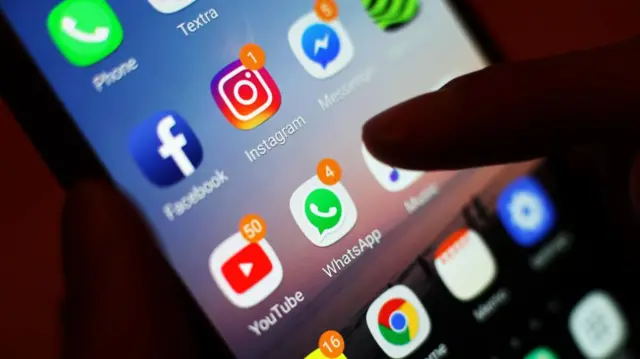
    A thumb hovering over a smartphone screen featuring apps such as Facebook, Instagram and WhatsApp.Image source, PA Media

    In December, under-16s in Australia were banned from using major social media services including Tiktok, X, Facebook, Instagram, YouTube, Snapchat and Threads.

    Australian Prime Minister Anthony Albanese said the day the ban took hold that social media had contributed to a rise in mental health issues.

    Under the ban, under-16s cannot set up new social media accounts and their existing profiles were deactivated.

    Children and parents are not punished for infringing the ban. Instead, social media companies face fines of up to A$49.5m (US$32m, £25m) for serious or repeated breaches.

    Earlier this month Greece announced plans to ban access to social media for under-15s, with France, Austria and Spain also among a growing number of nations pursuing similar curbs.

    Social media companies argue that blanket bans will be ineffective, difficult to enforce and could isolate vulnerable teenagers.

    This Flourish post cannot be displayed in your browser. Please enable Javascript or try a different browser.

  16. UK consultation asking for views on social media restrictionspublished at 15:33 BST

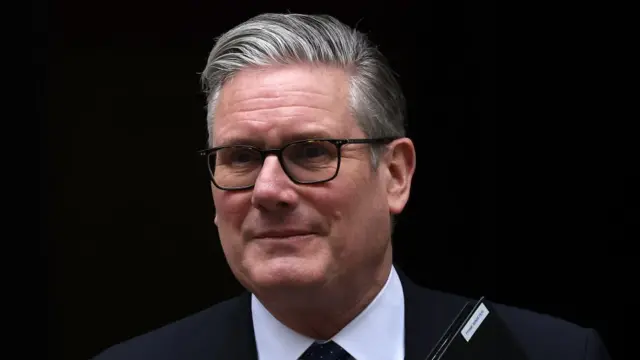
    A photograph of UK Prime Minister Keir Starmer cropped from the shoulders up.Image source, EPA

    The UK government is consulting on whether to ban access to social media for children under the age of 16 in a bid to strengthen protections for young people online.

    It follows Australia's decision last year to ban children from a range of platforms including Instagram, Snapchat, YouTube and TikTok.

    The government also wants the public's views on less dramatic interventions, including switching off addictive features like infinite scrolling and autoplay, overnight curfews,restrictions on AI chatbots, and strengthening age verification enforcement.

    Young people and their parents and guardians are being invited to submit comments before the consultation closes on 26 May, with the government planning to respond "in the summer".

    Prime Minister Keir Starmer said last week that while he believed social media could be made safer for British children, curbing access would be "preferable to a world where harm is the price of participation".

    Internet safety charity the Molly Rose Foundation is among a number of children's charities and online safety organisations that oppose a ban, saying it would fail to improve children's online safety.

  17. Should social media be banned for under-16s? Join the discussionpublished at 15:13 BST

    A group of young people posing for a photograph in BBC studios.

    As the UK government weighs up a potential ban on social media for under-16s, BBC News is hosting a live discussion bringing together young people from across north-west England.

    The programme will explore what the proposed ban could include, and hear from teenagers directly on how regulation could impact their online world.

    Co-hosted by BBC News Pria Rai, De-Graft Mensah, and Kirsty Grant, the discussion will cover everything from doom scrolling to disinformation and creativity to community.

    The panel of 12 to 18-year-olds will discuss the role social media plays in their lives and how they feel about the proposed ban for under-16s.

    You can follow the discussion by tapping watch live at the top of this page from 16:30 BST, on YouTube , externalor TikTok @BBCNews, external, where you can also submit your questions.

    We'll also hear from online safety minister Kanishka Narayan from 17:30.