Summary

  1. Under-16s face social media ban by next spring, but questions remain on how it will workpublished at 18:53 BST
    Rachel Flynn
    Live reporter

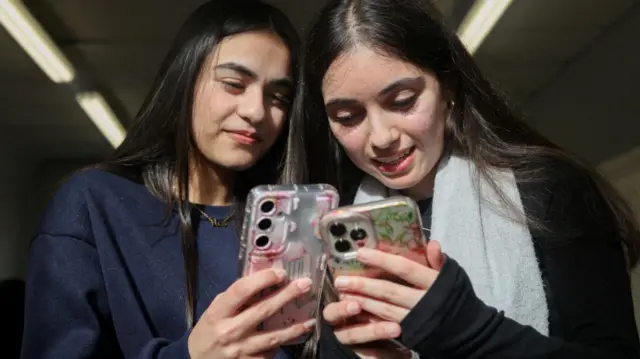
    Two young teenage girls use their iphones next to each otherImage source, Reuters

    Under-16s in the UK will be banned from using social media by spring next year, Prime Minister Keir Starmer announced earlier today.

    It follows a government consultation, in which 89% of 9,499 parents and carers said they strongly supported a legal minimum age for social media access, 88% of which strongly agreed that age should be under-16s.

    Apps such as Snapchat, TikTok, Youtube, Instagram, Facebook and X will be included in the ban, the government says, but it willnot include messaging services WhatsApp and Signal.

    A lot of the detail about this ban "isn't particularly clear", BBC technology correspondent Chris Vallance says, with no definitive list of what's banned, and what's not.

    Aliyyah, a 14-year-old from Barnsley, calls the ban "a waste of time" and says "sometimes apps are safe spaces for people". While Sean, a 13-year-old from Wythenshawe, says "it's time they did something about" social media use, calling it a "bad place".

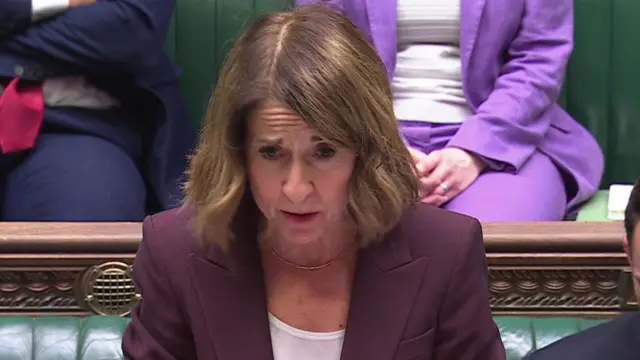
    Technology minister Liz Kendall described the ban as a "defining moment for our children", and said more details will be set out in the regulations.

    We're ending our live coverage here, but you can read more about the government's policy in our news story.
  2. Prince Harry and Meghan say under-16s social media ban a 'welcome step forward'published at 18:47 BST

    Sean Coughlan
    Royal correspondent

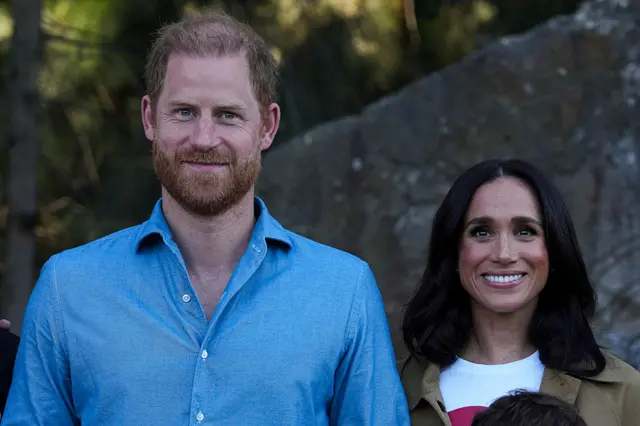
    Prince Harry, Duke of Sussex and Meghan, Duchess of Sussex pose for a photo during a Scar Tree Walk on April 16, 2026 in Melbourne, Australia. The Duke and Duchess of Sussex are on a four-day visit to Australia, with engagements across Melbourne, Canberra and Sydney in AprilImage source, Getty Images

    Prince Harry and Meghan have backed the government’s announcement on banning under-16s from social media as a “welcome step forward”.

    The US-based couple have themselves campaigned for better protection for children online and using social media.

    They called for online platforms to be designed with more attention to safety and to put “children’s wellbeing ahead of engagement and profit”.

    “The burden cannot rest solely on parents and children. It must also be borne by the companies,” said a statement from the couple.

    “Until then, every day without meaningful change is another day that children remain exposed to preventable harm.”

  3. A landmark ban - how did we get here?published at 18:28 BST

    Freya Scott-Turner
    Live reporter

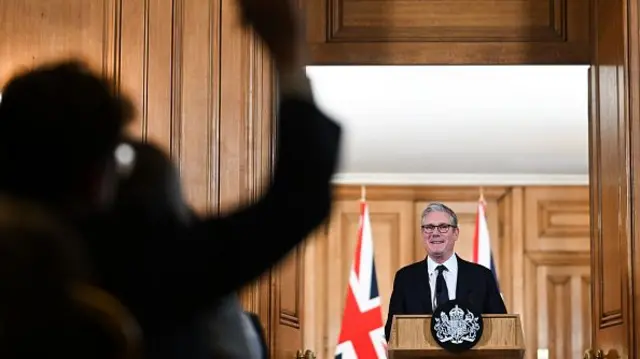
    Keir Starmer stands at a wooden podiumImage source, Bloomberg via Getty Images
    Image caption,

    Keir Starmer announced the policy at a media briefing earlier today

    The idea of an under-16s social media ban is not new.

    It's been floated - in various guises - by figures across the political spectrum, and gained traction in the UK after Australia became the world's first country to introduce such legislation in December 2025.

    Here's some of the key developments that brought us to today's announcement:

    11 January: Kemi Badenoch says her Conservative Party would ban under-16s from accessing social media if they came to power, referencing the ban in Australia. This echoes previous calls by the Liberal Democrats in September 2025 to restrict access to social media for under-16s.

    21 January: The House of Lords votes through an amendment to the government's schools bill to include a ban on social media for under-16s.

    March: MPs in the Commons reject the plans put forward in the House of Lords. The government instead launches a consultation to gauge support for, among other things, an under-16s social media ban on 2 March.

    26 May: The government consultation ends.

    15 June: Prime Minister Keir Starmer announces that under-16s will be banned from a variety of social media platforms, including Facebook, Instagram, and Snapchat.

    What's next?

    July: The government says it will "set out more detail" on further social media measures, including overnight curfews and limits on "infinite scrolling" for under-18s. Children's minister Josh MacAlister says detail on Virtual Private Networks (VPNs) - which critics say could be used to circumvent the ban - will be laid out too.

    By "the end of the year": The government says the first set of regulations will be laid out, to give tech companies and parents time to prepare.

    Next year: The government then says that "the changes should be implemented by spring 2027".

  4. Will banning social media improve children's mental health? Experts aren’t so surepublished at 18:05 BST

    Joe McFadden
    Health reporter

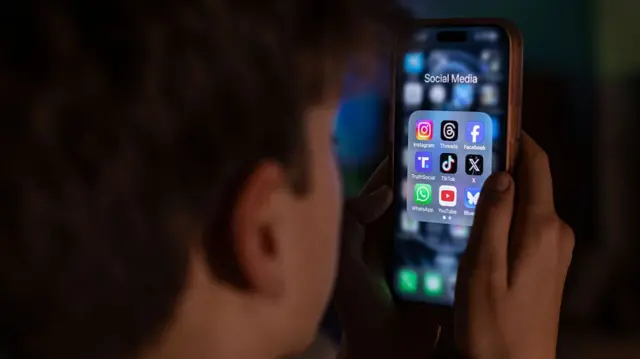
    A teenage boy looks at social media apps on his phoneImage source, Getty Images

    Experts and researchers have been sharing their reaction to the government’s ban on social media for under-16s and so far, their views have been mixed.

    Several scientists have pointed to the lack of evidence that a social media ban will improve children’s mental health, though many do recognise that excessive screen time can be harmful and say social media needs to be made safer for young people.

    Some studies have pointed to issues like children comparing appearances, external (e.g. body image), cyberbullying and viewing harmful content, while excessive ‘doomscrolling’, external is associated with poor mental health.

    But there is little direct evidence, external on how harmful social media actually is – and to what degree it causes poor mental health.

    Early reports from Australia have analysed the ban’s access and enforcement more than the impact on mental health and wellbeing – that will come later – but recent polling, external by the Molly Rose Foundation (who oppose a UK ban) found 70% of children still using restricted sites claim it was ‘easy’ to circumvent the ban.

    This is why many scientists would have preferred the government to wait for clearer evidence from Australia before imposing a blanket ban.

  5. Questions remain on how the ban will workpublished at 17:49 BST

    We've been receiving questions about the announcement of a social media ban for under-16s. Here are a selection.

    Nicola wonders if other Commonwealth countries like New Zealand and Canada will follow suit and asks what will happens with the Crown Dependencies. "Or will we have people visiting those locations on holiday etc, who can access social media accounts whilst outside of the UK?"

    Si Richy says"the ban is never going to work. The issue is that parents are abdicating their responsibility to their own children. Parents control when young people get a phone, they buy it, the parents pay the bills, whether it be contract or pay-as-you-go, the money comes from the parents."

    Conor in the West Midlands says "if it’s a ban on under 16-year-olds and a child becomes 16 in a school year in September, isn’t that going to cause problems with the rest of the class/year who don’t become 16 during various months throughout that school year?"

    Malc asks how the ban "is going to help schools, when most nowadays post their homework online."

    Have a question? You can get in touch in the following ways:

    Please read ourterms & conditions andprivacy policy

    In some cases a selection of your comments and questions will be published, displaying your name and location as you provide it unless you state otherwise. Your contact details will never be published.

    Your Voice graphic on purple background
  6. Enforcement will fall 'on the companies, not parents or children'published at 17:36 BST

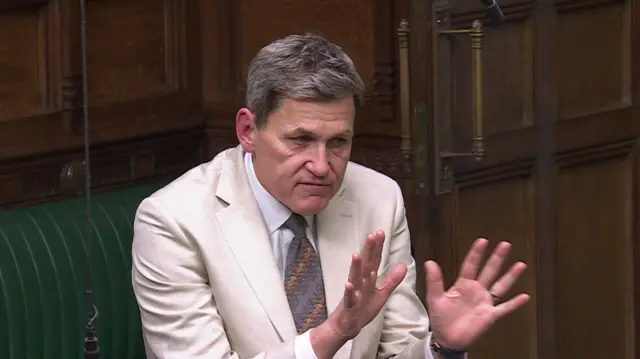
    Kit Malthouse speaking in the House of CommonsImage source, UK Parliament

    Kit Malthouse, a Conservative MP, asks the technology secretary if enforcement will be against parents or platforms.

    "She knows that screens are a major source of conflict within the home at the moment, we don't want to start thermo-nuclear war in homes up and down the land," he says, to some laughter.

    He also asks about gaming environments that use servers across the world and which can develop sophisticated ways to overcome any barriers the government may put in place.

    Kendall says absolutely the enforcement is "on the companies - not the parents, not the children".

    She says the government has got an overall ban on social media platforms but also has the ability to deal with specific features and functions in other services if it thinks they are risky to children.

  7. Ban will address messaging from strangers, Kendall pledgespublished at 17:34 BST

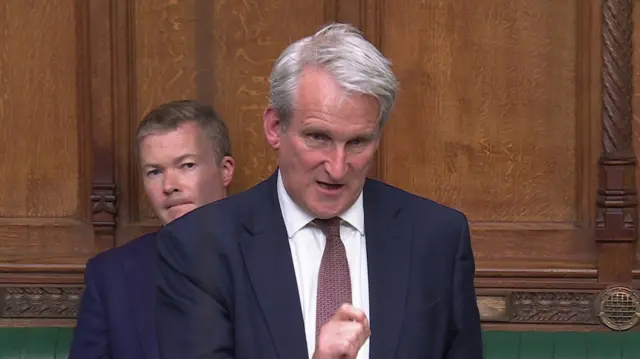
    Damian Hinds speaking in the House of CommonsImage source, UK Parliament

    Tory MP Damian Hinds asks Technology Secretary Liz Kendall how the exemption of messaging services from the ban, as well as blocking communications from strangers, can happen at the same time.

    "What is the net effect of those two things, if you have a messaging service that allows anybody who knows your phone number to add you to a large messaging group?" Hinds asks.

    Kendall says these details will be set out in the regulations, but if messaging services have features that allow strangers to communicate with children, the government "absolutely want[s] to deal with that".

  8. Ban came after 'dither and delay', Lib Dems saypublished at 17:32 BST

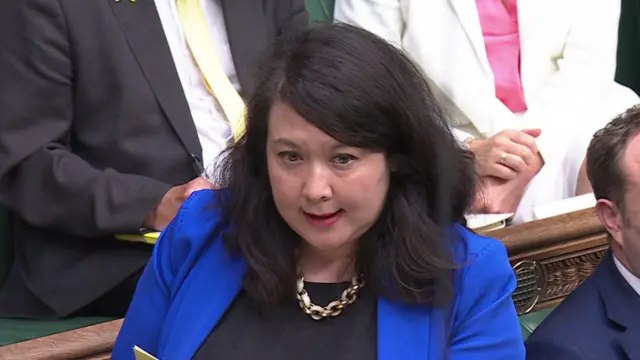
    Victoria Collins speaking in the House of CommonsImage source, UK Parliament

    Back in Westminster, Liz Kendall has been responding to Liberal Democrat MP Victoria Collins, who says she welcomes the ban to keep children safe.

    Collins says the prime minister's announcement has come after months of "dither and delay", labelling it a "panicked-policy cobbled together ahead of a by-election and a backbench rebellion."

    She says it's a real "disappointment" the government hasn't learned from Australia and other countries on how the UK can deal with the root course of online harm.

    Kendall says "we've learned the lesson" from the Australian model and will introduce higher effective age assurance measures and rigorous enforcement for riskier sites.

    She adds that technology is changing fast, but the powers in the act will allow them to move faster.

    "This is not a rush, this is a deeply thought through policy programme."

  9. Elon Musk calls the UK a ‘police state’published at 17:25 BST

    Graham Fraser
    Technology reporter

    Elon MuskImage source, Getty Images
    Image caption,

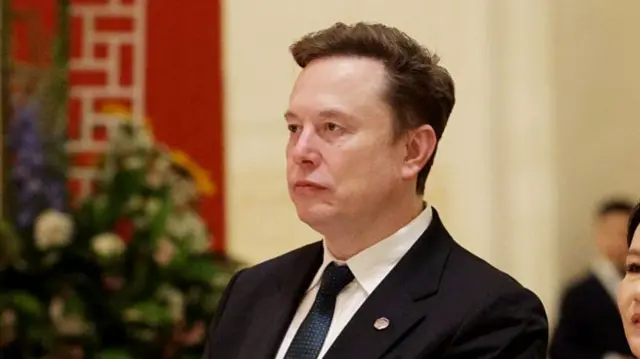
    Elon Musk in Beijing last month

    Away from the Commons, Elon Musk - the owner of X - has said the UK is a “police state”, as he reacted to the social media ban for under-16s and its wider implications.

    X is among the social media platforms that will be banned for younger people, in measures outlined today by Prime Minister Sir Keir Starmer.

    Musk, who is also the boss of SpaceX and Tesla, reacted to a post from Polymarket on his X platform., external

    He then went on to post, external: “This censorship law is a wolf in sheep’s clothing. The real goal is to enable the UK government to track everyone.”

    The government's plans state adults in the UK would be able to use social media by verifying their identities with digital IDs, external, facial recognition and other means such as credit cards, following the ban of younger users.

    The UK government outlined that many adults wouldn’t need to do age checks following the changes for under-16s, because their account had been open for more than 16 years, it already had a credit card connected to it, or it was linked to an email address that was already verified.

    For adults who were not already verified, they could use a facial recognition check.

    Musk, who has just become the world’s first trillionaire, has clashed several times with Starmer.

    Last week, the prime minister accused the tech billionaire of "trying to whip up division" over the murder of Henry Nowak.

  10. Tories question effectiveness of ban proposalspublished at 17:19 BST

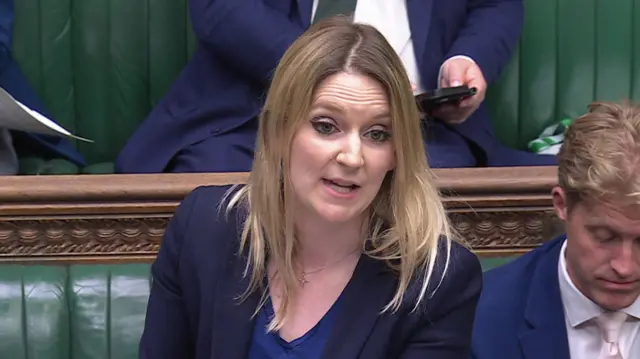
    Julia Lopez speaking in the House of CommonsImage source, UK Parliament

    Shadow technology secretary Julia Lopez is giving her response to news of the ban.

    She says Starmer was "personally opposed to this ban six months ago" - adding that she's grateful the PM "got there in the end".

    Lopez says the PM "wouldn't give a view" during debates on the social media ban - but has "finally found his voice" prior to the "career-critical" Makerfield by-election on Thursday.

    The shadow secretary says that while she welcomes the ban, its success will depend on its implementation.

    She asks Liz Kendall a number of questions about the ban, including where the funding for the ban will come from, and whether she is considering age-verification at "app-store level".

    "When harm from social media to our children is real and growing, the time comes for action, even when the answers are not perfect," Lopez says, adding that she looks forward to working with the technology secretary on the ban's implementation.

    Kendall responds to the Lopez's question about Ofcom's resources and implementation.

    "That's why I've asked them to do an urgent review - I would say they should look at their own resources first before coming to Parliament to ask for more, but I will of course look at what they say on that," she says.

  11. Ofcom to learn lessons from Australia to ensure compliance, Kendall sayspublished at 17:08 BST

    Liz Kendall says that from Australia's ban has shown that it is "inevitable" that some teens will find a way to get around social media restrictions - given it's been an integral part of their lives.

    "We will introduce more highly effective age assurance measures to better support compliance. I've asked Ofcom to share proposals on this in months."

    She adds that some worry a ban would push children onto riskier and less regulated sites, so she has written to Ofcom and its new chair to stress that both enforcement of the online safety act and the new ban must be a "top priority".

    She says she has also asked for an urgent review of whether Ofcom has the "right capabilities in place."

  12. UK first country in the world to ban sexualised chatbots, Kendall sayspublished at 17:03 BST

    Liz Kendall speaking in the House of Commons.Image source, UK Parliament

    Kendall mentions the restrictions the government is making for under-18s on AI chat bots regarding intimate relationships.

    "Today, Britain is becoming the first country in the world to ban chatbots that offer sexualised content to under-18s," she tells MPs.

    "And we will restrict this functionality on general purpose chatbots too."

    She says concerns have been raised over therapy app chatbots, and she recognises that some of them may have benefits, but she is working closely with Department of Health and others to assess the evidence - and she will update the House again over the wider measures on AI chatbots in a further statement in July.

  13. Kendall says ban is a 'defining moment' for childrenpublished at 16:53 BST

    Liz Kendall speaking in the House of Commons.Image source, UK Parliament

    Making a statement in the House of Commons on the social media ban for under 16s, Liz Kendall says that "today marks a defining moment for our children and future generations".

    She says the government's announcement will "give them the freedom to be children again", and "put power back into parents' hands".

    "Many children love connecting and interacting" on social media, she says, but there are others who "struggle with their mental health, concentration and self-esteem".

  14. Tech companies concerned about 'backlash' if ban doesn't work, says industry spokespersonpublished at 16:43 BST

    Doniya Soni-Clark is associate director of public affairs for Tech UK, a trade association that represents hundreds of tech companies across Britain.

    "A ban is a blunt instrument, and an ineffective tool for addressing some of the issues that parents and families are raising today," she tells Radio 4's World At One.

    Though she says the sector "stands ready to work with the government" on implementing the ban, "there is a massive feeling of 'we’re not sure this will work', and we’re concerned about the backlash that the tech sector will face as a result of that".

    Soni-Clark says that she thinks the industry is supportive of the ban's aim of protecting children - and says that stronger parental controls were being introduced across platforms prior to today's announcement.

    But she cautions that "until we have further details about what's in scope, and whether or not it's coherent across the sector, then we can’t guarantee the tech sector won’t go for judicial review, if they think that something is perhaps unfair or unachievable".

  15. Technology secretary to speak in the Commonspublished at 16:36 BST

    Technology Secretary, Liz KendallImage source, PA Media

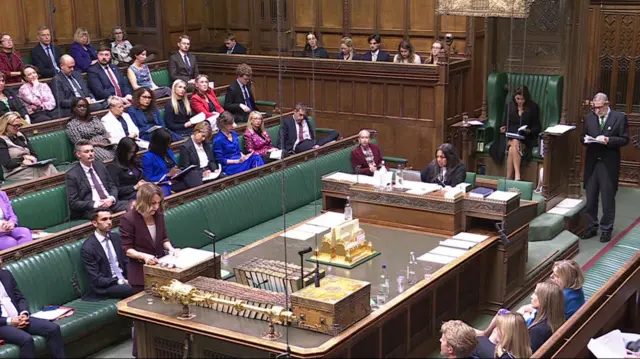
    We'll shortly be hearing from Technology Secretary Liz Kendall, who is speaking in the House of Commons about the social media ban for under-16s.

    We've heard the key details from PM Keir Starmer's announcement earlier, but if Kendall's statement has more information we'll be sure to bring it to you here and you will be able to watch a stream from Parliament at the top of this page.

  16. 'One pupil was up until 3am this morning on TikTok'published at 16:20 BST

    Hayley Clarke
    Education reporter

    Bill Morris, a 26-year-old maths teacher at a school in Barnsley, has been seeing the effects social media can have on his pupils even today.

    Just this morning, he says a Year 7 pupil arrived to school tired after being up until 03:00 BST on TikTok.

    He hopes the ban will have a "real positive impact", so that they’re "not doomscrolling up until the early hours of the morning, so they’re ready to engage with school".

    But he’s dubious about how effective the measures may be.

    "Kids aren’t daft," he says. "They will find ways around it. I think it comes from a good place. How well it will be monitored will be interesting to see."

    Bill says he grew up with social media himself, from Facebook to Snapchat. Phones aren’t allowed at his school, which he thinks gives the students more opportunities to talk to one another. That's better than his own experience of being at school, he says, when phones were out at break and lunch.

    "I think it’s a really positive thing that we take the phones off them," he says. For Bill, the legal ban on phones in schools coming into force later this month is "absolutely" a good thing too.

  17. Analysis

    While social media restrictions can protect users, they also take the heat off tech companiespublished at 16:09 BST

    Marianna Spring
    Social media investigations correspondent

    I've been investigating the real-world consequences of what unfolds on social media for both kids and adults for several years now. What I find time and time again is how the harmful impact of the sites comes down to their design - and what their algorithmic systems reward and push to users.

    Insiders and whistleblowers from the major companies have told me how they think the sites have made decisions that have deliberately inflamed the issues with their systems to compete against one another in an engagement arms-race. That means competing for clicks and eyeballs - and sending users posts that grip them regardless of the consequence.

    While restrictions for under-16s can protect them from some of this algorithmic impact, they also - in the short-term - take a bit of the heat off the companies to either invest in more guardrails to protect people or to re-think their features - a costly process.

    Teenagers have told me on several occasions that what they want is more control over what they see - and that when they use the in-built tools to indicate they don't want to see violent or hateful content, they're still pushed it several days later.

    One teenage girl at a school in Hampshire said: "It kind of makes you feel like, 'Oh, they're not listening to me. I'm telling them I don't want to see this kind of stuff.'"

  18. Will ban impact engagement in politics?published at 16:07 BST

    Andy in Blackburn Welsh and Scottish children can register to vote at 14, and therefore how will these people see posts made by politicians on social media?

    Joe Pike says there was a time when political campaigning existed before social media.

    "If politicians and political activists are to persuade people, maybe they'll have to return to doorstep canvassing, and to leaflets too," he says.

    Your Voice graphic against purple background
  19. Will breaking ban be criminal offence for children or parents?published at 15:56 BST

    "There are no signs of anything like that" in the government's announcement, says political correspondent Joe Pike.

    "Criminalising children, or their parents, or their teachers or guardians is not part of what the government is pitching," Pike explains. Instead, "they're trying to put the pressure on tech companies", he says.

    Pike adds the government wants to frame this as about "providing support and direction to parents and under-16s too".

    The next question is on Virtual Private Networks (VPNs) and how the government will stop young people using them to get around the ban.

    Senior technology reporter Chris Vallance explains that when age checks were first introduced for pornography sites, there was "a big spike" in VPN usage.

    But Vallance notes that many VPNs require payment, which would be an obstacle for a child, while platforms could also use AI to check somebody's age so a VPN wouldn't help.

    Still, VPN use is "certainly something that has increased and something that potentially could be used to get around some of this", he says.

    Purple banner that says Your Voice in graffiti style writing
  20. What social media is being banned in the UK and who does it apply to?published at 15:47 BST

    BBC technology correspondent Chris Vallance says that we don't have a definitive list of the platforms the ban will apply to, and that a lot about this ban "isn't particularly clear".

    But we can talk about the "major social platforms" - and if we follow Australia - some of the streaming platforms, Chris adds.

    The government will look at "high risk features" of apps - like allowing children to livestream, or allowing unfamiliar adults to contact them, Chris says.

    He adds that there are other measures that are under future consideration, such as curfews, that would potentially also apply to under 18s.

    Chris adds that the government says WhatsApp will not be banned.

    Purple banner which says 'YOUR VOICE'