Summary

  • Two men are about to be sentenced for a new offence of endangering others during a sea crossing to the UK

  • Mohammad Tajik, 32, was the first to be convicted of the new offence after piloting an overcrowded dinghy across the English Channel in poor weather on 17 January

  • Separately, Alnour Mohamed Ali, 27, was convicted after two men and two women died while trying to board a boat in France on 9 April

  • Prosecutors have confirmed in court that the deaths are not part of the allegations Ali faces, and the judge has said there is "no suggestion" he should be held accountable for them

  • The new offence came into force in April and is a really important part of the government's plan to counter small boat crossings, our home and legal correspondent, Dominic Casciani, writes

  • Both men are appearing at Canterbury Crown Court for sentencing

  1. Tajik's barrister asks for sentence of no more than 12 monthspublished at 11:25 BST

    Sean Seddon
    Reporting from Canterbury Crown Court

    More from Mohammad Tajik's barrister now.

    Niall Doherty says Tajik played no part in organising the crossing and took control mid-journey because the original pilot had stopped steering it.

    He made no financial gain from piloting the boat, the court hears.

    Doherty says his client knows a custodial sentence is "inevitable" but argues for no more than 12 months when taking into account his early guilty plea.

  2. Tajik's background reveals complexity of arrivalspublished at 11:25 BST

    Dominic Casciani
    Home and legal correspondent, at Canterbury Crown Court

    Mohammad Tajik’s defence barrister is explaining to the court that he only came to the UK because he had been fleeing for his life - after the Taliban had murdered his brother and father.

    Tajik is said to have been significantly traumatised by witnessing the murders and wanted to seek safety in Europe.

    He first went to Iran and then from there to Europe, entering at Greece. There, the authorities refused him asylum - and he moved on to France and then ultimately the UK. Critics of a tough approach to dinghy arrivals say point to cases like this one as examples of why there need to be more safe and legal routes for people to seek safety in the UK.

    But their critics in turn point out that Tajik passed through a series of European nations where he could have been given safety first.

  3. Tajik fled Afghanistan fearing Taliban persecution, court hearspublished at 11:23 BST

    Sean Seddon
    Reporting from Canterbury Crown Court

    We're now hearing from Tajik's barrister, Niall Doherty. He tells the court Mohammad Tajik grew up in Afghanistan, where his wife and 10-year-old son still live.

    He tells the court that around 10 years ago, members of the Taliban approached his father and asked him to place a "yellow powder" into food served to soldiers visiting his family's restaurant.

    Doherty says his client's father refused because of the likely fatal consequences to the soldiers, so both his father and brother were shot dead by the Taliban in front of him.

    Fearing he would also be targeted, he left Afghanistan intending to seek asylum.

    The defendant had a long route leading to his arrival in the UK, the barrister says. He worked in Iran, then travelled to Greece - where an asylum claim was refused. He eventually travelled through Europe to France.

    Tajik has no ties to the UK, the court hears, and has struggled emotionally since the significant trauma of witnessing the deaths of his father and brother.

  4. Maximum sentences for offence are over threshold for deportationpublished at 11:12 BST

    Dominic Casciani
    Home and legal correspondent, at Canterbury Crown Court

    If someone has arrived in the UK for the first time and not been deported, the maximum sentence is five years.

    If they had already arrived in the UK, were deported and then breached that order to return, the sentence can rise to six years.

    Both of those sentences are over the threshold for deportation again from the UK - and the government has changed the rules to speed up the deportation of offenders so it comes earlier in the sentence than used to be the case.

  5. Deaths of four people not part of allegations Ali faces, CPS confirms in courtpublished at 11:05 BST

    The judge intervenes to ask about reports of four people - two men and two women - dying trying to reach the boat Alnour MohamedAli was piloting.

    He says there is "no suggestion" Ali should be held accountable for the "tragic death" of others, and asks the prosecutor to make that clear in court.

    The CPS prosecutor confirms the deaths are not part of the allegation facing Ali, and that he should not be sentenced in relation to the deaths.

    In essence, the prosecution is telling the judge they do not consider Ali responsible for any deaths, and are not arguing any deaths should be taken into account when the judge calculates his sentence.

  6. Ali piloted 'extremely crowded' vessel, as some dangled legs over boat without life jacketpublished at 10:59 BST

    Sean Seddon
    Reporting from Canterbury Crown Court

    Outlining the case against Alnour Mohamed Ali, the prosecutor tells the court the Sudanese national was involved in a crossing at around 07:00 BST on 9 April.

    A number of people emerged from the dunes to try and board the boat off the coast of France, Bunting tells the court.

    There were 74 people onboard the "extremely crowded" vessel, including Ali - to the extent some passengers, several of whom did not have life jackets, were dangling their legs in the water off the side off the craft, the court hears.

    The nine meter long boat was intercepted around four hours later in international waters and seized once it arrived in the UK, when investigators discovered it was dangerously under-inflated. Just 19 life jackets were found on the vessel.

    Ali was arrested the next day and denied being the pilot, but later pleaded guilty.

  7. The cases are different, but they're in the same court due to new offencepublished at 10:50 BST

    Dominic Casciani
    Home and legal correspondent, at Canterbury Crown Court

    While the circumstances of these two cases are different, Judge Simon James, the Recorder of Canterbury, has brought them together to be sentenced alongside each other because they both concern this new offence of endangering others at sea.

    This sometimes happens when new offences have been charged for the first time.

    It allows an experienced judge to look at the different factors of each incident and to hand down a range of sentences at the same time - in effect providing some ad hoc initial guidelines for other judges who will have to deal with other such cases in the future.

    When Parliament sets a maximum sentence, it’s then up to judges in crown courts - and the Court of Appeal - to rule on what type of incident and offender where the most severe sentence should apply, and in which cases it is in the interests of justice to be more lenient.

    That means lawyers can give a clearer indication to future defendants about what they should expect to receive.

  8. Court sees drone footage showing Tajik steering packed dinghypublished at 10:48 BST

    Sean Seddon
    Reporting from Canterbury Crown Court

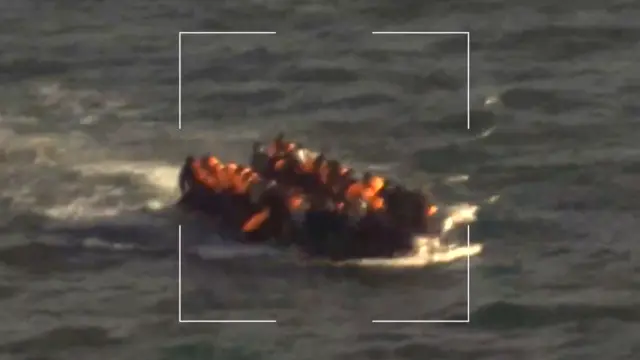
    A zoomed out image of a small boat with people crowded on it in life jackets.Image source, Crown Prosecution Service
    Image caption,

    Drone footage shows the packed dinghy Tajik was on board

    Outlining the prosecution's case, Daniel Bunting says Mohammad Tajik is a 32-year-old Afghan national.

    On 17 January, he left France on a small boat in the early hours, when some swell and fog reduced visibility at sea.

    The court is played drone footage of the packed dinghy Tajik was on board, in which dozens of people can be seen sitting along the edges of the vessel.

    In the footage he can be seen at the back of the boat at the tiller, which is used to steer the vessel.

    The boat was eventually intercepted at around midday by a UK Border Force boat, the court hears.

    Tajik and the other people on the boat were taken ashore at Dover and he was arrested the next day, during which he told police he had unsuccessfully attempted to claim asylum in Greece before travelling to the UK.

    The prosecutor says Tajik distanced himself from the tiller of the boat as rescuers approached.

  9. Court informed of name errorpublished at 10:38 BST

    Sean Seddon
    Reporting from Canterbury Crown Court

    Earlier official communications have referred to one of today's defendant's as Tajik Mohammad.

    However, we're now told there was an error and his name his actually Mohammad Tajik.

  10. Why are the two defendants in court together?published at 10:36 BST

    Sean Seddon
    Reporting from Canterbury Crown Court

    Recorder Simon James explains to the defendants they will be sentenced separately but have been asked to attend court together due to similarities between their cases.

  11. Defendants in dock, proceedings about to beginpublished at 10:34 BST
    Breaking

    Sean Seddon
    Reporting from Canterbury Crown Court

    Both defendants are now side by side in the dock in identical grey prison-issue sweatshirts.

    Interpreters are being sworn in and proceedings are about to begin.

  12. The new offence - explainedpublished at 10:30 BST

    Dominic Casciani
    Home and legal correspondent, at Canterbury Crown Court

    The new crime of endangering someone at sea is a really important element of the government’s plan to counter small boat crossings - since it came into force in April, some 15 people have already been charged with the offence which can lead to up to six years in jail.

    The starting point for suspecting someone of committing the crime is when they begin a journey to the UK from France, Belgium or The Netherlands knowing they didn’t have permission to do so.

    They commit the crime if they cause or create a risk of death or serious injury to others even if they did not intend to do so.

    Finally the law requires the suspect to have actually done something to endanger another.

    The most obvious example would be taking the tiller of a dinghy and ploughing on into dangerous seas when it is obvious the boat is not safe.

    In these first cases, Taijk's act was to let go of the steering when he saw a rescue boat coming. That left the dinghy out of control - endangering all onboard.

  13. Sentencing expected to get under way shortly - what you need to knowpublished at 09:57 BST

    Sean Seddon
    Reporting from Canterbury Crown Court

    We're expecting things to get under way at Canterbury Crown Court shortly after 10:00 BST.

    Both Alnour Mohamed Ali and Mohammad Tajik will be sentenced in the same court during separate hearings.

    Mohammad Tajik, 32, an Afghan migrant, was the first person to be convicted of the new offence after piloting a small boat on 17 January this year - he abandoned the dinghy when a rescue ship arrived, according to the Crown Prosecution Service.

    Separately, Alnour Mohamed Ali, 27, a Sudanese national, was charged with endangering life after two men and two women died while trying to board a small boat he was piloting in France on 9 April.

    They have both admitted the offences they are charged with, so today we will find out what sentence they will receive.

    The two men will become the first people to be sentenced under a new law designed to target people accused of being in charge of dangerous small boat crossings.

    We'll bring you updates live from court - stay with us.

  14. What's the maximum sentence?published at 09:40 BST

    The endangering others during a sea journey offence carries a maximum sentence of either:

    • five years imprisonment or a fine - or both
    • six years imprisonment or fine, or both, can apply to individuals who knowingly entered the UK in breach of a deportation order as part of committing the offence

    Both Tajik and Ali have pleaded guilty to breaking the law and will be sentenced this morning.

  15. Small boat arrivals in the UK down compared to same period last yearpublished at 09:32 BST

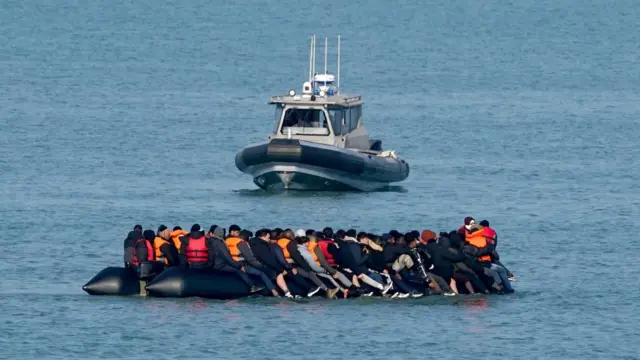
    People on a dinghy in the water wearing life jackets. Behind them is a small vessel.Image source, PA Media

    Between 1 January and 3 June 2026, a total of 9,142 people crossed the English Channel by small boat from France. This was down by 38% on the same period the previous year.

    These crossings have become the most common way for people to be detected entering the UK illegally since 2020.

    Nearly all those who arrive by small boat claim asylum. Under international law, this means they are allowed to stay in the country while their asylum application is considered.

    Small boat arrivals made up 42% of asylum applications between April 2025 to March 2026.

    Boats that arrived in the UK from 4 June 2025 to 3 June 2026 carried an average of 65 people. This has more than doubled since 2021.

    Experts say overcrowding in boats makes crossings riskier. At least 84 people died while attempting to cross the Channel in 2024, according to the United Nations (UN).

    The government has pledged to "smash the gangs" behind these crossings in order to reduce the numbers.

    This Flourish post cannot be displayed in your browser. Please enable Javascript or try a different browser.

  16. Endangering another during a journey by sea: A quick guide to the new offencepublished at 09:14 BST

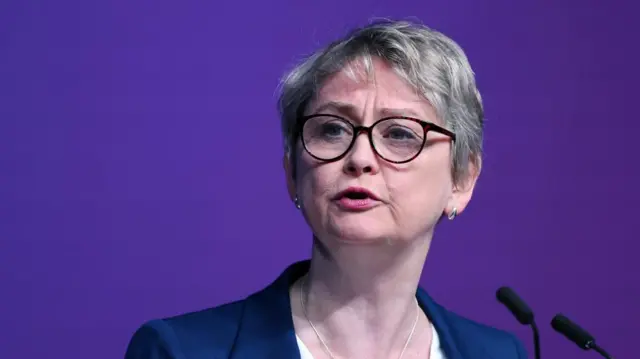
    Foreign Secretary Yvette Cooper wearing a navy blazer while standing in front of a microphone. A purple background is behind her.Image source, EPA/Shutterstock
    Image caption,

    Yvette Cooper introduced the new offence when she was home secretary

    The Border Security, Asylum and Immigration Act 2025 introduced a new criminal offence of endangering another during a journey by sea to the UK from France, Belgium or the Netherlands.

    This offence came into force in January and is aimed at preventing unsafe small boat crossings.

    The government says it has been introduced to "address acts that cause or risk the serious personal injury or death of another during small boat crossings to the UK, and in turn to reduce the risk of injury and fatality during these crossings".

    For the offence to apply, three things must all have happened:

    • The person must have arrived in the UK via a journey by water from France, Belgium or the Netherlands
    • They must have knowingly entered the UK in breach of a deportation order, or without leave or valid entry clearance, if either were required by immigration law
    • At any point during the journey they must have committed an act that caused, or created a risk of, death or serious injury to another person, which includes both physical and psychological injuries

    It's expected that this journey would usually be in a small boat, but it's the journey by water that matters not the mode of transport or number of boats used.

    If the boat is intercepted before reaching the UK, the offence still applies if it is brought to UK shores - but not if it is returned to the country it departed from, even if a dangerous act occurs.

  17. First man to be convicted of the new offencepublished at 08:56 BST

    Mohammad Tajik was the first person to be convicted of the new offence after piloting an overcrowded dinghy across the English Channel in poor weather conditions on 17 January this year.

    Some of the passengers were not wearing life jackets.

    The 32-year-old Afghan pleaded guilty to breaking the law at Canterbury Crown Court in April.

    The Crown Prosecution Service said Tajik abandoned the dinghy and its passengers when a rescue ship arrived.

    He reached the UK later the same day, where he was arrested. The Home Office has not provided an image of Tajik.

    He will be sentenced today.

  18. Alnour Mohamed Ali to be sentenced after deaths of four migrants in Channelpublished at 08:54 BST

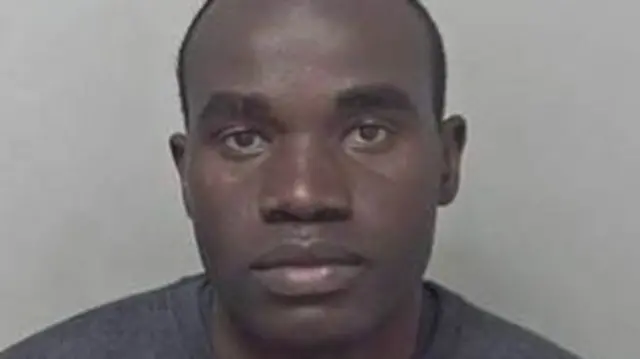
    Alnour Mohamed Ali looks to camera in custody in front of a plain backgroundImage source, National Crime Agency

    Alnour Mohamed Ali, a Sudanese national, was charged with endangering life after two men and two women died while trying to board a small boat he was piloting in France on 9 April.

    The 27-year-old, who admitted to having piloted the vessel, appeared at Canterbury Crown Court in April.

    The four people drowned after being swept away by strong currents at Equihen-Plage, near Boulogne-sur-Mer, in France.

    More than 40 people were rescued off the coast of northern France from around 07:30 local time that morning.

    Two children were among those taken to hospital as a precaution, while another person was treated for hypothermia.

    The National Crime Agency (NCA) said previously that 74 people "sailed on to the UK".

    Aided by an Arabic interpreter, Ali pleaded guilty to piloting a boat which "thereby created a risk of death or serious personal injury to others aboard the boat".

    He also admitted knowing he would arrive in the UK without valid entry clearance.

    He will be sentenced today.

  19. Two men to be sentenced for new offence of endangering lives in small boat crossingspublished at 08:52 BST

    Two men will today become the first to be sentenced under a new law aimed at reducing small boat crossings.

    Mohammad Tajik, 32, an Afghan migrant and Alnour Mohamed Ali, 27, a Sudanese national, were convicted separately of the same crime: endangering others during a journey by sea.

    They both pleaded guilty - Mohammad was the first person to be convicted of the law, which came into force in January 2026.

    Both men will appear in Canterbury Crown Court from 10:00 BST for sentencing.

    Those who commit the offence could face up to five years in prison, or up to six years if they are in breach of a deportation order.

    We'll take you through each of the cases shortly, and our team of writers are in Canterbury Crown court to bring us the latest developments.