

EXPLORE EPISODE NINE - 8 to 5
Local Navigation

Bringing to life spectacles of natural wonder on our doorstep
No.5
Summer flower meadows
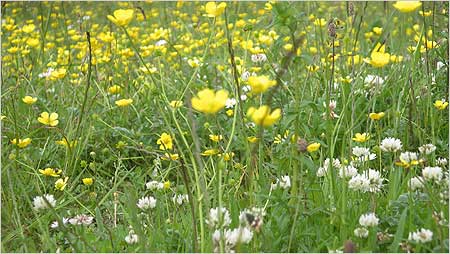
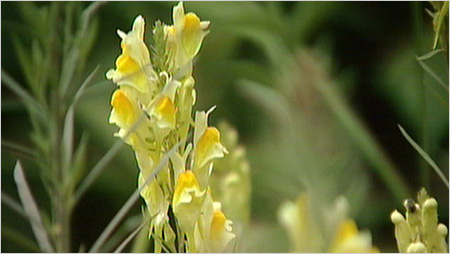
An English Hay Meadow in summer full of beautiful wild flowers may be gentle and understated but it's still one of summer's glorious spectacles. One fine example is alongside the Thames just north of Oxford. It’s a traditional hay meadow. with a whole variety of grasses and flowers.
In the North Oxford meadow it’s possible to find around 60 different varieties of flowers and grasses in a five metre square area.
Many of the flowers you can find in such meadows have glorious traditional sounding names like:
Rough Hawkbit (Leontodon hispidus) - a member of the daisy family, which grows to about 35cm high with a yellow flower, easily confused with a dandelion.
Devil’s-bit Scabious (Succisa pratensis) – which has a dome shaped flower-head with pinkish-lilac to violet-blue flowers with tiny mallet-shaped anthers projecting from it.
Lady’s Bedstraw (Gallium verum) – with its tiny yellow flowers, which smell of honey, on thin stems which grow to about 60cm high. In mediaeval times it was believed that it had formed part of the bedding in the stable at Bethlehem and it was know as Our Lady's Bedstraw.
Fairy flax (Linum catharticum) – is a delicate plant which grows up to 15cm tall and has white flowers with five petals.
Photo gallery
Watch and Listen
Janet Sumner visits a flower meadow in North Oxford and finds out just how many species are packed into a small area:
Help playing audio/video
Tips
Tips for viewing this species:
- Good places to see meadows include North Meadow National Nature Reserve near Cricklade in Wiltshire and Kingcombe Meadows near Dorchester in Dorset.
- Lie down low in the grass to get a better 'bird's eye' view.
- Use a microscope to look at flower petals.
- Late spring and summer are the best times of year to look at meadows as the wildflowers come into bloom.
- Don't trample through the fields walking on the plants, stick to the paths.
- Take a good wildflower book with you with plenty of pictures so you can identify the different flowers and grasses.
- Also take a note book so that you can make notes and draw flowers to identify later.
- Lincolnshire Wildlife Trust's website offers advice about creating your own wild flower meadow in your garden and Essex Wildlife Trust has more information about the plants you can use.
Habitat
The reason ancient meadowland looks like it does is because it’s been managed pretty much the same way for 1000 years. The land in North Oxford for example, has been owned by a group of people with each allocated an area by drawing lots, and from that land they could take the hay crop and graze animals afterwards. This system has been around since medieval times at least. Fifty or 60 years ago such meadows were common but now it’s thought that 95% of them have been lost because of changes in farming methods.
There have been a number of projects to revive meadowland landscapes around the country for example some of the National Parks have hay meadows you can visit, along with projects to preserve them.
Parts of Hampstead Heath in London are meadowland, and in the South Meadow you can see scores of different types of grasses.
In Dorset there are Kingcombe Meadows near Dorchester.
In Kent advice being offered to landowners about how to manage the land includes advice about meadow grasslands.
You can also find information about hay meadows near you on the Natural England website.
The BBC is not responsible for the content of external internet sites.
No. 8 - Dancing Adders
The 'dance' is the way that Britain's only poisonous snake establishes who's boss.
Best places to see - Widespread in the countryside with Thorne Moor in Yorkshire a particular hot spot.
No. 7 - Bluebells
Find out about the beauty and mysteries of the Bluebell... how they're used in medical research and where to see them.
Best places to see - Woodland areas including West Woods in Wiltshire which is featured in the programme.
No. 6 - Bird Song
In the spring you can hear all the UK’s native birds at full volume during dawn chorus... one of nature's noisiest spectacles.
Best places to see - UK-wide, from your back garden to the local park and further afield!


Also on Nature's Top 40
BBC Nature & Wildlife
More from bbc.co.uk nature

BBC iD
BBC iDBBC navigation
BBC links

BBC © 2014The BBC is not responsible for the content of external sites. Read more.
This page is best viewed in an up-to-date web browser with style sheets (CSS) enabled. While you will be able to view the content of this page in your current browser, you will not be able to get the full visual experience. Please consider upgrading your browser software or enabling style sheets (CSS) if you are able to do so.
