

EXPLORE EPISODE FIVE - 24 to 21
Local Navigation

Bringing to life spectacles of natural wonder on our doorstep
No.24
Parakeet roost
It’s believed that there are about 30,000 Ring necked Parakeets (Psittacula krameri) living in the south east of England and the RSPB estimates that the population will rise to nearly 50,000 by 2010. There are many myths about how the Parakeet came to be in England, there are stories of how they broke out of airport quarantine, they escaped from the set of the African Queen, they were escaped pets, the list continues. Despite being used to more tropical climates the birds are able to cope with the British winter especially by living in gardens and parks where food is readily available.
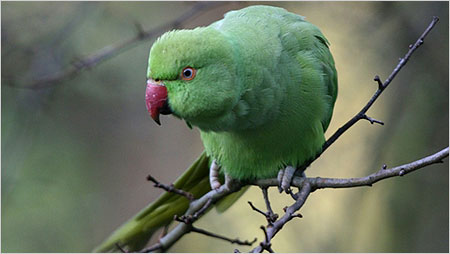
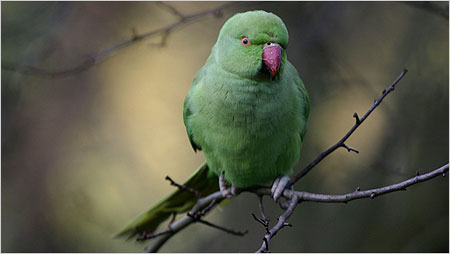
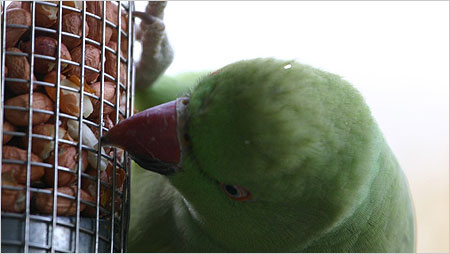
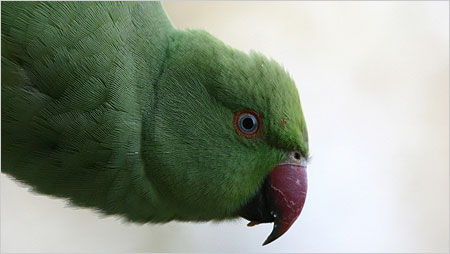
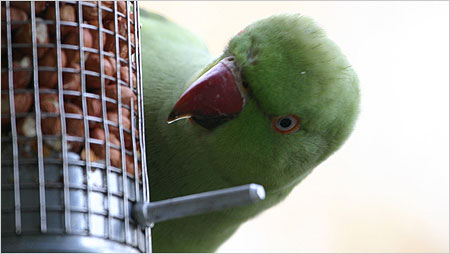
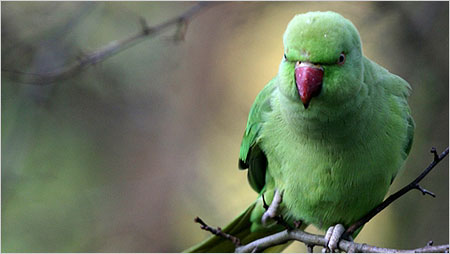
Ring necked Parakeets have predominantly green plumage with a red beak and a pink and black ring around the face and neck. Although Parakeets in Asia are vegetarian, those which have adopted Britain as a home will eat all sorts of scraps as well as fruit, nuts and seeds. They’ll even eat meat. They usually feed early in the morning and late in the afternoon and are regular visitors to bird tables in gardens in the South East of England.
They start nesting in January, although sometimes they don’t lay eggs until June. They’ll nest in a larger nest box or an old woodpecker nest hole. Females lay between two and four eggs and the resulting chicks are looked after by both parents.
Find out more about Parakeets...
Weblinks
How do parakeets survive in the UK?
The BBC is not responsible for the content of external internet sites.
Photo gallery
Watch and Listen
Sanjida O'Connell watches as some of the Parakeets who've made the South East of England their home prepare to roost:
Listen to the sound of Ring Necked Parakeets with this link from the British Garden Birds website
Help playing audio/video
Tips
Tips for viewing this species:
- Keep your eyes peeled for the distinctive green birds in the South East of England.
- Have a pair of binoculars or a scope handy for a closer look.
- Watch out for them roosting in trees at dusk - they’re hard to miss with the bright green plumage and their gregarious nature.
- If you get up close to a Parakeet BE CAREFUL!... They’re feisty souls and can inflict a nasty bite.
Habitat
Parakeets are members of the parrot family. No parrots are native to Europe and no other member of the family has adapted to become a naturalised resident of the UK. Parakeets have been recorded in almost every county in England and there’ve also been reported sightings in Wales and the Scottish Borders. They’re found mainly in Kent, Surrey and Sussex.
Parakeets come from the foothills of the Himalayas so are well equipped to cope with British winters. They’re bigger than many native British birds so they can compete for food and nest space. They’re not universally popular in Britain some people think they’re too noisy and aggressive and that they’re stealing nesting sites from native birds. They’re even referred to as ‘green rats’ or ‘posh pigeons’. But, one of the very few people who’s been studying them says their bad reputation isn’t justified and they can live quite happily alongside native birds.
They’re gregarious like rooks and starlings and will roost together. A roost of Parakeets can consist of thousands of birds and can be very noisy. Sometimes they roost in the most unlikely places, for example Wormwood Scrubs prison in West London. Hundreds of the birds converge on a tiny copse in the Scrubs nature reserve.
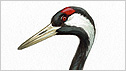
No. 23 - Common Crane
Find out about the only one of the world's 15 species of crane which has ever been native to Britain.
Best places to see - Norfolk and Suffolk.
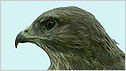
No. 22 - Birds of Prey
Birds of Prey, or raptors, cover a wide range of birds, find out which one has such keen eyesight it's reputed to be able to see a rabbit twitch two miles away.
Best places to see - UK-wide although Golden Eagle sightings are generally restricted to the Highlands and Islands of Scotland.
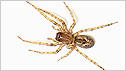
No. 21 - Arachnids
They're all poisonous and lots of people don't like them but spiders are fascinating... find out why!
Best places to see - UK-wide, in your own back garden!


Also on Nature's Top 40
BBC Nature & Wildlife
More from bbc.co.uk nature

BBC iD
BBC iDBBC navigation
BBC links

BBC © 2014The BBC is not responsible for the content of external sites. Read more.
This page is best viewed in an up-to-date web browser with style sheets (CSS) enabled. While you will be able to view the content of this page in your current browser, you will not be able to get the full visual experience. Please consider upgrading your browser software or enabling style sheets (CSS) if you are able to do so.
