

EXPLORE EPISODE TWO - 36 to 33
Local Navigation

Bringing to life spectacles of natural wonder on our doorstep
No.35
Seals
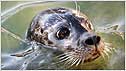
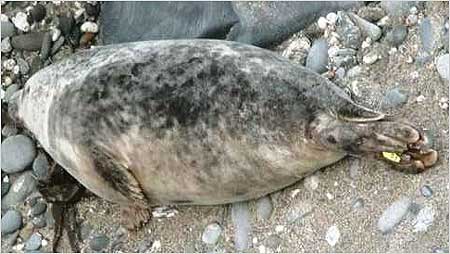
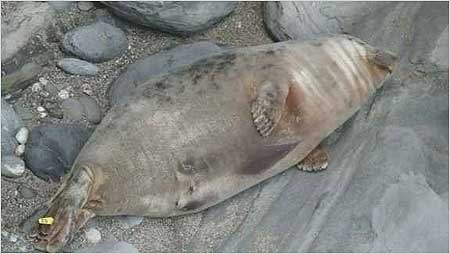
About half the world’s population of Grey Seals are found on and around British coasts - and their numbers have doubled since the 1960s. While on land these animals appear awkward and clumsy, but underwater they’re wonderful swimmers.
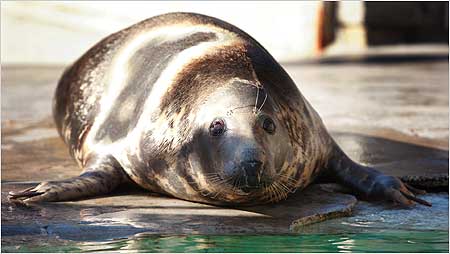
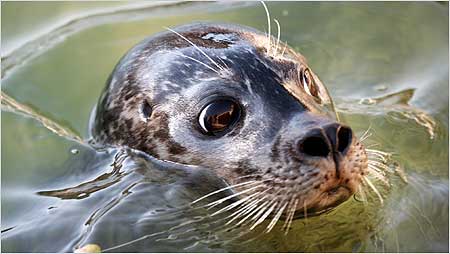
The Common and Grey Seals can be identified by their muzzles. Common Seals have short muzzles and V-shaped nostrils while Greys have a longer muzzle and parallel nostrils.
The Grey Seals usually dive underwater for about 10 minutes but they can remain submerged for up to 30 minutes.
Before diving they hyperventilate to saturate their blood with oxygen, and expel most of the air from lungs before going in water. This makes them less buoyant and reduces risk of decompression sickness ("the bends"), a condition caused by absorbed nitrogen bubbles expanding within the blood stream.
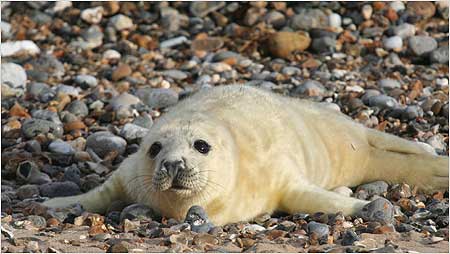
During the breeding season look out for the white seal pups which stand out from the camouflaged grey adults. Their colour is probably a hangover from when they were born on ice and snow.
Photo credits
Photos courtesy of Gweek National Seal Sanctuary and BBC.
Web links
BBC Science and Nature - Grey Seals
Mammal Society
Cornwall Wildlife Trust
The BBC is not responsible for the content of external internet sites.
Photo gallery
Watch and Listen
Watch presenter and naturalist Dr Janet Sumner swimming with seals off the coast of South West England:
Watch video and listen to audio of seals off Cornwall on BBC Nature:
Watch and listen to video and audio
Help playing audio/video
Tips
Tips for viewing this species:
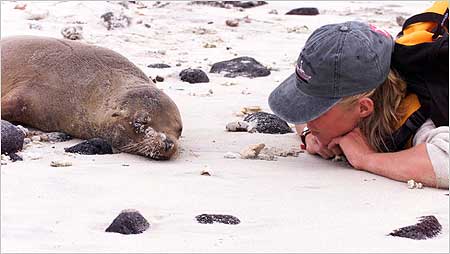
- Enjoy a close encounter with seals from either land or sea. Seal-watching is quite easy as seals are generally quite cumbersome and slow while on land - just find a good vantage point and sit still!
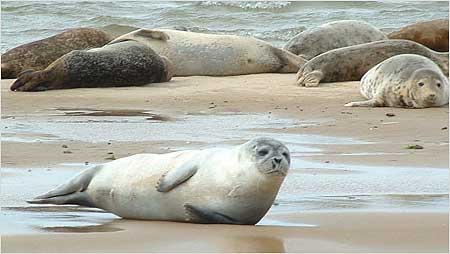
- There are some great places in the UK for land watching including Donna Nook (Lincolnshire) where visitors can enjoy the sight of thousands of Grey Seals on the beach in November and December. Other good places to watch seals include Seal Sands(Teesside), the Monach Islands(Scotland), Murlough (Northern Ireland), Blakeney Point (Norfolk), Cardigan Bay(Wales), Lundy Islandand the Farne Islands (Northumberland).
- Creep up on the seals quietly. Grey Seals are particularly inquisitive so don't worry about getting up close, although it's best to stand about a metre away just in case! If you get too close, they will show their teeth and growl, so back off if you're getting too close for comfort.
- Experts do not actively encourage people to seek out seals and swim with them, but these animals are very curious and like to investigate new things such as swimmers and surfers. Never approach a seal or make any sudden movements. Seals can carry diseases resulting in blood poisoning and vomiting.
- Take a cheap waterproof camera, attach it to your wrist, and try getting some action shots. If you take to the seas, choose a trusted boat operator who knows about wildlife.
- Check tide times and look for the seals hauled up on the rocks at low tide. During high tide watch for the seals' heads bobbing around in the water.
- Look out for young seals playing. Many youngsters are constantly pushing to move up the hierarchical ladder and this ambition comes out in play.
- The seals are often as curious about people as we are about them - and going underwater provides us with a great opportunity for a close encounter.
Habitat
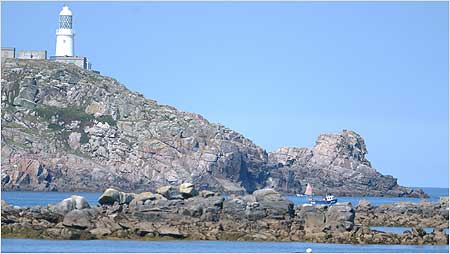
Seals can be found in coastal environments around the British Isles. One of the best places to watch them is the Isles of Scilly off the south western tip of England. Around 250-300 Grey Seals live on three of the groups of islands.
The female seals and the male bulls can be seen swimming around rocky shores. The biggest bull seals are the ones with the females because these dominant Alpha males get to mate with the cow seals. Younger males tend to be found elsewhere.
Sometimes the seals can be seen on the rocks around the Isles of Scilly especially in late September when there is a chance of spotting the young pups. The first white-coloured pups appear from mid September just before the big October and November storms.
Each seal gives birth to a single pup and the female will suckle its offspring for three weeks. The pup will develop its own blubber layers under creamy white fur. Once the pup has put on about 30 kgs of weight, its mum will abandon it and return to sea. In the meantime she will have mated again.
The young Grey Seal has to be fairly tough to leave the relative security of the "rookery" or nursery and venture into the sea. They must quickly learn to find food and establish their position within the seal colony.
No. 36 - Moths
Go moth spotting with the Nature's Top 40 team. Read our expert tips on how to catch moths humanely and identify them.
Best places to see - Wareham Forest (Dorset), Thorp Perrow (North Yorks) and woodlands.
No. 34 - Knot
Nature's Top 40 gives you expert tips on observing one of nature’s bird great spectacles, where to go and what time of year.
Best place to see - North Norfolk.
No. 33 - Machair
Expert tips on observing the great spectacle of the machair - with stunning flowers in abundance.
Best place to see - North West Scotland.


Also on Nature's Top 40
BBC Nature & Wildlife

More from bbc.co.uk nature


BBC iD
BBC iDBBC navigation
BBC links

BBC © 2014The BBC is not responsible for the content of external sites. Read more.
This page is best viewed in an up-to-date web browser with style sheets (CSS) enabled. While you will be able to view the content of this page in your current browser, you will not be able to get the full visual experience. Please consider upgrading your browser software or enabling style sheets (CSS) if you are able to do so.
