

EXPLORE EPISODE ONE - 40 to 37
Local Navigation

Bringing to life spectacles of natural wonder on our doorstep
No.38
Glow Worms
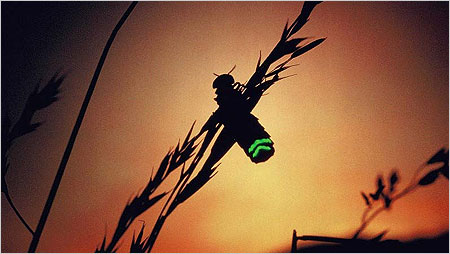
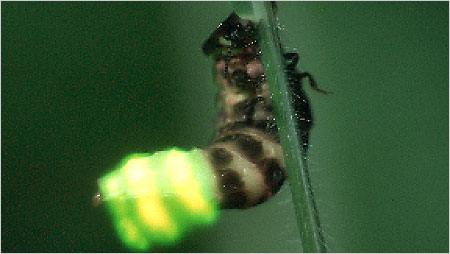
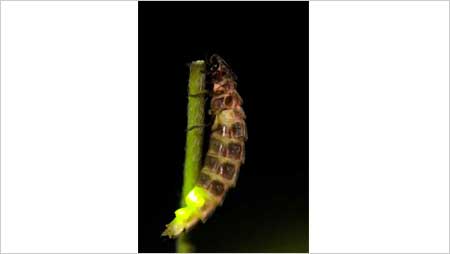
A Glow Worm isn’t in fact a worm at all, but is the common name for insect larvae and adult larviform females which glow. Specialised cells in the insects’ abdomen produce this ‘bioluminescence’ which gives off a green/yellow light and generates no heat. Glow Worms are luminous not phosphorescent.
The majority of Glow Worms seen in Britain are fireflies (lampyridae). The wingless adult female is the Glow Worm of literature, especially Lampyris noctiluca found throughout Europe including the British Isles.
In this species the male flies but does not glow. A second species of Glow Worm has been found in a small number of sites in Surrey, Sussex and Hampshire. But the lesser Glow Worm (Phosphaenus hemipterus) is not thought to be native to Britain and it’s possible that it may have been introduced accidentally.
The Lampyridae larvae are believed to glow as a warning signal to predators like toads not to eat them as they're mildly toxic.
For more information about Glow Worms...
Weblinks
The BBC is not responsible for the content of external internet sites.
Photo gallery
Watch and Listen
Chris Packham joins Glow Worm expert John Tyler to see the creatures in action:
Wildlife lovers go on the trail of one of Shropshire's smallest stars - the Glow Worm
Help playing audio/video
Tips
Tips for viewing this species:
- Glow Worms are more common in the south of England. Good places to see them include Slapton Ley National Nature Reserve in Devon, Barnack Hills and Holes National Nature Reserve in Cambridgeshire and Aston Rowant Nature Reserve near Stokenchurch in Buckinghamshire.
- Check out the site you intend to visit in DAYLIGHT. Many of the places Glow Worms favour (disused railway lines, churchyards, heathland) are much easier to familiarise yourself with in daylight. It also helps locate any possible dangers.
- The best time to see Glow Worms is summer evenings in June and July, when the light is going and you can no longer distinguish colours with the naked eye.
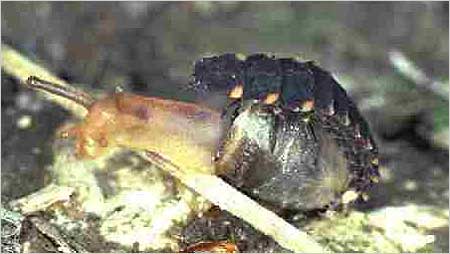
- Wherever there are small snails it’s worth looking for Glow Worms.
- One place where you’re likely to see Glow Worms is along a stretch of the Tarka Trail, next to the RSPB Isley Marsh Reserve at Yelland in North Devon, the RSPB has held regular "Glow Worm spotting" events.
- Your local Wildlife Trust is a good place to start if you’re looking for somewhere to watch Glow Worms.
- Binoculars or a telescope will help you get a closer look at the Glow Worms without disturbing them.
Habitat
The Glow Worm can be found in most parts of Great Britain although it appears to be less common in the north than the south. Glow Worms seem to like a habitat which has a mixture of plants growing to different heights. Rather than cultivated land you are more likely to find Glow Worms in areas with a mixture of shorter vegetation like grass and nettles through to shrubs and bushes. Most people in Britain probably live within an hour of a Glow Worm colony.
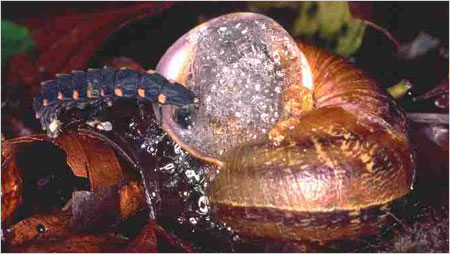
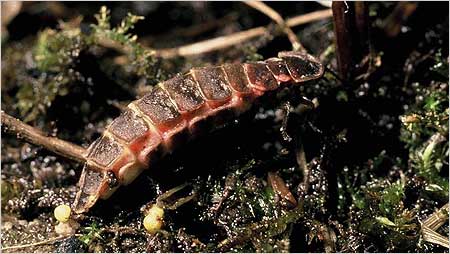
The Glow Worm spends most of its two year life cycle as a larva, eating, hibernating and growing. Snails make up the majority of the Glow Worms diet, some of which may be 200 times the insects own weight. Rather gruesomely they paralyse their prey by injecting a poison then sucking them dry. The Glow Worm larva eventually turns into a pupa before emerging as an adult. The adult has no mouth parts and so cannot eat at all, and will only live for perhaps 14 days. It spends this time trying to find a mate.
The female glows to attract males, but after mating lays her eggs and dies. Females often don’t travel more than a yard or two in their entire adult life.
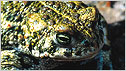
No. 40 - Courting Toads
Find out where to see Europe's noisiest amphibian, which can be heard several kilometres away.
Best places to see - the Duddon Estuary near Barrow in Furness, East Anglia, Lincolnshire and Lancashire coasts.
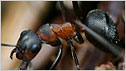
No. 39 - Wood Ants
Meet Britain's largest native ant species and find out about the huge nests the ants build.
Best places to see - Coed Y Brenin forest near Dolgellau in Wales.
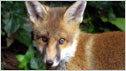
No. 37 - A Leash of Foxes
If you've been hearing bloodcurdling screams in your garden at night, it could be the sound of foxes.
Best places to see - UK-wide, in the countryside and in urban gardens.


Also on Nature's Top 40
BBC Nature & Wildlife
More from bbc.co.uk nature

BBC iD
BBC iDBBC navigation
BBC links

BBC © 2014The BBC is not responsible for the content of external sites. Read more.
This page is best viewed in an up-to-date web browser with style sheets (CSS) enabled. While you will be able to view the content of this page in your current browser, you will not be able to get the full visual experience. Please consider upgrading your browser software or enabling style sheets (CSS) if you are able to do so.
