BBC HomeExplore the BBC
This page has been archived and is no longer updated. Find out more about page archiving.

24 September 2014
Inside Out: Surprising Stories, Familiar Places

BBC Homepage
England
Inside Out
East
East Midlands
London
North East
North West
South
South East
South West
West
West Midlands
Yorks & Lincs
Go to BBC1 programmes page (image: BBC1 logo)

Contact Us

Inside Out - Yorkshire & Lincolnshire: Monday September 19, 2005

THIS WEEK'S HIGHLIGHTS

The Dales property crisis

Yorkshire Dales
The Dales - spiralling property prices

Inside Out looks at the tale of two brothers, Chris and Rick Baker, and their fight to stay in the Dales where they belong.

They refuse to budge from Swaledale, despite the blight that threatens the very nature of the Yorkshire Dales as we know it - spiralling house prices.

Perfect home

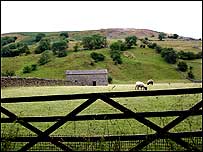
The Dales is an idyllic place to live. People come to it looking for the perfect holiday home or retirement place.

The outsiders have got money to burn, and they're sending house prices soaring.

The Dales is in crisis. In some of the villages, over a third of houses are second homes - at least, that's the official figure. Locals have told Inside Out that they believe that it is closer to 50 per cent.

In just five years, property prices in the national park have doubled.

A house in the Dales will set you back, on average, a whopping £240,000.

Young people are being forced out by the rising prices. And all the summer tourists can't rescue a crippled local economy.

House hunters

For three years Rick Baker has been renting a house in Reeth while he looks to buy a home for his growing family.

But his budget can't buy the kind of house he needs.

Rick's brother Chris, on the other hand, knows that he's one of the lucky ones.

Seven years ago, he bought a barn cheap from a local farmer - it was his only hope of getting a house he could afford.

Strict National Park rules meant that Chris faced a four year battle to convert the barn.
The Dales
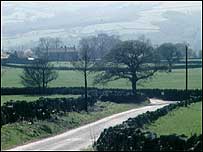
Country living but at what price for locals?

In the end planners gave him permission only because it contained an old Swaledale bread oven which they said was worth preserving.

Now, after years of hard graft at weekends and evenings, he's got something close to his dream home.

But brother Rick continues to struggle to find his dream home.

He's recently been looking at a house in Reeth - but what he can get for his money is disappointing.

The three bedroom house which he's looking at is on the market for £200,000 - the price is just too much for him.

Help at hand?

To improve the housing problem, the the National Park Authority has stepped in with a new set of rules which it says will mean that young people can stay put.

From now on, all new housing in the Dales will have to be sold to local people, at prices around 30 per cent lower than market value.

And in the future those houses will have to be sold on to other local people.

It's been touted as the great hope to preserve the future of the Dales, but the new plan is causing dismay and controversy.

The Dales National Park Authority identified dozens of villages where they would allow barns to be converted into homes in the future.

But a senior external planning inspector has stepped in to override their plans in more than 30 hamlets where locals felt they would be needed most.

And there's another problem - the National Park authority doesn't allow much new housing in the Dales.

The Dales is changing fast. Rick Baker still looking for a house. The longer he waits the higher the prices go. For him, the Dales plan has come too late.

Links relating to this story:

The BBC is not responsible for the content of external websites

See also ...

Inside Out: Yorkshire & Lincolnshire
More Great Salopians
Gallery

On the rest of Inside Out
Related articles on the
rest of the site

On bbc.co.uk
bbc.co.uk/history

On the rest of the web
website name

The BBC is not responsible for the content of external websites

Inside Out Archive

Inside Out: Yorkshire & Lincolnshire
View our story archive to see articles from previous series.

BBC Where I Live

Find local news, entertainment, debate and more ...

Bradford
Humber
Leeds
Lincolnshire
North Yorkshire
South Yorkshire

Meet your
Inside Out
presenter
Jamie Coulson

Jamie Coulson
your local Inside Out presenter.

Contact us
Contact the Yorkshire & Lincolnshire team with the issues that affect you.

Free email updates

Keep in touch and receive your free and informative Inside Out updates.
Subscribe
Unsubscribe

Green homes

Solar panels
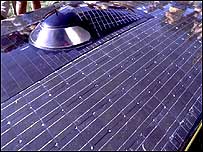
Solar panels in Australia - could the future be green in the UK?

With energy prices rising, alternative ways of making power have never been more popular - people are even doing it themselves at home.

On average, we each spend about £500 a year on energy in our homes.

But there are all sorts of ways in which we can cut those bills - double glazing being an obvious example.

SOLAR POWER

Solar panels are very easy to install.

Although there are initial costs in setting up solar projects, the savings on electricity bills in the long-term should make up for this.

The technology now needed is 90% cheaper than it was in the 1970s.

Houses with solar roof tiles can generate more electricity than is needed at certain times in the day, and can sell this back to local electricity companies.

By locating photovoltaic cells on top of houses, no extra land space is needed so solar power is particularly good in urban areas where space is limited.

How does it work? The photovoltaic effect is when photo cells convert sunlight directly into electricity - this has been used for sometime to power certain calculators, for example.

In this country, Photovoltaic cells (PV's) are being used as roof tiles. They cover the roof of a house and take advantage of the light coming from the Sun. This is trapped by the cell and turned into electricity.

Source: BBC Weather and Climate

But inevitably, we end up spending money on using up the earth's resources.

Yorkshire's wide open spaces are perfect for harnessing the elements.

Places like Blackshaw Head, in the Pennines, which is about to become the most energy efficient community in Yorkshire.

Look closely at the houses and you see something different about the roofs. They're all sprouting solar panels.

Ten families have got together to put in solar panels and get their hot water for free.

They've had such a good experience that more families are planning to join the project.

The talk in the pub nowadays is all about hot water. The residents have saved energy and money.

Even better, because they've done this as a group, the government is paying half the installation costs.

Wind power

One couple, Liz and Andrew Lowe, who live in the very windy Vale of York, are installing a new garden feature, a 5 kw turbine.

The turbine is costing them £15,000, but after ten years it will have paid for itself and they'll be selling power back to the National Grid.

Home made energy is not a new thing, of course. For years, there were lots of places that weren't connected.

In Swaledale they only got mains electricity in the 1970s. Before then, they used water power.

Charles Yates owns the last working farmhouse hydro electric plant in the Dales

Green machines?

About a quarter of the UK's COs emissions come from domestic energy use, 40 million tonnes leaking into the atmosphere each year.

Of course, one of the biggest power drains is our cars. However, there are ways of running a car, without lots of costly trips to the petrol station.

Marian Sloan, a GP in Sheffield drives a REVA G Wiz, a two seater hatchback.

Her maximum speed is 40 miles an hour - if she's lucky.

And the fuel cost… is the equivalent of about 600 miles to the gallon, powered by the wind turbine in the next field.

Maybe green homes and green cars could be the way that we'll all be living in the future?

Links relating to this story:

The BBC is not responsible for the content of external websites

"Ghost houses"

Inside Out investigates the problem of "ghost houses" - perfectly sound homes abandoned by their owners.

In Yorkshire and the Humber alone there are 85,000 empty houses - and most are privately owned.

The bad news for neighbours is that when occupiers move out, vandals, arsonists and criminals move in.

Inside Out highlights the plight of families in well-healed Beverley - property hot spot of the East Riding - where local planner Richard Abba has been struggling to sell his home in fashionable Manor Road.

Several years ago, the two women who lived opposite his home moved out, boarding up the windows.

Since then, the garden wall has been pushed over, drinks cans litter the garden, a supermarket trolley stands in the middle of the back lawn and drugs residue has been left in the flowerbeds.

Richard says, "They look at the house across the house the road and ask almost as many questions about that house as they do about my own.

"They want to know the future of that house - will it always be in that state of repair... It's an unused, empty house attracting vandalism, petty criminality and the wrong sort of person into the area."

Inside Out tracks down the owners of the empty house to the city of Lincoln, but they declined to say why they'd abandoned their old home, which is worth at least quarter of a million pounds.

Rescuing homes

Architect and author Maxwell Hutchinson, who has written a new book on rescuing houses, says ghost homes are an unusually common phenomenon.

They are often the result of elderly people refusing to sell up when they move into care homes or family disputes after a death.

He told Inside Out, "If a property is empty and boarded up for some time the vandals get in. All those lovely windows to break when you've got nothing to do.

""Some local authorities apparently don't regard it as a problem, like in Beverley, but they are being blind like the rest of us".

Maxwell Hutchinson

"And once you're inside, you can light fires, have parties or even take up residence as a squatter."

He continues, "If there is an abandoned car on the street the local authority has a statutory obligation to take it away but if you have an empty, abandoned house lots of local authorities turn a blind eye".

Local estate agent, Paul Staniford explains the impact of these abandoned houses, "Anybody purchasing property, you’d ask them the same question - would you like to live next door to this?

"Truthfully it has an effect on the sale and sale ability and if you’re worrying about the sale of your house you’re going to look at something like this and wish that is was next door to somebody else rather than yourself."


About the BBC | Help | Terms of Use | Privacy & Cookies Policy