BBC HomeExplore the BBC
This page has been archived and is no longer updated. Find out more about page archiving.

24 September 2014
Inside Out: Surprising Stories, Familiar Places

BBC Homepage
England
Inside Out
East
East Midlands
London
North East
North West
South
South East
South West
West
West Midlands
Yorks & Lincs
Go to BBC1 programmes page (image: BBC1 logo)

Contact Us

Inside Out - Yorkshire & Lincolnshire: Monday October 24, 2005
Hang gliding champion

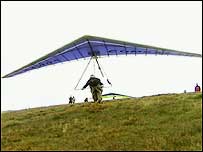
Glider
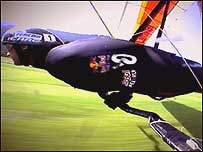
High flyers - the extreme sport of hang gliding

Imagine reaching speeds of 70 miles an hour and cruising at 10,000 feet. Welcome the world of hang gliding.

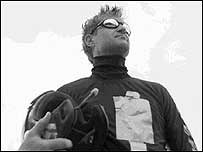
Inside Out follows the new British hang gliding champion Richard Lovelace from York.

We follow Richard as he tries to win another national title - the British Open Series.

Richard's passion for hang gliding began when he saw a metal contraption in his brother-in-law's garage and asked what it was.

After flying it down a hill and crashing at the bottom, he was hooked!

Sixteen years later, he's one of the best pilots in the world.

Gliding champion

York's Richard Lovelace is the newly-crowned British Hang Gliding Champion and one of the best pilots in the world.

Richard is the new face of British hang gliding, a sport suffering a decline in popularity and sponsorship.

He's the big hope to secure the sport's competitive future.

Richard Lovelace
Britain's finest - Richard Lovelace takes to the skies

Inside Out visits him in training for his next major competition.

Richard has come a long way from what was an unconventional introduction to the sport.

By day he works one of the few remaining signal boxes on the York-Scarborough railway line.

Forget Beckham and Owen, if hang gliding was a mainstream sport Richard would be a regular on the sports pages.

But success comes at a price. Richard's partner Caroline has had to come to terms the sport taking over both of their lives.

And Caroline also has to cope with the worry. Even in the world of extreme sports, they don't come much more dangerous than this.

Flying high

Inside Out follows Richard as he prepares for a new challenge - the final round of the British Open Hang Gliding Series.

Richard is one of only a handful of pilots that can still win the series.

Take off
Take off time - no room for mistakes

But it's very hard work despite Richard's determination and tenacity.

It's a 45 minute climb up a steep Dale, especially when carrying 40 kilos on your back.

At the summit, the preparation begins. All Britain's elite pilots are here and they've been waiting for the right weather for four days.

When it arrives, the kits are checked, the route is planned and the tensions mount.

But after a 30 mile sprint across the Dales, the sun disappears and the winds drop - the gliders are grounded, proving that patience is a major asset in this sport.

Extreme sport

Inside Out also looks at the dangers of hang gliding.

While we were filming Richard, a fellow pilot proved just how risky it can be, crashing 20 feet up into some trees and balancing on thin branches.

But this is the exception - few pilots walk away from an accident like this.

In the meantime Richard isn't deterred by the dangers of this extreme and exhilarating sport.

Links relating to this story:

The BBC is not responsible for the content of external websites

Inside Out Archive

Inside Out: Yorkshire & Lincolnshire
View our story archive to see articles from previous series.

BBC Where I Live

Find local news, entertainment, debate and more ...

Bradford
Humber
Leeds
Lincolnshire
North Yorkshire
South Yorkshire

Meet your
Inside Out
presenter
Jamie Coulson

Jamie Coulson
your local Inside Out presenter.

Contact us
Contact the Yorkshire & Lincolnshire team with the issues that affect you.

Free email updates

Keep in touch and receive your free and informative Inside Out updates.
Subscribe
Unsubscribe

Constable referee

football
Life's a pitch - the referee's lot is not always an easy one

It's the night shift at Sheffield's West Bar station and part-time desk sergeant 2799 Webb is doing what he knows best - quietly sorting out trouble.

But the day job is far more in the spotlight - Howard Webb is a referee and is responsible for laying down the law to the millionaires of the Premiership.

With the stakes so high in the modern game, 'The Man in Black', has never been under so much scrutiny, with every decision analysed, and every false move publicly exposed.

Inside Out looks at what's it like to be on the receiving end on the pitch.

Howard Webb's average Saturday kicks off early. We follow Howard leaving his home in Rotherham to police the Blackburn Rovers versus Fulham game.

Howard is among the Premiership's top 20 elite. It's taken him 15 years to climb the referee ranks from local games to international status, complete with a £60,000 per year pay package.

Professional referees are monitored by a team of medical experts and sports scientists, and must train as hard as the players they rule over.

On a typical Saturday Howard's pre-match warm up includes spelling out the rules of engagement to his fellow match officials.

Blackburn Rovers badge
A tough challenge in the Premiership

Every assignment is tough but this week's game is especially challenging. Last season Blackburn were officially the Premiership's dirtiest team, with more red and yellow cards than any other club. The fans, of course, are keen to blame the man in the middle - the referee.

With kick-off 75 minutes away, it's time for a security briefing with the ground safety officer.

Thousands in the ground and two and a half billion fans worldwide will view this action.

With an hour to go, the team sheets must officially be handed in.

Howard will need to keep a special eye on Rovers' fiery Welsh international Robbie Savage - and there's a friendly word with the home skipper Andy Todd.

Spies in the stands will monitor every whistle - an FA assessor and a match delegate who mark Howard's performance.

On the roof, a dozen sensors will track his movement for post match analysis. There's no hiding place.

Passion for the game

Next morning, Howard is back to his roots, keeping a firm hand on a local charity match. His Premiership match fee is £260 - here he's doing it for the love of the game.

Ten days later, Howard and his colleagues gather at a Midlands hotel for an inquest into their early season performances.

For the Blackburn game, Howard gets 70 out of 100, officially classed as "good".

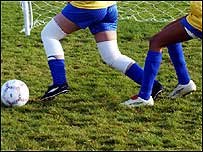
Tackle
Matches at every level require dedication from referees

The high marks will send him up the referees' league table, affecting performance bonuses and giving him more high-profile matches.

Then there is even closer video and computer analysis. A black dot on an animation charts every blade of grass covered.

Howard has travelled more than 11 kilometres and maintained an average distance of 17.4 metres from the ball.

His boss, former referee Keith Hackett, is happy with the stats but makes observations about two of the four bookings.

The end result is satisfactory, but can do better.

Howard's Way has worked OK and it's back on the road for the next match and the ever-critical eyes of fans, managers, press and players.

With the amateur game in crisis because of a shortage of referees, perhaps it's time we applauded people like Howard, rather than criticising their performances.

Links relating to this story:

The BBC is not responsible for the content of external websites

Scratch cards

Ferrari
Winners and losers - could you win a sports card from scratch?

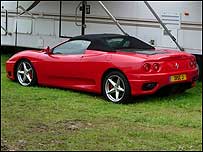
Meet multi millionaire businessman Gavin McConnon - he's young, rich, and driving a £100,000 Ferrari.

He's in business with his brother Iain - and together they're worth over £5 million.

They make their money from premium rate telephone promotions which guarantee generous prizes.

Inside Out investigates the story behind the company's prize winning promises.

From scratch to prize?

Scratch cards are sent to tens of thousands of homes in Yorkshire and Lincolnshire.

Scratch off the panels, and you'll find that you're a winner. You may win a fabulous Lotus Elise - or maybe not.

Inside Out tried out a scratch card and found that we had won £50,000, a car, or various other valuable prizes guaranteed.

All we had to do was call the number and claim our prize. But the calls were not cheap - at £1.50 per minute. Inside Out got a long message that eventually cost £10.

We found that we hadn't won the car, or any of the other guaranteed prizes. In fact we'd won a DVD and some vouchers. Now we just have to post the form off and claim our prize.

Strangely there was no company address on the scratch card - just a PO Box number based in Leeds.

Prizes galore?

We also found another promotion - this time a mock cheque book offering massive prizes - coming from the same Leeds PO Box number 161.

But when Nin Hammond called the number on the chequebook, she found there was a catch.

"I don't suppose anybody gets any money. I certainly didn't."
Nin Hammond

"One of these things came in the post - it said calls cost £1.50 a minute or something. I suppose I had nothing better to do so I dialled the number. I didn't think for one minute that my number would be the top prize," says Nin.

"Oh when it came to the £100 - the number that tallied with mine, it was £100 - I thought 'oh well that's not bad for a £1.50 telephone call'. And so I claimed it, and nothing happened."

Nin never received her £100 prize - not a penny.

As for Inside Out, it took several weeks to claim our prize - and we had to make a reminder phone call before it turned up.

But when it arrived, we received vouchers, apparently worth a £1,000, which sounds great until you look at the small print.

We found that we've have to spend a small fortune of our own money before any of these vouchers counted.

Tracking the numbers

Inside Out decided to investigate the company behind these promotions.

We traced the PO Box number to an address in Holbeck in Leeds.

It belongs to Griffin Direct Mail - a mailing house and distribution centre on an industrial estate. Nobody from Griffin Direct Mail wanted to talk to us.

They are paid to send out the scratch cards and chequebooks on behalf of other companies, but they won't tell us their names.

We found various scratch cards and other promotions based at Griffin. They all have one thing in common - to claim your prize, you have to call a premium rate phone line - usually an 0906 or 0907 number which is always expensive at around £1.50 a minute.

Trading Standards are well aware of the problem, but say a lack of legislation means there's little they can do.

The premium rate lines are a very valid service, but this is a misuse of these lines for essentially just a straightforward scam.

Companies are making millions of pounds out of the process, and there are numerous companies operating these scams.

So I think we're talking about many millions of pounds each year being taken out of consumers' pockets by deception.

They've fallen through the gaps in the enforcement and regulation regimes we've got in this country, and something needs to be done to put a stop to them.

The Irish connection

Although the PO Box distributing the material is in Leeds, it turns out the premium rate telephone number on our chequebook is owned by an Irish company called Prime Media Services, based near Dublin.

Prime Media runs the cheque book phone lines for another company who've got a bit of history with prize-winning telephone promotions.

Inside Out decided that it was time to visit Dublin, home of the McConnon brothers.

Dublin has boomed in recent years - and so have a string of premium rate promotion companies run by 28-year-old Gavin and 26-year-old Iain McConnon.

According to the latest accounts lodged at Irish Companies House, the McConnons are worth Euro7.5 million or £5 million.

In the last year alone, Inside Out found four premium rate telephone promotions run by the McConnons have breached guidelines set by the phone regulator ICSTIS.

These breaches included our chequebook, which ICSTIS said was misleading, exaggerated the chances of winning, and didn't display the phone call cost clearly enough.

We paid a visit to the McConnon's offices in the heart of the city, but they were not available.

So we visited Gavin McConnon's riverside apartment at Clarion Quay - one of the priciest addresses in Dublin - where we caught up with him in the underground car park.

We asked Gavin about his premium rate promotions, but the elusive Mr McConnon didn't want to talk to us.

Inside Out wanted to find out just how he and Prime Media Services repeatedly get away with flouting the rules set by phone regulator ICSTIS.

ICSTIS say that it can fine companies, and can bar access to the services, or, as in the case of Prime Media Services, it can stop them running a certain type of service ad infinitum.

So why hasn't ICSTIS stopped the McConnon's? Inside Out discovered that the phone regulator only has power over the premium rate phone companies, not the people who employ their services.

Despite imposing a ban on Prime Media Services, the company flouted it, and was running phone lines up until about a month ago.

Prime Media Services have subsequently been fined a further £25,000, and ICSTIS says that it is dealing with the network separately, because it didn't act on its instructions straight away.

That doesn't help Nin Hammond very much though. Her details have now been sold to other competition companies, and she has been inundated with mail.

Nin reflects on her experiences with the benefit of hindsight, "Nobody's going to give you £10,000 for the sake of a phone call or a stamp on an envelope."

She feels that she has been duped:

"Because I did have to spend some money making these phone calls. But I never did it again. I did learn a lesson from it."

There are thousands of people like Nin Hammond who dream of striking it lucky.

A very small number of people who ring up will win prizes, most will just get vouchers.

But we should point out that the McConnon brothers and the other companies who work for them aren't doing anything illegal.

Just remember, you never get something for nothing. And if you do get a scratch card through the post, be extremely cautious.

Links relating to this story:

The BBC is not responsible for the content of external websites


About the BBC | Help | Terms of Use | Privacy & Cookies Policy