WEIRD WEATHER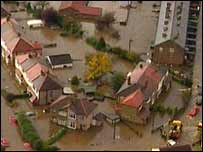 | | At risk? Can our Northern cities weather the storm |
Climate change is no longer the stuff of science fiction. Many believe we're on an accelerated collision course with disaster - and the weather we take for granted will be consigned to the history books... Good riddance you might say - but we're now entering a period when some of the region's major cities are at risk. For places like Hull, and others along the Humber, the stakes are extremely high. Some believe we've already had a taste of the future. In 2000 York, Ryedale and Selby found themselves under feet of water when the river Ouse broke its banks. It was not the severity of the flooding, but the sheer, widespread scale and persistence which stunned a watching world. But this could be mearly a taste of things to come. Some predictions of Yorkshire's weather 50 years hence say we can expect 30% more rain on average every winter. Global concernsGlobally the weather seems now to be volatile and unpredictable. In 2002, the river Danube burst its banks and flooded a large area of central Europe. It was the worst flooding for 400 years. The next year however the area experienced a heat wave that was the hottest for 250 years. The predictions are that Yorkshire's summers will become warmer and drier but that winters, although also tending to be milder, will also be a lot wetter. If these predictions turn out to be right it could turn the ecology of Yorkshire on its head. Southern species of flora and fauna are heading north, while existing species face extinction as Yorkshire gets hotter. Long dry summers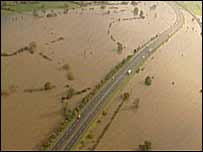 | | What will Yorkshire's farmers be able to grow in the future? |
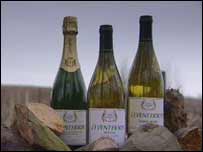
Globally temperatures have risen by 0.6C over the last hundred years. If the trend continues it could mean that in less than 50 years farmers in the Vale of York could be growing more exotic fare. New climate scenarios for Yorkshire and Humberside suggest the region will be up to 2C warmer by 2050 and that farmers' growing seasons would be extended by a month. That means that famers could start growing things that have so far not thrived in Yorkshire's traditional climate. A wine tasters paradise? Leventhorpe Vineyard near the village of Swillington west of Leeds is the most northerly commercial vineyard in Britain. The vineyard was established by George Bowden in 1986 and he believes that we could see grape varieties moving north as the climate changes. The vineyard produces thousands of bottles a year. Leventhorpe's four dry whites, one sparkling and one red have put Leeds on the wine-growing map. 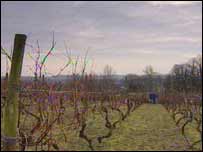 | | Will wine squeeze out more tradional fare? |
The tasty wines have helped overturn Britain's reputation of producing poor quality wine. George attributes the fine flavours to the quick draining sandy soil his vineyard sits on and its position on the side of a valley that fans the wines with a pleasantly warm breeze. George isn't the first to produce wines in Leeds. He has revived a tradition dating back hundreds of years. The Romans noted the good wine growing conditions around Leeds and started cultivating vines. Cistercian monks from nearby Kirkstall Abbey also produced their own communion wine. George says that there is some documentary evidence of wine making in the region right up until the 19th Century. New varieties
 | | "Harvests are getting much earlier." | | George Bowden |
Interest in English wine is increasing and he is experiencing an increase in demand, but how will climate change affect his business? "I have noticed that harvests are getting much earlier. "We used to harvest in November but are finding harvests are now in September and October. "The predicted wetter winters will not affect the vines as the vines are resilient and can stand up to temperatures as low as -20C". George feels that climate change could allow him to try and grow new vines; "If the climate becomes warmer I can introduce new varieties, such as the later growing varieties of Pinot Noir and Chardonnay." So warmer weather and longer growing seasons can help George expand his wine portfolio. He says; "Making good wine is not easy, but it will be less difficult if the climate changes". And with your wine sir? The rising temperatures will affect agriculture as a whole, so be prepared to try some new dishes to go with your English wine. Changing sea temperatures is likely to affect the type and quality of fish stocks. The Yorkshire coast has already seen a reduction in cod stocks and an increase in red mullet stocks due partly to warming waters. For fruit and vegetables, the range of current crops will move northward. What are marginal crops nowadays, such as maize and sunflowers, may increasingly be grown in the South. Changing landscape| Climate scenarios for 2080 | - Temperatures will be between 1.5C and 4C warmer (the greatest rises will be in the summer of up to 4.5C in the Humber Estuary)
- Winters will be wetter, and summers, springs and autumns drier. Overall there will be a reduction in average annual rainfall of up to 10%
- Sea level could rise between 6cm and 82cm by the 2080s, with greatest increases in the Humber Estuary.
- Increased solar radiation and reductions in cloud cover of between 10 and 20% along the coast
- Reduction in number of days with fog, including along major transport routes M1 and M62
- Increases in the number of very hot days, especially in large cities like Leeds and away from the coast.
- An increase in the growing season by between 45 and 100 days along the Yorkshire and Lincolnshire coast.
Source: Government Office for Yorkshire and The Humber |
But amid the opportunities there are threats too. Naturalists say species could be wiped out as the North becomes warmer. They could be replaced by migrants from the South. Moorland areas could give up their cover of heather and slowly transform into upland pastures, meaning that grouse and other traditional moorland inhabitants would find themselves without a home. Hotter drier summers could mean crops face more pressures from weeds who would also thrive under the new conditions. Other pests might also establish themselves. People fear that the likes of the Colorado Beetle, famed for decimating potato crops abroad, might start to find our changing climate more appealing. It's predictable weather that makes a farmers job easier. Extreme weather could wipe out crops through drought or flooding. Hull under water?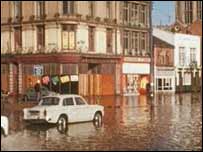 | | How long can Hull resist the encroaching tides? |
The fate of the city of Hull could be down to a battle between 21st century engineering and Nature's wrath. The Humber is not protected as well against flooding as the likes of the Thames Estuary. In fact it is ranked as the "second most at risk" estuary in the country. The Environment Agency says it's going to have to spend £1 billion over next 100 years to protect the Humber against the rising sea. Along the Humber estuary land is to be allowed to flood in an attempt to absorb the sea's destructive energy. New flood defences are also being planned. The biggest problem is the city of Hull itself. Located at the mouth of the estuary, the city centre is itself four metres below sea level. With the sea predicted to rise half a metre in the next 50 years it's going to take a lot of work to keep Hull above water. | 



 Inside Out - Yorkshire & Lincolnshire: Monday February 28, 2005