THIS WEEK'S HIGHLIGHTSPlasticine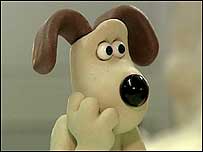 | | Plasticine animated by Aardman and Nick Park |
For many of us Plasticine is a toy which we grew up with during our childhood. Its malleable form meant that it helped shape our growing imaginations. Plasticine was invented in Bath and made famous in Bristol, but where is it now? Inside Out West uncovers the fascinating history of one of Britain's most enduring toys. It all started with the frustrations of a Victorian art teacher, William Harbutt.
He invented an oil based modelling clay for his sculpture students to stop their work drying out too quickly. It was only when his children started playing with plasticine at home that he realised it might have wider appeal. Small scale production began in a basement in Bath, using a garden roller to flatten out the clay. Within four years, production moved to Harbutt's first factory in Bathampton. Hundreds of uses for plasticine were found, but it was TV producers in Bristol who brought it international fame. The animated children's character Morph was modelled from plasticine. The same techniques are still being used today by Aardman to create the characters in the new Wallace and Gromit feature film. In the early 1980s Harbutts were taken over and the Bathampton factory was closed down. The Harbutts name disappeared from the packaging and production was moved overseas. Sales plummeted. | PLASTICINE | Some claim Plasticine was invented by Franz Kolb of Munich, Germany in 1880. He sold "Kunst-Modellierton" ("art-model-hone"). His invention was similar, but not the same. Plasticine was invented by art teacher William Harbutt of Bathampton, near Bath, as a substitute for clay, in 1897.
Plasticine is popular as a teaching tool for its soft and non-hardening characteristics. Plasticine has been on sale to the public since 1908. |
Now though, a deal has been struck with a company that specialises in breathing new life into classic toys. Plasticine is being re-marketed to try to bring about a nostalgic revival. The new look Plasticine should soon be reappearing in toy shops across the country. Links relating to this story: The BBC is not responsible for the content of external websites | 



 Inside Out - West: Monday September 19, 2005