UP IN SMOKE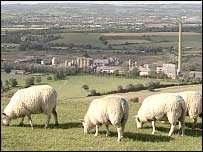 | | The rural landscape of Westbury includes a large cement factory |
Many of us dream of moving to the country, where living in the fresh, open space is enough to lift any spirit. But residents in one Wiltshire town are having their dreams dashed as the government plans to burn toxic waste right on their doorsteps. Facing a growing mountain of toxic waste, the government devised a plan. They are looking to use the waste as fuel for a cement works in Wiltshire. The problem is, residents of the local town Westbury live near the cement works and are none too pleased at the thought of their rural heaven being destroyed. Stand up and be countedWhen the government's plans to burn toxic waste near Westbury were revealed, residents were up in arms. Protests were carried out and the folk of Westbury were on the warpath. But despite their resistance, the plan was given the go ahead anyway. There's no doubt the government needs to do something about the rising hazardous waste dumps. So what is now known as hazardous waste; things like used engine oil and used plastic from cars, will soon be something else - fuel. It's something that isn't going down well with residents. Former teacher David Levy is so outraged by the plans that he is devoting his life to fighting them. David is the Chair of action group "The Air That We Breathe", which campaigns against the burning of hazardous waste in the area. "I've given up my home, and I've given up a job that would have been reasonably well paid, to do this. It's near enough bankrupted me and I'm absolutely fuming," David says. 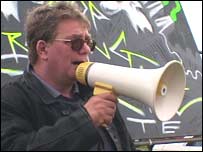 | | If we do nothing, this area will become an environmental wasteland as far as I'm concerned | | David Levy |
"Already, they had permission to burn four million tyres a year in this plant, they haven't fitted one extra filter since that time. "They now want to burn up to 40% substitution of all these hazardous toxic waste chemicals and you've actually got a government - a government - that's reclassified these things as a fuel!" David's anger is understandable and he is worried about his grandchildren growing up facing possible health risks. Burn it upExtremely high temperatures are needed to make cement and the large kilns use tonnes of fuel each day. To keep up with cement demand at a reasonable cost, Lafarge Cement in Westbury replaced some of its expensive coal with old tyres four years ago. This in itself brought about a public outcry, but residents are even more concerned at the factory's plan to add a cocktail of toxic chemicals - like paint stripper, pharmaceuticals and herbicides - to the mix. Lafarge Cement's view is that the chemicals have to go somewhere, and this is the best option. Francisco Hevia from the company comments, "Personally I would prefer those fuels to be destroyed in our kilns than land filled in the country. "It's very positive for future generations, for my sons, my grandsons and the rest of the people in the UK." Francisco believes the experience already gathered from many different plants around Europe is enough to ensure the safety of workers and locals. "The limits imposed on us by the Environment Agency are enough to ensure that all the safety and health standards are being respected," he stresses. Safe or suspicious?It is the Environment Agency, a government body set up to look after the best interests of the environment, who permitted a six-month trial. Their take is that burning the hazardous material as fuel could actually be good for the environment. If the materials are used in this way they will be effectively destroyed. The alternative is to transport them to specialist hazardous material dumps around the UK, only one of which is in the west. 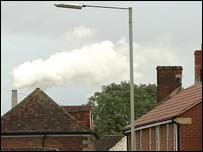 | | Residents are worried about the waste produced by the factory |
The other positive side is the fact that using hazardous waste as fuel cuts down on the use of fossil fuels like coal, which would otherwise be used. Dr Tony Owen from the Environment Agency comments, "The reason the Environment Agency is here, and the reason that I do the job, is to protect the environment. "Obviously at the top of that is protecting people's health and their enjoyment of the environment. I'm absolutely clear about that: this is why we get up in the morning." Burning coal releases gases like sulphur dioxide, so burning chemicals should actually reduce the amount of pollution. But it may also lead to increases in other types of pollution such as dioxins and heavy metals. It's this down side that worries locals. Opinions dividedTony Owen is keen to portray the trial in Westbury as safe and positive for all concerned, but admits emotions are running high. "We do get quite vitriolic correspondence accusing us of corruption, being in league with the company, things like that," he says. "What I would want to do here is to reassure people who are concerned that we have taken the best technical advice available to us from the health professionals about the conditions under which this trial will continue." David Levy from "The Air That We Breathe" isn't convinced. "How the hell do you evaluate things like dioxins, which are measured in very minute quantities but have a drastic effect on people's health, against something like sulphur dioxide which is an acidic gas that comes out in vast quantities? "You can't say one against the other, it just does not pan out," he says. Many politicians are concerned that views like David's aren't being properly considered. 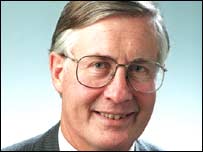 | | I think there are some good reasons for some concern about this | | Michael Meacher MP |
Former Environment Minister Michael Meacher MP listens to David's concerns. "The organisation of these trials does need to be seen to be absolutely impartial, independent, arms-length, and I don't think you can quite say that here," Michael comments. "Now I'm not saying the company is dishonest, I'm not saying that at all, but I'm just saying people need to be persuaded by arms-length action by an independent body. "Some measures have been taken but certainly not yet enough in my view," he says. Help from afarDavid Levy now believes his only hope lies abroad, so he travels to France to meet a couple who are fighting the same cement company who want to use chemical waste as fuel. Steve and Nicole Redner are lawyers, and they're using the law to try win their case. Nicole explains their situation, "The courts do like to apply what's called the "principle de precaution" - the precautionary principle - which has now become law in France. "It's a very, very important principle. It basically says that if you don't know what you're dealing with then don't use human lives as guinea pigs!" There are around 20,000 inhabitants within a six mile radius of the cement factory in France, and locals believe the companies shouldn't be able to get away with playing with people's health. Steve and Nicole believe there may be an ulterior motive for factories burning toxic waste. "The more we investigate the matter the more concerned we become because we realise that this co-incineration of toxic waste in cement factories is actually an extremely profitable business for the cement factories," Nicole says. Seeing the situation in France has given David Levy new hope for his own cause. "What I've learnt from this experience in France is that the European courts are maybe our answer. "I will be working very closely with the French groups and I do believe we can win doing that," he comments. Keeping at itBack in Westbury, David is keen to get the community reinvigorated to the cause. 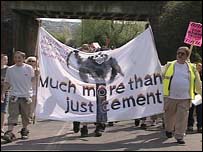 | | Westbury's community are adamant they won't give up the fight |
A balloon protest is organised and spirits are lifted with the idea that they may win this fight after all. But at the factory, Francisco Hevia insists they are not doing anything to risk the health of locals. "We are not an incinerator, we are a cement manufacturer. "We are manufacturing our products and we will be manufacturing it still in 50 years time and this is our main concern." When asked if they are making money out of burning the toxic waste Francisco replies, "This is not our main purpose. Yes, we are paying back for our investments and we are getting flexibility for the future for different types of fuels." Early in October 2004, the Environment Agency said it was tightening rules regarding burning toxic waste and would be consulting the public more in the future. David thinks this is nonsense. "It means that we will not be consulted any more. Anything and everything will be going into this plant and we will not know. "If you multiply that by 23, that's the number of cement plants that there are around the country, then you can see that this is a national issue and this should be challenged in a public inquiry. "We here in Westbury are being sidelined by the very people who should be protecting us," he complains. Only time will tell what the end result of Westbury's waste struggle will be, but one thing's for sure - locals like David Levy won't be giving up the fight. If you want more information on the burning of hazardous material please contact the Environment Agency. | 



 Inside Out - West: Monday October 18, 2004