BBC HomeExplore the BBC
This page has been archived and is no longer updated. Find out more about page archiving.

28 October 2014
Inside Out: Surprising Stories, Familiar Places

BBC Homepage
England
Inside Out
East
East Midlands
London
North East
North West
South
South East
South West
West
West Midlands
Yorks & Lincs
Go to BBC1 programmes page (image: BBC1 logo)

Contact Us

Inside Out - South East: Monday October 16, 2006

Waste not, want not...
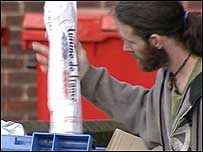
Skip with French bread
Rubbish - a rich source of goodies for freegans

From collecting junk on the street to eating food from bins…. we meet some of the people capitalising on the things everyday folk leave behind.

Inside Out meets Jerry who can't let anything go to waste.

Jerry's garage, home and garden are testimony to his passion for recycling - he's got stuff everywhere.

Jerry says that the best thing he's ever found is a heating system - it was dumped in a skip and he just had to rescue it.

Amongst Jerry's other rescued items are a hairdryer, tea's made, computer table, hoover, cuddly toy, and cocktail shaker.

Jerry believes that he's making the most efficient use of products:

"We're a very wasteful country… we should be ashamed about what we throw out. I've travelled a lot in third world countries and they're amazing the things that they make use of."

He's a self-styled street farmer, taking unwanted stuff from skips.

Freegans

Over 17 million tons of food is buried in landfills across the country every year… and a staggering 4 million of it is considered edible.

James is what is known as a freegan, one of a growing number of people prepared to scour rubbish bins and recycle food from the rubbish.

He'll happily tuck into a meal that's come from a litter bin, dumpster or refuge sack.

We join James as he tucks into his dinner, all rescued from the garbage:

"I don't think it's disgusting. Look, it's still in it's packaging… and this fruit pot is perfectly in tact… nothing leaked on it. It's as good as just off the store shelf."

A low income and the need for a varied diet got James in to it.

Recycling symbol
Recycling - booming in popularity with Freecycle

But he also hates to see stuff wasted as he explains, "I guess there's a desire to keep waste to a minimum. In my own way, I'm doing my bit."

A lot of the food which James eats is still in its plastic packaging, but he avoids anything that smells like it's been hanging around for a few days.

But not everybody is a fan of freegans - some local stores don't approve.

To them, freegans make a mess, put themselves at risk of food poisoning and damage store property.

However skip divers and freegans might well be doing their bit for the environment, but what they’re doing is also illegal.

Removing anything from bins without getting the permission of its owner is against the law.

Freecycle

However, you don't need to be real greenie to get into Freecycle, an online recycling centre.
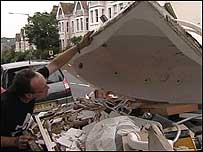
Skip with bath
Rubbish - everything including the kitchen sink... and bath

Freecyle started in the US just three years ago and already has two million members worldwide.

More people are adopting a green way life, and the interest in sustainable living has fuelled the boom in Freecycle's activities.

Freecycle says that "one person's trash can be another's treasure".

On local radio...

All week - tune in to BBC Southern Counties Radio to find out just what you can do with food that's past its sell-by date.

BBC Southern Counties - check our programmes.

As well as skip diving with fregans, reporter Steve Dale has been out finding out how charities distribute the free food they get from big businesses.

He has also been looking at just what food we waste at home each week.

Links relating to this story:

The BBC is not responsible for the content of external websites

Inside Out Archive

Inside Out: South East
View our story archive to see articles from previous series.

BBC Where I Live

Find local news, entertainment, debate and more ...

Kent
Surrey and Sussex

Meet your
Inside Out
presenter
Go to our profile of Kaddy Lee-Preston (image: Kaddy Lee-Preston)

Kaddy Lee-Preston
your local Inside Out presenter.

Contact us
Contact the South East team with the issues that affect you.

Free email updates

Keep in touch and receive your free and informative Inside Out updates.
Subscribe
Unsubscribe

Cross Channel ferries

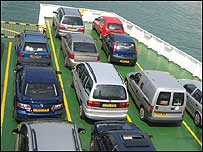
Ferry with cars
Cross Channel hopping - the ferry business gears up

Inside Out looks at the future of the cross Channel ferry business, and how the service is changing due to increasing competition.

In the 1970's and 80's, with no Channel Tunnel and fewer cheap flights, the cross Channel business was a real money spinner.

Duty free saw passenger numbers balloon.

Pack them in was the mentality - luxury and comfort were secondary considerations.

Now all that's changing - cross Channel travel has gone all posh.

Take Norfolkline for example. Their image up until last year was a belt and braces service aimed at continental truckers.

Now they're kitting out ships with restaurants, bars, a cinema and even massage chairs.

Norfolkline has also invested heavily in smaller, faster ferries - a new generation of super fast ferries.

Built from aluminium, these new powerful, light craft can cross the channel in around 30 minutes.

That means they can make lots more crossings per day, maximising profit and reducing ticket prices.

Kurt Stavis of Speedferries believes that fast ferries are the way ahead.

The only high speed operator running out of Dover at the moment, Kurt wants to go even faster so he's shopping for one of the new super ships.

And he's also planning to move into the now empty Hoverspeed terminal.

But Speedferries won't be the only fast ferry operator around for long, if Folkestone gets its way.

Folkestone's fast ferry will most probably go to Boulogne, a French port that's also reinventing itself.

Cheap tickets

When it comes to fishing for cheap tickets, research shows that passengers are a ruthless bunch, cruising the Internet to snap up the best deals.

Fast ferries are changing the cross Channel market.

Ticket prices are already lower than three years ago and operators are introducing dynamic pricing - high tickets for peak travel, cheaper tickets for unpopular times.

Nick Warren is Managing Director of ferrycheap.com

His ferry website sells the discount deals he negotiates face to face with the operators.

So is there a revolution in cross Channel travel going on or is it just a passing fade?

One thing's for sure, if you want to see lower, more flexible ferry tickets and 30 minute crossings, the success of this new breed of fast ferry is vital.

Links relating to this story:

The BBC is not responsible for the content of external websites

Postcards from the past

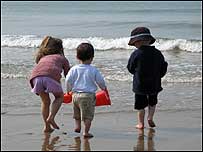
Beach with kids
On the beach - the changing face of the seaside

Inside Out looks at film archive showing the seaside towns of Ramsgate and Bexhill in the late 1950's early 60's.

We look at what holidays were like before package tours flooded the market, and ask how the seaside the town have changed.

Once upon a holiday...

Back in the 1950's and 60's a holiday abroad was just a dream for most people.

Forget about Florida, Portugal and Greece - realistic destinations were places like Bexhill and Ramsgate.

Although there wasn't much competition from foreign resorts, there were plenty of English seaside destinations to choose from, so if a town wanted tourists, it paid to advertise.

Today, these seaside publicity films are kept at Screen Archive South East.

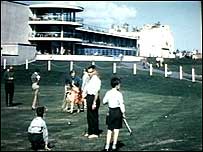
Beach golf
Those were the days - coastal golf at the seaside

They're great films to watch with wonderful plummy voices and famous faces, including footage of a Margate beauty contest with Barbara Windsor.

'A Summer Memory Of Bexhill' is a typical promotional film of the time with lots of sunny pictures and good old-fashioned, over-the-top commentary.

The Ramsgate film, 'At The Sign Of The Ram and Gate', takes a more creative approach.

It follows the story of a journalist, sent from the smog of Fleet Street to the bracing air of the Kent coast.

Looking at Bexhill and Ramsgate today, there are very few reminders of their heyday as seaside resorts.

Links relating to this story:

The BBC is not responsible for the content of external websites


About the BBC | Help | Terms of Use | Privacy & Cookies Policy