COMBING THE BEACHESNot only is the sea full of interesting stuff, much of it ends washed up on the beaches. Everything found on the beach tells a story, it's just a case of finding ways of understanding them. As part of the launch of the Great Eggcase Hunt, marine biologist Lisa Browning takes to the beaches in Littlehampton in West Sussex with a group of children. The task for today is to look for interesting objects washed up on the beach, objects that can reveal the secrets of the sea. Let's show you a selection of what you might find on the beaches! Cuttle fish - 'talkactive' creaturesWest Beach of Littlehampton is an important scientific area that gives us loads of clues to the world below the sea. 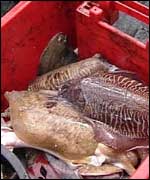 | | Cuttle fish - still with bones |
A quiet beach stroll can easily turn into a treasure hunt, and especially after a really bad storm. Stormy weather guarantees some interesting finds. Cuttle fish bones are easily spotted thanks to their size and stark white colour. Lisa says "Cuttle fish are truly extraordinary creatures. They 'talk' to each other using colour and patterns, like zebra stripes for courtship." They can use both sides of their body to communicate. One side might be chatting up a mate, while the other is scaring off a predator, making them bi-lingual one might say - or is that perhaps two-faced? "Cuttle fish are my favourites!" Lisa raves. Whelk findsWhelk egg cases on the shores may look like a lump of bubble wrap, but it's not. 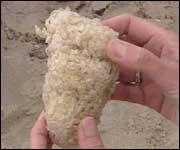 | | This empty whelk eggcase has already hatched its eggs |
The whelks lay large clumps of eggs on rocks in the sea, and some get washed up on the shores in stormy weather. If the eggcase is grey, the whelks have already hatched. But if the eggcase has yellow colour, there might still be some whelks inside. The yellow eggcases are normally found during the January breeding period. One thing that can be mentioned about the baby whelks is that they are cannibalistic. The first whelks to hatch will eat their brothers and sisters eggs in order for their survival.
The sea - the world's greatest recycling stationEverything natural on the beach is connected in one way or another. 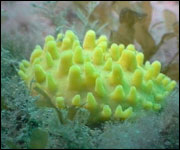 | | This sponge is a colourful asset to the sea bed - as well as very useful! |
One great example is the sponge living on the bottom of the sea. It feeds by sucking in water, filtering out all the edible bits and releasing the water. When it dies, it is squashed up and some thousand years later, it is washed up on the beach as flint. The sea is a great recycling station, although it may takes some hundred or even thousand years. |