Perhaps hoping to cash in on the success of The Pianist, here's a release for another Ronald Harwood scripted film about a classical musician during the Holocaust era.
Directed by the veteran Hungarian István Szabó, Taking Sides begins in post-WWII Berlin, where US Major Steve Arnold (a bullish Harvey Keitel) is charged by his superiors with connecting the renowned conductor of the Berlin Philharmonic Orchestra, Dr Wilhelm Furtwängler (Stellan Skarsgård), to the Nazi party.
"HITLER'S BANDLEADER"
The American believes that right is clearly on the victors' side and derides Furtwängler as "Hitler's bandleader", a collaborator who played for the Führer on the eve of his birthday and who was decorated by both Hermann Goering and Joseph Goebbels. Why hadn't he fled Germany like so many of his fellow artists? The musician's colleagues, however, testify to Furtwängler's integrity, stressing that he never joined the party and risked everything by helping Jews to escape abroad.
With its theatrical set-ups and lengthy, didactic speeches, Taking Sides never breaks free from its stage origins. Particularly ill-served are supporting characters such as the American-Jewish soldier (Moritz Bleibtreu) of German parentage, who falls for the daughter (Birgit Minichmayr) of one of the plotters against Hitler.
Szabó and Harwood also load the dice against Arnold's absolutist moral judgements, painting him as an aggressive, bullying Yank, with no understanding of European high culture.
"INTRIGUING EXAMINATION"
But despite these flaws Taking Sides does offer an intriguing examination of the role of an artist under a tyrannical regime - which, in the case of the Nazis, was one that revered classical music. To what extent can an individual be blamed for a society's atrocities?
Was Furtwängler right to say that art, in reflecting man's highest aspirations, is more important than politics? And whilst Keitel, with his boxer's frame and furious eyes, ratchets up his character's anger, the acting honours here - and the main reason to see the film - belong to Skarsgård's impressive performance as the bewildered yet still defiant scapegoat, who can't believe his own downfall.





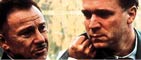
 Taking Sides (2003)