| 24 September 2014 |

| |
| BBC Homepage | | |
| |||
| Contact Us | | |
Video NationYou are in: Cumbria > Video Nation > Elmina - A Ghanaian story at Whitehaven 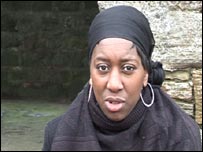 Sonia Thakker Elmina - A Ghanaian story at WhitehavenMention the word ‘Elmina’, and you’ll see Sonia Thakker flinch. Anger furrows her brow like the dark clouds appearing in the skies over Whitehaven.
It’s obvious, it hurts her somewhere deep inside her heart. And when she sings Harry Burleigh’s ‘Sometimes I feel like a motherless child’, standing on the very edge of the harbour being lashed by a sullen sea, the pain is most poignant. But Elmina is her middle name, for heaven’s sake – so why is she so angry ? “Well, Elmina happens to be the fortress built by the British on the erstwhile Gold Coast to break the will of the slaves before shipping them to the sugar plantations. My forefathers were amongst them. And it makes me angry that some people here have no knowledge or even care about what happened to families that were forcibly broken up and sold for profit.” That Gold Coast is today’s Ghana, a nation still suffering from the effect of displaced communities, families and traditions. In fact even now, Africans from across the world descend on Ghana in the summer of each year to track down their lost genealogies. 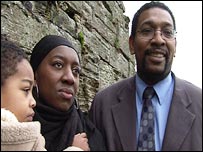 Sonia and her family “Whitehaven made a lot of money on slave trade; in fact, some of the families of the slavers still exist here. But who over here really cares?” asks Nash Thakker, Sonia’s husband. Well, maybe some do, because to commemorate the bi-centenary of the Wilberforce Agreement abolishing slavery on the British Isles and the Commonwealth, Whitehaven is apologising this year for its role in the slave trade. And yet, there is simmering discontent in parts of England and Cumbria itself, with some people saying an apology is uncalled for since they had nothing to do with slavery. “True”, says Nash, “but the waters of the North-Atlantic are littered with more dead bodies than the those who died in the Holocaust. If we are prepared to accept the Holocaust, why can’t we be prepared to say, look guys, we’re sorry for what our fathers did to your fathers. And then lets move on.” Fine, but surely the white slavers couldn’t have raided villages and kidnapped the natives all by themselves? It’s common knowledge that the African tribes were busy attacking and selling each other, thus aiding and abetting the trade – an aspect anti-apologists keep bringing up. 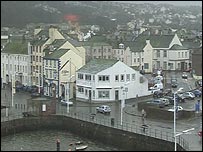 Looking over Whitehaven “Yes, they were involved in assisting the slavers”, replies Nash, “but they never intended to make slaving a profit-making industry. The only people who benefited were the Western nations.” Ironically, while the region made a good deal of its fortune on black slaves, Nash has now been hired as Project Manager by Copeland Council to bring back business to the area. “I will pass on to my sons whatever I earn” adds Nash pointing out to his little boys, “But the slaves could never pass on anything to their children. They just languished in anger and pain. And this is the pain that my wife feels, the pain that nations feel.” Their children, now playing on the shores of Whitehaven are British, and perhaps too young to be aware of their slave ancestry; too innocent to realise the importance of being free on the very spot that saw slave ships returning from the sea. “I wonder if my forefathers hadn’t been enslaved, where would I be? How different a future would my children have?”, asks Sonia as she stares at the turbulent eddies made by the waves. last updated: 01/05/2008 at 16:05 You are in: Cumbria > Video Nation > Elmina - A Ghanaian story at Whitehaven |
| | About the BBC | Help | Terms of Use | Privacy & Cookies Policy |